Nike Vomero vs Pegasus: The Ultimate Running Shoe Comparison
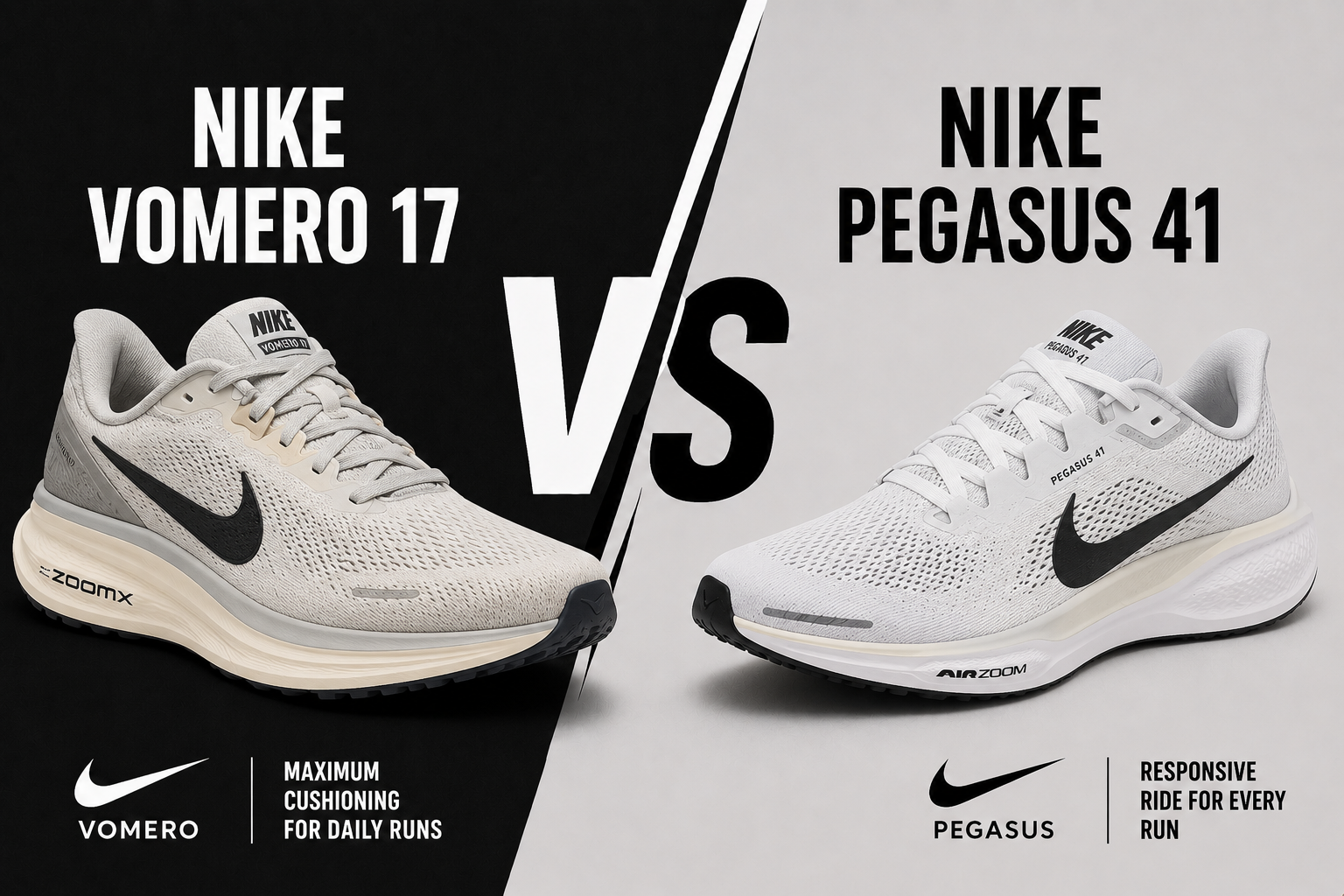
If you’ve been running in Nikes for any length of time, you already know the Pegasus by reputation — it’s the shoe that’s been Nike’s do-everything daily trainer since 1982, the one coaches recommend to beginners, and the one plenty of serious runners still reach for on easy days.
The Vomero has always lived one step up the comfort ladder: a plusher, more cushioned sibling built for runners who want extra protection on tired legs.

But with Nike’s 2025–2026 lineup overhaul, that gap has widened significantly, and the Nike Vomero vs Pegasus decision now comes down to a much clearer question than it used to.
The current Pegasus 41 is a responsive, moderately cushioned daily trainer — Nike’s own description positions it as the “Icon” of its responsive-cushioning category.

The Vomero 18, on the other hand, went all-in on maximalist comfort, adding a dramatic jump in stack height and becoming Nike’s dedicated max-cushion trainer.
That means these two shoes, which used to feel like close cousins, now serve genuinely different roles in a running rotation.
This guide breaks down cushioning, weight, fit, durability, and value so you know which shoe actually matches your training, whether you’re logging easy recovery miles, building up for a marathon, or just want one dependable trainer for daily runs.
What This Article Will Help You Decide
- Which shoe offers better cushioning for easy runs vs. faster efforts
- How the Vomero and Pegasus differ in stack height, weight, and drop
- Which shoe is more versatile across different paces
- Comfort and support differences for long-distance running
- Fit and sizing differences between the two models
- Durability and expected mileage lifespan
- Value for money and long-term cost per pair
- Which shoe suits wider vs. narrower feet
- The best use cases for each shoe in a training rotation
- A clear, final recommendation based on your running goals
Quick Verdict
| Category | Winner |
|---|---|
| Best Overall Daily Trainer | Nike Pegasus 41 |
| Best for Comfort | Nike Vomero 18 |
| Best for Easy/Recovery Runs | Nike Vomero 18 |
| Best for Tempo Runs | Nike Pegasus 41 |
| Best Value | Nike Pegasus 41 |
| Best for Wide Feet | Nike Pegasus 41 |
| Best for Narrow Feet | Nike Vomero 18 |
| Best for Long Runs | Nike Vomero 18 |
| Best for Versatility Across Paces | Nike Pegasus 41 |
| Best for Walking / All-Day Wear | Nike Vomero 18 |
The Pegasus remains the more versatile, better-value everyday running shoe, while the Vomero has repositioned itself as a dedicated max-cushion option for slower, more comfort-focused miles.
Read also: Adidas Ultraboost vs Nike Pegasus: The Complete Comparison Guide
Who Should Buy Each Shoe?
Who Should Buy the Nike Pegasus
The Pegasus makes sense if you want one shoe that can realistically handle your whole training week — easy runs, tempo sessions, and even the occasional faster workout.
It’s the better pick for runners who value a responsive, ground-connected feel and don’t want a shoe that feels sluggish when they pick up the pace, and it’s also the more forgiving option for wider feet thanks to its available extra-wide sizing.
Who Should Buy the Nike Vomero
The Vomero is the better call if your priority is maximum comfort and shock absorption, especially for easy, slow-paced, or recovery runs, or for runners dealing with joint sensitivity who want extra cushioning underfoot.
It’s also worth considering for heavier runners or those logging high weekly mileage who want a plush landing on tired legs, though it’s a narrower shoe overall, so it suits narrower feet better than wide ones.
Product Overview
Nike Pegasus 41: Design, Build, and Details
- Design: The 41st iteration of Nike’s most famous running shoe, positioned as the “Icon” model of Nike’s responsive-cushioning category following the brand’s 2025 lineup restructuring.
- Materials: Engineered mesh upper that’s notably breathable, with a dynamic lacing system integrated into an internal midfoot band for a secure, glove-like fit.
- Midsole: Full-length ReactX foam with two embedded Air Zoom units in the heel and forefoot, delivering a snappy, stable “classic Pegasus” ride.
- Outsole: Waffle-inspired rubber outsole known for durability, with users commonly reporting 400–500 miles before needing to replace a pair.
- Weight: Around 10.4 oz for a men’s US 9, on the heavier side for the category but not dramatically so.
- Breathability: Strong, with reviewers noting no issues even in extreme heat and humidity.
- Cushioning: A 37mm heel / 27mm forefoot stack height with a 10mm drop, offering solid protection without tipping into maximalist territory.
- Support: Neutral support with a well-padded heel counter and midfoot band that provides a secure, adjustable lockdown.
- Available widths: Standard D width plus an extra-wide 4E option, making it more accommodating for wider feet.
- Retail price range: Around $140.
- Intended use: Daily training, tempo runs, long runs up to half-marathon and marathon distance, and general do-it-all versatility.
Nike Vomero 18: Design, Build, and Details
- Design: A dramatic overhaul from the Vomero 17, repositioned as the “Icon” model of Nike’s new max-cushioning category, going head to head with maximalist shoes like the Hoka Clifton and Bondi.
- Materials: Engineered mesh with a full sleeve for a plush, comfortable step-in feel, though the softer materials absorb water more readily in wet conditions.
- Midsole: Dual-density setup with a ZoomX top layer over a firmer ReactX base, delivering a soft, forgiving ride with less energy return than a full ZoomX shoe.
- Outsole: Regrind and carbon rubber combination, with a more segmented design than prior Vomero versions for improved flexibility.
- Weight: Around 10.4–11.5 oz, depending on the source and size measured, noticeably heavier than its predecessor and on the heavier end of the max-cushion category.
- Breathability: Weaker than the Pegasus — the plush, padded upper doesn’t breathe as well and can run hot in warmer climates.
- Cushioning: A substantial 44mm heel / 34mm forefoot stack height (with some testers measuring closer to 46mm/36mm), making it one of Nike’s most high-heeled running shoes to date, while retaining the same 10mm drop as the Pegasus.
- Support: Fit runs narrower than average through the toebox, tapering to an average-to-narrow midfoot, which some reviewers flagged as a drawback for wider feet.
- Available widths: Standard width only, without a wide option at this time.
- Retail price range: Around $150, notably including a rare price drop from the previous version.
- Intended use: Easy runs, recovery days, and long, slow-paced mileage rather than tempo work or faster training.
Head-to-Head Comparison
Design
The Pegasus keeps its classic, ground-connected running shoe silhouette, while the Vomero has visibly transformed into a tall, maximalist trainer with a much bulkier midsole profile than in previous versions.
Comfort
The Vomero offers a deeper, plusher cushioning experience thanks to its much taller stack height, ideal for slow, comfort-focused miles. The Pegasus offers a firmer, more classic ride that some runners find less fatiguing over faster efforts, even if it’s less plush at rest.
Fit
The Pegasus fits true to size with a well-padded, glove-like midfoot lockdown and is available in a wide option. The Vomero runs snugger through the toebox and midfoot, and several testers recommend considering a half size up for a more comfortable fit.
Sizing
Both shoes generally run true to size for most runners, though the Vomero’s narrower toebox means those with wider feet may want to size up or look elsewhere, while the Pegasus’s available 4E extra-wide option makes it the safer choice for wider feet.
Materials
The Pegasus’s engineered mesh upper is more breathable and holds up well in hot, humid conditions. The Vomero’s plush, padded mesh feels great against the foot but performs worse in wet conditions, absorbing more water and becoming noticeably heavier when soaked.
Breathability
The Pegasus is the clear winner here, with reviewers specifically noting no discomfort even in extreme heat and high humidity, while the Vomero’s plush upper is reported to run hot in warm climates.
Cushioning
The Vomero wins decisively on raw cushioning depth, with a stack height roughly 7–9mm taller than the Pegasus at the heel. However, more cushioning doesn’t automatically mean more energy return — some testers found the Vomero’s energy return actually decreased compared to its own predecessor, despite the added foam.
Arch Support
Neither shoe offers structured arch support beyond their cushioning systems, both being neutral-support trainers designed to work with a natural gait rather than correct for pronation.
Heel Support
Both feature well-padded heel counters, with the Pegasus 41 specifically improving its heel counter rigidity over the Pegasus 40 to boost stability for heel strikers.
Weight
The Pegasus is generally the lighter of the two shoes, though both have gained weight compared to their own earlier versions. The added stack height on the Vomero makes it noticeably heavier on the foot during faster efforts.
Traction
Both shoes use variations of Nike’s waffle-inspired rubber outsole, offering reliable grip on roads, treadmills, and light gravel or dirt paths, with the Pegasus’s outsole covering slightly more surface area for extra durability.
Durability
The Pegasus has a well-established reputation for durability, with users commonly reporting 400–500 miles before retiring a pair. The Vomero’s median lifespan is generally estimated around 400 miles as well, though its softer ZoomX top layer may compress faster under heavy daily use than the Pegasus’s firmer ReactX-only setup.
Flexibility
The Pegasus’s more moderate stack height keeps it reasonably flexible underfoot. The Vomero’s much taller midsole reduces natural flexibility, though its updated, more segmented outsole design was specifically built to offset some of that stiffness.
Energy Return and Responsiveness
The Pegasus feels snappier and more responsive thanks to its embedded Air Zoom units, making it better suited to tempo runs and faster efforts. The Vomero prioritizes plush comfort over responsiveness, and testers noted it doesn’t want you to pick up the pace the way the Pegasus does.
Versatility Across Paces
The Pegasus is the more versatile shoe, capable of handling everything from easy jogs to tempo workouts and even light speed sessions. The Vomero is best reserved for easy, recovery, and long slow-distance runs, and feels noticeably less agile when pace increases.
Long Runs
Both shoes handle long runs well thanks to their substantial stack heights, though the Vomero’s extra cushioning gives it a slight edge for pure comfort over marathon distances, provided you don’t need to change pace significantly.
Walking Comfort
The Vomero’s deeper cushioning makes it a comfortable option for all-day walking in addition to running, while the Pegasus, though still comfortable, offers a firmer, more ground-connected feel underfoot.
Weather Resistance
The Pegasus’s more breathable mesh handles varied conditions reasonably well, and a Gore-Tex version is available for wet-weather runners. The Vomero’s plush upper is more absorbent in wet conditions, becoming noticeably heavier when saturated, and doesn’t currently offer a waterproof version.
Price
The Pegasus is generally the more affordable option at around $140, compared to the Vomero’s roughly $150 price point — though the Vomero 18’s price actually dropped $10 from its predecessor, a rare move in the running shoe market.
Long-Term Value
The Pegasus offers stronger long-term value thanks to its versatility across training types and established durability track record, while the Vomero’s value is more dependent on how much of your training is genuinely easy-paced mileage.
Comparison Table
| Feature | Nike Pegasus 41 | Nike Vomero 18 |
|---|---|---|
| Price | ~$140 | ~$150 |
| Weight | ~10.4 oz | ~10.4–11.5 oz |
| Heel-to-Toe Drop | 10 mm | 10 mm |
| Stack Height (Heel/Forefoot) | 37 mm / 27 mm | 44 mm / 34 mm |
| Upper Material | Engineered mesh | Padded engineered mesh with sleeve |
| Midsole | ReactX foam with dual Air Zoom units | ZoomX top layer over ReactX base |
| Outsole | Waffle-inspired rubber | Regrind and carbon rubber |
| Best Use | Daily training, tempo, long runs | Easy runs, recovery, long slow miles |
| Comfort Rating | 8/10 | 9/10 |
| Responsiveness Rating | 8/10 | 6.5/10 |
| Durability Rating | 8.5/10 | 8/10 |
| Breathability Rating | 8.5/10 | 6.5/10 |
| Versatility Rating | 9/10 | 6.5/10 |
| Overall Rating | 8.5/10 | 7.5/10 |
Real-Life Scenarios
- Beginner runners: Pegasus, for its reliable, versatile, do-everything reputation.
- Marathon training (mixed paces): Pegasus, for its ability to handle both easy and tempo days.
- Recovery days: Vomero, for its deep, plush cushioning.
- Long, slow-distance runs: Vomero, for maximum comfort over extended miles.
- Tempo and speed work: Pegasus, for its more responsive, ground-connected ride.
- Runners with joint sensitivity: Vomero, for extra shock absorption.
- Heavier runners: Vomero, for its deeper cushioning and impact protection.
- Runners who also walk a lot for daily activity: Vomero, for its plush, comfort-first ride.
- Wide feet: Pegasus, thanks to its available extra-wide sizing option.
- Hot, humid climates: Pegasus, for its more breathable engineered mesh.
- Runners wanting a single do-it-all shoe: Pegasus, for its balance of comfort and responsiveness across paces.
- Treadmill running: Either works well, though the Vomero’s plush cushioning may feel especially comfortable on a hard treadmill belt.
Best Alternatives
- Nike Vomero Plus — A lighter, more versatile max-cushion option using full-length ZoomX foam, better suited to runners who want Vomero-level comfort with more responsiveness across paces.
- Nike Invincible 4 — A bouncier max-cushion shoe using full ZoomX foam without the Vomero’s firmer ReactX base, ideal for those who want a livelier ride.
- Hoka Clifton — A lighter maximalist trainer that’s a common comparison point for the Vomero’s new max-cushion positioning.
- ASICS Novablast — A lighter, more agile cushioned trainer for runners who want plush comfort without the Vomero’s added weight.
- Brooks Ghost — A reliable, versatile daily trainer often compared to the Pegasus for its balanced, do-everything reputation.
- New Balance 1080 — A plush, comfort-focused trainer that competes directly with the Vomero for long, easy-mile comfort.
- Nike Pegasus Premium — A more elevated version within the Pegasus family for runners who want extra comfort while staying in the responsive-cushioning category.
- Saucony Ride — A dependable, moderately cushioned daily trainer comparable to the Pegasus in versatility and price.
Pros and Cons
Nike Pegasus 41
Pros
- Versatile enough to handle easy runs, tempo work, and long runs
- Responsive ride thanks to dual Air Zoom units
- Highly breathable mesh upper, performs well in heat and humidity
- Available in extra-wide sizing for wider feet
- Strong durability, commonly lasting 400–500 miles
Cons
- Heavier than earlier Pegasus versions
- Forefoot cushioning can feel thin for runners used to max-cushion shoes
- Zoom Air units can make the ride feel firm compared to modern foam-only trainers
- Less plush than dedicated comfort-first shoes like the Vomero
Nike Vomero 18
Pros
- Exceptionally plush, comfortable cushioning for easy and recovery runs
- Tallest stack height in Vomero history, excellent shock absorption
- Comfortable, well-padded upper with no break-in period needed
- Rare price drop from the previous version
Cons
- Noticeably heavier, limiting versatility for faster paces
- Narrower toebox, less accommodating for wide feet
- Reduced energy return despite the added cushioning
- Plush upper doesn’t breathe as well and absorbs water in wet conditions
Common Mistakes Buyers Make
Many runners buy the Vomero expecting it to replace their everyday trainer entirely, without realizing its added weight and reduced energy return make it much better suited to easy and recovery days than tempo work or faster training.
Others assume the Pegasus offers the same depth of cushioning as modern maximalist trainers, when in fact it deliberately stays more moderate in stack height to preserve responsiveness and ground feel.
Buyers with wider feet sometimes purchase the Vomero without realizing its narrower toebox may not suit them as well as the Pegasus, which offers an extra-wide sizing option.
It’s also common to underestimate how much shoe choice matters by pace — picking a max-cushion shoe like the Vomero for a fast workout, or a firmer, more responsive shoe like the Pegasus for a long recovery jog, often leads to unnecessary discomfort that better shoe rotation could solve.
When to Choose the Nike Pegasus
Choose the Pegasus if you want one dependable shoe that can handle the bulk of your weekly training, from easy jogs to tempo sessions, and you value responsiveness and breathability over maximum plushness. It’s also the smarter pick for wider feet, hot climates, and runners who want strong resale-level durability from a well-established, proven daily trainer.
When to Choose the Nike Vomero
Choose the Vomero if your priority is maximum comfort and cushioning for easy recovery, or long, slow-distance runs, especially if you’re dealing with joint sensitivity or simply want the plushest ride Nike currently offers. It’s a smart addition to a training rotation alongside a more responsive shoe like the Pegasus, rather than a full replacement for faster-paced training.
Final Verdict
These two shoes now serve genuinely different purposes in Nike’s lineup. The Pegasus remains the more versatile, better-value daily trainer capable of handling the majority of a typical runner’s weekly mileage, from easy days to tempo efforts.
The Vomero has repositioned itself as a dedicated comfort specialist — exceptional for slow, easy miles and recovery runs, but not built to replace a more responsive shoe for faster training.
Many serious runners end up using both: the Pegasus as the workhorse for most of the week, and the Vomero reserved specifically for recovery days or long, easy-paced runs where maximum cushioning matters more than responsiveness.
If you only want one shoe and your training includes a mix of paces, the Pegasus is the safer, more versatile choice. If most of your running is slow and comfort-focused, the Vomero is worth the extra cushioning.
Frequently Asked Questions
Which is more cushioned, the Vomero or the Pegasus? The Vomero, with a stack height of roughly 44mm in the heel compared to the Pegasus’s 37mm, is Nike’s taller, more maximalist option of the two.
Which shoe is better for beginners, the Vomero or the Pegasus? The Pegasus is generally recommended for beginners thanks to its versatility across paces and its long-standing reputation as a reliable, do-everything daily trainer.
Is the Nike Vomero good for fast running? Not particularly. Reviewers consistently found the Vomero 18 too heavy and lacking in energy return for tempo or speed work, making it best suited to easy and recovery-paced runs.
Is the Nike Pegasus good for long runs? Yes — the Pegasus 41 is commonly used for long runs, tempo sessions, and even marathon training, thanks to its balanced cushioning and responsive Air Zoom units.
Which shoe is heavier, the Vomero or the Pegasus? The Vomero is generally heavier, largely due to its significantly taller stack height, though both shoes have gained some weight compared to their own earlier versions.
Does the Nike Vomero run true to size? It runs slightly snug through the toebox and midfoot, and some testers recommend sizing up half a size for a more comfortable fit, particularly for those with wider or higher-volume feet.
Does the Nike Pegasus run true to size? Yes, most runners find the Pegasus 41 true to size, with a well-padded, secure midfoot lockdown and an available extra-wide option for wider feet.
Which shoe is more breathable, the Vomero or the Pegasus? The Pegasus, thanks to its engineered mesh upper, which testers specifically praised for performing well even in extreme heat and humidity, while the Vomero’s plush upper runs hotter.
Which shoe is better for wide feet, the Vomero or the Pegasus? The Pegasus, since it’s available in an extra-wide 4E option, while the Vomero currently only comes in a standard width and runs narrower through the toebox.
How long do the Vomero and Pegasus typically last? Both shoes have a median expected lifespan of around 400 miles, with some Pegasus users reporting up to 500 miles before needing a replacement.
Which shoe is more affordable, the Vomero or the Pegasus? The Pegasus, at around $140, compared to the Vomero’s roughly $150 price point, though the Vomero did receive a rare $10 price cut from its previous version.
Can the Vomero or Pegasus be used for walking as well as running? Both work well for walking, though the Vomero’s deeper cushioning may feel especially comfortable for all-day walking, while the Pegasus offers a firmer, more ground-connected feel.
Which shoe has better energy return, the Vomero or the Pegasus? The Pegasus generally offers better energy return thanks to its embedded Air Zoom units, while the Vomero’s added cushioning actually reduced energy return slightly compared to its own predecessor.
Should I buy the Vomero or the Pegasus if I only want one running shoe? If your training includes a mix of paces, the Pegasus is the safer, more versatile choice. If the vast majority of your running is slow, easy-paced mileage, the Vomero’s extra cushioning may suit you better.
Is the Nike Vomero replacing the Pegasus? No — the two shoes now serve different roles within Nike’s restructured lineup, with the Pegasus representing the responsive-cushioning category and the Vomero representing the max-cushioning category.
Read also: