Adidas Ultraboost vs Nike Pegasus: The Complete Comparison Guide
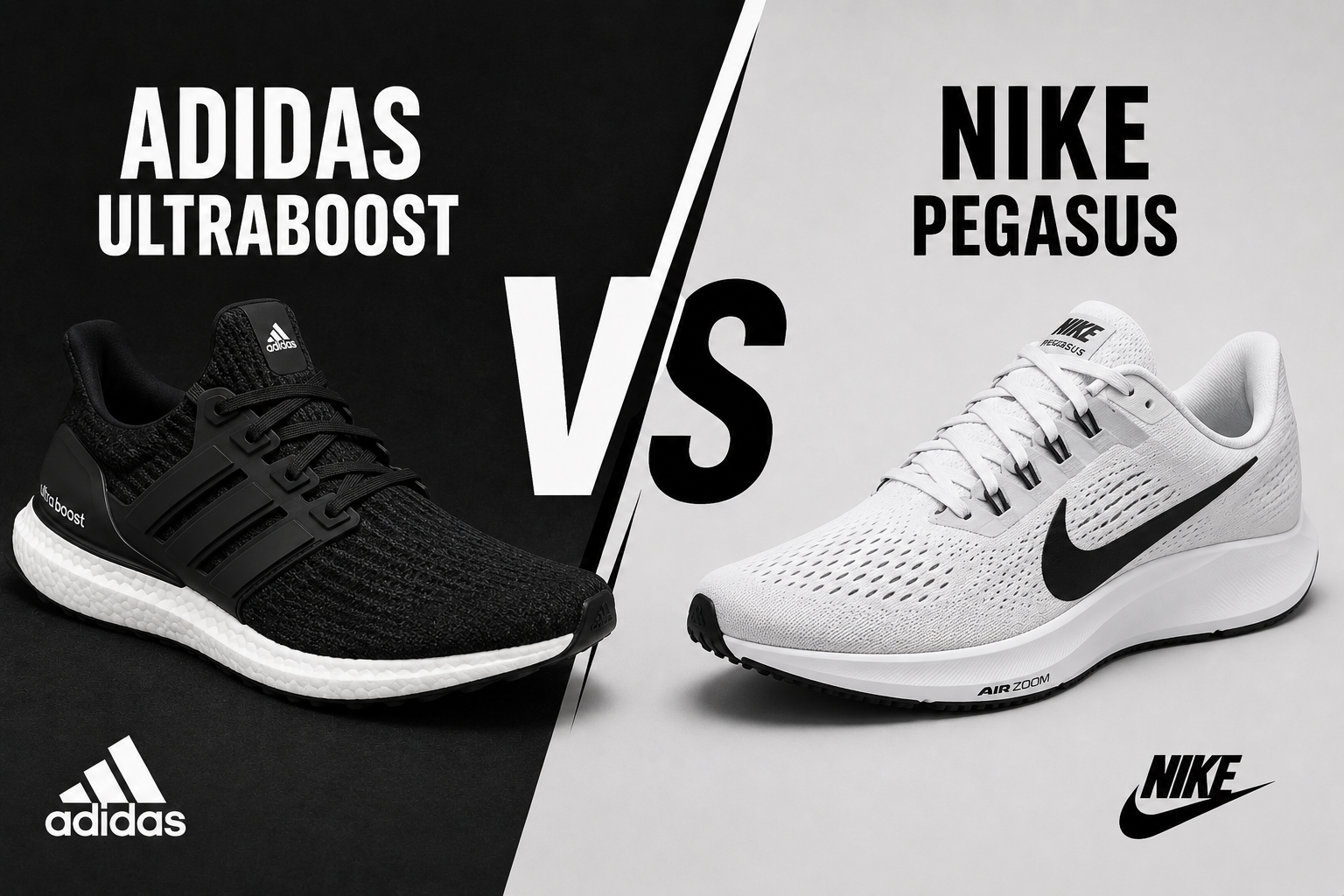
The Adidas Ultraboost vs Nike Pegasus comparison comes up constantly because these are two of the most trusted names in everyday running shoes, yet they solve the comfort problem in almost opposite ways.
The Ultraboost leans on a full-length Boost midsole and a sock-like Primeknit upper for a soft, energetic ride that’s just as popular off the track as on it.

The Pegasus takes a more balanced, purpose-built approach, combining a lighter ReactX foam midsole with dual Air Zoom units for a responsive, stable ride that’s been refined across more than 40 iterations since 1983.
Neither shoe is objectively “better” in a vacuum. The right pick depends on how you actually run, how much you weigh, what surfaces you train on, and whether you care as much about all-day comfort walking around as you do about logging real training miles.

This guide breaks down the Ultraboost review and Pegasus running shoes comparison from every practical angle — cushioning, fit, durability, and long-term value — so you can make a decision based on how these shoes actually perform, not just how they look in a marketing photo.
What This Article Will Help You Decide
- Which shoe offers better cushioning and energy return for daily runs
- How the two differ in fit, sizing, and lockdown
- Which shoes suit wide feet, narrow feet, and different arch types
- Weight and how it affects pace and fatigue over longer runs
- Materials and durability over hundreds of training miles
- Breathability and how each shoe performs in warm versus cold weather
- Style versatility for wearing the shoes casually, not just for training
- Value for money, including how mileage lifespan affects true cost per wear
- Which shoe is the smarter choice for walking, standing, and travel versus serious mileage
- Whether one shoe wins outright, or whether your running style should decide
Quick Verdict
| Category | Winner |
|---|---|
| Best Overall | Nike Pegasus |
| Best for Comfort (plush feel) | Adidas Ultraboost |
| Best for Walking | Adidas Ultraboost |
| Best for Running (daily training) | Nike Pegasus |
| Best for Casual Wear | Adidas Ultraboost |
| Best Value | Nike Pegasus |
| Best for Wide Feet | Nike Pegasus |
| Best for Narrow Feet | Adidas Ultraboost |
| Best for All-Day Wear | Adidas Ultraboost |
| Best for Travel | Adidas Ultraboost |
Keep in mind this table reflects general tendencies. Runners with specific gait patterns, injury history, or performance goals should weigh individual sections below more heavily than any single summary ranking.
Read also: Nike Blazer Mid vs Air Force 1: The Complete Comparison Guide (2026)

Who Should Buy Each Shoe?
Who Should Buy the Adidas Ultraboost
The Ultraboost is the better call if plush, all-day comfort matters more to you than shaving seconds off a training pace.
Its full-length Boost midsole delivers a soft, cushioned ride that holds up remarkably well for walking, standing, and general daily wear, which is exactly why it crossed over from performance running into lifestyle sneaker territory so successfully after its 2015 launch.
A good example: someone who wants one shoe that handles a treadmill session, a long walk around the city, and a full day on their feet at work, and who prioritizes underfoot comfort over shaving grams of weight.
Who Should Buy the Nike Pegasus
The Pegasus makes more sense if you’re a genuine runner logging regular training miles. Its combination of ReactX foam and dual Air Zoom units gives it a livelier, more responsive ride at running paces, and its lighter overall weight makes a real difference across longer distances. It’s also generally the more affordable and wider-fitting option of the two.
A good example: someone training for a 10K or half-marathon who needs a dependable daily trainer that can handle serious mileage without breaking down or feeling sluggish.
Product Overview
Adidas Ultraboost
- Design: Sock-like performance running shoe first released in 2015, featuring a Primeknit upper and a distinctive full-length white or colored Boost midsole
- Materials: Primeknit textile upper that molds to the foot, with a supportive TPU heel counter and cage overlay
- Midsole technology: Full-length adidas Boost midsole, made of hundreds of fused TPU capsules designed for high energy return
- Outsole: Continental rubber outsole, developed in partnership with the tire manufacturer for reliable all-conditions grip
- Weight: Roughly 11 oz per shoe (men’s size 10), on the heavier side for a performance running shoe
- Breathability: Good — the knit upper flexes and breathes well, though it can run warm in direct sun due to its snug fit
- Cushioning: Soft, plush, and bouncy, with a noticeably higher stack height than the Pegasus
- Support: Torsion System underfoot adds midfoot stability; TPU cage locks the foot in place
- Available colors: Wide range of performance and lifestyle colorways, plus frequent collaborations
- Retail price range: Standard Ultraboost models typically retail around $180–$190, with special editions and collaborations running higher
- Intended use: Daily running, walking, treadmill training, and everyday lifestyle wear
Nike Pegasus
- Design: Classic daily trainer silhouette, refined over more than 40 versions since 1983, with an engineered mesh upper and a streamlined, purpose-built running profile
- Materials: Engineered mesh upper for breathability, paired with a Dynamic Midfoot Fit system that ties the lacing directly into an internal support band
- Midsole technology: Full-length Nike ReactX foam paired with dual Air Zoom units in the forefoot and heel
- Outsole: Rubber waffle-inspired outsole designed for reliable traction across road surfaces
- Weight: Roughly 10.5 oz per shoe (men’s size 10), noticeably lighter than the Ultraboost
- Breathability: Excellent — the engineered mesh upper is built specifically for airflow during hard efforts
- Cushioning: Responsive and energetic rather than plush, with a firmer, snappier feel than the Ultraboost
- Support: Wider forefoot and heel in recent versions improve stability, along with the midfoot lacing system
- Available colors: Large rotation of performance colorways across nearly every seasonal release
- Retail price range: Standard retail sits around $145, with frequent discounts bringing it well below that on sale
- Intended use: Daily training runs, tempo work, everyday mileage, and general athletic and casual wear
Head-to-Head Comparison
Design
The Ultraboost has a sleeker, more sock-like silhouette with a distinctive full Boost midsole that’s become a design signature in its own right.
The Pegasus has a more traditional running-shoe profile, refined generation after generation rather than dramatically reinvented, with a slightly more athletic, purpose-built look if you want a shoe that doubles as a lifestyle sneaker, lean towards Ultraboost. If you want a shoe that reads as a serious training tool, lean Pegasus.
Comfort
This depends heavily on what kind of comfort you’re after. For plush, cushioned, all-day comfort — walking, standing, commuting — the Ultraboost’s higher stack Boost midsole generally feels softer underfoot.
For running comfort specifically, many runners find the Pegasus’s slightly firmer, more responsive ride more comfortable over actual training miles, since it doesn’t feel mushy or unstable at faster paces.
Fit
The Ultraboost’s Primeknit upper offers a snug, sock-like fit that hugs the foot closely, which some runners love, and others find restrictive, particularly around the ankle cage.
The Pegasus has evolved to include a slightly wider forefoot and heel in its most recent versions, generally accommodating a broader range of foot shapes.
Sizing
The Ultraboost tends to run true to size to slightly small, particularly through the toe box, given its snug knit construction. The Pegasus generally runs true to size and is available in a wider range of width options (including wide sizing), making it the more forgiving choice for shoppers who aren’t sure exactly which size or width they need.
Materials
The Ultraboost’s Primeknit upper is soft, stretchy, and molds to the foot over time, but it can show wear (pilling, stretching) faster than a woven mesh under heavy daily use. The Pegasus’s engineered mesh is more structured and tends to hold its shape better over the life of the shoe, though it offers a less form-fitting feel than Primeknit.
Breathability
The Pegasus generally wins here. Its engineered mesh is specifically designed for running-specific airflow, while the Ultraboost’s snug knit construction, while breathable, can trap more heat given how closely it wraps the foot.
Cushioning
The Ultraboost offers a higher stack height and a softer, more cushioned feel underfoot, ideal for walking and lower-intensity movement. The Pegasus’s dual Air Zoom units combined with ReactX foam deliver a livelier, more responsive energy return that many runners prefer specifically for training paces, even though the overall ride feels firmer than the Ultraboost’s.
Arch Support
Neither shoe is a dedicated stability or motion-control shoe, but the Pegasus’s Torsion-adjacent midfoot support system and slightly firmer platform generally offer more structured support for runners with mild overpronation. The Ultraboost’s Torsion System provides some midfoot stability but prioritizes a soft ride over structured support.
Heel Support
The Pegasus’s molded heel and Dynamic Midfoot Fit system generally provide a more secure, locked-in heel compared to the Ultraboost’s TPU heel counter, which can feel slightly less structured for runners who need extra heel stability.
Weight
The Pegasus is meaningfully lighter — roughly half an ounce less per shoe — which becomes more noticeable the longer and faster you run. For daily training runs and tempo work, that weight difference genuinely affects how “quick” the shoe feels underfoot.
Traction
Both shoes perform well on dry roads. The Ultraboost’s Continental rubber outsole, developed specifically for reliable grip across conditions, has a strong reputation for wet-weather traction. The Pegasus’s waffle-inspired outsole is a proven, reliable performer across a wide range of road surfaces, backed by decades of refinement.
Durability
The Pegasus’s more structured mesh upper and firmer foam tend to hold up a bit longer under serious mileage. The Ultraboost’s Boost midsole is durable in terms of cushioning retention, but the knit upper can show wear faster, particularly around high-flex areas like the forefoot.
Flexibility
The Pegasus flexes more naturally at the forefoot, which many runners prefer for a more efficient toe-off during faster efforts. The Ultraboost feels a bit stiffer through the midsole, given its thicker Boost stack, though it remains comfortable for walking and easy-paced running.
Running Performance
For actual training runs, especially at faster paces or longer distances, the Pegasus is generally considered the stronger performance shoe thanks to its lighter weight, more responsive foam, and structured support. The Ultraboost performs well for easy-paced runs and lower-mileage training but isn’t typically the first choice of serious runners logging high weekly mileage.
Walking Comfort
The Ultraboost’s plush, high-stack cushioning makes it an excellent walking shoe, arguably better suited to all-day walking comfort than the firmer, more running-specific Pegasus.
Casual Everyday Wear
Both shoes work well casually, but the Ultraboost has a stronger lifestyle sneaker following thanks to its distinctive silhouette and soft ride, making it the more natural crossover shoe for non-running use.
Travel
The Ultraboost’s cushioned comfort makes it a strong travel shoe for long days of walking through airports and cities, similar to how other max-cushioned sneakers tend to outperform firmer performance trainers for all-day comfort.
Standing All Day
The Ultraboost’s higher-stack Boost midsole generally reduces foot fatigue better than the Pegasus during extended standing, thanks to its plush, forgiving cushioning.
Cleaning
Both shoes clean up with a soft brush, mild soap, and water. The Ultraboost’s knit upper should avoid excessive scrubbing, which can stretch or damage the fibers; the Pegasus’s mesh upper is generally more forgiving of firmer brushing.
Maintenance
Rotate pairs if you’re running regularly with either shoe, since resting the foam between runs helps it recover and extends its usable lifespan. Air-dry both shoes rather than using direct heat, which can damage both the Boost midsole and ReactX foam over time.
Weather Resistance
Neither shoe is fully waterproof, though the Ultraboost’s Continental rubber outsole and tighter knit construction generally handle wet roads a bit better than the Pegasus’s more ventilated mesh upper, which lets water in faster in wet conditions.
Break-in Period
Both shoes are largely comfortable right out of the box, which is typical of modern running shoe design. The Ultraboost’s knit upper may take a few wears to fully mold to your foot shape, while the Pegasus feels close to its final fit almost immediately.
Style Versatility
The Ultraboost is the more versatile lifestyle shoe, pairing easily with joggers, leggings, and casual everyday outfits thanks to its sleek, sock-like silhouette. The Pegasus reads more specifically as a performance running shoe, which works well for athletic and athleisure looks but is less of a natural fit for general streetwear styling.
Available Colorways
Both brands release frequent new colorways, though the Ultraboost has built a stronger reputation for collaborations and limited lifestyle-driven releases, while the Pegasus focuses more on performance-driven seasonal colorways.
Price
The Pegasus is generally the more affordable option at standard retail, and it also sees frequent, substantial discounts through Nike and retail partners, often bringing the price well below the Ultraboost’s typical sale price.
Long-Term Value
Given the Pegasus’s lighter weight, structured durability, and lower price point, many runners find it delivers stronger long-term training value per dollar. The Ultraboost’s higher price is easier to justify if you’re using it primarily for comfort-driven walking and lifestyle wear rather than serious mileage.
Cushioning Technology Explained: Boost vs. ReactX and Air Zoom
The real difference between these two shoes comes down to how each brand engineers energy return, and understanding that helps explain why they feel so different underfoot. Adidas Boost midsoles are built from hundreds of small, fused TPU (thermoplastic polyurethane) capsules.
This construction method creates a midsole that compresses and rebounds slowly and consistently, which is why the Ultraboost feels soft and plush rather than sharp or snappy — it’s designed to absorb impact gradually and return that energy over a slightly longer window of ground contact.
Nike’s approach to the Pegasus is different. Instead of one homogenous foam structure, the Pegasus 41 combines a ReactX foam midsole with two separate Air Zoom units, one under the forefoot and one under the heel.
ReactX foam alone is a lighter, more responsive compound than older Nike React formulations, engineered to compress and rebound quickly rather than slowly, giving the shoe a snappier, more energetic feel at faster paces.
The Air Zoom units then add a second, distinct layer of responsiveness right at the areas of highest impact — the heel strike and forefoot toe-off — which is part of why Pegasus wearers often describe the ride as “lively” rather than simply “soft.”
This engineering difference has a real practical consequence for shoppers. If your priority is a plush, forgiving ride for lower-intensity movement — walking, standing, easy recovery jogs — the Boost midsole’s slower, more cushioned compression generally feels better.
If your priority is a responsive, energetic ride that holds up at faster training paces and longer distances, the Pegasus’s ReactX-plus-Air-Zoom combination is generally the better-performing system, and it’s a big part of why the shoe has remained a trusted daily trainer across more than four decades of continuous refinement.
Real-Life Scenarios
- College students: Nike Pegasus — lighter, more affordable, and versatile enough for both class and casual training runs
- Office workers (business casual crossover): Adidas Ultraboost — the sleeker lifestyle silhouette pairs better with casual office-adjacent outfits
- Travelers: Adidas Ultraboost — superior all-day cushioning for airports and long days of walking
- Walking all day: Adidas Ultraboost
- Training for a race (5K–marathon): Nike Pegasus — lighter weight and more responsive cushioning for serious mileage
- Streetwear/casual outfits: Adidas Ultraboost
- Gym workouts (cardio machines, treadmill): Both work well; the Ultraboost’s cushioning suits steady-state cardio, while the Pegasus suits interval and tempo work
- Long shifts (retail, hospitality): Adidas Ultraboost
- Daily commuting on foot: Adidas Ultraboost, for its plush, all-day comfort
- Vacation: Adidas Ultraboost, for extended walking comfort across multiple days
- Weekend recreational running: Nike Pegasus
Outfit Ideas: Adidas Ultraboost
- Joggers, oversized hoodie, crossbody bag for an athleisure-casual look
- Leggings, cropped jacket, minimal accessories for a gym-to-street transition
- Straight-leg jeans, plain white tee, bomber jacket
- Track pants, zip-up windbreaker, baseball cap
- Tailored shorts, technical tee, lightweight rain jacket
- Wide-leg trousers, fitted top, structured tote for a smart-athleisure mix
- Compression tights, performance tank, running vest for a training-day look
- Denim jacket, joggers, plain tee for casual weekend errands
- Matching tracksuit for a full retro-athletic look
- Layered activewear with a puffer vest for cold-weather training
Outfit Ideas: Nike Pegasus
- Running shorts, moisture-wicking tank, lightweight windbreaker
- Joggers, performance long-sleeve, running vest
- Compression tights, fitted tee, light jacket for cool-weather runs
- Athletic shorts, graphic tee, snapback for casual athletic wear
- Track pants, zip-up hoodie, crossbody sling bag
- Straight-leg jeans, plain tee, denim jacket for off-duty casual wear
- Cargo shorts, technical polo, baseball cap for warm-weather errands
- Matching Nike tracksuit for a full athletic look
- Leggings, oversized sweatshirt, beanie for cold-weather training
- Basketball shorts, ribbed tank, crew socks for an athletic-leisure fit
Best Alternatives
- Nike Vomero — a more cushioned, max-comfort alternative within Nike’s own running lineup
- Adidas Solarglide — a more stability-focused alternative to the Ultraboost within Adidas’s lineup
- Hoka Clifton — a lighter, max-cushioned alternative popular for both running and all-day comfort
- Brooks Ghost — a well-balanced, reliable daily trainer comparable to the Pegasus
- New Balance Fresh Foam X 1080 — a plush, comfort-focused alternative similar in spirit to the Ultraboost
- Asics Gel-Nimbus — a cushioned daily trainer with strong support for runners who need extra stability
- Saucony Ride — a well-rounded, moderately priced daily trainer alternative to the Pegasus
- Adidas Supernova — a more affordable, comfort-focused alternative within Adidas’s running lineup
- On Cloudmonster — a max-cushioned, lightweight alternative popular for both training and casual wear
- Nike Invincible — a max-cushioned Nike alternative for runners who want more plush comfort than the Pegasus offers
Pros and Cons
Adidas Ultraboost — Pros
- Exceptionally plush, comfortable cushioning for walking and all-day wear
- Sock-like Primeknit fit that molds to the foot
- Strong reputation as a crossover lifestyle sneaker
- Reliable Continental rubber outsole grip in varied conditions
- Wide range of colorways and collaborations
Adidas Ultraboost — Cons
- Heavier than the Pegasus, which can matter for serious training
- Higher price point at standard retail
- Knit upper can show wear faster than woven mesh
- Snug fit may not suit wider feet without sizing up
Nike Pegasus — Pros
- Lighter weight, better suited to serious training mileage
- More responsive, energetic ride at running paces
- Wider range of width options, including wide sizing
- More affordable at standard retail, with frequent discounts
- Decades of refinement back its reliability as a daily trainer
Nike Pegasus — Cons
- Firmer ride, less plush than the Ultraboost for walking or standing
- Less of a natural crossover into general lifestyle/streetwear looks
- Engineered mesh, while breathable, doesn’t offer the same sock-like feel as Primeknit
- Cushioning prioritizes responsiveness over maximum softness
Common Mistakes Buyers Make
- Buying the Ultraboost expecting top running performance: It’s a genuinely capable running shoe for easy mileage, but serious runners chasing faster paces or higher weekly mileage often find the Pegasus performs better for training specifically.
- Buying the Pegasus expecting maximum plush comfort: Its responsive, firmer ride is excellent for running, but it isn’t the softest option if all-day walking comfort is your main priority.
- Ignoring foot width: The Pegasus offers wide sizing options that the Ultraboost generally does not; wide-footed buyers should factor this in before purchasing.
- Sizing the Ultraboost the same as a regular sneaker: Its snug knit construction often runs slightly smaller than expected; trying a half size up can help avoid a cramped toe box.
- Assuming either shoe replaces a specialty stability shoe: Runners who need serious motion control or overpronation support should consult a running specialist rather than relying on either of these neutral-leaning daily trainers.
Care Guide
Cleaning: Remove laces and insoles before cleaning. Use a soft brush with mild soap and water on both uppers, being gentler with the Ultraboost’s knit construction to avoid stretching or pilling. Air-dry both shoes away from direct heat, which can damage the foam midsoles.
Storage: Store both shoes in a cool, dry place away from direct sunlight, which can degrade foam cushioning over time. Avoid compressing the midsole under heavy items when storing.
Maintenance: Rotate between at least two pairs if you’re running regularly in either shoe — this gives the foam time to fully decompress and recover between runs, meaningfully extending its lifespan.
Increasing lifespan: Both Boost and ReactX/Air Zoom cushioning systems degrade gradually with mileage. Adidas recommends replacing Ultraboost running shoes roughly every 300–500 miles, depending on use; a similar mileage range applies to the Pegasus. Watch for flattened cushioning, visible outsole wear, or new aches after runs as signs that it’s time for a replacement.
When to Choose the Adidas Ultraboost
- Plush, all-day comfort matters more to you than shaving weight or maximizing running performance
- You want a shoe that doubles easily as a lifestyle sneaker
- You have narrower feet and prefer a snug, sock-like fit
- You’re mostly walking, standing, or running at an easy pace rather than training seriously
- You’re willing to pay a premium for the Boost cushioning experience
When to Choose the Nike Pegasus
- You’re training seriously and want a lighter, more responsive daily trainer
- You have wider feet or need width options beyond standard sizing
- Your budget favors the more affordable option
- You want a shoe that holds up well to consistent, heavy training mileage
- You prioritize running performance over general lifestyle versatility
Final Verdict
This comparison comes down to a genuine philosophical difference in cushioning design, not just a simple “better or worse” call. The Nike Pegasus generally wins for serious runners thanks to its lighter weight, more responsive ReactX-and-Air-Zoom cushioning, wider fit options, and lower price point — it’s built first and foremost as a training tool, and decades of refinement show.
The Adidas Ultraboost counters with unmatched plush comfort for walking, standing, and everyday wear, plus a stronger crossover appeal as a genuine lifestyle sneaker.
If you’re a runner logging real training miles, the Pegasus is very likely the smarter buy. If you want maximum comfort for a shoe that spends more time walking city streets than pounding out tempo runs, the Ultraboost is hard to beat.
Many runners end up owning both — Pegasus for structured training, Ultraboost for recovery days, and everyday wear — which, if your budget allows, covers both bases well.
Frequently Asked Questions
Is the Nike Pegasus better for running than the Adidas Ultraboost? For serious training mileage, yes, generally. The Pegasus is lighter and offers a more responsive ride thanks to its ReactX foam and dual Air Zoom units, which many runners prefer at faster paces and longer distances.
Is the Adidas Ultraboost more comfortable than the Pegasus? For walking and all-day wear, yes. The Ultraboost’s full-length Boost midsole delivers a plusher, more cushioned feel than the Pegasus’s firmer, more performance-oriented ride.
Does the Ultraboost run true to size? The Ultraboost tends to run true to size or slightly small due to its snug knit construction; many buyers find a half size up more comfortable.
Does the Pegasus run true to size? Yes, the Pegasus generally runs true to size and offers wide sizing options for buyers who need extra width.
Which shoe is better for wide feet? The Nike Pegasus generally accommodates wide feet better, thanks to its available width options and its wider forefoot in recent versions.
Which shoe is lighter? The Nike Pegasus is lighter, at roughly 10.5 oz per shoe compared to the Ultraboost’s roughly 11 oz per shoe (men’s size 10).
Can I wear the Ultraboost or Pegasus casually, not just for running? Yes, both work well casually, though the Ultraboost has a stronger reputation as a lifestyle crossover sneaker thanks to its distinctive silhouette.
Which shoe is cheaper? The Nike Pegasus is generally cheaper at standard retail than the Adidas Ultraboost, and it also sees more frequent, deeper discounts.
How long do Ultraboost or Pegasus running shoes last? Both are generally recommended for replacement every 300–500 miles of running, depending on your weight, gait, and running surface.
Which shoe is better for standing all day at work? The Adidas Ultraboost’s plush, high-stack cushioning generally reduces foot fatigue better than the firmer Pegasus during extended standing.
Is the Ultraboost or Pegasus better for beginners just starting to run? Both work well for beginners, but the Pegasus’s lower price point, wide sizing options, and decades of proven reliability make it a common recommendation for new runners.
Which shoe has better traction in wet conditions? The Ultraboost’s Continental rubber outsole has a strong reputation for reliable grip in wet and varied conditions, developed specifically in partnership with the tire manufacturer.
Do the Ultraboost and Pegasus work for treadmill workouts? Yes, both perform well on a treadmill. The Ultraboost suits steady-state cardio and comfort-focused sessions, while the Pegasus suits interval and tempo-focused treadmill training.
Which shoe has more colorway options? Both brands release frequent colorways, though the Ultraboost has built a particularly strong reputation for lifestyle-driven collaborations alongside its performance releases.
Should I buy both the Ultraboost and the Pegasus? If your budget allows, yes — many runners use the Pegasus as a dedicated training shoe and the Ultraboost for recovery days, walking, and everyday wear, since the two shoes genuinely complement each other’s strengths.
Read also: