Hoka Clifton vs Nike Invincible: The Complete Comparison Guide
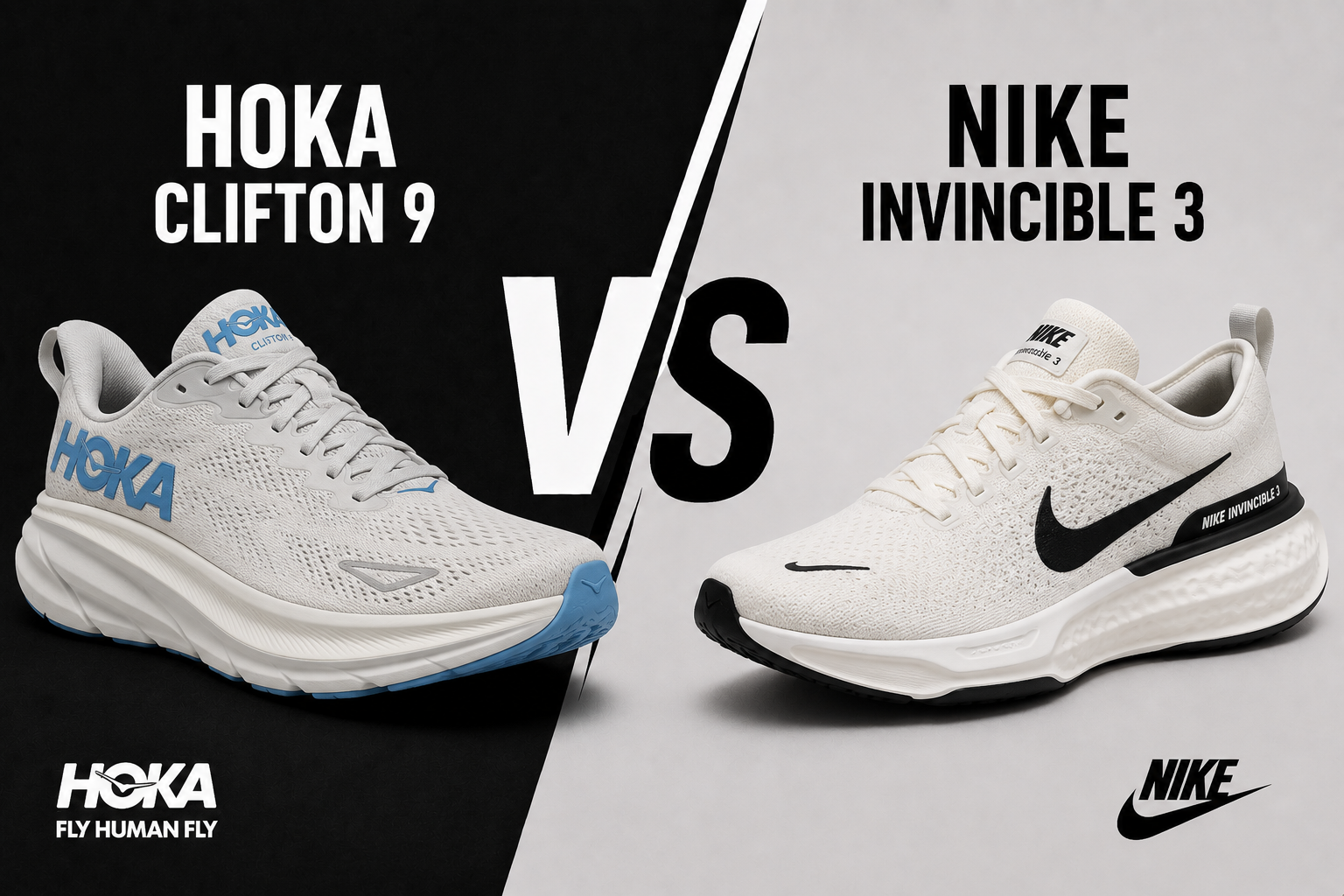
The Hoka Clifton vs Nike Invincible comparison sits at the center of one of running’s biggest ongoing debates: how much cushioning is actually useful, and at what point does “more plush” start working against you?
Both shoes are max-cushioned daily trainers built for comfort over speed, but they land on very different sides of that question.
The Clifton, now in its ninth generation, is famous for delivering serious cushioning in a genuinely lightweight package — Hoka managed to pack 32mm of forefoot foam into a shoe that weighs well under 12 ounces.
The Invincible goes the opposite direction, using a full-length ZoomX foam midsole to chase maximum plushness, accepting extra weight as the trade-off.
If you’re comparing these two cushioned sneakers because you want the softest possible ride for easy runs, recovery days, or simply standing and walking comfortably for hours, this guide breaks down exactly how they differ — cushioning feel, weight, stability, durability, and price — so you can figure out which one actually matches how you move, not just how each brand markets “maximum comfort.”
What This Article Will Help You Decide
- Which shoe offers a genuinely more comfortable ride for daily miles
- How the two differ in weight and why that matters more than you’d think
- Which shoe is more stable at faster paces versus easy, recovery-pace running
- Fit and sizing differences, including width options
- Durability and how long each shoe’s cushioning realistically lasts
- Breathability and how each performs across seasons
- Style versatility for wearing these shoes casually, not just for training
- Value for money, including price-per-mile over the shoe’s realistic lifespan
- Which shoe is the smarter choice for marathon training versus all-day walking comfort
- Whether one shoe is a clear winner, or whether your running style and weight should decide
Quick Verdict
| Category | Winner |
|---|---|
| Best Overall | Hoka Clifton |
| Best for Comfort (plushest ride) | Nike Invincible |
| Best for Walking | Hoka Clifton |
| Best for Marathon/Long Runs | Tie — depends on pace and weight |
| Best for Casual Wear | Hoka Clifton |
| Best Value | Hoka Clifton |
| Best for Wide Feet | Nike Invincible |
| Best for Narrow Feet | Hoka Clifton |
| Best for All-Day Wear | Hoka Clifton |
| Best for Recovery Days | Nike Invincible |
As with any comparison between two genuinely different cushioning philosophies, take this table as a starting point. Your body weight, running pace, and how much stack height you personally enjoy will matter more than any general ranking.
Read also: Air Jordan 1 High vs Air Jordan 1 Mid: The Complete Comparison Guide (2026)
Who Should Buy Each Shoe?
Who Should Buy the Hoka Clifton
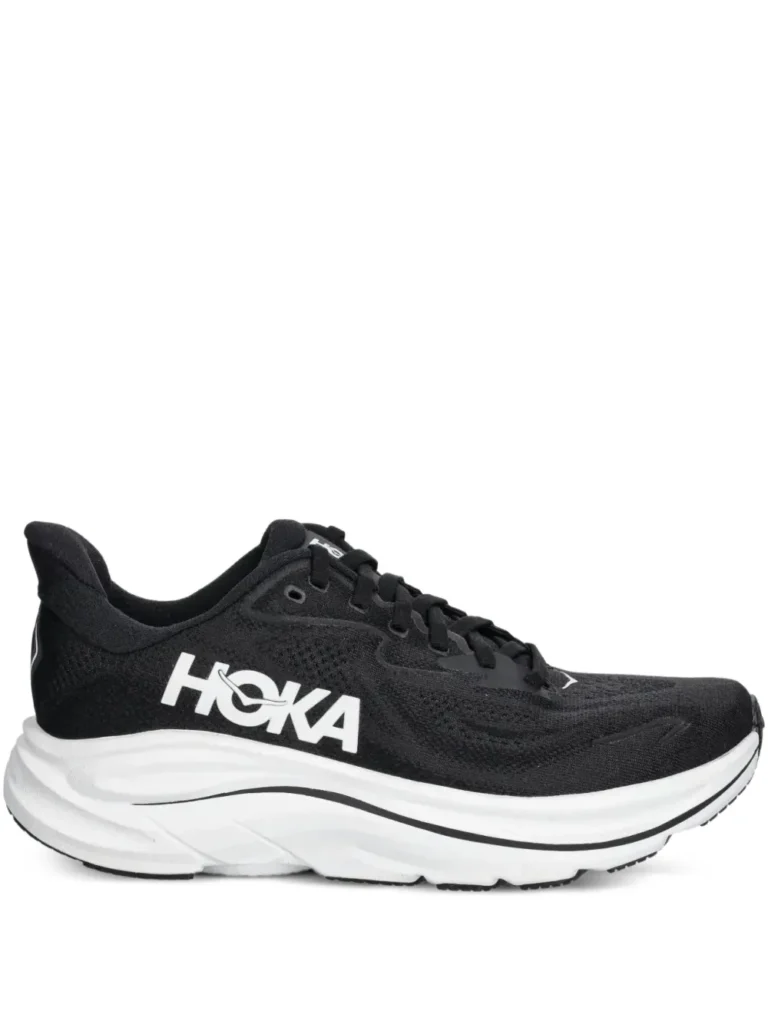
The Clifton is the better call if you want serious cushioning without carrying extra weight on your feet. At roughly 8.8 oz per shoe with over 32mm of forefoot stack, it delivers a genuinely light, agile ride that works for daily training, easy runs, walking, and standing all day — all without feeling like you’re running in a brick.
It’s also the more budget-friendly and versatile option of the two, doubling easily as an everyday walking or lifestyle shoe.
A good example: someone training for a 10K or half marathon who wants a dependable daily trainer that handles a wide range of paces and doubles as a comfortable all-day walking shoe.
Who Should Buy the Nike Invincible
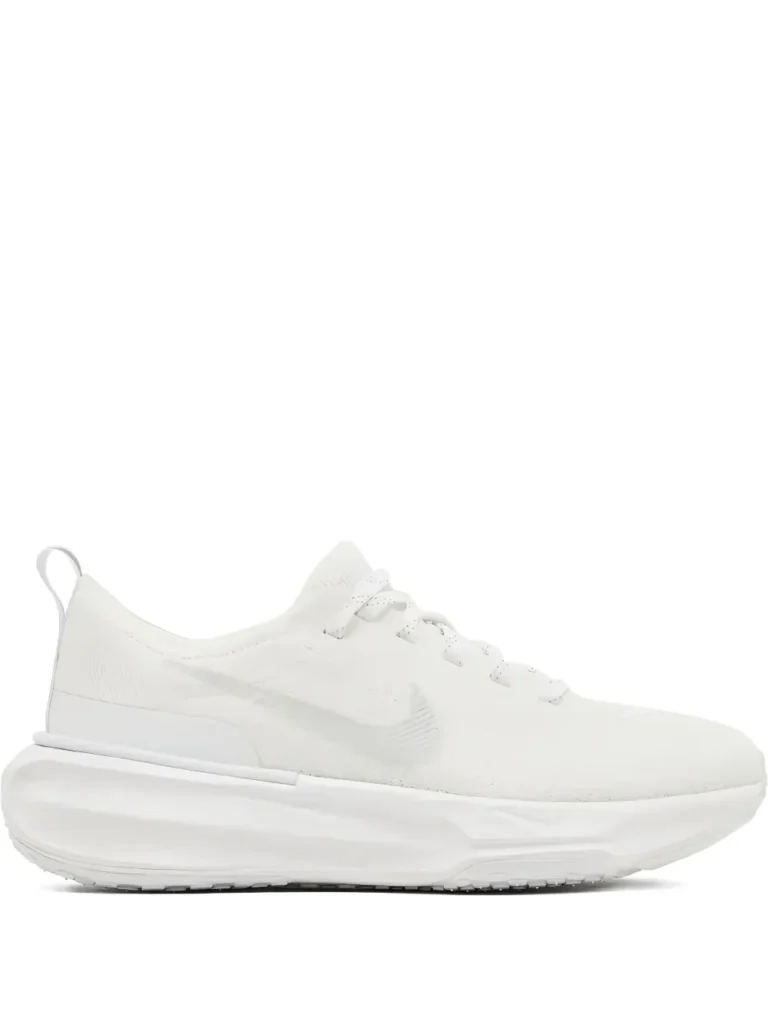
The Invincible makes more sense if maximum plushness is your singular priority and you’re specifically looking for a dedicated recovery-day or long, slow-distance shoe.
Its full-length ZoomX foam delivers a genuinely different, deeper cushioned feel than the Clifton’s EVA-based midsole, and its roomier toe box suits wider feet better.
It’s best treated as a specialist tool in a rotation rather than an everyday do-it-all trainer.
A good example: a marathon runner deep into a high-mileage training block who wants a dedicated recovery shoe to protect tired legs on easy days, separate from their primary daily trainer.
Product Overview
Hoka Clifton (Clifton 9)
- Design: Low-to-the-ground max-cushion daily trainer with Hoka’s signature early-stage meta-rocker geometry and a wide, stable platform
- Materials: Engineered knit upper with overlays and hotmelts removed for a plusher, more streamlined feel
- Midsole technology: Full-length compression-molded EVA (CMEVA) foam, marketed as ProFly+, with a symmetrical cushion bed and J-Frame technology to gently guide against overpronation
- Outsole: Durabrasion rubber concentrated in high-wear zones, with some exposed foam to save weight
- Weight: Approximately 8.7–8.8 oz per shoe (men’s size 9), notably light for its stack height
- Breathability: Below average for a road shoe — the plush, thick knit upper prioritizes comfort over airflow
- Cushioning: Soft, protective, and well-balanced, with a stack height of roughly 32mm (forefoot) and 37mm (heel)
- Support: J-Frame technology and a wide base provide moderate, non-intrusive stability for neutral runners
- Available colors: A wide range of performance and lifestyle-friendly colorways are released regularly
- Retail price range: Standard retail sits at approximately $145
- Intended use: Daily training, easy runs, recovery jogs, walking, and extended standing
Nike Invincible (Invincible 3)
- Design: Maximalist daily trainer with a dramatically flared, wide midsole platform and a pronounced rocker geometry
- Materials: Dense Flyknit upper with Flywire support strands and reflective trim, with a fabric lasting layer over the midsole
- Midsole technology: Full-length Nike ZoomX foam — the same PEBA-based foam used in Nike’s elite racing shoes like the Vaporfly and Alphafly, here deployed purely for cushioning rather than speed
- Outsole: Thick, two-piece carbon rubber outsole built for durability over a soft, protective ride
- Weight: Approximately 10.6–10.9 oz per shoe (men’s size 9-10), among the heavier shoes in the daily trainer category
- Breathability: Good — the Flyknit upper includes strategically placed breathable zones
- Cushioning: Extremely soft and deep, with a stack height of roughly 40mm (heel) and 31mm (forefoot) and a 9mm heel-to-toe drop
- Support: A firm rim around the heel counter and a wide, flared midsole base help stabilize the otherwise very soft ride
- Available colors: Solid rotation of performance colorways, with some limited and collaborative releases
- Retail price range: Standard retail sits at approximately $180
- Intended use: Recovery runs, long slow-distance training, marathon-pace efforts, and maximum-cushion easy miles
Head-to-Head Comparison
Design
The Clifton has a lower, more streamlined profile despite its generous stack height, thanks to Hoka’s early-stage meta-rocker geometry that keeps the ride feeling compact and agile.
The Invincible has a noticeably bulkier, more flared silhouette, with a wider midsole platform that’s immediately visible from any angle.
If you want a max-cushion shoe that still feels nimble, lean Clifton. If you want a shoe that visually and physically announces itself as a maximalist cushioned trainer, lean toward Invincible.
Comfort
Both shoes are genuinely excellent for comfort, but they get there differently. The Invincible’s full-length ZoomX foam delivers a deeper, softer, more “sink-in” sensation that many reviewers describe as one of the plushest rides in running.
The Clifton’s CMEVA foam is firmer by comparison but still well-cushioned, and its lighter weight means that cushioning doesn’t come with the same fatigue-inducing bulk over a long run.
Fit
The Clifton has a narrower, more tapered fit, particularly through the toe box, which suits narrower feet well but can feel tight for wider feet even in available wide sizing. The Invincible offers a roomier, true-to-size fit with a wider toe box, and Nike offers wide sizing on select colorways as well, making it generally the more accommodating shoe for wider feet.
Sizing
Both shoes generally fit true to size. The Invincible’s roomier toe box means some runners find they don’t need to size up as much as they would with narrower Hoka models, while the Clifton’s narrower, tapered shape is worth trying on carefully if you have wide feet, even within its wide-width options.
Materials
The Clifton’s stripped-back knit upper prioritizes a soft, lightweight feel, removing overlays and hotmelts in its most recent generation to boost comfort. The Invincible’s denser Flyknit upper with Flywire support offers more structure and lockdown, at some cost to the sock-like softness the Clifton’s upper provides.
Breathability
The Invincible generally performs better here, with reviewers rating its ventilation favorably thanks to strategically placed breathable zones in the Flyknit construction. The Clifton’s thicker, plusher upper has been rated below average for breathability in independent lab testing, trading airflow for underfoot comfort.
Cushioning
This is genuinely close, but the two shoes feel different rather than one being simply “more cushioned.” The Invincible has a taller stack height and a softer, deeper sink-in feel from its ZoomX foam. The Clifton has slightly less overall stack but delivers efficient, well-balanced cushioning in a package that’s roughly two ounces lighter per shoe, which many runners find translates to a more comfortable ride over the full duration of a run, not just underfoot.
Arch Support / Stability
Neither shoe is a dedicated stability trainer, but the Clifton’s J-Frame technology and wide base are specifically engineered to offer moderate, unobtrusive guidance against overpronation for neutral runners. The Invincible relies on its flared midsole and firm heel rim for stability, but multiple independent reviews note the shoe can feel slightly unstable or “sloppy” during faster efforts or midfoot landings, given how soft and deep its cushioning is.
Weight
The Clifton wins decisively here — at roughly 8.7-8.8 oz per shoe, it’s genuinely one of the lighter max-cushioned trainers on the market. The Invincible, at roughly 10.6-10.9 oz per shoe, is meaningfully heavier, a direct trade-off for its deeper ZoomX foam stack. This two-ounce difference is significant over the course of a long run, where extra shoe weight compounds fatigue with every stride.
Traction
Both shoes have documented weaknesses in wet-weather grip, though for different reasons. The Clifton’s softer outsole with exposed foam sections has been shown in lab testing to underperform on wet surfaces and steep inclines.
The Invincible’s thick, two-piece carbon rubber outsole scores somewhat better in wet-traction testing, though its small tread nubs have also drawn some criticism for slick conditions.
Durability
Both shoes have a similar realistic lifespan of roughly 300-400 miles under normal training conditions, in line with most cushioned daily trainers.
The Invincible’s soft ZoomX foam is specifically noted by reviewers as wearing down faster than firmer midsole materials, while the Clifton’s exposed foam sections on the outsole can lead to earlier-than-expected wear in high-friction areas, even though the surrounding Durabrasion rubber holds up well.
Flexibility
The Clifton is notably stiffer to flex than the average running shoe, largely due to its oversized midsole and thick, supportive midfoot area. The Invincible actually bends more easily in flexibility testing than you might expect given its bulk, aided by its rocker geometry, though its overall ride still feels less agile than the Clifton’s due to sheer weight.
Marathon and Long-Run Performance
Both shoes are strong choices for long, slow-distance training and marathon-pace efforts, but they suit slightly different runners. The Clifton’s lighter weight makes it a more versatile option that can handle a wider range of paces without feeling sluggish. The Invincible is specifically recommended by reviewers for runners targeting a 4:00+ marathon pace who want maximum cushioning and don’t mind the added weight in exchange for that extra protection over 26.2 miles.
Walking Comfort
The Clifton’s lighter build and moderate stability features make it an excellent walking shoe, frequently recommended by reviewers specifically for people who are on their feet all day. The Invincible’s plush ZoomX cushioning is also very comfortable for walking, though its extra weight and less agile ride make it a slightly less natural fit for all-day wear compared to the Clifton.
Casual Everyday Wear
Both shoes work reasonably well casually, though the Clifton’s lower profile and lighter weight give it a slight edge for all-purpose daily wear beyond just running.
Standing All Day
The Clifton’s moderate, well-balanced cushioning combined with its lighter overall weight makes it a strong choice for extended standing without the added bulk of the Invincible.
Cleaning
Both shoes clean up with a soft brush, mild soap, and water. Avoid soaking either shoe’s foam midsole, since prolonged water exposure can degrade both CMEVA and ZoomX foam over time.
Maintenance
Rotate between multiple pairs if you’re running regularly in either shoe, allowing the foam to fully decompress and recover between sessions. This is particularly important for the Invincible’s ZoomX foam, which reviewers note compresses and wears faster than firmer alternatives.
Weather Resistance
Neither shoe is built for wet weather performance, with both showing documented weaknesses in wet-traction testing. Neither includes waterproofing in its standard configuration.
Break-in Period
Both shoes are largely comfortable right out of the box, which is typical of modern cushioned running shoe design. Neither requires a significant break-in period before feeling close to its final fit and ride.
Style Versatility
The Clifton’s lower-profile, more streamlined silhouette works well across both athletic and casual everyday outfits. The Invincible’s bulkier, more visually dramatic platform leans harder into a “dad shoe” or maximalist sneaker aesthetic, which is a stronger style statement but slightly less neutral for everyday wear.
Price
The Clifton is significantly more affordable at roughly $145 versus the Invincible’s roughly $180, making it the clear value pick, especially given its lighter, more versatile performance profile.
Long-Term Value
Given the Clifton’s lower price, lighter weight, and broader everyday versatility, it generally delivers stronger value per dollar for most runners. The Invincible’s higher price is easier to justify if you specifically want a dedicated recovery-day shoe and are willing to pay a premium for its deeper, plusher ZoomX cushioning.
CMEVA vs. ZoomX: Why These Two “Max Cushion” Shoes Feel So Different
Both shoes market themselves as maximally cushioned, but the foam technology underneath tells a more interesting story.
The Clifton uses compression-molded EVA (CMEVA), a well-established foam type that Hoka has refined over nine generations specifically to balance softness with weight efficiency.
Independent lab testing has measured the Clifton 9’s midsole as relatively firm compared to some competitors, which sounds counterintuitive for a “max cushion” shoe, but that firmness combined with its exceptionally low weight is precisely why it delivers protective cushioning without feeling heavy or sluggish underfoot.
The Invincible takes a fundamentally different approach by using ZoomX, a PEBA-based foam that Nike originally developed for its elite racing shoes like the Vaporfly and Alphafly.
PEBA foams are lighter and more resilient than standard EVA per unit of volume, but Nike deploys an enormous amount of it in the Invincible — a full 40mm heel stack — purely for cushioning rather than speed, since the shoe carries no carbon plate.
That’s what produces the deep, “sink-in” sensation reviewers consistently describe: your foot isn’t just cushioned by the foam, it’s genuinely absorbed into it in a way EVA-based shoes like the Clifton don’t replicate.
The practical trade-off is weight and stability. Because ZoomX is deployed in such large quantities in the Invincible, the shoe ends up roughly two ounces heavier than the Clifton despite being a lighter foam by volume, simply because there’s so much more of it.
That extra material also makes the ride feel less stable and more “disconnected” at faster paces, according to multiple independent reviews, which is exactly why the Invincible is generally recommended as a specialist recovery-day shoe rather than a do-everything daily trainer.
If you’re choosing between these two shoes specifically because you want “maximum cushioning,” it’s worth understanding that the Invincible delivers more raw foam volume, while the Clifton delivers a more efficient, better-balanced cushioning-to-weight ratio.
Real-Life Scenarios
- College students: Hoka Clifton — lighter, more versatile, and budget-friendly for both training and everyday walking
- Office workers wanting an all-day comfort shoe: Hoka Clifton
- Marathon training (general daily mileage): Hoka Clifton — lighter weight suits a broader range of training paces
- Marathon training (dedicated recovery days): Nike Invincible — deeper, softer cushioning protects tired legs
- Walking all day: Hoka Clifton
- Standing all day at work: Hoka Clifton
- Runners coming back from injury: Nike Invincible — maximum protective cushioning for cautious, low-impact miles
- Casual/athleisure outfits: Hoka Clifton, for its lower-profile, more versatile silhouette
- Long shifts (retail, hospitality): Hoka Clifton
- Daily commuting on foot: Hoka Clifton
- Travel: Hoka Clifton, for its lighter weight and lower profile in luggage as well as on foot
- Slow, easy long runs specifically: Nike Invincible
Outfit Ideas: Hoka Clifton
- Joggers, oversized hoodie, crossbody bag for an athleisure-casual look
- Leggings, cropped jacket, minimal accessories for a gym-to-street transition
- Running shorts, moisture-wicking tank, lightweight windbreaker
- Straight-leg jeans, plain white tee, denim jacket for off-duty casual wear
- Track pants, zip-up windbreaker, baseball cap
- Compression tights, performance long-sleeve, running vest
- Cargo shorts, technical polo, baseball cap for warm-weather errands
- Matching tracksuit for a full athletic look
- Wide-leg trousers, fitted top, structured tote for a smart-athleisure mix
- Layered activewear with a puffer vest for cold-weather training
Outfit Ideas: Nike Invincible
- Running shorts, technical tank, lightweight rain jacket
- Joggers, performance long-sleeve, running vest
- Compression tights, fitted tee, light jacket for cool-weather recovery runs
- Oversized graphic tee, joggers, crossbody sling bag
- Track pants, zip-up hoodie, baseball cap
- Matching Nike tracksuit for a full athletic statement look
- Athletic shorts, ribbed tank, snapback for casual athletic wear
- Puffer vest, mock neck, slim joggers
- Leggings, oversized sweatshirt, beanie for cold-weather easy runs
- Minimalist all-black athletic outfit that lets the shoe’s bold silhouette stand out
Best Alternatives
- Hoka Bondi — an even more maximally cushioned Hoka option, heavier than the Clifton but plusher
- Nike Pegasus — a lighter, more responsive Nike daily trainer for runners who want less cushioning bulk
- Asics Gel-Nimbus — a max-cushioned alternative with a reputation for being more streamlined and versatile than the Invincible
- Brooks Glycerin — a plush, well-balanced daily trainer alternative to both shoes
- New Balance Fresh Foam X 1080 — a comfort-focused alternative with a softer, more forgiving ride
- On Cloudmonster — a firmer max-stack alternative for runners who want cushioning without the softer, sink-in feel
- Saucony Triumph — a comfortable, breathable daily trainer alternative to the Clifton
- Adidas Ultraboost — a plush, energetic alternative popular for both running and everyday wear
- New Balance SC Trainer — a max-cushioned recovery-day alternative comparable to the Invincible
- Hoka Mach — a lighter, faster Hoka option for runners who like the brand but want a quicker, more responsive ride
Pros and Cons
Hoka Clifton — Pros
- Exceptionally light for its stack height and cushioning level
- More affordable at standard retail
- Moderate stability features that work well for neutral runners
- Versatile across a wide range of paces, from easy runs to daily training
- Strong all-day walking and standing comfort
Hoka Clifton — Cons
- Narrower, more tapered fit that may not suit wide feet
- Below-average breathability compared to more ventilated shoes
- Softer outsole with exposed foam wears faster in high-friction areas
- Below-average wet-weather traction
Nike Invincible — Pros
- Exceptionally deep, plush ZoomX cushioning
- Roomier fit, better suited to wide feet
- Strong breathability thanks to strategically placed Flyknit zones
- Genuinely protective for recovery days and high-mileage training blocks
- Distinctive, bold silhouette for runners who want a maximalist look
Nike Invincible — Cons
- Noticeably heavier than the Clifton and most daily trainers
- Higher price point at standard retail
- Can feel unstable or “sloppy” at faster paces
- Soft ZoomX foam wears down faster than firmer midsole materials
Common Mistakes Buyers Make
- Assuming “more cushioning” always means “more comfortable”: The Invincible’s deeper stack doesn’t automatically make it the better shoe — its extra weight can actually increase fatigue over longer runs compared to the lighter Clifton.
- Buying the Invincible as the only shoe: Reviewers consistently note it works best as a specialist recovery-day shoe within a rotation, not as a versatile daily trainer for all paces.
- Ignoring foot width: The Clifton’s narrower, tapered fit doesn’t suit every foot shape even in wide sizing; wide-footed buyers are often better served by the roomier Invincible.
- Expecting either shoe to perform well for speed work: Both are built for comfort over performance at faster paces; runners doing regular tempo or interval work should look at lighter, firmer options instead.
- Overlooking realistic mileage lifespan: Both shoes’ soft foam degrades over time; runners tracking serious weekly mileage should budget for replacement around the 300-400 mile mark rather than expecting years of use from a single pair.
Care Guide
Cleaning: Remove laces and insoles before cleaning. Use a soft-bristle brush with mild soap and warm water on the knit or Flyknit uppers. Avoid soaking either shoe’s foam midsole, and air-dry both away from direct heat, which can degrade the cushioning over time.
Storage: Store both shoes in a cool, dry place away from direct sunlight, and avoid compressing the midsole under heavy items, which can create permanent creases in the soft foam.
Maintenance: Rotate between at least two pairs if you’re running regularly, giving the foam time to decompress and recover between sessions — this is especially important for extending the usable life of the Invincible’s ZoomX midsole.
Increasing lifespan: Both shoes are generally rated for 300-400 miles of use, depending on runner weight, pace, and surface. Watch for flattened cushioning, exposed or worn outsole areas, or new aches after runs as clear signs it’s time to replace either shoe.
When to Choose the Hoka Clifton
- You want serious cushioning without the extra weight
- Your budget favors the more affordable option
- You need a versatile shoe that handles a range of paces, plus walking and standing
- You have narrower feet or prefer a lower-profile, more streamlined silhouette
- You’re looking for one shoe that can reasonably handle most of your daily training needs
When to Choose the Nike Invincible
- Maximum plushness and protection are your top priority, especially for recovery days
- You have wider feet or need a roomier toe box
- You’re deep into a high-mileage marathon training block and want a dedicated easy-day shoe
- You don’t mind extra weight in exchange for a deeper, softer cushioned feel
- You’re building a shoe rotation and want a genuine specialist for your slowest, easiest miles
Final Verdict
This comparison ultimately comes down to two different philosophies about what “maximum comfort” should mean.
The Hoka Clifton delivers protective, well-balanced cushioning in an exceptionally light package, making it the more versatile, better-value choice for most runners who want one dependable shoe across a range of paces and everyday uses.
The Nike Invincible goes further in raw plushness thanks to its full-length ZoomX foam, but that comes at the cost of extra weight and reduced stability at faster paces, which is exactly why reviewers consistently position it as a specialist recovery-day shoe rather than an everyday trainer.
If you want one lightweight, comfortable, do-it-all shoe for training, walking, and standing, the Clifton is the smarter buy for most people.
If you’re specifically building a rotation and want the plushest possible option for your easiest, slowest miles, the Invincible earns its place and its premium price. Many serious runners, in fact, own both — Clifton for daily training and walking, Invincible for dedicated recovery days — which, if your budget allows, covers both ends of the comfort spectrum well.
Read also: Air Jordan 1 High vs Air Jordan 1 Mid: The Complete Comparison Guide (2026)
Frequently Asked Questions
Is the Nike Invincible more cushioned than the Hoka Clifton? The Invincible has a taller stack height and a deeper, softer “sink-in” feel thanks to its full-length ZoomX foam. The Clifton has slightly less stack but a more efficient cushioning-to-weight ratio, since it’s roughly two ounces lighter per shoe.
Which shoe is better for marathon training? It depends on the role. The Clifton’s lighter weight makes it more versatile for general daily marathon training mileage, while the Invincible is specifically recommended for dedicated recovery days and runners targeting a 4:00+ marathon pace who want maximum protective cushioning.
Does the Hoka Clifton run true to size? Yes, the Clifton generally fits true to size, though its toe box runs narrow, which can be an issue for wide-footed runners even in available wide sizing.
Does the Nike Invincible run true to size? Yes, the Invincible fits true to size with a roomier, more accommodating toe box than the Clifton.
Which shoe is better for wide feet? The Nike Invincible generally accommodates wide feet better, thanks to its roomier toe box and available wide sizing on select colorways.
Which shoe is lighter? The Hoka Clifton is significantly lighter, at roughly 8.7-8.8 oz per shoe compared to the Invincible’s roughly 10.6-10.9 oz per shoe.
Can I wear the Clifton or Invincible for walking, not just running? Yes, both work well for walking, though Clifton’s lighter weight and more moderate stability features make it the more commonly recommended option specifically for all-day walking and standing.
Which shoe is cheaper? The Hoka Clifton is cheaper at standard retail, at approximately $145, compared to the Invincible’s approximately $180.
How long do the Clifton or Invincible last? Both shoes are generally rated for around 300-400 miles of running, depending on the runner’s weight, pace, and surface, which is in line with most cushioned daily trainers.
Is the Nike Invincible good for speed work? No, reviewers consistently note that its soft, deep cushioning and extra weight make it unstable and clunky at faster paces. It’s best suited for easy, recovery-pace running.
Which shoe has better breathability? The Nike Invincible generally performs better for breathability, with strategically placed ventilated zones in its Flyknit upper, while the Clifton’s thicker, plusher knit upper has tested below average for airflow.
Do the Clifton and Invincible work for casual, everyday wear? Yes, both work casually, though the Clifton’s lower-profile silhouette gives it a slight edge for general everyday versatility, while the Invincible leans into a bolder, more maximalist sneaker look.
Which shoe has better traction in wet conditions? Neither shoe excels in wet-traction testing, though the Invincible’s thicker carbon rubber outsole has scored somewhat better than the Clifton’s softer outsole with exposed foam sections in independent lab testing.
Is the Hoka Clifton or Nike Invincible better for beginners just starting to run? The Clifton is generally the more beginner-friendly choice thanks to its lighter weight, lower price, and greater versatility across paces, though the Invincible’s extra cushioning can appeal to beginners specifically concerned about impact protection.
Should I buy both the Hoka Clifton and the Nike Invincible? If your budget allows, yes — many runners use the Clifton as a versatile daily trainer and the Invincible as a dedicated recovery-day shoe, since the two genuinely complement each other’s strengths within a rotation.
Read also: