Nike Blazer Mid vs Air Force 1: The Complete Comparison Guide (2026)
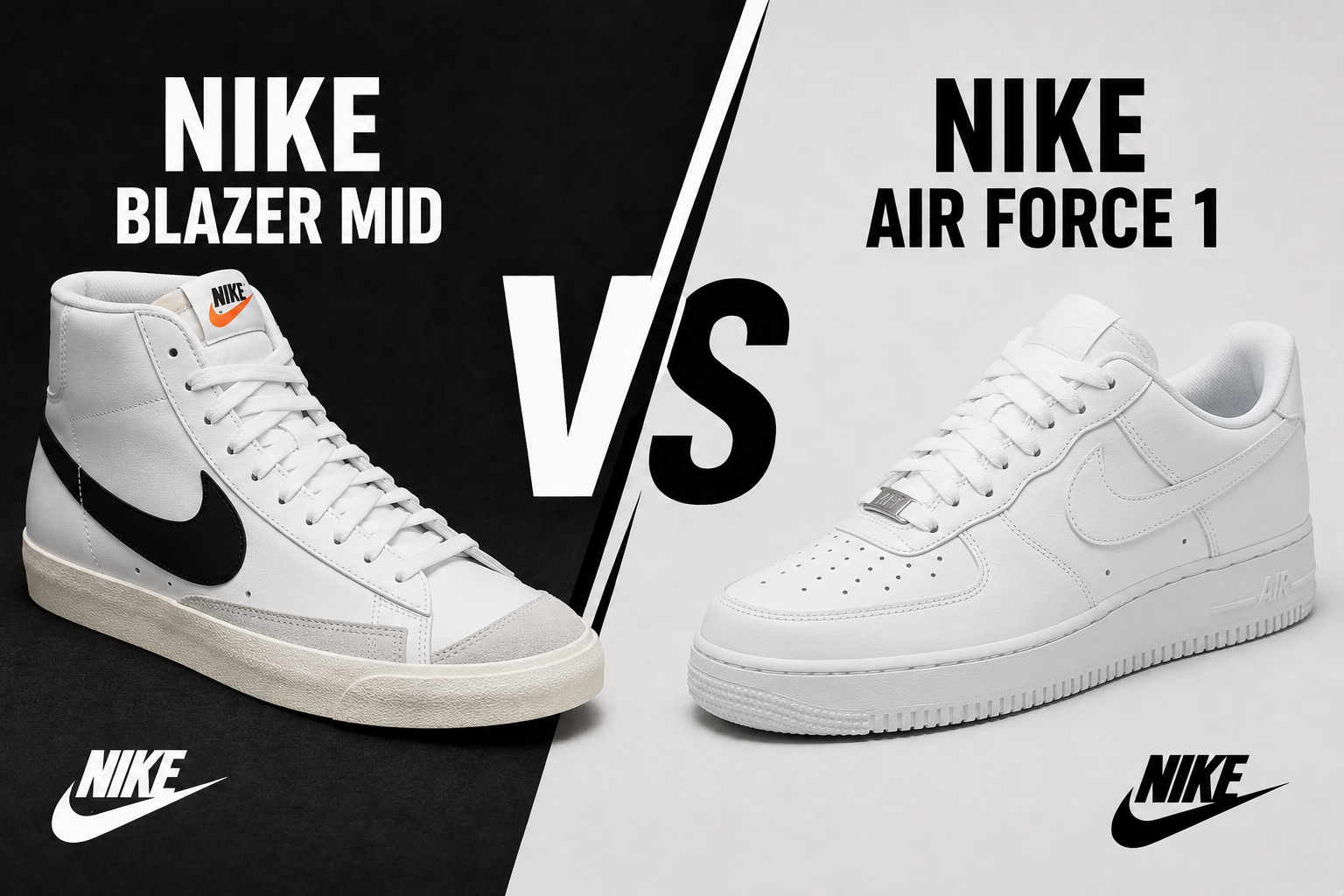
Few matchups define “classic Nike” quite like the Blazer Mid and the Air Force 1. Both are vintage basketball shoes turned everyday staples, both lean on plain leather uppers and a big, visible Swoosh, and both show up constantly in “timeless sneaker” roundups next to each other.
But they come from different eras of Nike’s design history and they wear very differently on foot: the Blazer Mid is a 1970s-rooted, vulcanized-sole shoe with a raw, exposed-foam tongue and a slightly retro, skate-adjacent look, while the Air Force 1 is a 1982 basketball shoe built around Nike Air cushioning, with a chunkier, more structured silhouette that has become arguably the single most recognizable sneaker on the planet.
If you’re deciding between them, the short version is this: the Blazer Mid is the lighter, more flexible, more vintage-feeling shoe with a slimmer profile and a lower price tag, ideal for buyers who want a retro basketball look without a lot of bulk.
The Air Force 1 is the chunkier, more cushioned, more durable shoe with genuine Nike Air comfort technology, ideal for buyers who want maximum all-day support and the most universally recognized silhouette in sneaker culture.

Neither is a wrong choice — they simply solve different problems, and this guide breaks down exactly which one solves yours.
Which sneaker is better overall? It depends on priorities: the Air Force 1 wins on cushioning, durability, and universal styling; the Blazer Mid wins on lightweight comfort, flexibility, and vintage-specific aesthetics.
Which offers better comfort? The Air Force 1, thanks to its Nike Air-Sole heel cushioning and thicker midsole, it’s the more forgiving shoe for long days on hard surfaces. The Blazer Mid feels lighter and more flexible but offers less underfoot cushioning.
Which is better for everyday wear? Both are excellent daily sneakers. The Air Force 1 edges ahead for pure durability and all-day support; the Blazer Mid edges ahead for buyers who want a lighter shoe that doesn’t feel bulky.
Which gives better value? The Blazer Mid, since general-release colorways typically retail $10–$20 lower than the Air Force 1 ’07 and are frequently discounted.
Who should buy each shoe? Buy the Blazer Mid if you want a lighter, vintage-basketball aesthetic, a lower price point, and a shoe that flexes naturally with your stride. Buy the Air Force 1 if you want maximum cushioning, a more durable long-term shoe, and the most iconic, versatile silhouette in Nike’s catalog.
At a Glance: Nike Blazer Mid vs Air Force 1
| Spec | Nike Blazer Mid ’77 | Nike Air Force 1 ’07 |
|---|---|---|
| Brand | Nike | Nike |
| Original Release | 1973 | 1982 |
| Modern Retro Era | Reissued as “Mid ’77” since the late 2010s | Continuously in production since 1982 (“’07” refers to the 2007 25th-anniversary update) |
| Retail Price | ~$100–$110 (standard colorways) | ~$115–$130 (standard colorways); premium/LV8 editions run higher |
| Weight (per shoe, size 9–10) | ~11–12 oz | ~13–14 oz |
| Upper Material | Leather with suede overlays, exposed foam tongue | Full-grain leather, some textile/mesh variants |
| Midsole | Vulcanized rubber sole, no Air unit | Foam midsole with visible/encapsulated Nike Air-Sole unit |
| Outsole | Herringbone rubber outsole, flexible | Thick rubber cupsole, less flexible |
| Heel Drop | Roughly 6–8mm (flatter, court-shoe feel) | Roughly 10–12mm (chunkier stack height) |
| Cushioning | Minimal, flexible, closer-to-ground feel | Substantial, cushioned, more shock-absorbing |
| Support | High-top collar aids ankle stability | Padded low-top collar, wide platform aids lateral stability |
| Breathability | Good; leather with some perforation | Moderate; solid leather with minimal ventilation |
| Durability | Very good; simple vulcanized construction | Excellent; among the most durable Nike lifestyle shoes made |
| Best For | Lightweight vintage-basketball style, flexible daily wear | Maximum comfort, all-day support, universal styling |
| Overall Rating | 4.5/5 | 4.7/5 |
Note: prices, weights, and materials vary by specific colorway and retailer — treat these as representative ranges for standard general-release pairs.
Read also: Nike Air Force 1 vs Adidas Superstar: The Complete Comparison Guide
Product Overview: Nike Blazer Mid
Brand History and Design Philosophy
The Blazer debuted in 1973 as one of Nike’s first basketball shoes, worn most famously by NBA legend George “Iceman” Gervin. It was built to compete with Converse and Adidas basketball shoes of the era, using a simple vulcanized rubber sole and a straightforward leather upper.
The Blazer never became a major performance shoe in basketball — it was eclipsed by later technologies — but it found a second life first in skate culture in the 2000s and then, more recently, as a retro-casual lifestyle staple, especially after Nike reissued it as the “Blazer Mid ’77,” referencing its original release year.
Construction, Materials, and Technology
The Blazer Mid’s upper is typically leather with suede overlays on the toe and heel, paired with a signature exposed-foam tongue that gives it a slightly raw, unfinished look distinct from most modern sneakers.
The sole is vulcanized rubber rather than a separate glued-on midsole-and-outsole assembly, which keeps the shoe lightweight and flexible but limits how much cushioning it can offer compared to a foam-midsole shoe like the Air Force 1.
There is no Nike Air unit in the standard Blazer Mid — cushioning comes from a thin foam insole and the natural give of the vulcanized sole.
Comfort, Weight, and Fit
The Blazer Mid is noticeably lighter than the Air Force 1 and flexes more naturally underfoot, which some wearers prefer for all-day mobility. Its high-top collar gives moderate ankle support without much bulk.
Because the sole is thinner and less cushioned, the Blazer Mid can feel firmer on hard pavement over long distances compared to the Air Force 1’s more padded ride.
Typical Retail Price and Popular Use Cases
Standard Blazer Mid ’77 colorways retail between roughly $100 and $110, with premium leather or vintage-finish editions pushing slightly higher.
It’s most popular as a retro-casual daily sneaker, especially favored for its slimmer profile compared to bulkier basketball-inspired shoes, and pairs particularly well with cropped or tapered pants that show off its ankle silhouette.
Product Overview: Air Force 1
Brand History and Design Philosophy
The Air Force 1 launched in 1982 as the first basketball shoe to feature Nike Air cushioning technology, developed by designer Bruce Kilgore.
It was worn by a roster of NBA players nicknamed the “Original Six” and quickly became a status symbol both on and off the court. Unlike most retro sneakers, the Air Force 1 has never gone out of production — it’s been continuously manufactured since its debut, making it one of the longest-running sneaker silhouettes in history.
The “’07” designation refers to the 25th-anniversary update in 2007, which slightly modernized the construction while keeping the design essentially unchanged, and remains the standard version sold today.
Construction, Materials, and Technology
The Air Force 1’s upper is typically full-grain leather, prized for its structure and durability, with some colorways using textile or mesh panels for added breathability. Its defining technical feature is the Nike Air-Sole unit encapsulated in the midsole, providing genuine cushioning rather than a purely cosmetic bump — a functional carryover from its original basketball design.
The outsole is a thick rubber cupsole with a pivot circle at the forefoot, originally intended to aid basketball footwork, which today mostly adds to the shoe’s chunky, easily recognizable stance.
Comfort, Weight, and Fit
The Air Force 1 is heavier than the Blazer Mid due to its thicker midsole and more substantial leather upper, but that extra weight comes with a real comfort payoff: the Air-Sole cushioning noticeably softens heel-strike impact, making it one of the more comfortable Nike lifestyle sneakers for long periods of standing or walking. Its stiffer, less flexible sole trades some natural stride feel for structure and support.
Typical Retail Price and Popular Use Cases
Standard Air Force 1 ’07 colorways retail between roughly $115 and $130, with premium, LV8, or waterproof Gore-Tex editions priced higher. It’s the most universally worn sneaker in Nike’s catalog, equally common in streetwear, hip-hop culture, business-casual offices, and school hallways, and remains one of the best-selling sneakers in the world year after year.
Head-to-Head Comparison
Design
The Blazer Mid reads as vintage-athletic: a slimmer, more tapered silhouette, a soft exposed-foam tongue, and simple color-blocking that usually keeps the toe and heel in a contrasting suede tone against a leather base.
The Air Force 1 reads as bold and utilitarian: a thicker, boxier shape, a flat rubber outsole with a visible pivot circle, and a more uniform monochrome look in its most iconic colorways (all-white or all-black).
If you want a shoe that looks lighter and more “vintage sport,” the Blazer Mid wins; if you want a shoe with maximum presence and instant recognizability, the Air Force 1 wins.
Build Quality and Materials
Both use genuine leather on standard releases, and both are well-constructed for their price points. The Air Force 1’s leather tends to be slightly thicker and more structured, contributing to its reputation for holding shape and resisting creasing better over time than most sneakers in this category.
The Blazer Mid’s construction is simpler (vulcanized sole vs. cupsole-and-Air-unit), which keeps weight down but offers a bit less structural reinforcement than the Air Force 1’s build.
Comfort and Cushioning
This is the most decisive category between the two. The Air Force 1’s Nike Air-Sole cushioning provides a genuinely softer, more shock-absorbing ride, especially noticeable on hard flooring or pavement over extended periods.
The Blazer Mid’s thinner, flatter sole gives a closer-to-ground feel that some wearers prefer for its natural flexibility, but it offers noticeably less cushioning for long stretches of standing or walking. If underfoot comfort over many hours is your top priority, the Air Force 1 has a clear advantage.
Sizing and Fit
Both generally run true to size. The Blazer Mid tends to fit slightly narrower and more snugly through the midfoot, in keeping with its slimmer profile, while the Air Force 1 offers a bit more room throughout, particularly in the toe box, which some wide-footed buyers find more accommodating.
Toe Box
The Air Force 1’s toe box is boxier and roomier, a byproduct of its chunkier overall silhouette. The Blazer Mid’s toe box is more tapered, contributing to its sleeker look but offering less space for wider feet.
Arch Support and Heel Lockdown
Neither shoe includes dedicated arch support — both use flat, general-purpose insoles, so buyers with specific arch needs should plan on an aftermarket insole regardless of which model they choose.
Heel lockdown is comparable between the two, though the Air Force 1’s slightly padded collar and structured heel counter give it a marginal edge in keeping the foot secure during walking.
Breathability
Both are primarily leather sneakers with limited ventilation. The Blazer Mid’s exposed-foam tongue and slightly thinner overall construction give it a marginal breathability edge in warm weather; the Air Force 1’s thicker leather retains more heat, though some colorways add mesh panels to offset this.
Flexibility
The Blazer Mid is significantly more flexible thanks to its vulcanized sole, which bends naturally with the foot’s rolling motion during a normal walking stride. The Air Force 1’s thicker cupsole is stiffer and takes longer to break in, trading flexibility for structure and support.
Traction and Grip
Both use rubber outsoles with herringbone-inspired traction patterns suited to indoor and dry outdoor surfaces. Neither is designed for wet-weather or off-road traction, and both can be slick on smooth, wet flooring.
Weight
The Blazer Mid is meaningfully lighter than the Air Force 1, a direct result of its simpler, thinner sole construction. This makes it the more natural choice for buyers who find bulkier basketball-style sneakers fatiguing over a long day.
Shock Absorption, Responsiveness, and Energy Return
The Air Force 1’s Nike Air-Sole unit provides genuine, noticeable shock absorption — a real functional advantage over the Blazer Mid, which relies on basic foam and rubber without any air cushioning technology. For buyers who spend hours on their feet on hard surfaces, this is one of the more meaningful practical differences between the two shoes.
Stability
The Air Force 1’s wider, flatter platform and thicker sole give it a strong sense of ground stability, particularly useful for standing for long periods. The Blazer Mid, with its narrower base and thinner sole, feels nimbler underfoot but offers somewhat less stability on uneven ground.
Walking Comfort and Standing All Day
For all-day standing (retail work, event staffing, long museum or airport days), the Air Force 1’s cushioning gives it a clear edge. The Blazer Mid is still a comfortable option for shorter walks and typical daily errands, but its firmer sole becomes more noticeable over many consecutive hours.
Running and Gym Performance
Neither shoe is appropriate for running or structured training — both lack the flex grooves, breathability, and impact protection of dedicated athletic footwear. Treat both as lifestyle sneakers that reference basketball heritage rather than shoes built for actual sport today.
Travel, Daily Wear, and Streetwear Styling
Both travel well thanks to their low-maintenance leather uppers. The Blazer Mid’s lighter weight makes it marginally easier to pack; the Air Force 1’s structured shape holds up slightly better against being crushed in a suitcase.
In streetwear contexts, the Air Force 1 carries more cultural weight and instant recognizability, while the Blazer Mid leans into a slightly more niche, vintage-athletic aesthetic.
Business Casual Styling
The Air Force 1, particularly in an all-white or all-black colorway, is commonly worn in relaxed business-casual settings and reads as slightly more polished due to its cleaner, more uniform silhouette. The Blazer Mid also works well in muted colorways but leans a touch more casual due to its exposed-foam tongue detail.
Durability
The Air Force 1 is widely regarded as one of the most durable sneakers Nike makes, with thick leather and a robust cupsole that resists wear well over years of regular use.
The Blazer Mid holds up well, too, but its thinner sole and lighter construction generally show wear (particularly outsole wear and sole separation over many years) somewhat sooner than the Air Force 1’s more heavy-duty build.
Weather Performance
Neither shoe is weatherproofed by default; leather uppers on both handle light rain reasonably well with a protectant spray, but suede accents on the Blazer Mid are more vulnerable to water staining than the Air Force 1’s typically all-leather build.
Neither should be worn in snow or standing water without additional waterproofing, though the Air Force 1 does have Gore-Tex editions available for buyers who want built-in weather protection.
Ease of Cleaning and Maintenance
Both clean up well with a soft brush, mild soap, and water. The Air Force 1’s smooth, uniform leather (especially in all-white colorways) is famously easy to keep looking fresh and is one of the reasons it remains a favorite among sneaker cleaning enthusiasts. The Blazer Mid’s suede overlays require slightly more careful spot-cleaning than a pure-leather Air Force 1.
Price and Long-Term Value
The Blazer Mid offers a lower entry price on standard colorways, making it the better immediate-value pick. The Air Force 1, while slightly pricier, tends to deliver stronger long-term value thanks to its superior durability and cushioning longevity — buyers planning to wear one pair heavily for years often find the extra upfront cost worthwhile.
Real-World Performance
Long walks: The Air Force 1’s cushioned Air-Sole unit makes it a more comfortable option over several miles, while the Blazer Mid’s flatter sole is fine for shorter walks but feels more directly on hard pavement.
Airport travel: Both slip on and off easily at security. The Blazer Mid’s lighter weight is a small plus for travelers packing light; the Air Force 1’s cushioning is a plus for standing in long lines.
Theme parks: For a full day of walking and standing, the Air Force 1 is generally the better choice thanks to its superior shock absorption.
College and campus life: Both are extremely common on campus. The Blazer Mid’s slimmer profile suits buyers who prefer a lighter daily shoe; the Air Force 1 suits buyers prioritizing comfort across long days of classes.
Office work: In casual or business-casual offices, both work well in neutral colorways, with the Air Force 1’s cleaner silhouette reading as slightly more polished.
Daily commuting: Both handle stairs and public transit comfortably; the Air Force 1’s stability gives it a slight edge on uneven urban terrain.
Vacations and weekend outings: Either works well for vacation-casual outfits. The Blazer Mid’s lighter build suits warm-weather trips; the Air Force 1 suits trips involving a lot of walking.
Driving: Both have low-profile soles that don’t interfere much with pedal feel, though the Blazer Mid’s thinner sole gives slightly better pedal sensitivity for some drivers.
Shopping and long work shifts: The Air Force 1’s cushioning makes it the stronger pick for extended time on your feet.
Light exercise: Neither is designed for structured exercise; for casual activity like a short walk or errands, both are adequate, but avoid either for running or lateral movement-heavy activities.
Who Should Buy Each Shoe
Students: The Blazer Mid appeals to students wanting a lighter, vintage-leaning daily shoe; the Air Force 1 suits students who want maximum comfort across long days on campus.
Professionals: Both work in casual office settings; the Air Force 1’s cleaner, more uniform look often reads slightly more polished in business-casual environments.
Travelers: The Blazer Mid’s lighter weight is a small travel advantage; the Air Force 1’s comfort is a bigger advantage for long days of sightseeing.
Sneaker collectors: The Air Force 1 has a deeper collaboration history and broader collector culture, given its decades of continuous production and countless special editions.
Fashion lovers: The Air Force 1 offers more instant recognizability in outfit photos; the Blazer Mid offers a slightly more understated, vintage-specific aesthetic.
Gym users: Neither shoe is appropriate for structured gym training — use a dedicated training shoe and reserve either of these for after-gym casual wear.
Wide feet: The Air Force 1’s boxier toe box generally accommodates wider feet more comfortably than the Blazer Mid’s tapered shape.
Narrow feet: The Blazer Mid’s slimmer profile suits narrower feet more naturally.
Flat feet: Neither shoe offers structured arch support; buyers with flat feet should plan on an aftermarket insole for either shoe, though the Air Force 1’s thicker midsole may feel more forgiving underfoot as a base.
People with plantar fasciitis: Neither shoe is designed specifically for plantar fasciitis. If you manage this condition, consult your podiatrist and consider adding a supportive orthotic insole to either shoe before extended wear.
Budget buyers: The Blazer Mid’s lower standard retail price makes it the easier shoe to buy new without stretching your budget.
Premium buyers: The Air Force 1’s premium, LV8, and special-material editions offer more upscale options for buyers willing to spend more.
Style Guide: How to Wear Each Sneaker
Jeans: Both pairs naturally pair with straight or slim denim. The Blazer Mid’s slimmer profile suits tapered jeans especially well; the Air Force 1’s bulkier stance balances nicely with straight or slightly wider cuts.
Cargo pants: The Air Force 1’s utilitarian look complements cargo pants well; the Blazer Mid also works, particularly in muted or earth-tone colorways.
Chinos: Both suit a smart-casual chino look, especially in clean white or black colorways.
Joggers: Both pair well with joggers for an athleisure look; the Air Force 1’s chunkier sole gives a slightly more grounded, streetwear-forward silhouette.
Shorts: The Blazer Mid’s lighter build and slimmer ankle cut suit shorts particularly well in warm weather; the Air Force 1 also works but reads a touch bulkier with shorts.
Oversized clothing: The Air Force 1’s boxier shape balances oversized fits especially well. The Blazer Mid, being more tapered, can look slightly understated under heavily oversized proportions.
Minimalist outfits: The Blazer Mid, in tonal or two-color combinations, suits minimalist styling nicely thanks to its slimmer lines; an all-white Air Force 1 is also a minimalist staple in its own right.
Smart casual: The Air Force 1 in a clean white or black colorway is one of the most reliable smart-casual sneaker choices available; the Blazer Mid works similarly in muted tones.
Streetwear: The Air Force 1 carries more instant streetwear recognition given its decades of hip-hop and collaboration culture.
Summer: The Blazer Mid’s lighter construction and better airflow suit hot weather slightly better than the heavier, thicker Air Force 1.
Winter: Neither shoe is weatherproof by default; the Air Force 1’s thicker leather offers marginally better protection from cold, and Gore-Tex editions exist for buyers wanting built-in weather resistance.
Spring/Fall: Both transition well into shoulder seasons, particularly in earth-tone or muted colorways.
Date nights: The Air Force 1’s clean, polished look in white or black often reads well for smart-casual date-night outfits; the Blazer Mid works similarly with a slightly more relaxed edge.
Weekend outfits: Both are ideal weekend sneakers; pick based on comfort priorities (Air Force 1) versus lightweight vintage styling (Blazer Mid).
Travel outfits: Either pair easily with joggers or relaxed denim for a comfortable travel-day look.
Best Alternatives
- Nike Dunk Low — Best for buyers who want a flatter, wider platform than either shoe here. Strengths: excellent stability, strong colorway variety. Weaknesses: less cushioning than the Air Force 1. Price range: $110–$130.
- Air Jordan 1 Low — Best for buyers who want more basketball heritage and streetwear cachet. Strengths: Air-Sole heel cushioning, strong collaboration culture. Weaknesses: narrower fit than either Blazer or AF1. Price range: $115–$145.
- Nike Cortez — Best for buyers who want an even lighter, running-inspired retro look. Strengths: very lightweight, classic minimalist design. Weaknesses: less structured support than the Blazer or AF1. Price range: $80–$100.
- Converse Chuck Taylor All Star — Best for budget-conscious buyers wanting a classic canvas silhouette. Strengths: inexpensive, extremely lightweight. Weaknesses: minimal cushioning or arch support. Price range: $55–$70.
- Adidas Stan Smith — Best for buyers who want a slim, minimalist alternative to the Blazer Mid. Strengths: lightweight, clean design, breathable. Weaknesses: less cushioned than the Air Force 1. Price range: $85–$100.
- Reebok Club C 85 — Best for buyers who want a low-profile, court-inspired alternative to the Air Force 1. Strengths: soft leather, lightweight comfort. Weaknesses: less durable long-term than the AF1. Price range: $75–$90.
- Nike Air Force 1 Mid — Best for buyers who like the AF1’s comfort but want extra ankle coverage. Strengths: same cushioning technology, more ankle support. Weaknesses: bulkier for warm-weather wear. Price range: $120–$140.
- Nike Blazer Low ’77 — Best for buyers who want the Blazer look with a lower-cut collar. Strengths: lighter than the Mid, easier to wear with shorts. Weaknesses: less ankle support than the Mid. Price range: $70–$100.
- New Balance 480 — Best for buyers seeking a running-inspired alternative with a retro edge. Strengths: soft cushioning, lightweight. Weaknesses: less iconic than the Blazer or AF1. Price range: $80–$100.
- Puma Suede Classic — Best for buyers wanting a lightweight, heritage-inspired alternative to the Blazer Mid. Strengths: soft suede comfort, affordable. Weaknesses: less structured than either shoe compared here. Price range: $70–$90.
Pros and Cons
Nike Blazer Mid — Pros
- Noticeably lighter than the Air Force 1
- More flexible, natural-feeling sole for daily walking
- Lower standard retail price
- Slimmer, more vintage-specific silhouette
- Good breathability thanks to thinner construction
Nike Blazer Mid — Cons
- Less underfoot cushioning than the Air Force 1
- Suede overlays require more careful maintenance than pure leather
- Less durable over very long-term heavy use than the Air Force 1
- A narrower toe box may not suit wider feet
Air Force 1 — Pros
- Genuine Nike Air-Sole cushioning provides real shock absorption
- Extremely durable leather construction
- Most universally recognized silhouette in Nike’s lineup
- Roomier toe box accommodates a wider range of foot shapes
Air Force 1 — Cons
- Heavier than the Blazer Mid
- Stiffer sole requires more break-in time
- Higher standard retail price
- Bulkier profile can look heavy with slimmer or cropped pants
Common Buyer Questions
Is the Nike Blazer Mid worth the money? Yes, particularly for buyers who want a lightweight, vintage-styled daily sneaker at a lower price point than most Nike lifestyle shoes.
Is the Air Force 1 worth the money? Yes — its combination of genuine cushioning technology and exceptional durability makes it one of the better long-term value sneakers in Nike’s catalog, despite the slightly higher price.
Does the Blazer Mid run true to size? Generally, yes, with a slightly narrower fit through the midfoot than the Air Force 1.
Does the Air Force 1 run true to size? Yes, and it tends to offer a bit more room in the toe box than the Blazer Mid.
Is either comfortable for all-day wear? Both can be, but the Air Force 1’s Air-Sole cushioning makes it the more comfortable option for extended standing or walking.
Can you run in either shoe? No — neither is designed for running or structured athletic activity.
Can you wear either shoe casually? Yes, both are designed primarily as everyday lifestyle sneakers today.
Is the Blazer Mid durable? Yes, though its thinner sole generally shows wear somewhat sooner than the Air Force 1’s heavier-duty construction under equivalent use.
Is the Air Force 1 durable? Yes — it’s widely regarded as one of the most durable sneakers Nike produces.
Does either shoe crease easily? Both will develop creases across the toe box over time, typical of leather sneakers; the Air Force 1’s thicker leather tends to resist deep creasing slightly better.
Is either shoe easy to clean? Yes, both clean up well with a soft brush and mild soap. The Air Force 1’s smooth leather (especially in white colorways) is famously easy to keep looking fresh; the Blazer Mid’s suede accents need more careful spot-cleaning.
Which lasts longer? The Air Force 1 generally holds up longer under heavy, extended use due to its thicker sole and leather construction.
Which has better cushioning? The Air Force 1, by a clear margin, thanks to its Nike Air-Sole unit.
Which is better for wide feet? The Air Force 1, thanks to its boxier, roomier toe box.
Which is better for narrow feet? The Blazer Mid, thanks to its slimmer, more tapered fit.
Do either of these run hot in summer? Both are primarily leather, so neither is especially breathable, but the Blazer Mid’s thinner construction runs slightly cooler than the heavier Air Force 1.
Which is more versatile for outfits? Both are highly versatile; the Air Force 1 has a slight edge in universal recognizability, while the Blazer Mid offers a lighter, more vintage-specific look.
Do either of these hold resale value? Standard colorways of both generally sell near retail; limited editions and collaborations of the Air Force 1 tend to command stronger resale premiums given its longer collaboration history.
Which is better for a first sneaker purchase? The Air Force 1 is often recommended as a safe, durable first purchase due to its comfort and universal styling, though the Blazer Mid is an equally reasonable, lighter-weight starting point.
Care and Maintenance
Cleaning: For leather portions of either shoe, use a soft-bristle brush with a small amount of mild soap and water, working in circular motions before wiping with a clean, damp cloth. For the Blazer Mid’s suede overlays, use a dedicated suede brush and suede cleaner rather than water.
Storage: Store both shoes upright in a cool, dry place away from direct sunlight, which can yellow white midsoles and fade leather over time. Shoe trees help maintain shape between wears, particularly useful for the Air Force 1’s structured toe box.
Avoiding creasing: Using a shoehorn when putting either sneaker on reduces stress on the toe box, and shoe trees or crease-protecting inserts can slow the formation of deep creases over time. Some crease development is unavoidable with leather sneakers.
Increasing lifespan: Rotate between multiple pairs if you wear sneakers daily, apply a leather or suede protectant spray before the first wear, and avoid wearing either shoe in heavy rain or snow without waterproofing (or opt for a Gore-Tex Air Force 1 for built-in protection).
Mistakes to avoid: Don’t machine-wash either shoe, don’t use harsh detergents or bleach on leather, and don’t store either pair in direct sunlight or a damp closet where mildew can develop.
Common Buying Mistakes
Choosing based only on appearance: Photos don’t reveal how differently these two shoes feel underfoot — the Blazer Mid is noticeably lighter and flatter than the chunkier, more cushioned Air Force 1.
Ignoring intended use: Buying either shoe expecting running or gym performance leads to disappointment; both are lifestyle sneakers first, despite their basketball origins.
Buying the wrong width: Wide-footed buyers who choose the Blazer Mid without trying it on sometimes find it too snug; narrow-footed buyers who choose the Air Force 1 sometimes find it feels slightly loose until broken in.
Ignoring cushioning preferences: Buyers who prioritize all-day comfort and shock absorption should lean toward the Air Force 1’s Nike Air cushioning; buyers who prefer a lighter, more flexible, closer-to-ground feel should lean toward the Blazer Mid.
Overpaying for hype colorways: Both models have limited-edition releases that resell above retail — general-release colorways of either shoe offer nearly identical comfort and quality for a fraction of the price of collaborations.
Final Recommendation
There’s no single winner between the Nike Blazer Mid and the Air Force 1 — it comes down to how you weigh comfort against weight, and heritage look against price.
If you want a lighter, more flexible, vintage-basketball-styled sneaker at a lower price point, the Blazer Mid is the better everyday pick, especially for buyers who find bulkier shoes fatiguing over long days.
If you want maximum cushioning, best-in-class durability, and the single most recognizable sneaker silhouette in Nike’s history, the Air Force 1 is the stronger long-term investment.
Both are excellent, well-built lifestyle sneakers with genuine basketball roots, and both will serve you well for years with basic care. If you’re still undecided, consider your daily routine: if you’re mostly walking short distances and want a lighter shoe, lean Blazer Mid; if you’re on your feet for hours at a time and want maximum comfort, lean Air Force 1.
Frequently Asked Questions
1. Is the Nike Blazer Mid the same as the Air Force 1? No. They’re both vintage Nike basketball shoes, but the Blazer Mid (1973) uses a lighter vulcanized sole with no Air cushioning, while the Air Force 1 (1982) uses a thicker cupsole with a Nike Air-Sole unit for genuine shock absorption.
2. Which is more comfortable, the Blazer Mid or the Air Force 1? The Air Force 1 is generally more comfortable for all-day wear due to its Nike Air cushioning, though the Blazer Mid feels lighter and more flexible for shorter periods.
3. Does the Air Force 1 run small? It generally runs true to size, with a slightly roomier toe box than the Blazer Mid.
4. Does the Blazer Mid run small? It generally runs true to size but fits narrower through the midfoot than the Air Force 1.
5. Which sneaker is better for wide feet? The Air Force 1, thanks to its boxier, roomier toe box.
6. Which sneaker is better for narrow feet? The Blazer Mid, due to its slimmer, more tapered fit.
7. Are the Blazer Mid and Air Force 1 good for running? No, neither is designed for running or structured exercise; both are lifestyle sneakers.
8. Which is cheaper, the Blazer Mid or the Air Force 1? The Blazer Mid is generally cheaper, typically retailing between $100 and $110, compared to $115–$130 for the standard Air Force 1 ’07.
9. Which sneaker holds up better over time? The Air Force 1 is generally considered more durable long-term, thanks to its thicker leather and more robust sole construction.
10. Can you wear either shoe in the rain? Neither is weatherproof by default; light rain is manageable with a leather protectant spray, though the Air Force 1 does offer Gore-Tex editions with built-in waterproofing.
11. Which sneaker is more popular in streetwear? The Air Force 1 carries more instant streetwear recognition given its decades-long cultural history in hip-hop and collaboration culture.
12. Is the Blazer Mid good for standing all day at work? It’s usable, but its thinner sole offers less cushioning than the Air Force 1 for very long shifts on your feet.
13. Is the Air Force 1 good for standing all day at work? Yes, its Nike Air cushioning makes it one of the better lifestyle sneakers for extended standing.
14. Which sneaker has better arch support? Neither offers dedicated arch support; buyers who need it should add an aftermarket insole to either shoe.
15. What is the difference between the Air Force 1 ’07 and other Air Force 1 versions? The ’07 designation refers to the 2007 25th-anniversary update, which is now the standard modern version; other versions like the ’01 or Mid/High use slightly different proportions, materials, or ankle heights.
16. Which sneaker is better for gym workouts? Neither — both lack the flexibility and support needed for structured training; use a dedicated training shoe instead.
17. Do the Blazer Mid and Air Force 1 crease easily? Both develop creases across the toe box over time, which is typical of leather sneakers; the Air Force 1’s thicker leather resists deep creasing slightly better.
18. Which sneaker is easier to clean? The Air Force 1’s smooth, uniform leather is generally easier to clean than the Blazer Mid’s suede overlays, which require more careful spot-cleaning.
19. Which sneaker is a better first pair for someone new to sneaker collecting? The Air Force 1 is often recommended as a durable, comfortable entry point, though the Blazer Mid is an equally reasonable, lighter-weight alternative.
20. Can I wear the Blazer Mid or Air Force 1 with shorts? Yes, both pair well with shorts; the Blazer Mid’s lighter, slimmer profile suits shorts especially well in warm weather.
Read also: