Air Jordan 1 High vs Air Jordan 1 Mid: The Complete Comparison Guide (2026)
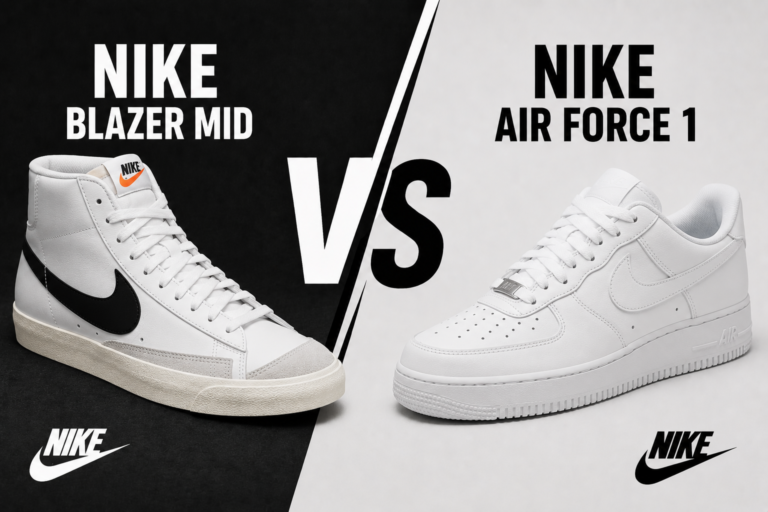
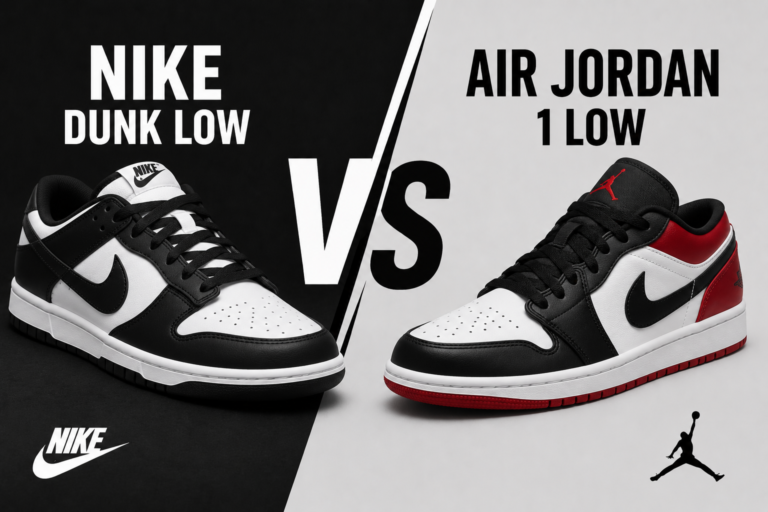
Inside the Air Jordan 1 family, no comparison comes up more often than High vs. Mid.
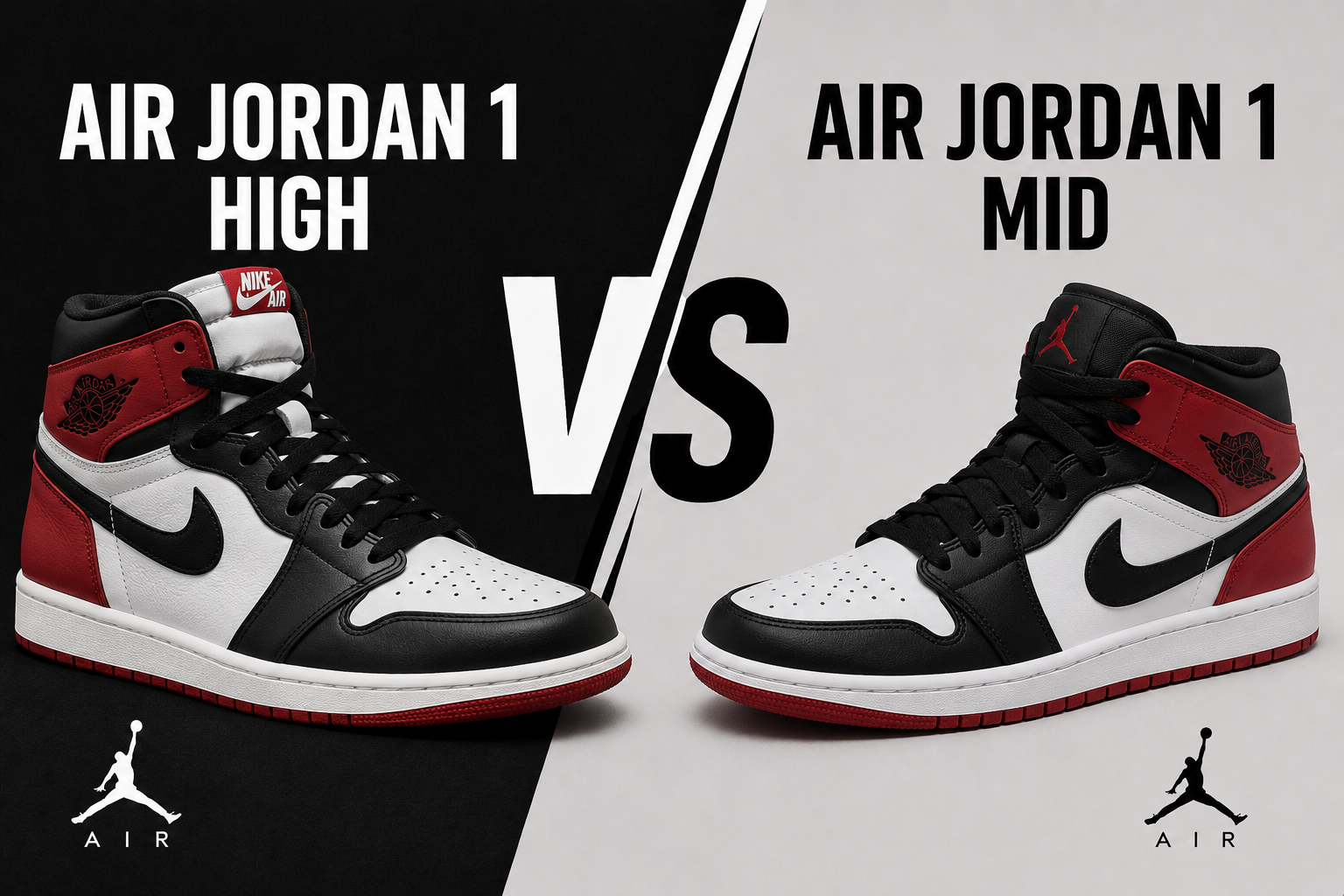
Both share the exact same design language — the same panel shapes, the same Wings logo, the same Swoosh placement — but they sit at very different points on price, collar height, and cultural weight.
The Air Jordan 1 High is the shoe Michael Jordan actually wore and the one most associated with the silhouette’s origin story; the Air Jordan 1 Mid is a more modern addition, created specifically to make the AJ1 look more accessible and affordable without changing its core DNA.
If you’re trying to choose between them, here’s the short version: the Jordan 1 High is the more authentic, more collectible, and generally more expensive option, with a taller collar that covers the ankle bone and closely mirrors the original 1985 silhouette.
The Jordan 1 Mid is the lighter, cheaper, more year-round-practical option, with a collar that sits below the ankle for easier movement and a lower barrier to entry for anyone building a Jordan collection.
Neither is objectively better — the right pick depends on your budget, how much ankle coverage you want, and whether authenticity or everyday practicality matters more to you.
Which sneaker is better overall? The High wins on authenticity, collectibility, and the classic look most people associate with the Jordan 1; the Mid wins on practicality, affordability, and everyday flexibility.
Which offers better comfort? The Mid is generally more comfortable for everyday movement, since its lower collar doesn’t restrict ankle flexion the way the High’s taller shaft can, especially before break-in.
Which is better for everyday wear? The Mid, thanks to its lighter weight, lower collar, and easier on/off, though the High is still a completely wearable daily sneaker for those who like the taller look.
Which gives better value? The Mid, by a wide margin — its lower retail price and broader year-round availability make it the more budget-friendly way to own the Jordan 1 silhouette.
Who should buy each shoe? Buy the High if you want the most authentic, collector-favored version of the silhouette and don’t mind paying a premium. Buy the Mid if you want the Jordan 1 look at a lower price with an easier day-to-day fit.
At a Glance: Air Jordan 1 High vs Air Jordan 1 Mid
| Spec | Air Jordan 1 High (Retro OG) | Air Jordan 1 Mid |
|---|---|---|
| Brand | Jordan Brand (Nike) | Jordan Brand (Nike) |
| Original Release | 1985 | Introduced in the 2000s as a modern addition (not part of the 1985 lineup) |
| Retail Price | ~$180–$200 (OG general releases); collabs up to $225+ | ~$110–$140 (standard colorways); SE editions up to ~$150 |
| Weight (per shoe, size 9–10) | ~14–15 oz | ~12–13 oz |
| Upper Material | Premium leather, often with nubuck or suede on OG colorways | Leather, synthetic leather, and textile blend |
| Midsole | Foam midsole with encapsulated Nike Air-Sole heel unit | Foam midsole with encapsulated Nike Air-Sole heel unit |
| Outsole | Rubber cupsole with pivot circle | Rubber cupsole with pivot circle |
| Collar Height | Full high-top covers the ankle bone | Mid-cut, sits just below the ankle bone |
| Cushioning | Air-Sole heel cushioning, firmer perimeter support | Same Air-Sole heel cushioning, slightly lighter overall build |
| Support | Maximum ankle coverage and lockdown | Moderate ankle coverage, more freedom of movement |
| Breathability | Moderate; thicker OG-spec leather retains heat | Moderate; often slightly more breathable due to lighter materials |
| Durability | Excellent, especially OG-spec leather | Very good; materials vary more by colorway tier |
| Best For | Collectors, authenticity, classic Jordan 1 look | Everyday wear, budget buyers, year-round comfort |
| Overall Rating | 4.7/5 | 4.5/5 |
Note: prices, weights, and materials vary by specific colorway and retailer — treat these as representative ranges for standard general-release pairs.
Read also: Nike Air Max 270 vs Adidas NMD: The Ultimate Lifestyle Sneaker Comparison
Product Overview: Air Jordan 1 High
Brand History and Design Philosophy
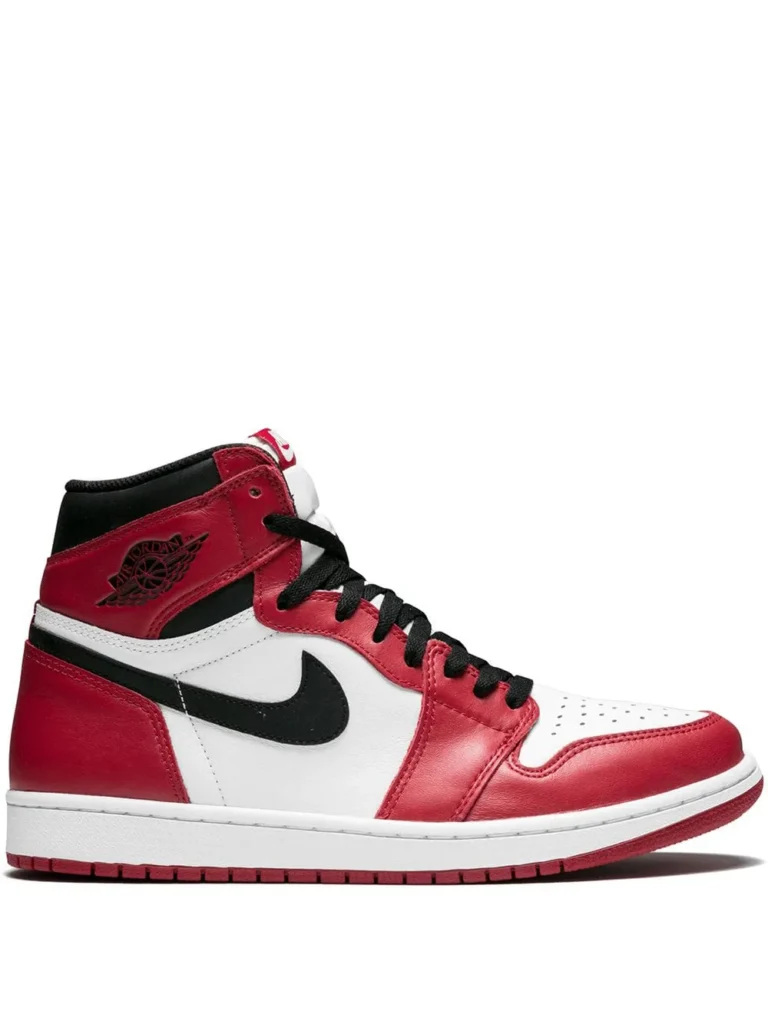
The Air Jordan 1 High is the original 1985 silhouette, designed by Peter Moore as Michael Jordan’s first signature shoe.
It’s the version Jordan actually wore on-court (in colorways later dubbed “Bred” and “Chicago”), the version the NBA famously fined Jordan for wearing due to its color-blocking violating uniform rules, and the version most closely tied to the Jordan Brand origin story.
Every retro release since has aimed to recreate — or reinterpret — this original high-top silhouette, and it remains the flagship version of the model in Jordan Brand’s lineup.
Construction, Materials, and Technology
The Air Jordan 1 High typically uses premium leather, and OG-spec releases specifically aim to replicate the original 1985 construction: thicker leather panels, accurate stitching patterns, and period-correct details like the “Nike Air” branding on the tongue rather than the modern Jumpman logo.
Cushioning comes from a Nike Air-Sole unit encapsulated in the heel of the midsole — the same basic technology used across the Jordan 1 lineup, but paired here with a taller, more structured upper that adds noticeably more weight and stiffness than the Mid or Low.
Comfort, Weight, and Fit
The High is the heaviest and most structured of the Jordan 1 family. Its tall collar restricts ankle flexion more than the Mid, particularly before the leather softens with wear, which some buyers find less comfortable for walking-heavy days but appreciate for the extra ankle lockdown it provides.
Sizing is true to size for most buyers, though OG-spec releases with thicker leather can feel snug initially and benefit from a short break-in period.
Typical Retail Price and Popular Use Cases
Standard Air Jordan 1 High OG colorways retail between roughly $180 and $200, with collaborations and special editions running higher, sometimes above $225.
It’s most popular among collectors, basketball heritage enthusiasts, and streetwear buyers who want the most authentic, recognizable version of the silhouette, and it remains the version most frequently referenced in sneaker culture and resale markets.
Product Overview: Air Jordan 1 Mid
Brand History and Design Philosophy
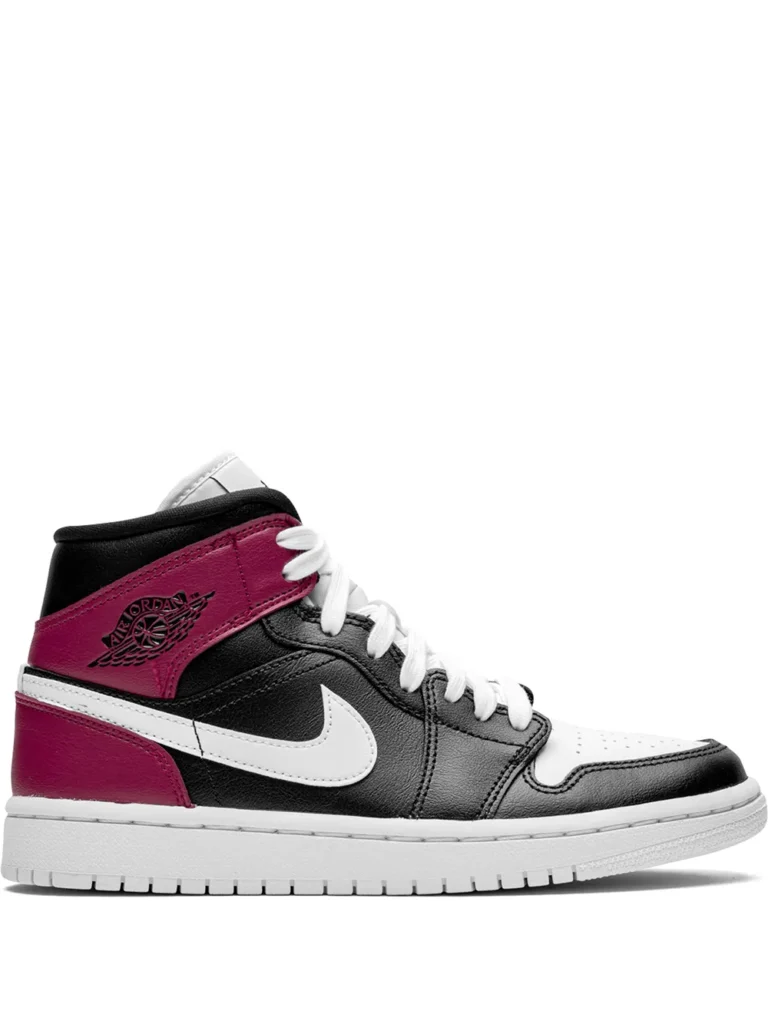
Unlike the High, the Air Jordan 1 Mid wasn’t part of the original 1985 lineup — it was introduced by Jordan Brand years later as a way to offer the Jordan 1 silhouette at a lower price point with a more versatile, everyday-friendly cut.
Despite not being part of the original release, the Mid has become one of the best-selling Jordan 1 variants precisely because of its accessibility: it’s more widely available, restocked more frequently, and priced meaningfully lower than the High.
Construction, Materials, and Technology
The Air Jordan 1 Mid uses a blend of leather, synthetic leather, and textile materials, varying more by specific colorway than the High’s more consistently premium-leather construction.
Like the High, it includes a Nike Air-Sole unit in the heel for genuine cushioning, along with the same rubber cupsole and pivot-circle outsole.
The primary structural difference is the collar height — the Mid’s shaft sits below the ankle bone, reducing both weight and material cost compared to the High’s taller build.
Comfort, Weight, and Fit
The Mid is noticeably lighter than the High and offers more freedom of ankle movement thanks to its lower collar, making it a more comfortable option for buyers who plan to walk extensively or want a less restrictive fit. It runs true to size, similarly to the High, though the lighter overall construction means less break-in time is typically needed before the shoe feels fully broken in.
Typical Retail Price and Popular Use Cases
Standard Air Jordan 1 Mid colorways retail between roughly $110 and $140, with special-edition (SE) releases running slightly higher, up to about $150. It’s the most practical, budget-conscious entry point into Jordan Brand’s flagship silhouette, and it’s popular with students, casual wearers, and anyone who wants the Jordan 1 look without the High’s price tag or bulk.
Head-to-Head Comparison
Design
Visually, the High and Mid share nearly identical panel shapes, Swoosh placement, and heel branding — the primary visual difference is collar height. The High’s shaft extends well above the ankle bone, giving it a bolder, more substantial silhouette that many consider the “true” Jordan 1 look.
The Mid’s shorter collar creates a more streamlined, versatile profile that some buyers find easier to style with a wider range of pant lengths. Materials quality also tends to skew higher on the High, particularly in OG-spec releases, giving it a slightly more premium look and feel overall.
Build Quality and Materials
The High generally uses thicker, higher-grade leather, especially in OG-spec releases that aim to replicate the original 1985 construction.
The Mid’s materials vary more by colorway — some use full leather comparable to the High, while others lean on synthetic leather or textile blends to keep costs down.
Buyers who prioritize premium materials should expect to pay for it on the High; buyers comparing similarly priced Mid SE releases to standard Mids will notice a real difference in material quality between tiers.
Comfort and Cushioning
Both use the same core cushioning technology — a Nike Air-Sole unit in the heel — so underfoot comfort is broadly similar between the two.
The meaningful difference is in the collar: the High’s taller shaft can restrict natural ankle movement, particularly before it breaks in, while the Mid’s lower cut allows for a more natural range of motion.
For pure all-day walking comfort, the Mid generally has a slight edge; for ankle support and lockdown, the High wins.
Sizing and Fit
Both fit true to size for most buyers. The High’s taller collar and thicker leather can feel snugger and require more break-in time initially, while the Mid tends to feel comfortable closer to first wear due to its lighter construction and lower collar.
Toe Box
Toe box shape and volume are essentially identical between the two, since both share the same core last — the primary fit difference between the High and Mid comes from the collar height, not the forefoot.
Arch Support and Heel Lockdown
Neither shoe includes dedicated arch support, so buyers with specific arch needs should plan on an aftermarket insole for either model. Heel lockdown clearly favors the High, whose taller collar wraps further around the ankle and heel, providing noticeably more stability than the Mid’s shorter shaft.
Breathability
Both are primarily leather sneakers with limited airflow, though the High’s typically thicker OG-spec leather retains slightly more heat than the Mid’s often lighter, more varied material mix. Neither model is a strong choice for very hot climates without seeking out more breathable, perforated colorways.
Flexibility
The Mid is generally more flexible thanks to its lower collar, which doesn’t constrain the ankle during a normal walking stride. The High’s taller shaft restricts some natural flex at the ankle, particularly noticeable during the first several wears before the leather softens.
Traction and Grip
Both use the same rubber cupsole with a pivot circle, so traction performance is essentially identical between the two models on dry, indoor, and typical outdoor surfaces. Neither is designed for wet-weather or off-road traction.
Weight
The High is noticeably heavier than the Mid due to its taller, more material-intensive upper. This is one of the most immediately noticeable differences when trying the two side by side — the Mid feels distinctly lighter and less bulky on foot.
Shock Absorption, Responsiveness, and Energy Return
Since both share the same Nike Air-Sole heel cushioning, shock absorption is comparable between the two. Any perceived difference in “cushioned feel” tends to come more from the extra weight and structure of the High rather than a difference in the underlying cushioning technology itself.
Stability
The High offers superior stability thanks to its taller collar, which locks the ankle in place more effectively — a genuine functional advantage for buyers who value extra ankle support. The Mid trades some of that stability for a lighter, more freely moving fit.
Walking Comfort and Standing All Day
For long days of walking, the Mid is generally the more comfortable option due to its lighter weight and unrestricted ankle movement. The High can still be worn comfortably for extended periods, but its added weight and taller collar make it feel more substantial — a trade-off some buyers accept for the extra support and classic look.
Running and Gym Performance
Neither shoe is designed for running or serious gym training — both lack the flexibility, breathability, and impact protection of dedicated athletic footwear. Despite the basketball heritage of the silhouette, treat both as lifestyle sneakers rather than performance shoes for structured activity today.
Travel, Daily Wear, and Streetwear Styling
The Mid’s lighter weight and lower collar make it marginally easier to pack and wear through a full day of travel. The High carries more cultural weight in streetwear contexts, given its status as the “original” Jordan 1 silhouette, and is frequently the version referenced in Jordan Brand marketing, collaborations, and collector culture.
Business Casual Styling
Both can work in relaxed business-casual settings in muted, neutral colorways, though the High’s taller collar makes it slightly less practical to wear with dress trousers, since the shaft can be visible above certain pant breaks. The Mid’s lower cut integrates a bit more easily into smart-casual outfits.
Durability
Both hold up well with normal use. The High’s typically thicker leather (especially in OG-spec releases) gives it a slight durability edge over long-term ownership, though the Mid is still a durable shoe within its price tier, particularly in full-leather colorways.
Weather Performance
Neither model is weatherproofed by default. Leather versions of both handle light rain reasonably well with a protectant spray, though neither should be worn in heavy rain or snow without additional waterproofing.
Ease of Cleaning and Maintenance
Both clean up similarly with a soft brush, mild soap, and water. The High’s thicker OG-spec leather is often slightly easier to spot-clean and maintain its shape than the Mid’s more varied, occasionally synthetic materials, which can show wear differently depending on the specific colorway.
Price and Long-Term Value
The Mid is the clear value pick, offering the Jordan 1 look and comparable cushioning technology at roughly half to two-thirds the price of the High. The High offers stronger long-term resale potential on desirable OG colorways, but for buyers simply wanting to own and wear the silhouette without chasing collector value, the Mid delivers significantly more value per dollar.
Real-World Performance
Long walks: The Mid is generally more comfortable over long distances thanks to its lighter weight and unrestricted ankle movement; the High’s added weight and taller collar make it feel more substantial over many miles.
Airport travel: The Mid’s lighter build and easier on/off make it a slightly more convenient travel shoe; the High’s taller collar can take a touch longer to lace and unlace at security checkpoints.
Theme parks: For a full day of walking, the Mid generally holds a comfort edge due to its lighter weight, though the High’s extra ankle support may appeal to buyers concerned about stability on uneven terrain.
College and campus life: Both are common on campus. The Mid appeals to budget-conscious students; the High appeals to those building a Jordan collection or prioritizing the classic look.
Office work: In casual or business-casual offices, the Mid’s lower collar integrates a bit more easily with a wider range of pant styles.
Daily commuting: Both handle stairs and public transit well; the Mid’s lighter weight makes it marginally more comfortable for daily wear.
Vacations and weekend outings: Either works for vacation-casual outfits; the Mid suits warm-weather trips especially well, given its lighter build.
Driving: Both have low-profile enough soles that don’t interfere significantly with pedal feel, though the High’s taller collar can feel slightly bulkier around the ankle while driving.
Shopping and long work shifts: The Mid’s lighter weight makes it the more comfortable choice for extended time on your feet.
Light exercise: Neither shoe is designed for structured exercise; for casual activity like a short walk or errands, both are adequate, but avoid either for running or lateral-movement-heavy activities.
Who Should Buy Each Shoe
Students: The Mid is the more budget-friendly choice for students wanting the Jordan 1 look without the High’s price tag.
Professionals: The Mid integrates more easily into business-casual outfits due to its lower collar; the High works too, particularly in monochrome colorways.
Travelers: The Mid’s lighter weight makes it a more practical travel shoe for extended walking.
Sneaker collectors: The High is the clear choice for collectors, given its status as the original, most authentic version of the silhouette and its stronger presence in Jordan Brand’s collaboration and OG-release history.
Fashion lovers: The High carries more cultural weight and instant recognizability as “the” Jordan 1; the Mid offers a more versatile, easier-to-style everyday alternative.
Gym users: Neither shoe is appropriate for structured gym training — use a dedicated training shoe and reserve either of these for after-gym casual wear.
Wide feet: Both share the same core last, so fit for wide feet is comparable between the two; buyers with wider feet may want to size up half a size in either model.
Narrow feet: Both fit similarly through the forefoot; the primary fit variable between them is collar height and ankle room, not width.
Flat feet: Neither shoe offers structured arch support; buyers with flat feet should plan on an aftermarket insole for either model.
People with plantar fasciitis: Neither shoe is designed specifically for plantar fasciitis. If you manage this condition, consult your podiatrist and consider adding a supportive orthotic insole to either shoe before extended wear.
Budget buyers: The Mid is the clear recommendation, offering the Jordan 1 silhouette at a significantly lower price point.
Premium buyers: The High, particularly OG-spec and collaboration releases, offer the more premium materials and collector cachet that buyers seeking a higher-end purchase are looking for.
Style Guide: How to Wear Each Sneaker
Jeans: Both pairs well with straight or slightly tapered denim. The High’s taller collar looks best with jeans that break just above or at the ankle, showing off the silhouette; the Mid works with a broader range of jean lengths.
Cargo pants: Both suit cargo pants well, particularly in muted or earth-tone colorways; the High’s bulkier stance leans slightly more into a rugged streetwear look.
Chinos: The Mid’s lower collar integrates more naturally with a smart-casual chino look; the High also works but reads slightly bolder.
Joggers: Both pairs naturally pair with joggers for an athleisure look; the High’s taller shaft creates a more dramatic silhouette against tapered jogger cuffs.
Shorts: The Mid is generally the better choice with shorts, since the High’s tall collar can look visually heavy against bare ankles.
Oversized clothing: The High’s chunkier, taller silhouette balances oversized fits particularly well; the Mid also works but reads a bit more understated by comparison.
Minimalist outfits: The Mid, in a clean two-tone or monochrome colorway, suits minimalist styling nicely; an all-white or all-black High can also work well for buyers wanting the taller silhouette in a more restrained palette.
Smart casual: The Mid integrates more easily into smart-casual outfits due to its lower collar; the High works best in muted, neutral colorways for this context.
Streetwear: The High carries the strongest streetwear credibility as the original, most collected version of the silhouette.
Summer: The Mid’s lighter construction and lower collar suit warm weather better than the heavier, taller High.
Winter: The High’s taller collar offers slightly more ankle coverage and warmth in cold weather, though neither shoe is weatherproof by default.
Spring/Fall: Both transition well into shoulder seasons, particularly in earth-tone or muted colorways.
Date nights: The Mid’s cleaner, lower-profile look often reads well for smart-casual date-night outfits; the High makes a bolder style statement for those wanting to lean into the classic silhouette.
Weekend outfits: Both are excellent weekend sneakers; pick based on comfort priorities (Mid) versus classic silhouette and collectibility (High).
Travel outfits: The Mid’s lighter weight makes it the more practical travel-day choice, particularly for trips involving a lot of walking.
Best Alternatives
- Air Jordan 1 Low — Best for buyers who want the lowest-profile version of the silhouette. Strengths: lightest of the three, most versatile with shorts. Weaknesses: least ankle support. Price range: $115–$145.
- Nike Dunk High — Best for buyers who want a similarly tall, retro-basketball silhouette outside the Jordan line. Strengths: wider, flatter platform. Weaknesses: no Air-Sole cushioning. Price range: $115–$135.
- Nike Blazer Mid — Best for buyers who want a lighter, more vintage-styled mid-top alternative. Strengths: lighter weight, lower price. Weaknesses: less structured ankle support than the Jordan 1 High. Price range: $100–$110.
- Air Jordan 1 Element — Best for buyers who want Jordan 1 styling with added weather protection. Strengths: GORE-TEX construction, trail-ready outsole. Weaknesses: bulkier and pricier than the standard Mid. Price range: $150–$180.
- Nike Air Force 1 Mid — Best for buyers who want Air cushioning in a mid-top silhouette outside the Jordan line. Strengths: durable, roomy toe box. Weaknesses: bulkier, less streamlined than the Jordan 1. Price range: $120–$140.
- Air Jordan 3 Retro — Best for buyers who want a step up in premium materials and design detail within the Jordan line. Strengths: distinctive elephant-print detailing, strong collector demand. Weaknesses: significantly higher price. Price range: $200–$220.
- Converse Chuck 70 Hi — Best for budget buyers wanting a classic high-top canvas alternative. Strengths: inexpensive, lightweight. Weaknesses: minimal cushioning or support. Price range: $85–$100.
- Air Jordan 1 High ’85 — Best for buyers wanting the most period-accurate reproduction of the original 1985 shoe. Strengths: authentic vintage proportions and details. Weaknesses: the highest price point in the Jordan 1 family. Price range: $200–$225.
- New Balance 550 — Best for buyers who want a retro-basketball look with strong cushioned comfort outside the Jordan line. Strengths: soft cushioning, wide-foot friendly. Weaknesses: less brand cachet than the Jordan 1. Price range: $110–$130.
- Air Jordan 1 Mid SE — Best for buyers who want upgraded materials on the Mid without the full price of the High. Strengths: premium touches at a mid-tier price. Weaknesses: still not as authentic as OG-spec High releases. Price range: $130–$150.
Pros and Cons
Air Jordan 1 High — Pros
- Most authentic, collector-favored version of the silhouette
- Taller collar provides superior ankle lockdown and stability
- Typically uses thicker, higher-grade leather
- Strongest resale and collaboration culture within the Jordan 1 line
Air Jordan 1 High — Cons
- Heaviest and bulkiest of the Jordan 1 family
- Significantly more expensive than the Mid
- A taller collar can restrict ankle movement, especially before break-in
- Less practical for warm-weather or shorts-focused outfits
Air Jordan 1 Mid — Pros
- Noticeably lighter and more flexible than the High
- Meaningfully lower retail price
- Easier to style with shorts and a wider range of pant lengths
- Broadly available year-round, easier to buy at retail
Air Jordan 1 Mid — Cons
- Less ankle support and lockdown than the High
- Material quality varies more by specific colorway
- Carries less collector cachet than the High
- Considered by some enthusiasts a less “authentic” version of the silhouette
Common Buyer Questions
Is the Air Jordan 1 High worth the money? Yes, particularly for buyers who value authenticity, ankle support, and the classic silhouette Michael Jordan actually wore — though the premium over the Mid is real and worth weighing against your budget.
Is the Air Jordan 1 Mid worth the money? Yes — it offers the same core Air-Sole cushioning and nearly identical looks to the High at a meaningfully lower price, making it a strong value pick for most everyday buyers.
Does the Jordan 1 High run true to size? Generally, yes, though OG-spec leather can feel snug initially and benefit from a short break-in period.
Does the Jordan 1 Mid run true to size? Yes, and it tends to feel comfortable sooner than the High due to its lighter construction.
Is either comfortable for all-day wear? Both can be, but the Mid is generally more comfortable for extended walking due to its lighter weight and lower, less restrictive collar.
Can you run in either shoe? No — neither is designed for running or structured athletic activity.
Can you wear either shoe casually? Yes, both are widely worn as everyday lifestyle sneakers today, despite their basketball origins.
Is the High durable? Yes, particularly OG-spec releases with thicker leather, which tend to hold up exceptionally well over time.
Is the Mid durable? Yes, though durability varies more by specific colorway and materials tier than with the High.
Does either shoe crease easily? Both develop creases across the toe box over time, typical of leather sneakers; this isn’t a sign of defect.
Is either shoe easy to clean? Yes, both clean up well with a soft brush and mild soap; the High’s typically thicker leather is often slightly easier to maintain than the Mid’s more varied material mix.
Which lasts longer? The High generally has a slight durability edge thanks to its typically thicker, higher-grade leather, though a well-made Mid in full leather can last comparably long.
Which has better cushioning? Cushioning technology is essentially identical between the two — both use the same Nike Air-Sole heel unit.
Which is better for ankle support? The High, by a clear margin, thanks to its taller collar.
Which is better for warm weather? The Mid, thanks to its lighter construction and lower collar.
Do either of these run hot in summer? Both are primarily leather, so neither is especially breathable, but the High’s taller, thicker build runs warmer than the Mid.
Which is more versatile for outfits? The Mid is generally more versatile thanks to its lower collar, which works with a wider range of pant lengths and shorts; the High makes a bolder style statement.
Do either of these hold resale value? The High holds significantly stronger resale value, particularly on OG and collaboration colorways; the Mid generally sells close to retail on standard releases.
Which is better for a first Jordan purchase? The Mid is often recommended as an accessible, lower-cost entry point into the Jordan 1 silhouette, while the High appeals more to buyers ready to invest in the most authentic version from the start.
Care and Maintenance
Cleaning: For leather portions of either shoe, use a soft-bristle brush with a small amount of mild soap and water, working in circular motions before wiping with a clean, damp cloth. For suede or nubuck accents found on some High OG colorways, use a dedicated suede brush and cleaner rather than water.
Storage: Store both shoes upright in a cool, dry place away from direct sunlight, which can yellow white midsoles and fade leather over time. Shoe trees help maintain shape between wears, particularly useful for preserving the High’s taller collar structure.
Avoiding creasing: Using a shoehorn when putting either sneaker on reduces stress on the toe box, and shoe trees or crease-protecting inserts can slow the formation of deep creases over time. Some crease development is unavoidable with leather sneakers.
Increasing lifespan: Rotate between multiple pairs if you wear sneakers daily, apply a leather or suede protectant spray before the first wear, and avoid wearing either shoe in heavy rain or snow without additional waterproofing.
Mistakes to avoid: Don’t machine-wash either shoe, don’t use harsh detergents or bleach on leather, and don’t store either pair in direct sunlight or a damp closet where mildew can develop.
Common Buying Mistakes
Choosing based only on appearance: Photos rarely convey how differently the High and Mid feel on foot — the High is noticeably heavier and more restrictive at the ankle than it appears in pictures.
Ignoring intended use: Buying either shoe expecting running or gym performance leads to disappointment; both are lifestyle sneakers first, despite their basketball origins.
Buying the wrong collar height for your needs: Buyers who want maximum flexibility for walking sometimes regret choosing the High over the Mid, while buyers who wanted more ankle support sometimes wish they’d chosen the High over the Mid — think through your priorities before buying.
Ignoring cushioning preferences: Since both share the same Air-Sole cushioning, this is less of a differentiator between these two specifically than in other Jordan 1 comparisons — the real decision driver here is collar height, weight, and price.
Overpaying for hype colorways: Both models have limited-edition releases that resell well above retail — general-release colorways of either shoe offer nearly identical comfort and quality for a fraction of the price of collaborations.
Final Recommendation
The choice between the Air Jordan 1 High and the Air Jordan 1 Mid largely comes down to budget and how much you value authenticity versus practicality. If you want the most classic, collector-favored version of the silhouette — the one Michael Jordan actually wore, with maximum ankle support and premium materials — the High is worth the extra investment, particularly if you’re building a serious Jordan collection.
If you want the Jordan 1 at a significantly lower price, with a lighter, more flexible fit that’s easier to wear through a full day, the Mid is the smarter everyday choice for most buyers.
Both are excellent sneakers built on the same historic silhouette, and both will serve you well for years with basic care.
If you’re still undecided, consider trying on both in person — the difference in weight and ankle restriction between the High and Mid is often more noticeable in person than in photos, and it’s the single biggest factor in long-term satisfaction with either shoe.
Frequently Asked Questions
1. Is the Air Jordan 1 High the same shoe as the Air Jordan 1 Mid? They share the same core silhouette and Air-Sole heel cushioning, but the High has a taller collar that covers the ankle bone, while the Mid’s collar sits below it — resulting in different weight, support, and price.
2. Which is more comfortable, the High or the Mid? The Mid is generally more comfortable for everyday movement due to its lighter weight and lower, less restrictive collar; the High offers more ankle support and stability in exchange for added weight.
3. Does the Air Jordan 1 High run small? It generally runs true to size, though OG-spec leather can feel snug initially and benefit from a short break-in period.
4. Does the Air Jordan 1 Mid run small? It generally runs true to size and tends to feel comfortable sooner than the High due to its lighter construction.
5. Which sneaker is better for ankle support? The High, thanks to its taller collar, which covers the ankle bone.
6. Which sneaker is more affordable? The Mid, which typically retails for $110–$140, compared to $180–$200 for the standard High.
7. Are the Jordan 1 High and Mid good for running? No, neither is designed for running or structured exercise; both are lifestyle sneakers.
8. Which is cheaper, the High or the Mid? The Mid is significantly cheaper on standard releases, often by $50–$80 compared to the High.
9. Which sneaker holds up better over time? The High generally has a slight durability edge due to its typically thicker, higher-grade leather.
10. Can you wear either shoe in the rain? Neither is weatherproof by default; light rain is manageable with a leather protectant spray, but neither should be worn in heavy rain or snow without additional waterproofing.
11. Which sneaker is more popular among collectors? The High, given its status as the original, most authentic version of the Jordan 1 silhouette and its deeper collaboration history.
12. Is the Mid good for standing all day at work? Yes, its lighter weight makes it one of the more comfortable Jordan 1 variants for extended standing.
13. Is the High good for standing all day at work? It’s still wearable for extended periods, but its added weight and taller collar make it feel more substantial than the Mid over very long days.
14. Which sneaker has better cushioning? Both use the same Nike Air-Sole heel cushioning, so cushioning technology is essentially identical between the two.
15. What is the difference between the Air Jordan 1 High and the Air Jordan 1 High ’85? The ’85 designation refers to a specific retro line built to more precisely match the original 1985 construction and proportions, typically at a higher price point than the standard High.
16. Which sneaker is better for gym workouts? Neither — both lack the flexibility and support needed for structured training; use a dedicated training shoe instead.
17. Do the High and Mid crease easily? Both develop creases across the toe box over time, typical of leather sneakers, and this isn’t a sign of poor quality.
18. Which sneaker is easier to clean? Both clean similarly with a soft brush and mild soap; the High’s typically thicker leather is often slightly easier to maintain than the Mid’s more varied material mix.
19. Which sneaker is a better first Jordan purchase? The Mid is often recommended as an accessible, lower-cost entry point, while the High suits buyers ready to invest in the most authentic version of the silhouette from the start.
20. Can I wear the High or Mid with shorts? Yes, though the Mid is generally the better choice with shorts, since the High’s tall collar can look visually heavy against bare ankles.
Read also: