New Balance 550 vs Nike Dunk Low: The Complete Comparison Guide
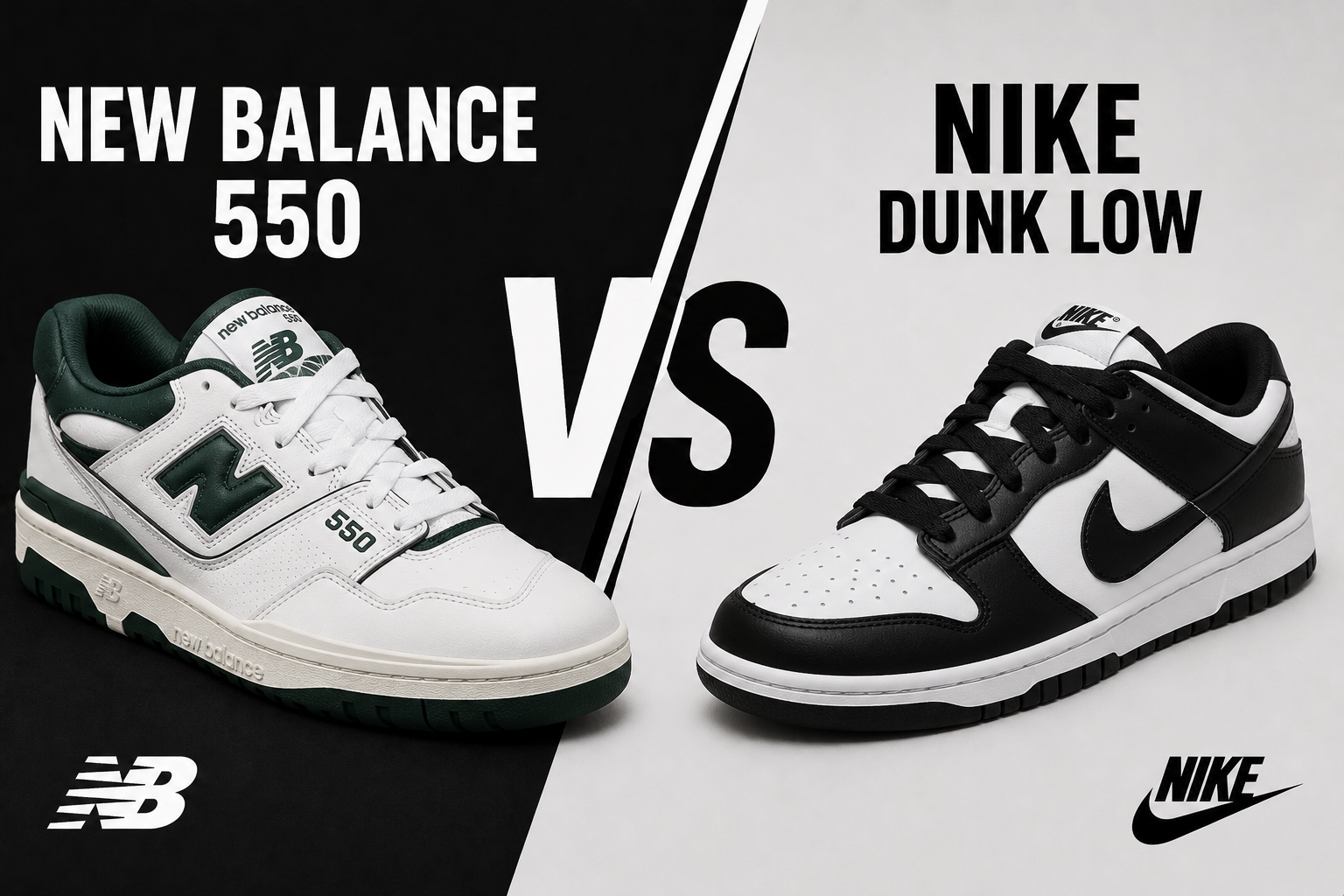
The New Balance 550 vs Nike Dunk Low debate is one of the more interesting matchups in current sneaker culture, mostly because these two retro basketball shoes come from completely different design eras but ended up competing for the exact same closet space.
The Dunk Low is a Nike original from 1985, built for college basketball before it became a skate and streetwear staple.
The 550 is a New Balance performance shoe from the same general period, resurrected in 2020 through a Teddy Santis and Aime Leon Dore collaboration that turned a forgotten basketball shoe into one of the most-copied silhouettes in menswear.
Both shoes now function almost identically in a wardrobe: low-top, color-blocked, leather-heavy, and endlessly matchable with jeans. But they don’t fit, feel, or wear the same, and the differences matter more than the surface-level similarity suggests.

This guide walks through comfort, sizing, materials, durability, and style so you can figure out which retro sneaker actually deserves a spot in your rotation — or whether, like a lot of people who’ve tried both, you end up wanting one of each.
What This Article Will Help You Decide
- Which shoe is more comfortable for extended, all-day wear
- How the fit and sizing genuinely differ between the two
- Which shoe suits wide feet, narrow feet, and high insteps better
- Materials and construction quality, colorway by colorway
- Weight and how it affects long days on your feet
- Durability expectations over months and years of regular wear
- Style versatility across streetwear, casual, and smart-casual outfits
- Value for money, including standard retail versus premium “Made in USA”/collaboration pricing
- Which shoe works better as a genuine Nike Dunk alternative for people priced out of hyped colorways
- Whether one shoe is objectively better, or whether the right pick depends entirely on your foot and your closet
Quick Verdict
| Category | Winner |
|---|---|
| Best Overall | Nike Dunk Low |
| Best for Comfort | New Balance 550 |
| Best for Walking | New Balance 550 |
| Best for Casual Wear | Tie — depends on style |
| Best Value | Nike Dunk Low (standard colorways) |
| Best for Wide Feet | New Balance 550 |
| Best for Narrow Feet | Nike Dunk Low |
| Best for All-Day Wear | New Balance 550 |
| Best for Travel | New Balance 550 |
| Best for Skateboarding/Court Use | Nike Dunk Low |
Treat this table as a starting point, not a final answer. The two shoes appeal to genuinely different foot shapes and use cases, which is why so many buyers end up doing side-by-side comparisons before committing.
Who Should Buy Each Shoe?
Who Should Buy the Nike Dunk Low
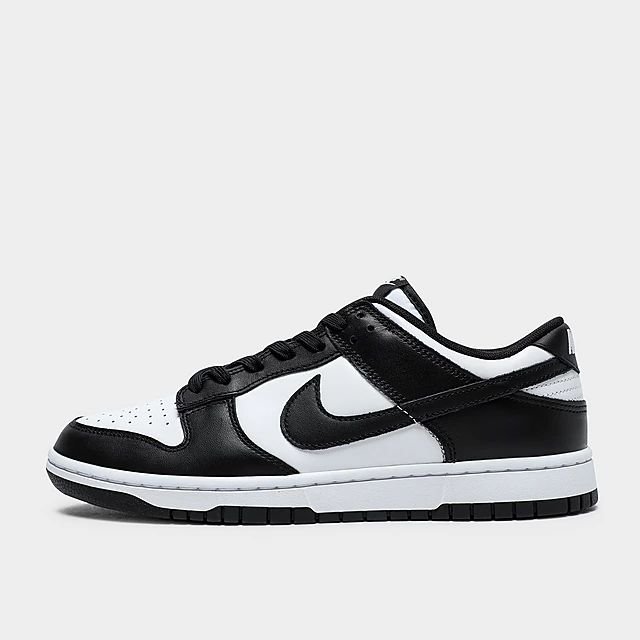
The Dunk Low is the better call if you want maximum color and collaboration variety, a slightly more compact, locked-in fit, and a shoe with real skateboarding and basketball performance credibility behind it (particularly the SB Dunk Low, which adds Zoom Air cushioning and extra padding).
It’s also generally the more affordable option in standard general-release colorways, making it the more budget-friendly Nike Dunk alternative to chase if you’re not hunting limited drops.
A good example: someone who wants one clean, low-profile sneaker that pairs with basically every streetwear or casual outfit, and who doesn’t mind a firmer, flatter ride in exchange for that classic basketball-shoe silhouette.
Who Should Buy the New Balance 550
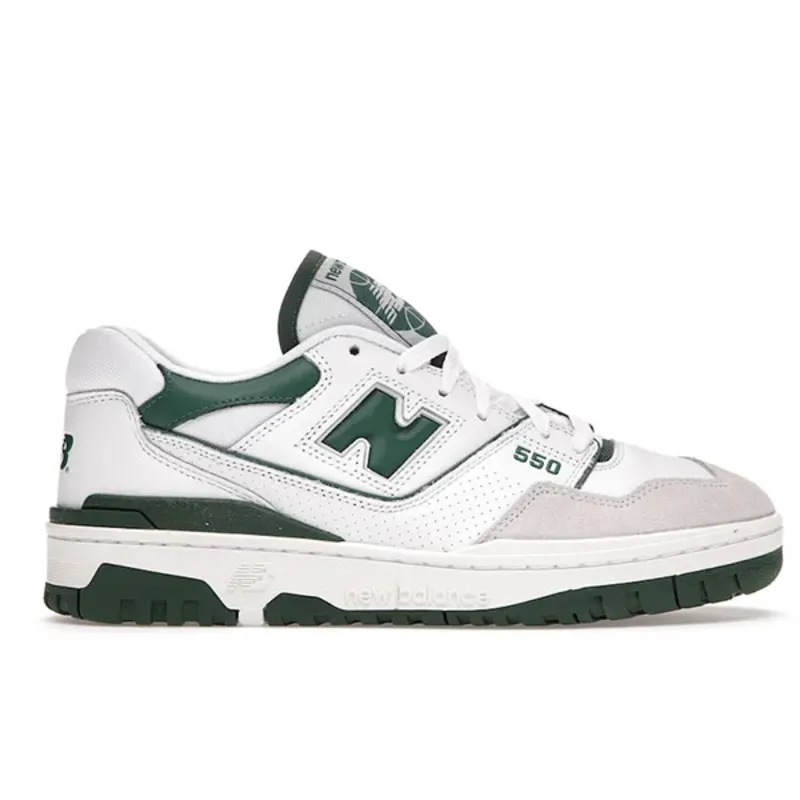
The 550 makes more sense if comfort and a roomier fit are priorities — it tends to suit wider feet and higher insteps noticeably better than the Dunk Low.
It also leans into a slightly dressier, more “quiet luxury” aesthetic thanks to the Aime Leon Dore-driven redesign, with premium leather and suede options that photograph and wear a bit more elevated than a standard Dunk.
A good example: someone building a more minimal, grown-up casual wardrobe who wants a comfortable everyday shoe that doesn’t scream “sneakerhead,” but still nods to retro basketball design.
Product Overview
Nike Dunk Low
- Design: Low-top basketball silhouette from 1985, originally designed for college teams, featuring a wide color-blocked panel layout and a padded, low-cut collar
- Materials: Leather upper on most general releases, with perforated toe detailing; SB Dunk Low versions add suede and additional padding
- Midsole technology: Standard flat foam midsole on the general-release Dunk Low; SB Dunk Low versions add a Zoom Air insole for extra impact cushioning
- Outsole: Herringbone-inspired rubber outsole designed originally for hardwood traction
- Weight: Roughly 11–12 oz per shoe (men’s size 10), among the lighter shoes in this class
- Breathability: Moderate — leather upper with perforated toe panel for some airflow
- Cushioning: Firm and flat, more court-shoe feel than lifestyle-cushioned feel, unless you opt for an SB version
- Support: Padded collar gives decent ankle comfort, though the overall structure is fairly minimal
- Available colors: Enormous rotation of colorways and collaborations released nearly every week
- Retail price range: Standard general-release colorways typically retail around $115–$130, with SB, collaboration, and premium editions running $130–$150+
- Intended use: Basketball heritage silhouette, skateboarding (SB versions), streetwear, everyday casual wear
New Balance 550
- Design: Chunky, low-top retro basketball silhouette originally released in the 1980s, revived in 2020 with a cleaner, more refined build via the Aime Leon Dore collaboration
- Materials: Premium leather uppers, often with suede detailing and a large “N” logo on the sides
- Midsole technology: Cushioned EVA midsole designed for comfort over pure court performance
- Outsole: Wide, chunky rubber outsole built for stability and grip
- Weight: Slightly heavier than the Dunk Low, typically around 12–13 oz per shoe
- Breathability: Moderate, comparable to the Dunk Low given similar leather-heavy construction
- Cushioning: Noticeably softer and more forgiving underfoot than the standard Dunk Low
- Support: Padded collar and a wider platform give a stable, supportive feel, especially for wider feet
- Available colors: Wide but slightly more curated rotation than the Dunk, with frequent drops split between mature, muted tones and bolder collaborative colorways
- Retail price range: Standard colorways typically retail around $110–$120, with premium “Made in USA” and collaboration editions running $150–$230+
- Intended use: Everyday casual wear, all-day comfort, retro-inspired streetwear and smart-casual styling
Head-to-Head Comparison
Design
The Dunk Low has a tighter, more compact silhouette with sharp panel lines and a classic basketball-shoe profile that’s remained essentially unchanged since 1985. The 550 has a chunkier, slightly bulkier build with a wider platform and a more prominent midsole, giving it a bolder, more retro “dad shoe” presence. If you want a sleeker, more minimal look, lean Dunk. If you want a chunkier, more textured retro look, lean 550.
Comfort
The 550 generally wins here for extended wear. Its EVA midsole is noticeably softer and more cushioned than the Dunk Low’s flatter, firmer foam, which makes a real difference over several hours of walking or standing. The standard Dunk Low can start to feel stiff underfoot after extended use, though the SB Dunk Low closes much of this gap thanks to its added Zoom Air cushioning.
Fit
The Dunk Low has a snugger, more compact fit through the midfoot and a narrower toe box. The 550 runs noticeably roomier, both in width and toe box volume, which is a major factor for buyers with wider or higher-volume feet.
Sizing
The Dunk Low generally runs true to size, occasionally slightly narrow for wide-footed wearers. The 550 tends to run true to size or very slightly large, and its wider platform makes it far more forgiving for buyers who normally need a wide-width shoe but can’t always find one.
Materials
Both shoes use genuine leather on their primary releases. The Dunk Low’s leather is typically a bit thinner and more structured, which helps it hold its shape but can crease more visibly with wear. The 550’s leather, especially in the premium “Made in USA” and ALD-driven colorways, tends to be thicker and slightly softer, giving it a more premium hand-feel out of the box.
Breathability
Both shoes perform similarly here, since both rely primarily on leather uppers without significant mesh paneling. Neither is an especially warm-weather shoe compared to mesh-heavy sneakers, though the Dunk’s perforated toe box gives it a very slight edge in airflow.
Cushioning
The 550 offers a clear cushioning advantage over the standard Dunk Low. If cushioning is your top priority and you’re not specifically interested in the SB Dunk Low, the 550 is the more comfortable everyday choice.
Arch Support
Neither shoe includes dedicated arch support in the stock insole. Both benefit from an aftermarket insole if you need more structured arch support for all-day wear.
Heel Support
Both shoes offer a padded heel collar, though the Dunk Low’s more structured, compact heel counter gives it slightly better lockdown. The 550’s wider fit can occasionally lead to minor heel slip if you don’t lace it snugly, particularly for narrower heels paired with the roomier forefoot.
Weight
The Dunk Low is noticeably lighter thanks to its more compact, minimal construction. The 550’s chunkier midsole and wider platform add a bit of extra weight, which is a fair trade-off for the added cushioning it provides.
Traction
The Dunk Low’s herringbone-inspired outsole, designed originally for hardwood basketball courts, provides confident grip on flat, dry surfaces and remains one of the more court-capable retro basketball silhouettes still in general release. The 550’s wider, chunkier outsole offers solid everyday traction but wasn’t designed with the same court-specific performance in mind.
Durability
Both shoes hold up well under normal daily wear. The Dunk Low’s thinner leather can show creasing and scuffing a bit faster, especially in white colorways, while the 550’s thicker leather and suede combinations tend to mask everyday wear and tear slightly better, particularly in darker or mixed-material colorways.
Flexibility
The Dunk Low flexes more naturally at the ball of the foot thanks to its flatter, more minimal sole. The 550’s thicker midsole makes it feel a bit stiffer, particularly when brand new, though like most leather sneakers it loosens with wear.
Walking Comfort
For long walking days, the 550’s superior cushioning makes it the more comfortable option. The standard Dunk Low is fine for moderate walking but its firmer ride becomes more noticeable over several hours, particularly on hard pavement.
Casual Everyday Wear
Both are excellent everyday sneakers, and this is really where the comparison lives. The Dunk Low leans slightly more into pure streetwear territory given its skate and basketball pedigree, while the 550 leans into a cleaner, more elevated casual look thanks to its ALD-driven redesign.
Travel
The 550’s cushioning advantage makes it the smarter travel shoe for long days of walking through airports and cities, similar to how max-cushioned lifestyle sneakers typically outperform flatter, firmer basketball silhouettes on long walking days.
Standing All Day
The 550’s softer EVA midsole noticeably reduces foot fatigue during extended standing compared to the Dunk Low’s firmer, flatter sole, unless you’re specifically wearing an SB Dunk Low with Zoom Air cushioning.
Cleaning
Both shoes clean up easily with a soft-bristle brush, mild soap, and warm water. Suede sections on premium 550 colorways require a dedicated suede brush and should avoid direct water contact when possible; leather sections on both shoes respond well to a standard sneaker cleaning kit.
Maintenance
Rotate socks, apply a leather and suede protector spray before first wear, and avoid machine washing — this applies equally to both shoes. Because the 550’s suede detailing is more common across its lineup than on the Dunk Low, 550 owners should budget a bit more time for routine maintenance.
Weather Resistance
Neither shoe is built for wet weather. Suede sections on the 550 are particularly vulnerable to water staining, and both models’ leather uppers will absorb moisture and stain if worn without a protective treatment in rain or snow.
Break-in Period
The 550 tends to feel comfortable faster thanks to its softer, more cushioned midsole. The Dunk Low has a slightly longer break-in period, particularly around the toe box and collar, before the leather loosens and molds to your foot.
Style Versatility
The Dunk Low is arguably the more universally recognized, more versatile shoe across a wider range of streetwear-driven outfits, given its five-decade design history and near-constant colorway rotation. The 550 leans into a specific, slightly more curated aesthetic — clean, retro, a bit more “elevated casual” — that’s extremely popular right now but slightly less neutral than the Dunk’s chameleon-like versatility.
Available Colorways
The Dunk Low wins decisively here. Nike releases new Dunk Low colorways and collaborations on a near-weekly basis, giving shoppers vastly more variety at any given time than the more curated New Balance 550 lineup.
Resale Value
Limited Nike Dunk Low collaborations (Off-White, Travis Scott, and other hyped releases) have historically commanded some of the highest resale premiums in sneaker culture. The 550, particularly in Aime Leon Dore and “Made in USA” colorways, also holds strong resale value, though generally at a lower premium ceiling than the most hyped Dunk collaborations.
Price
Standard Dunk Low colorways are typically the cheaper entry point of the two shoes. However, once you move into premium 550 colorways or hyped Dunk collaborations, pricing between the two shoes converges and can even flip, with premium 550 releases sometimes running higher than a standard general-release Dunk.
Long-Term Value
Given the 550’s superior comfort for extended everyday wear, many owners feel it justifies its price if it’s going into regular daily rotation. The Dunk Low offers excellent value at its lower standard retail price point, particularly for buyers who prioritize style variety and don’t need maximum cushioning for long walking days.
Read also: Nike Dunk Low vs Air Jordan 1 Low: The Complete Comparison Guide (2026)
Design Heritage and Construction: A Deeper Look
Understanding why these two shoes feel so different underfoot starts with understanding what they were originally built to do. The Nike Dunk Low was engineered in 1985 specifically for college basketball, with a low-cut collar for mobility and a flatter, firmer sole built to maximize court feel and quick lateral movement.
That basketball-first design philosophy is still baked into the modern Dunk Low: it’s light, compact, and built around a snug, locked-in fit rather than cushioned comfort. When Nike SB adopted the silhouette in the early 2000s for skateboarding, the brand added a Zoom Air insole and extra padding specifically because skaters needed more impact protection than the original basketball design provided, which is why SB Dunk Lows feel noticeably different underfoot than standard general-release pairs.
The New Balance 550 comes from a similar era but a different design lineage. It was also a performance basketball shoe in the 1980s, but New Balance’s engineering approach favored a wider platform and a more cushioned midsole from the start, prioritizing stability and shock absorption over the minimal, court-feel construction Nike favored.
When Steven Smith’s original design was revived and refined by Teddy Santis for the 2020 relaunch, that cushioned, stability-focused DNA carried over, which is exactly why the modern 550 still feels noticeably softer and roomier than the Dunk Low, even though both shoes are marketed today as near-identical retro basketball lifestyle sneakers.
This distinction matters more than it might seem for a simple style comparison. If you’ve ever wondered why two shoes that look similarly “retro basketball” in photos can feel completely different on your feet, the answer almost always traces back to what sport-specific problem each shoe was originally engineered to solve — court mobility and a locked-in feel for the Dunk, stability and shock absorption for the 550.
Modern lifestyle versions of both shoes have softened those original performance distinctions somewhat, but the core underfoot feel each was built around is still very much present today.
Real-Life Scenarios
- College students: New Balance 550 — better comfort for full days of walking between classes
- Office workers (business casual): New Balance 550 — the cleaner, more elevated look pairs well with smart-casual outfits
- Travelers: New Balance 550 — superior all-day cushioning for airports and sightseeing
- Walking all day: New Balance 550
- Skateboarding: Nike SB Dunk Low — purpose-built with Zoom Air cushioning for impact protection
- Streetwear outfits: Nike Dunk Low — the sheer colorway variety and cultural cachet make it a streetwear staple
- Business casual outfits: New Balance 550
- Gym workouts: Neither shoe is designed for actual training — both lack the lateral support needed for lifting or cardio
- Long shifts (retail, hospitality): New Balance 550
- Daily commuting: Tie — both handle typical commutes comfortably, though the 550 has a slight comfort edge on longer commutes
- Vacation: New Balance 550, for the comfort factor over multiple walking-heavy days
- Weekend wear: Nike Dunk Low, for a classic streetwear-driven casual look
Outfit Ideas: Nike Dunk Low
- White tee, straight-leg jeans, varsity jacket
- Cargo pants, graphic tee, bomber jacket
- Track pants, zip-up jacket, crossbody bag for an athletic-leaning streetwear look
- Denim-on-denim with a plain white tee
- Basketball shorts, ribbed tank, snapback for a court-inspired fit
- Chinos, tucked-in polo, minimal watch for a smart-casual crossover
- Plaid flannel worn open, plain tee, distressed jeans
- Oversized hoodie, joggers, beanie for a cold-weather streetwear look
- Cropped puffer jacket, wide-leg jeans, beanie
- Skate-inspired fit: baggy jeans, graphic tee, canvas jacket
Outfit Ideas: New Balance 550
- Wide-leg trousers, oversized sweater, minimal jewelry
- Cream hoodie, tailored joggers, denim jacket
- Chinos, fitted crewneck, unstructured blazer for smart-casual
- Straight-leg jeans, plain white tee, suede overshirt
- Cargo pants, fitted long-sleeve, technical windbreaker
- Corduroy pants, turtleneck, wool coat for a fall layering look
- Athletic shorts, ribbed tank, bucket hat for warm-weather casual
- Pleated trousers, button-down shirt, minimal accessories
- Track suit top-to-bottom for a retro athletic look
- Tailored shorts, polo shirt, crew socks pulled up for a preppy-casual mix
Best Alternatives
- Adidas Samba — a flatter, more minimal retro soccer-inspired alternative to both
- New Balance 990v6 — for shoppers who want New Balance’s cushioning philosophy in a more technical-looking sneaker
- Nike Air Force 1 — a chunkier, more cushioned Nike alternative to the Dunk Low
- New Balance 574 — a more budget-friendly, cushioning-focused alternative to the 550
- Converse Chuck Taylor All Star — a flatter, more minimalist retro alternative to both shoes
- Nike SB Dunk Low — for buyers who want the Dunk silhouette with genuine skate performance upgrades
- Adidas Superstar — another classic low-top retro alternative with a distinct shell-toe identity
- New Balance 2002R — a chunkier, more cushioned option for buyers who like the 550’s comfort but want more visual bulk
- Vans Old Skool — a lightweight, budget-friendly retro alternative with strong skateboarding roots
- Reebok Club C 85 — a clean, minimalist tennis-shoe alternative with excellent everyday comfort
Pros and Cons
Nike Dunk Low — Pros
- Lighter weight than the 550
- Snugger, more locked-in fit
- Enormous colorway and collaboration variety
- Lower standard retail price on general-release colorways
- Strong basketball and skateboarding heritage and cultural relevance
Nike Dunk Low — Cons
- Firmer, less cushioned ride on standard (non-SB) versions
- Narrower fit may not suit wide feet
- Thinner leather can crease and scuff more visibly over time
- Hyped colorways often sell well above retail
New Balance 550 — Pros
- Noticeably more cushioned and comfortable for extended wear
- Roomier fit, better suited to wide feet and higher insteps
- Premium leather and suede options feel more elevated
- Faster break-in period
- Strong resale value on Aime Leon Dore and “Made in USA” colorways
New Balance 550 — Cons
- Heavier than the Dunk Low
- Bulkier silhouette may not suit buyers who prefer a sleeker look
- Fewer colorway options at any given time compared to the Dunk
- Premium colorways can cost significantly more than standard Dunk Low releases
Common Mistakes Buyers Make
- Assuming both shoes fit identically: The 550 runs noticeably roomier than the Dunk Low; buyers with narrow feet sometimes end up with a sloppy fit if they don’t size down slightly.
- Buying hyped Dunk colorways as a first pair: Limited collaborations often sell well above retail; a general-release colorway delivers the same comfort and construction for a fraction of the price.
- Overlooking foot width entirely: Wide-footed buyers who choose the Dunk Low without trying it on often end up with a tight, pinched feel — the 550 is generally the better call.
- Skipping suede protection on the 550: Suede detailing is common across 550 colorways and stains easily without a protective spray applied before first wear.
- Buying either shoe for actual basketball or training: Outside of the performance-oriented SB Dunk Low, neither shoe offers the support needed for real athletic activity — both are designed as lifestyle and casual sneakers first.
Care Guide
Cleaning: Remove laces and insoles before cleaning. Use a soft-bristle brush with mild soap and warm water on leather sections, and a dedicated suede brush for any suede paneling on the 550. Wipe with a damp cloth to remove residue, then air-dry away from direct heat or sunlight.
Storage: Store both shoes with shoe trees or stuffed with paper to help them keep their shape, and keep them out of direct sunlight, which can yellow the midsoles over time.
Maintenance: Apply a leather and suede protector spray every few weeks of regular wear. Rotating between multiple pairs of shoes significantly extends the life of the cushioning and outsole on both models.
Increasing lifespan: Avoid machine washing either shoe. Address scuffs and stains as soon as they happen rather than letting them set in. Replace insoles if you want extra comfort without buying a new pair — this is a particularly effective upgrade for standard Dunk Low owners who want more cushioning without switching shoes entirely.
When to Choose the Nike Dunk Low
- You want the lighter, more compact, more court-inspired silhouette
- Your budget favors a standard general-release colorway over a premium retro shoe
- You have narrower feet or prefer a snugger, more locked-in fit
- You want maximum colorway and collaboration variety to choose from
- You’re interested in the SB Dunk Low specifically for skateboarding or added cushioning
When to Choose the New Balance 550
- Comfort and all-day wearability are your top priority
- You have wider feet or a higher instep
- You want a cleaner, slightly more elevated retro aesthetic
- You’re willing to pay more for premium leather and suede construction
- You’re building a more curated, minimal casual wardrobe rather than chasing constant new colorways
Final Verdict
There’s no single correct answer here, and the more you actually wear both shoes, the clearer that becomes. The Nike Dunk Low wins on pure versatility, colorway variety, and affordability at standard retail, plus it carries a genuine basketball and skateboarding pedigree that the 550 can’t match.
The New Balance 550 counters with a clear comfort advantage, a roomier fit for wider feet, and a more elevated, curated aesthetic that’s become a wardrobe staple in its own right since its 2020 relaunch.
If style variety, a snugger fit, and price matter most, go with the Dunk Low. If comfort, room in the toe box, and a cleaner, more grown-up retro look matter more, the 550 is the better buy. Plenty of sneaker collectors end up owning both and rotating based on the day — comfort-focused errands in the 550, statement streetwear fits in the Dunk — which isn’t a bad way to hedge your bets if your budget allows it.
Frequently Asked Questions
Is the New Balance 550 more comfortable than the Nike Dunk Low? Generally, yes, for extended wear. The 550’s softer EVA midsole provides more cushioning than the standard Dunk Low’s firmer, flatter sole, especially over long walking days.
Does the New Balance 550 run true to size? The 550 tends to run true to size or very slightly large, with a noticeably roomier fit than the Dunk Low, particularly in the toe box.
Does the Nike Dunk Low run true to size? Yes, for most feet the Dunk Low fits true to size, though it can feel snug for wide-footed wearers.
Which shoe is better for wide feet? The New Balance 550 generally accommodates wide feet better thanks to its wider platform and roomier fit.
Which shoe is better for narrow feet? The Nike Dunk Low’s more compact, structured fit tends to suit narrower feet better.
Are Dunk Lows or 550s better for walking all day? The New Balance 550 is the better choice for extended walking thanks to its softer, more cushioned midsole.
Which sneaker is more durable? Both are durable with proper care, but the 550’s thicker leather and suede combinations tend to mask everyday wear slightly better than the Dunk Low’s thinner leather.
Can you wear the Dunk Low or 550 to the gym? Neither is designed for training. Both lack the lateral support and cushioning needed for lifting, running, or high-intensity workouts, though the SB Dunk Low offers more impact protection than either standard version.
Which shoe is cheaper? Standard general-release Nike Dunk Lows are typically cheaper than New Balance 550s, though premium 550 colorways can also cost more than hyped Dunk collaborations, so pricing varies significantly by specific release.
How do you clean white Dunk Lows or 550s? Use a soft-bristle brush with mild soap and warm water, gently scrub the leather, use a suede brush on any suede sections, wipe clean, and air-dry away from direct sunlight or heat.
Do the Dunk Low and 550 work for business casual outfits? The New Balance 550 leans slightly more versatile for business casual thanks to its cleaner, more elevated aesthetic, though both can work depending on the rest of the outfit.
Which shoe has more colorway options? The Nike Dunk Low has significantly more colorways and collaborations available at any given time compared to the more curated New Balance 550 lineup.
Is the New Balance 550 a good Nike Dunk alternative? Yes — many shoppers specifically search for New Balance 550 as a Nike Dunk alternative because it offers a similar retro basketball silhouette with a more cushioned, comfort-focused fit.
Which shoe holds resale value better? Limited Nike Dunk Low collaborations have historically commanded some of the highest resale premiums in sneaker culture, though premium New Balance 550 releases, especially Aime Leon Dore and “Made in USA” editions, also hold strong resale value.
Should I buy both the Nike Dunk Low and the New Balance 550? If your budget allows, yes — they serve genuinely different purposes (comfort-focused everyday wear versus a snugger, more streetwear-driven silhouette) and complement each other well in a rotation.
Read also: