Nike Dunk Low vs Air Jordan 1 Low: The Complete Comparison Guide (2026)

If you’ve narrowed your next sneaker purchase down to two pairs, there’s a good chance they’re the Nike Dunk Low and the Air Jordan 1 Low.
These two are the most compared sneakers in Nike’s entire lifestyle lineup, and for good reason: both started life on a basketball court in the 1980s, both wear low enough to pair with anything from joggers to tailored trousers, and both have been reissued in hundreds of colorways that show up on every “best sneakers” list you’ll find.
Yet despite looking similar in photos — chunky leather panels, a rounded toe, a low-cut collar — they fit differently, feel differently on foot, and are genuinely better suited to different people.
The short version: the Dunk Low is the wider, flatter, more skate-influenced shoe with a padded tongue and a slightly more relaxed, retro-casual look.

The Air Jordan 1 Low is the narrower, more structured, basketball-DNA shoe with a perforated toe box and a slightly higher-profile midsole thanks to its Nike Air unit.
Neither is objectively “better” — the right pick depends on your foot shape, how you plan to wear it, and which visual language you gravitate toward.
This guide walks through everything you’d want to know before choosing between the Dunk Low and the Jordan 1 Low — sizing, comfort, materials, durability, styling, alternatives, and the buying mistakes that trip up first-time buyers of either shoe — so you can make the call with confidence and never need to open another tab to finish your research.
Which sneaker is better overall? Neither wins outright — it’s a wash that depends on foot shape and use case. The Dunk Low generally wins on all-day comfort and wide-foot accommodation; the Jordan 1 Low generally wins on ankle mobility, arch definition, and heritage cachet.
Which offers better comfort? The Dunk Low, for most wearers, thanks to its wider platform, higher-volume toe box, and thicker padded tongue and collar. The Jordan 1 Low can feel tighter out of the box, especially across the midfoot.
Which is better for everyday wear? Both are excellent daily sneakers, but the Dunk Low’s flatter sole and slightly more forgiving fit make it marginally easier to wear from the first day you take it out of the box, with less break-in required.
Which gives better value? The Nike Dunk Low, because standard retail colorways sit lower ($110–$125) than most standard Air Jordan 1 Low releases ($115–$145), and general-release Dunk colorways are typically easier to find at retail price.
Who should buy each shoe? Buy the Dunk Low if you have average-to-wide feet, want a slightly more casual and skate-inspired look, or prioritize comfort for long days on your feet. Buy the Air Jordan 1 Low if you have narrow-to-average feet, want more basketball heritage and brand storytelling behind your sneaker, or prefer a slightly more tailored, sock-like fit.
At a Glance: Nike Dunk Low vs Air Jordan 1 Low
| Spec | Nike Dunk Low (Retro) | Air Jordan 1 Low |
|---|---|---|
| Brand | Nike | Jordan Brand (Nike) |
| Original Release | 1985 | 1985 |
| Modern Retro Era | 1999 (retro), mainstream since 2020 | 2015 (revival) |
| Retail Price | ~$110–$125 (general releases) | ~$115–$145 (general releases); $130–$225 for OG/collab editions |
| Weight (per shoe, size 9–10) | ~12–13 oz | ~11–12 oz |
| Upper Material | Leather with tonal overlays, sometimes suede/canvas | Leather (often with perforated toe box), suede on some colorways |
| Midsole | Solid rubber-and-foam wedge, no visible Air unit | Foam midsole with encapsulated Nike Air-Sole unit at heel |
| Outsole | Herringbone-inspired solid rubber, wide flat base | Rubber cupsole with more pronounced heel bevel |
| Heel Drop | Roughly 8–10mm (flat platform feel) | Roughly 10–12mm (slightly more heel lift) |
| Cushioning | Firm, stable, court-shoe feel | Slightly softer at heel due to Air-Sole cushioning |
| Support | Wide base gives strong lateral stability | Structured ankle collar gives more lockdown, narrower base |
| Breathability | Moderate; mesh tongue helps, mostly leather elsewhere | Moderate to good; perforated toe cap aids airflow |
| Durability | Very good; simple construction ages well | Good; leather quality varies by tier (OG vs standard) |
| Best For | All-day comfort, wide feet, skate-casual style | Streetwear styling, narrower feet, basketball heritage |
| Overall Rating | 4.6/5 | 4.5/5 |
Note: exact weight, price, and materials vary by specific colorway, collaboration, and retailer — treat these as representative ranges for standard general-release pairs, not universal constants.
Product Overview: Nike Dunk Low
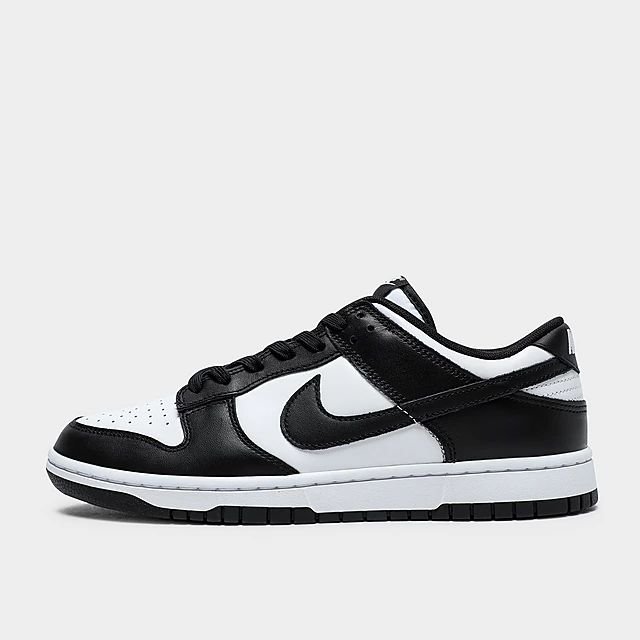
Brand History and Design Philosophy
The Dunk was born in 1985 as a college basketball shoe, built on the same last as the original Air Jordan 1 but marketed through Nike’s “Be True to Your School” campaign, which paired specific colorways with major NCAA programs.
It disappeared from relevance for most of the 1990s until skateboarders adopted it in the early 2000s for its flat, stable platform — leading to the Nike SB Dunk line, which is technically a different shoe with a padded tongue and Zoom Air insole, distinct from the lifestyle Dunk Low Retro most people are comparing against the Jordan 1 today.
The modern Dunk Low Retro that exploded in popularity starting in 2020 (largely off the back of the “Panda” black-and-white colorway) is a lifestyle-focused reissue: same silhouette, same wide, flat platform, but tuned for everyday wear rather than skateboarding impact.
Construction, Materials, and Technology
The Dunk Low’s upper is typically full-grain or textured leather with tonal or contrast overlays stitched around the toe, eyestays, and heel. Some colorways swap in suede, canvas, or corduroy panels. There is no visible Air-Sole window; cushioning comes from a solid EVA foam midsole paired with a wide rubber outsole that borrows its traction pattern loosely from basketball and skate shoes.
The signature identifying features are the perforated Swoosh overlay on some colorways, the padded collar with a distinctive cut that dips lower at the front than the back, and the wide toe box that has made the Dunk popular with buyers who find narrower sneakers uncomfortable.
Comfort, Weight, and Fit
Out of the box, the Dunk Low tends to feel more immediately comfortable than the Jordan 1 Low because of its wider platform and higher-volume toe box. It weighs slightly more per pair due to its flatter, thicker midsole, but that extra material translates into a more planted, stable ride — good for walking, standing, and general daily wear, less ideal if you want a sneaker that feels sporty or responsive.
Typical Retail Price and Popular Use Cases
Standard Dunk Low colorways retail between roughly $110 and $125, with premium materials packs (suede, corduroy, patent leather) pushing toward $130. It’s most popular as a daily casual sneaker, paired with everything from baggy jeans to tailored shorts, and has become a staple in both streetwear and “quiet luxury” minimalist outfits.
Product Overview: Air Jordan 1 Low

Brand History and Design Philosophy
The Air Jordan 1 Low was designed by Peter Moore alongside the original high-top Air Jordan 1, released in 1985 as Michael Jordan’s first signature shoe. The high-top became the icon; the low-top was initially a secondary option for players who wanted more ankle mobility. It was shelved for long stretches and revived properly in 2015, and has since become — by release volume — the single most prolific Air Jordan 1 silhouette, thanks in large part to high-profile collaborations like Travis Scott’s “Mocha” and “Reverse Mocha” Lows.
Design-wise, the Jordan 1 Low carries over the Wings logo, the Swoosh, and the “Nike Air” or Jumpman branding from its taller sibling, but in a cut that sits below the ankle bone, making it read as a lifestyle shoe first and a basketball shoe second for most modern buyers.
Construction, Materials, and Technology
The Jordan 1 Low’s upper is usually leather, frequently mixed with suede overlays and a perforated toe cap for breathability — a detail carried over from the original 1985 pattern. Underneath, it uses a foam midsole with an encapsulated Nike Air-Sole unit at the heel, which is a genuine performance-basketball cushioning technology rather than a purely cosmetic addition. That Air unit is one of the clearest functional differences between the two shoes: the Dunk has no comparable air cushioning in its standard retro form.
The outsole uses a cupsole construction with a slightly more pronounced heel bevel than the Dunk, which gives it a touch more roll during walking but a marginally less stable, flatter stance when standing still.
Comfort, Weight, and Fit
The Jordan 1 Low tends to fit narrower through the midfoot and has a lower-volume toe box than the Dunk Low. Buyers with wider feet often need to size up half a size or look for wide-width releases where available. The heel cushioning from the Air-Sole unit gives it a slightly softer landing than the Dunk on hard pavement, but the overall structure is stiffer out of the box and benefits from a short break-in period, especially around the ankle collar.
Typical Retail Price and Popular Use Cases
Standard general-release Jordan 1 Lows retail between about $115 and $145, while OG-spec, premium leather, and collaboration releases can run from $130 up to $225. It’s the go-to sneaker for streetwear-forward outfits, basketball heritage collectors, and buyers who want a shoe with more brand storytelling and resale culture around it than the Dunk offers.
Head-to-Head Comparison
Design
Both shoes share the same basic silhouette DNA — rounded toe, panel-based leather upper, low-cut collar — because the Dunk was quite literally built on the Air Jordan 1’s last in 1985. The differences show up in the details: the Dunk’s toe box is rounder and boxier, its overlays are simpler, and its color-blocking tends to favor two or three tones divided into large panels. The Jordan 1 Low has more going on visually — a perforated toe cap, a Swoosh that sits higher and more diagonally, a heel-mounted Wings logo, and slightly busier stitching. If you want a cleaner, more minimalist look, the Dunk usually reads calmer; if you want a shoe with more visual texture and instantly recognizable basketball branding, the Jordan 1 Low wins.
Build Quality and Materials
Both use full-grain or textured leather on their standard releases, and both vary meaningfully in quality tier — a $120 general-release Dunk uses thinner leather than a $150+ “Premium” Dunk, just as a standard Jordan 1 Low uses lighter leather than an “OG” spec release with thicker hides and period-correct detailing. Pound for pound, standard releases of both shoes are comparable in build quality; the more meaningful variable is which specific tier or colorway you’re buying, not which model you choose.
Comfort and Cushioning
This is one of the more decisive categories. The Dunk Low’s wider platform and thicker underfoot foam make it noticeably more comfortable for long stretches of standing or walking, right out of the box. The Jordan 1 Low’s Air-Sole heel unit gives a slightly springier feel on impact, but its narrower shape and firmer midfoot can create pressure points for wider feet until the leather breaks in. If all-day comfort with minimal break-in is your priority, the Dunk generally has the edge; if you want a touch more heel bounce and don’t mind a short adjustment period, the Jordan 1 Low holds its own.
Sizing and Fit
The Dunk Low runs true to size for most people, occasionally slightly roomy in the toe box. The Jordan 1 Low runs true to size as well, but fits narrower through the midfoot — many buyers with average-to-wide feet size up half a size, particularly in suede or canvas colorways that don’t stretch as readily as leather.
Toe Box
The Dunk’s toe box is rounder and higher-volume, which is why it’s frequently recommended to buyers who find pointier sneakers uncomfortable. The Jordan 1 Low’s toe box is more tapered and lower-volume, contributing to its sleeker silhouette but reducing space for wider forefeet.
Arch Support and Heel Lockdown
Neither shoe has dedicated arch support — both rely on flat, general-purpose insoles, so buyers with pronounced arch needs should plan on aftermarket insoles regardless of which model they pick. Heel lockdown slightly favors the Jordan 1 Low, whose more structured collar and midfoot overlay pull the heel in more securely; the Dunk’s flatter collar shape can allow marginal heel slip in the first few wears before the leather molds to your foot.
Breathability
Both are primarily leather sneakers, so neither is a “breathable” shoe in hot climates compared to mesh running shoes. The Jordan 1 Low’s perforated toe cap gives it a slight airflow advantage. The Dunk Low compensates somewhat with a mesh-lined tongue, but the overall difference is marginal in daily wear.
Flexibility
The Dunk Low’s flatter, wider sole flexes more naturally with a rolling walking gait. The Jordan 1 Low’s cupsole construction is a touch stiffer, which suits its basketball heritage but can feel less forgiving on very long walks until broken in.
Traction and Grip
Both use rubber outsoles with basketball-court-inspired herringbone-style patterns, and both perform similarly on dry pavement and indoor flooring. Neither is designed for wet or off-road traction — expect both to be slick on rain-soaked tile or smooth stone.
Weight
The Dunk Low is marginally heavier due to its thicker midsole and wider platform. In practice, the difference is small enough that most wearers won’t notice it without a scale, but it does contribute to the Dunk’s more “planted” feel versus the Jordan 1 Low’s slightly lighter, more agile stance.
Shock Absorption, Responsiveness, and Energy Return
The Jordan 1 Low’s Air-Sole heel unit provides genuine shock absorption on heel-strike impact — useful if you’re on your feet on hard surfaces for long periods. The Dunk Low relies on firmer foam without an air chamber, giving a more stable but less “cushioned” ride. Neither shoe is designed for running or high-impact activity, and both should be treated as lifestyle sneakers rather than performance footwear.
Stability
The Dunk Low’s wider base gives it a clear stability advantage, particularly for lateral movement or uneven ground. The Jordan 1 Low’s narrower platform and slightly higher heel-to-toe drop make it feel marginally less stable when standing still, though this is rarely noticeable in normal daily use.
Walking Comfort and Standing All Day
For jobs or routines that involve hours of standing (retail, hospitality, campus life, theme parks), the Dunk Low is generally the more forgiving choice thanks to its wider base and thicker cushioning. The Jordan 1 Low is still perfectly wearable for these situations, but buyers who already know they need extra width or arch support may want to add insoles regardless of which shoe they choose.
Running and Gym Performance
Neither shoe is built for running or serious gym training — both lack the flex grooves, breathability, and impact protection of a dedicated training or running shoe. If you need a sneaker for actual workouts, look elsewhere; these are lifestyle shoes that happen to share basketball ancestry.
Travel, Daily Wear, and Streetwear Styling
Both shoes travel well because they’re low-profile enough to slip on and off at security checkpoints, and both pair easily with a wide range of travel outfits. In streetwear contexts, the Jordan 1 Low tends to carry more cultural weight and collaboration history, while the Dunk Low leans into a slightly more understated, skate-and-collegiate aesthetic.
Business Casual Styling
Neither shoe is a natural fit for strict business formal, but both work in relaxed business-casual settings when paired with tailored chinos or dark denim, especially in muted, monochrome colorways like all-white, all-black, or tonal grey.
Durability
Both hold up well with normal use. Common wear points are similar: crease lines across the toe box, yellowing of white midsoles over time, and outsole wear at the ball of the foot and heel. The Dunk’s simpler construction (no visible Air unit to maintain) gives it a very slight durability edge over long-term ownership, though both are well within normal expectations for a leather lifestyle sneaker.
Weather Performance
Neither shoe is weatherproofed in its standard form. Leather uppers handle light rain reasonably well if treated with a protectant spray, but suede and canvas colorways are considerably more vulnerable to water staining. Neither shoe should be worn in snow or standing water without aftermarket waterproofing.
Ease of Cleaning and Maintenance
Both shoes clean up similarly with a soft brush, mild soap, and water, or a dedicated sneaker cleaning kit. Leather colorways of either model are easier to spot-clean than suede or canvas versions, which require more careful brushing and a specialized suede cleaner.
Price and Long-Term Value
The Dunk Low generally offers better value at retail because standard colorways sit at a lower price point and are more frequently available at retail rather than requiring resale markups. The Jordan 1 Low’s broader range — from affordable general releases to $200+ collaborations — means its value proposition depends heavily on which specific pair you’re buying.
Read also: Nike Air Max 90 vs Air Max 97: The Complete Comparison Guide
Real-World Performance
Long walks: The Dunk Low’s wider, flatter platform makes it noticeably more comfortable across several miles of walking than the Jordan 1 Low, which can start to feel tight through the midfoot after extended wear, particularly before it’s broken in.
Airport travel: Both slip on and off easily and pack well in a suitcase. The Dunk’s slightly bulkier profile takes up a touch more room; the Jordan 1 Low’s lower stack height makes it marginally easier to stash in a carry-on.
Theme parks: For a full day of walking and standing in line, the Dunk Low is the better pick for most people, thanks to its wider base and thicker cushioning underfoot.
College and campus life: Both are extremely common on college campuses and work well for walking between classes. The Jordan 1 Low edges ahead here culturally, given its deep ties to basketball and streetwear scenes popular on campuses.
Office work: Neither is a formal office shoe, but in casual or business-casual offices, both work well in neutral colorways.
Daily commuting: Both handle stairs, public transit, and short walks equally well. The Dunk’s stability gives it a slight edge on uneven sidewalks or subway platforms.
Vacations and weekend outings: Either shoe pairs well with vacation-casual outfits. The Jordan 1 Low’s stronger brand recognition makes it a slightly more “look at me” choice; the Dunk Low blends in more easily across different settings.
Driving: Both have low, flexible soles that don’t interfere with pedal feel, though the Jordan 1 Low’s marginally lower stack height gives a slightly better sense of pedal pressure for some drivers.
Shopping and long work shifts: The Dunk Low’s wider platform and thicker cushioning again make it the more comfortable choice for extended periods on your feet.
Light exercise: Neither shoe is designed for structured exercise, but for casual activities like a short walk or light errands, both perform adequately. Avoid using either for anything involving lateral cutting, running, or heavy gym work.
Who Should Buy Each Shoe
Students: The Dunk Low is a strong everyday pick for comfort across a full day of classes; the Jordan 1 Low appeals more to students invested in sneaker and streetwear culture.
Professionals: Either works in casual office environments; choose the colorway (monochrome or muted tones) more than the model.
Travelers: The Dunk Low’s comfort edge makes it slightly better suited to long travel days; the Jordan 1 Low packs marginally flatter.
Sneaker collectors: The Jordan 1 Low has deeper collaboration history, more OG-spec releases, and stronger resale culture, making it the more collectible of the two for most enthusiasts.
Fashion lovers: Both are staples, but the Jordan 1 Low tends to carry more instant brand recognition in outfit photos, while the Dunk Low offers a cleaner canvas for minimalist styling.
Gym users: Neither shoe is appropriate for structured gym training — pick a dedicated training shoe instead and reserve either of these for after-gym casual wear.
Wide feet: The Dunk Low is the clear recommendation, thanks to its wider platform and higher-volume toe box.
Narrow feet: The Jordan 1 Low’s tighter midfoot and tapered toe box suit narrower feet more naturally.
Flat feet: Neither shoe offers structured arch support; buyers with flat feet should plan on aftermarket insoles regardless of which model they choose, though the Dunk’s flatter, wider base may feel more naturally stable underfoot.
People with plantar fasciitis: Neither shoe is designed with plantar fasciitis in mind. If you manage this condition, consult your podiatrist and plan to add a supportive orthotic insole to either shoe before wearing it for extended periods.
Budget buyers: The Dunk Low’s lower general-release price point makes it the easier shoe to buy new, at retail, without chasing limited drops.
Premium buyers: The Jordan 1 Low’s OG-spec and collaboration tiers offer more premium materials and storytelling for buyers willing to spend more.
Style Guide: How to Wear Each Sneaker
Jeans: Both pair naturally with straight-leg or slightly tapered denim. The Dunk Low’s chunkier silhouette suits slightly wider jeans; the Jordan 1 Low’s sleeker profile works well with both relaxed and slim cuts.
Cargo pants: The Dunk Low’s utilitarian, skate-inspired look complements cargo pants especially well. The Jordan 1 Low also works, particularly in muted or earth-tone colorways.
Chinos: Both work for a smart-casual chino look; stick to clean, low-contrast colorways (white, black, tan) for either shoe in this context.
Joggers: Both pair naturally with joggers for an athleisure look; the Dunk Low’s flatter sole gives a slightly more grounded silhouette, while the Jordan 1 Low’s basketball heritage feels more intentional in this pairing.
Shorts: Both work well with shorts in warm weather; lighter, breathable colorways (canvas Dunks, perforated Jordan 1 Lows) suit summer heat best.
Oversized clothing: The Dunk Low’s boxier silhouette balances oversized fits nicely. The Jordan 1 Low, being a touch sleeker, can look slightly lost under very oversized proportions unless paired in a bold colorway.
Minimalist outfits: The Dunk Low, especially in tonal or two-color combinations, is the stronger minimalist pick thanks to its cleaner panel lines.
Smart casual: Both work in smart-casual settings in neutral colorways like all-white leather or black-and-white.
Streetwear: The Jordan 1 Low generally carries more instant streetwear credibility due to its collaboration history and basketball branding.
Summer: Lighter canvas or perforated colorways of either shoe breathe better in hot weather; avoid heavy suede in either model during summer months.
Winter: Neither shoe is weatherproof; if you plan to wear either in winter, treat the leather with a protectant spray and avoid wearing them in snow or slush.
Spring/Fall: Both transition well into shoulder seasons, particularly in earth-tone or muted colorways.
Date nights: The Jordan 1 Low’s slightly more polished, storied look often reads better for a smart-casual date-night outfit; the Dunk Low works equally well in a clean white or black colorway.
Weekend outfits: Both are ideal weekend sneakers; pick based on comfort needs (Dunk Low) versus styling statement (Jordan 1 Low).
Travel outfits: Either pairs easily with joggers or relaxed denim for a comfortable travel-day look.
Best Alternatives
- Nike Air Force 1 Low — Best for buyers who want maximum durability and an even wider, flatter platform. Strengths: extremely durable, huge colorway range. Weaknesses: heavier, less “heritage” storytelling than either Dunk or Jordan 1. Price range: $90–$140.
- Adidas Samba OG — Best for buyers who want a low-profile, retro soccer-inspired look. Strengths: lightweight, flexible, minimalist. Weaknesses: less cushioned for all-day standing. Price range: $100–$120.
- New Balance 550 — Best for buyers who want a slightly chunkier retro-basketball look with strong comfort. Strengths: soft cushioning, wide-foot friendly. Weaknesses: less brand-name cachet than Jordan 1. Price range: $110–$130.
- Air Jordan 1 Mid — Best for buyers who want a middle ground between the Low’s mobility and the High’s ankle coverage. Strengths: more ankle support than the Low. Weaknesses: slightly bulkier for everyday wear. Price range: $125–$150.
- Nike Dunk High — Best for buyers who love the Dunk’s shape but want ankle coverage. Strengths: more heritage college-basketball styling. Weaknesses: less versatile with shorts or cropped pants. Price range: $115–$135.
- Converse Chuck Taylor All Star — Best for budget buyers who want a classic canvas silhouette. Strengths: inexpensive, extremely lightweight. Weaknesses: minimal cushioning or support. Price range: $55–$70.
- Vans Old Skool — Best for skate-casual styling on a budget. Strengths: durable, flexible, affordable. Weaknesses: flatter, less cushioned sole than either Dunk or Jordan 1. Price range: $70–$85.
- Nike Blazer Mid ’77 — Best for buyers who want a retro basketball look with a slightly taller collar. Strengths: distinctive vintage styling. Weaknesses: less padded than the Dunk. Price range: $100–$115.
- Air Jordan 1 Low Golf — Best for buyers who want Jordan 1 styling with a performance-ready outsole. Strengths: better traction and weather resistance. Weaknesses: pricier and less common in lifestyle colorways. Price range: $130–$160.
- Puma Suede Classic — Best for buyers wanting a lightweight, low-profile alternative with heritage appeal. Strengths: soft suede comfort, affordable. Weaknesses: less structured support than Dunk or Jordan 1. Price range: $70–$90.
Pros and Cons
Nike Dunk Low — Pros
- Wide, high-volume toe box suits a broader range of foot shapes
- Flatter, more stable platform for standing and walking
- Generally, lower retail price on standard colorways
- Simpler construction tends to age well long-term
- Cleaner panel lines suit minimalist styling
Nike Dunk Low — Cons
- No visible Air cushioning, so it feels firmer underfoot
- Slightly heavier than the Jordan 1 Low
- Can look visually “flatter” or less dynamic to some buyers than the Jordan 1 Low’s silhouette
- Popular colorways can still sell out quickly and hit resale markups
Air Jordan 1 Low — Pros
- Air-Sole heel cushioning gives a slightly softer step-in feel
- Strong brand storytelling and collaboration history for collectors
- Slightly lighter than the Dunk Low
- Perforated toe cap aids breathability
Air Jordan 1 Low — Cons
- Narrower midfoot and toe box can be uncomfortable for wide feet
- Standard general-release price is often higher than the Dunk Low
- Stiffer out-of-the-box feel requires a short break-in period
- Premium and OG-spec versions get expensive quickly
Common Buyer Questions
Is the Nike Dunk Low worth the money? Yes, for most buyers, its price-to-comfort ratio is strong, especially on general-release colorways under $125.
Is the Air Jordan 1 Low worth the money? Yes, particularly if you value the brand heritage and plan to build a broader Jordan collection, though pricier collaborations should be evaluated purely on personal enjoyment rather than investment potential.
Does the Dunk Low run true to size? Mostly yes, occasionally slightly roomy — some buyers with narrow feet consider sizing down half a size.
Does the Jordan 1 Low run true to size? Generally true to size in length, but narrower in width — many wide-footed buyers size up half a size.
Is either comfortable for all-day wear? Both can be, but the Dunk Low is generally more comfortable straight out of the box due to its wider platform and thicker cushioning.
Can you run in either shoe? No — neither is designed for running. Both lack the flexibility, breathability, and impact protection of a dedicated running shoe.
Can you wear either shoe casually? Yes, both are designed primarily as lifestyle sneakers in their modern retro forms.
Is the Dunk Low durable? Yes, its simpler construction holds up well over years of regular wear.
Is the Jordan 1 Low durable? Yes, though durability varies more by materials tier — OG-spec leather tends to outlast lower-tier synthetic blends.
Does either shoe crease easily? Both will crease across the toe box with wear, as is typical of leather sneakers; this is largely unavoidable and not a sign of poor quality.
Is either shoe easy to clean? Yes, both clean up well with a soft brush and mild soap; suede and canvas colorways of either model require more careful cleaning than leather versions.
Which lasts longer? In practical terms they’re comparable, with the Dunk Low having a very slight edge due to its simpler construction with no separate Air unit to maintain.
Which has better cushioning? The Jordan 1 Low has a slight edge in heel impact absorption due to its Air-Sole unit; the Dunk Low has an edge in overall platform comfort due to its wider base and thicker foam.
Which is better for wide feet? The Nike Dunk Low, without question.
Which is better for narrow feet? The Air Jordan 1 Low generally fits narrower feet more securely.
Do either of these run hot in summer? Both are primarily leather sneakers, so neither is especially breathable; look for canvas or heavily perforated colorways of either model for warmer climates.
Which is more versatile for outfits? Both are highly versatile; the Dunk Low leans slightly more minimalist, while the Jordan 1 Low leans slightly more into streetwear statement pieces.
Do either of these hold resale value? Standard general releases of both models generally sell near or slightly above retail for popular colorways; limited editions and collaborations of the Jordan 1 Low tend to command stronger resale premiums than equivalent Dunk Low releases.
Which is better for a first sneaker purchase? The Dunk Low is often recommended as a safer first purchase due to its comfort and lower average price, though either is a reasonable starting point.
Care and Maintenance
Cleaning: For leather colorways of either shoe, use a soft-bristle brush with a small amount of mild soap and water, working in circular motions before wiping with a clean, damp cloth. For suede colorways, use a dedicated suede brush and suede cleaner rather than water, which can leave permanent stains.
Storage: Store both shoes upright in a cool, dry place away from direct sunlight, which can yellow white midsoles and fade colored leather over time. Shoe trees help maintain shape between wears.
Avoiding creasing: Using a shoehorn when putting either sneaker on reduces stress on the toe box, and shoe trees or crease-protecting inserts can slow the formation of deep creases over time. Some crease development is unavoidable with any leather sneaker.
Increasing lifespan: Rotate between multiple pairs if you wear sneakers daily, apply a leather or suede protectant spray before the first wear, and avoid wearing either shoe in heavy rain or snow without waterproofing.
Mistakes to avoid: Don’t machine-wash either shoe, don’t use harsh detergents or bleach on leather, and don’t store either pair in direct sunlight or a damp closet where mildew can develop.
Common Buying Mistakes
Choosing based only on appearance: Photos rarely show how a shoe fits your specific foot shape — the Dunk Low and Jordan 1 Low look similar in pictures but fit quite differently in person.
Ignoring intended use: Buying either shoe expecting running or gym performance leads to disappointment; both are lifestyle sneakers first.
Buying the wrong width: Wide-footed buyers who choose the Jordan 1 Low without trying it on (or sizing up) often end up uncomfortable; narrow-footed buyers who choose the Dunk Low sometimes find it feels slightly loose until broken in.
Ignoring cushioning preferences: Buyers who prefer a softer, more cushioned step should lean toward the Jordan 1 Low’s Air-Sole heel; buyers who prefer a firmer, more stable platform should lean toward the Dunk Low.
Overpaying for hype colorways: Both models have limited-edition releases that resell far above retail — general-release colorways of either shoe offer nearly identical comfort and quality for a fraction of the price.
Final Recommendation
There’s no universal winner between the Nike Dunk Low and the Air Jordan 1 Low — the right choice comes down to your foot shape and what you want from the shoe day to day. If you have average-to-wide feet, spend long hours standing or walking, and want a slightly more understated, minimalist silhouette, the Dunk Low is the more comfortable, better-value everyday sneaker. If you have narrower feet, care about basketball heritage and collaboration culture, and want a shoe with a bit more visual detail and brand storytelling, the Air Jordan 1 Low is the stronger pick.
Both are excellent sneakers within their category — lifestyle shoes with basketball roots, not performance footwear — and both will serve you well for years with basic care. If you’re still torn, consider trying both on in a physical store before buying online, since the fit difference between them is the single biggest factor in long-term satisfaction with either shoe.
Frequently Asked Questions
1. Is the Nike Dunk Low the same shoe as the Air Jordan 1? No, though they share the same original last from 1985. The Dunk Low has a wider platform, a rounder toe box, and no visible Air cushioning, while the Jordan 1 Low is narrower and includes a Nike Air-Sole heel unit.
2. Which is more comfortable, the Dunk Low or the Jordan 1 Low? The Dunk Low is generally more comfortable for all-day wear due to its wider base and thicker cushioning, though the Jordan 1 Low’s Air-Sole heel provides slightly softer impact absorption.
3. Does the Air Jordan 1 Low run small? It runs true to size in length but narrow in width, so wide-footed buyers often size up half a size.
4. Does the Nike Dunk Low run small? It generally runs true to size, occasionally slightly roomy in the toe box.
5. Which sneaker is better for wide feet? The Nike Dunk Low, thanks to its wider platform and higher-volume toe box.
6. Which sneaker is better for narrow feet? The Air Jordan 1 Low, due to its more tapered, structured fit.
7. Are the Dunk Low and Jordan 1 Low good for running? No, neither is designed for running or structured exercise; both are lifestyle sneakers.
8. Which is cheaper, the Dunk Low or the Jordan 1 Low? The Dunk Low is generally cheaper on standard general releases, typically retailing between $110 and $125, compared to $115–$145 for standard Jordan 1 Lows.
9. Which sneaker holds up better over time? Both are durable, with the Dunk Low having a very slight edge due to its simpler construction.
10. Can you wear the Dunk Low or Jordan 1 Low in the rain? Neither is weatherproof by default; light rain is manageable with a leather protectant spray, but neither should be worn in heavy rain or snow without additional waterproofing.
11. Which sneaker is more popular in streetwear? The Air Jordan 1 Low generally carries more streetwear cachet due to its collaboration history with figures like Travis Scott.
12. Is the Dunk Low good for standing all day at work? Yes, its wider, more stable platform makes it one of the better casual sneakers for long shifts on your feet.
13. Is the Jordan 1 Low good for standing all day at work? It’s still a reasonable option, though its narrower fit and firmer midfoot may be less forgiving than the Dunk Low over very long shifts.
14. Which sneaker has better arch support? Neither offers dedicated arch support; buyers who need it should add an aftermarket insole to either shoe.
15. What is the difference between Air Jordan 1 Low and Air Jordan 1 Low OG? The OG version uses period-correct materials and construction details closer to the original 1985 release, typically at a higher price point than the standard Low.
16. Which sneaker is better for gym workouts? Neither — both lack the flexibility and support needed for structured training; use a dedicated training shoe instead.
17. Do the Dunk Low and Jordan 1 Low crease easily? Both will develop creases across the toe box over time, which is typical of leather sneakers and not a sign of defect.
18. Which sneaker is easier to clean? Both clean similarly with a soft brush and mild soap; leather colorways of either model are easier to maintain than suede or canvas versions.
19. Which sneaker is a better first pair for someone new to sneaker collecting? The Dunk Low is often recommended as a comfortable, lower-cost entry point, though either shoe works well as a first purchase.
20. Can I wear the Dunk Low or Jordan 1 Low with shorts? Yes, both pair well with shorts, particularly in lighter, breathable colorways during warm weather.
Read also: