Men’s Suit Guide for Short Guys
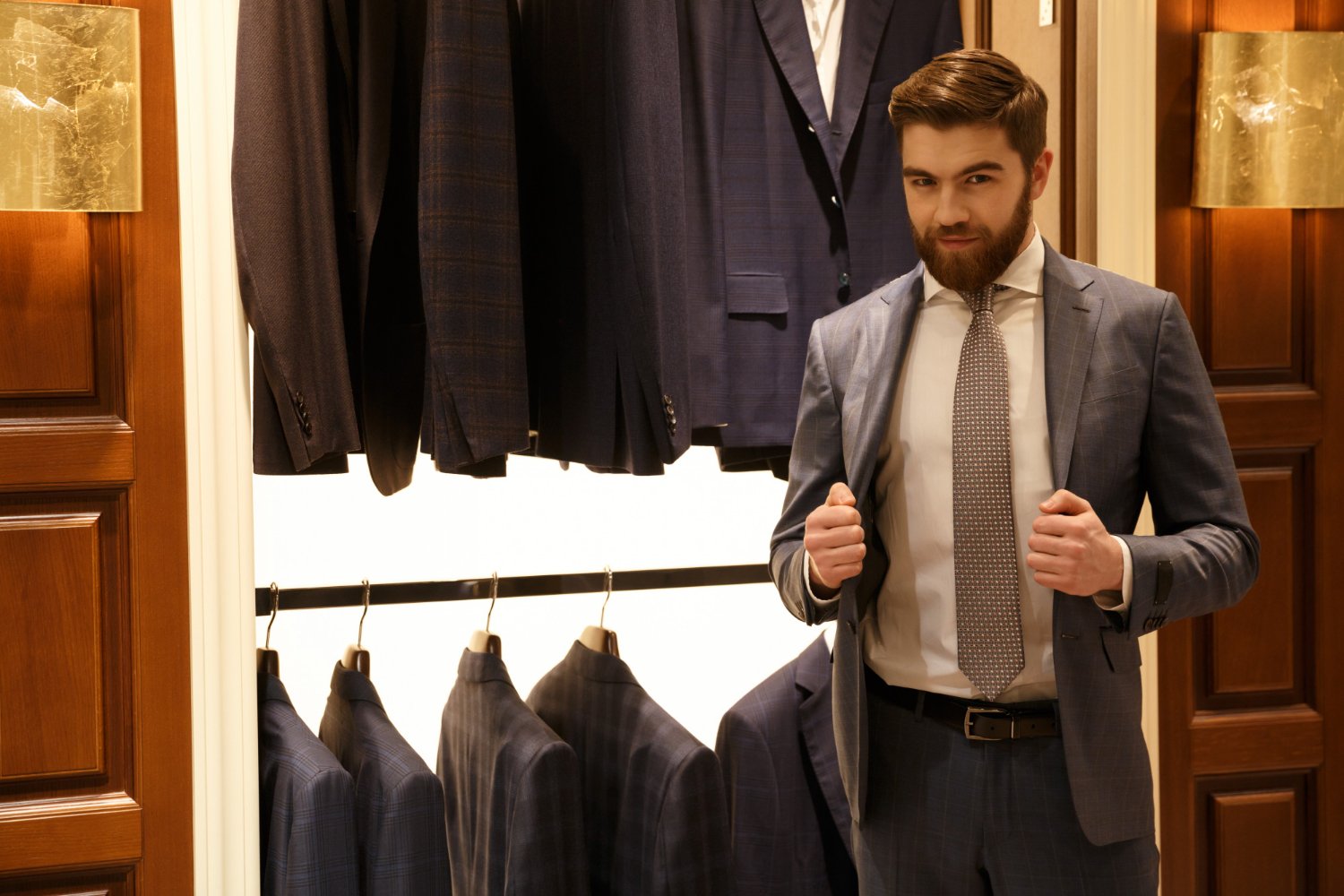
I’ve fitted plenty of men who came in convinced that being under 5’8″ meant certain suits were simply off-limits to them.
Double-breasted jackets, wider lapels, bold patterns — all filed under “not for me” before they’d even tried them on.
Most of that thinking comes from style advice written in general terms, without accounting for the fact that proportion, not height itself, is what actually determines whether a suit works.
Being shorter doesn’t limit what you can wear nearly as much as most advice suggests. What it does is change how precisely certain elements need to be calibrated — jacket length, lapel width, trouser break, pattern scale — to keep your proportions looking balanced rather than overwhelmed.
Get those calibrations right, and there’s very little a shorter man can’t wear convincingly.
This guide covers what actually matters when building a suit wardrobe for a shorter frame: the fit adjustments that make the biggest visual difference, which construction and styling choices flatter versus fight your proportions, and how to avoid the small mistakes that make a well-fitted suit read as ill-fitted from across the room.
Why Proportion Matters More Than Height Alone
The core principle for shorter men is simple to state and easy to get wrong in practice: everything about the suit needs to create the impression of a longer leg line and a cleaner break between upper and lower body.
This isn’t about tricking the eye — it’s about avoiding the specific errors that visually compress a shorter frame further than it needs to be.
A suit cut with the same proportions used for a 6’2″ frame, simply shortened at the hem and sleeve, will almost never look right on a 5’6″ man. The jacket length, lapel width, pocket placement, and even button stance all need to scale down proportionally, not just get trimmed at the edges.
This is exactly why off-the-rack suits, even in the correct size for your chest, often look slightly wrong on shorter frames — the proportions were drafted for an average or taller build and then scaled down incompletely.
Read also: Men’s Suit Guide for Tall Guys
Jacket Length: The Single Biggest Factor
Jacket length affects a shorter man’s silhouette more than almost any other detail. The general rule — jacket hem ending where your thumb naturally curls when your arms hang at your sides, roughly covering your seat — still applies, but shorter men need to lean toward the shorter end of that range rather than the longer end.
A jacket that runs even an inch too long on a shorter frame visually shortens the leg line beneath it, since it’s eating into space that should read as trouser.
This is one of the most overlooked adjustments in ready-to-wear shopping — a jacket that fits correctly through the chest and shoulders often still needs a length adjustment to sit correctly on a shorter torso, and it’s a relatively inexpensive alteration that makes a disproportionate difference in the finished look.
Lapel Width: Smaller, Not Absent
Lapel width should scale with your frame, not just with current trends. A wide lapel on a narrower, shorter frame can visually overwhelm the chest and shoulders, drawing the eye to a proportion that isn’t there to support it.
This doesn’t mean skinny lapels are the only option — it means the lapel width should sit in proportion to your jacket’s chest width and your own frame, typically on the narrower-to-medium end of what’s currently available, rather than the widest options on the rack.
Peak lapels, common on double-breasted jackets, can still work well on a shorter man, provided the jacket length and button stance are calibrated correctly — the danger isn’t the lapel style itself, it’s when every other proportion on the jacket is left at a taller man’s default setting.
Trouser Break and Leg Line
This is where a lot of shorter men unknowingly sabotage an otherwise well-fitted suit. A trouser with a full break — fabric pooling at the ankle — visually shortens the leg significantly, which matters more on a shorter frame than a taller one, where there’s more leg length to spare.
A clean, minimal break, where the trouser just grazes the top of the shoe without any horizontal creasing, keeps the leg line reading as long and uninterrupted as possible. Some shorter men do well with a slight taper through the leg as well, though this should stay subtle — an overly slim trouser paired with a shorter torso can look disproportionate in the opposite direction, making the legs look spindly rather than lengthened.
Trouser Rise and Where It Sits
Trouser rise matters more for shorter men than most style advice acknowledges. A mid-to-slightly-higher rise, sitting at or just above the natural waist, elongates the leg line by giving your torso a cleaner, higher starting point for the leg to visually begin.
A low-rise pair of trousers cuts the leg length shorter by definition, since more of what would otherwise read as “leg” gets absorbed into a lower-slung waistband.
This is a detail worth discussing directly with a tailor if you’re having trousers made or altered — most off-the-rack trousers are cut with a rise that doesn’t account for how much it affects a shorter frame’s proportions specifically.
Sleeve Length and Shirt Cuff
Sleeve length rules don’t change fundamentally for shorter men — a quarter to half inch of shirt cuff should show beyond the jacket sleeve — but the visual impact of getting this wrong is more pronounced on a smaller frame, where every element is doing more proportional work.
A sleeve even slightly too long reads as more disproportionate on a 5’6″ frame than the same excess length would on someone six inches taller, simply because there’s less overall canvas for the eye to average across.
Pattern and Print Scale
This is one of the most practical, underdiscussed pieces of advice for shorter men: pattern scale matters as much as pattern choice.
A large windowpane check or a bold, wide-stripe suit can overwhelm a shorter frame, since the repeat of the pattern doesn’t get enough visual space to read as intentional rather than busy.
Finer patterns — subtle herringbone, narrow pinstripes, tight birdseye weaves — tend to work better, since the smaller repeat scales more naturally to a smaller canvas.
This doesn’t mean bold patterns are entirely off-limits; it means the scale of the pattern should be considered alongside your frame size, the same way lapel width should be.
Color and Contrast Choices
Monochromatic or tonal outfits — where the suit, shirt, and accessories sit in a tighter, more unified color range — tend to elongate the visual line more effectively than high-contrast combinations.
A navy suit with a white shirt and dark tie creates natural breaks in the silhouette at the collar and waist; a suit and shirt in closer tonal ranges (navy suit, light blue shirt, similarly toned tie) creates a smoother, less broken visual line from shoulder to shoe.
This isn’t a rule against contrast entirely — a crisp white shirt against a navy suit is still one of the most reliable combinations in menswear, regardless of height. It’s simply a consideration worth keeping in mind when you’re deciding between two otherwise similar options.
Read also: 20 Suit Outfits for Men on a Budget
Fabric Weight and Drape
Lighter to mid-weight fabrics tend to drape more cleanly on shorter frames than heavier, stiffer fabrics, which can add visual bulk without adding useful structure.
A mid-weight wool in the Super 100–120 range typically drapes well without overwhelming a smaller frame, while heavier flannels or tweeds, while excellent fabrics in general, can read as bulkier on a shorter build unless the cut is kept close to the body.
Single-Breasted vs. Double-Breasted for Shorter Men
Single-breasted suits are generally the more forgiving option for shorter men, simply because there’s less fabric across the front to manage proportionally.
That said, double-breasted suits absolutely can work on shorter frames — the key adjustments are a shorter jacket length than you’d expect, a higher button stance, and a four-button configuration rather than six, which creates a shorter visual line down the chest and avoids the elongated double row of buttons overwhelming a smaller torso.
Dress Code Considerations
None of the core dress code rules change for shorter men — business, business casual, formal, and black tie all follow the same general expectations regardless of height.
What changes is the margin for error. A slightly long jacket or full trouser break might go unnoticed on a taller frame at a business casual event, but the same errors are more visible on a shorter frame, simply because there’s less overall silhouette to distribute the mistake across.
For interviews specifically, a well-tailored single-breasted suit in navy or charcoal, with careful attention to jacket length and trouser break, reads as more put-together on a shorter frame than an off-the-rack suit left unaltered, even if the unaltered suit is technically a nicer fabric.
Common Mistakes Shorter Men Make
Buying a suit sized for the chest and ignoring jacket length entirely. Chest fit is important, but length is often the detail that needs the most correction, and it’s frequently skipped because it’s less obviously “wrong” than a jacket that’s too tight or too loose.
Choosing trousers with too much break. This is the single most common styling mistake I see on shorter men — trousers pooling at the ankle, cutting visual leg length exactly where it matters most.
Over-correcting into overly slim cuts. In trying to avoid looking boxy, some shorter men size down too aggressively, ending up with a jacket that pulls across the chest or trousers so slim they look spindly rather than lengthened. Proportional, not minimal, is the actual goal.
Wearing patterns or textures scaled for a larger frame. A pattern that would read as tasteful on a 6’3″ frame can look busy and overwhelming scaled down to a 5’6″ frame, simply because the same size check or stripe now covers proportionally more of the visible torso.
Building a Suit Wardrobe as a Shorter Man
Start with a single-breasted suit in navy or charcoal, tailored specifically for jacket length and trouser break — these two elements alone will do more for your silhouette than almost any other decision you make. From there, a second suit in a slightly different shade or a subtle fine-scale pattern gives you range without repeating the same fit lessons from scratch.
If you’re working with a tailor for the first time, be specific about jacket length and trouser rise — don’t assume the standard off-the-rack proportions were drafted with your frame in mind, because in most cases, they weren’t.
A tailor who understands proportional scaling, not just taking in the waist or hemming the trousers, will make a far bigger difference to how the finished suit looks on you.
Frequently Asked Questions
Should shorter men avoid double-breasted suits entirely? No, but the jacket needs a shorter length, higher button stance, and ideally a four-button rather than six-button configuration to avoid overwhelming a smaller frame.
Is it better to size down or get a suit tailored for a shorter frame? Tailoring is almost always the better option. Sizing down often creates fit problems elsewhere — a jacket tight through the chest to compensate for length, for instance — rather than solving the actual proportional issue.
Do shorter men need to avoid bold patterns completely? Not entirely, but pattern scale matters. Finer, smaller-repeat patterns tend to translate better to a smaller frame than large-scale checks or wide stripes.
What’s the single most important alteration for a shorter man? Jacket length, followed closely by trouser break. Both directly affect how long or compressed your overall silhouette appears.
Does a higher trouser rise actually make a visible difference? Yes. A rise that sits at or just above the natural waist gives the leg a cleaner, higher starting point, which reads as a longer leg line than a lower-rise pair of trousers would on the same frame.
Should shorter men avoid wide lapels? Very wide lapels can overwhelm a smaller chest, but medium-width lapels, proportional to the jacket’s chest width, work fine. The goal is proportion, not the smallest possible lapel.
Can a shorter man wear a three-piece suit well? Yes, provided the waistcoat is cut to sit cleanly at the natural waist without extending too low, which would otherwise shorten the visible leg line beneath it.
Is monochromatic dressing necessary for shorter men? Not necessary, but it’s a genuinely useful tool for creating a longer visual line, particularly for everyday business wear where you want a clean, put-together look without much effort.
Do shoes make a real difference for a shorter man’s proportions? Yes — a slightly tapered, pointed-toe shoe (without going to extremes) elongates the foot’s visual line more than a rounded, chunky toe shape, which reads as more compact.
Should shorter men work with a tailor from the start rather than buying off-the-rack? It’s not strictly necessary, but it significantly shortens the learning curve. A tailor who understands proportional scaling for shorter frames will save you multiple rounds of buying suits that don’t quite work before you land on the right formula.
Final Thoughts
Height was never the actual constraint — proportion was, and proportion is entirely something you can control through fit, length, and scale, regardless of how tall you are. A shorter man in a suit that’s been properly calibrated for his frame will look sharper than a taller man in an ill-fitted one, every time.
Get the jacket length and trouser break right before worrying about anything else, and the rest of the suit will fall into place far more easily than you’d expect.
Read also: