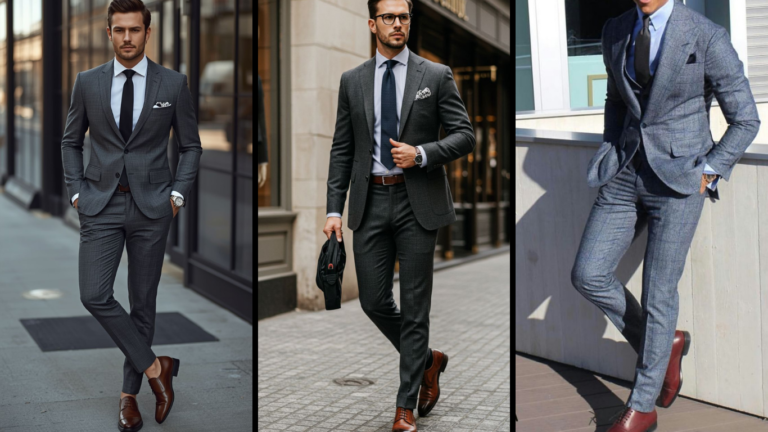
20 Suit Outfits for Men Over 40
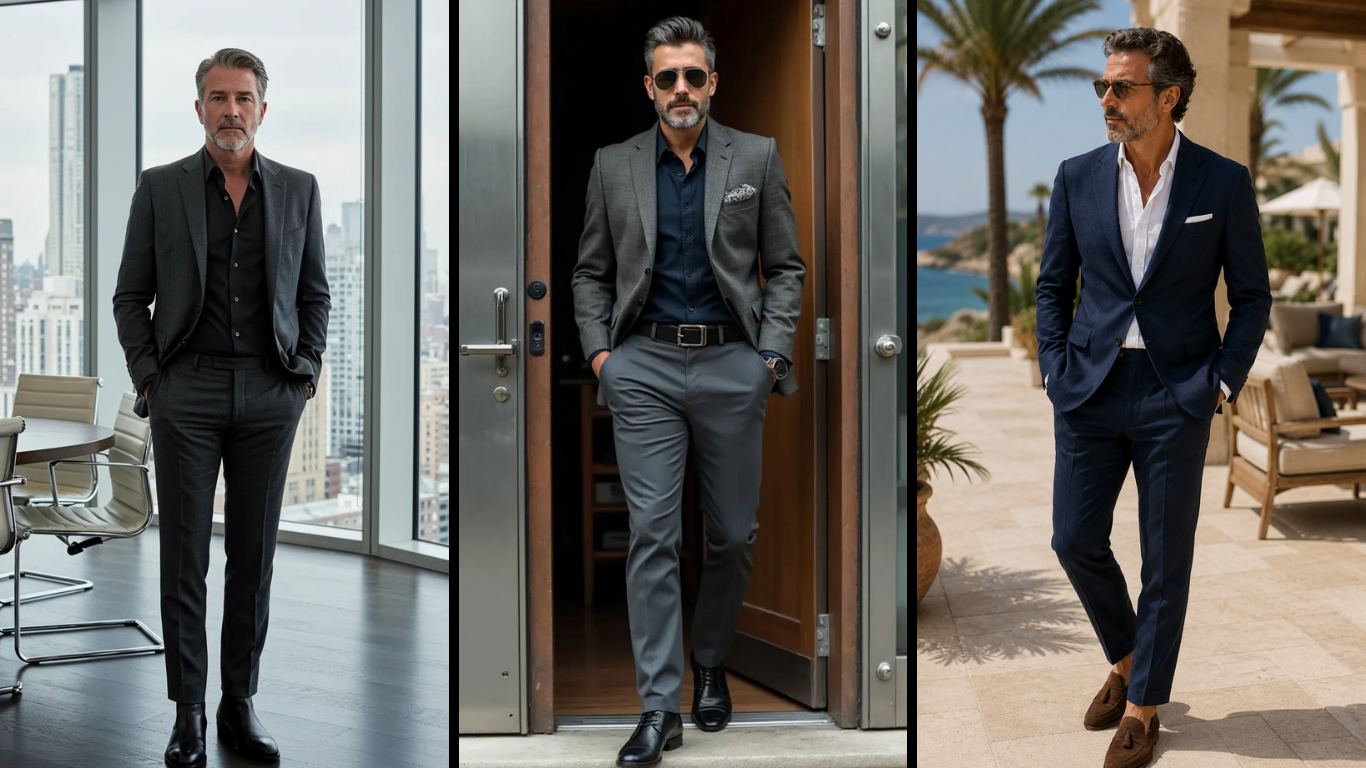
There’s a particular kind of confidence that comes with age when it comes to dressing well — you’ve stopped chasing trends and started understanding what actually works for you.
But that shift also means the rules that served you in your twenties don’t always apply anymore. Fit changes. Priorities change.
What looked sharp at 28 can look like you’re trying too hard at 45, and what would have looked stuffy at 25 can look genuinely elegant now.
I’ve fitted more men in their 40s, 50s, and 60s than almost any other age group, and the conversation is rarely about hiding anything. It’s about proportion, quality, and choosing pieces that reflect an established sense of style rather than a borrowed one.
A well-dressed man over 40 doesn’t need a wardrobe full of statement pieces. He needs a handful of suits that fit properly, fabrics that age well, and the confidence to wear them without over-explaining the choice.
This guide covers 20 suit outfits built specifically with that stage of life in mind — outfits that read as authoritative, comfortable, and current without trying to look twenty-five years younger than you are.
Fit Considerations That Actually Matter After 40
A few fit principles are worth understanding before getting into specific outfits, because they apply across nearly every look on this list.
Trouser rise matters more than most men realize. A slightly higher rise, sitting closer to the natural waist rather than low on the hips, tends to look more proportionate and comfortable as your build changes with age. It also holds a shirt tuck cleaner throughout the day.
Room through the midsection isn’t a compromise — it’s correct tailoring. A suit that’s slim through the chest and shoulders but has a touch more room through the waist and seat will always look sharper than a uniformly slim cut that pulls or bunches. This isn’t about “hiding” anything; it’s about a jacket that drapes properly instead of fighting your body.
Structured shoulders help posture read better. A well-padded, structured shoulder creates a straighter, more confident silhouette, which matters more as posture naturally shifts with age. An unstructured, soft-shoulder jacket can look slightly deflated on a frame that would benefit from more structure.
The quality of the fabric shows more than it did at 25. Cheaper suiting tends to look cheaper on a mature man in a way it doesn’t always on someone younger — the eye reads age and refinement together, so a suit that looks slightly synthetic or shiny undercuts an otherwise put-together outfit. Investing in genuine wool, even at a mid-range price point, pays off visibly.
1. The Foundational Executive Look: Navy Suit, White Shirt, Burgundy Tie
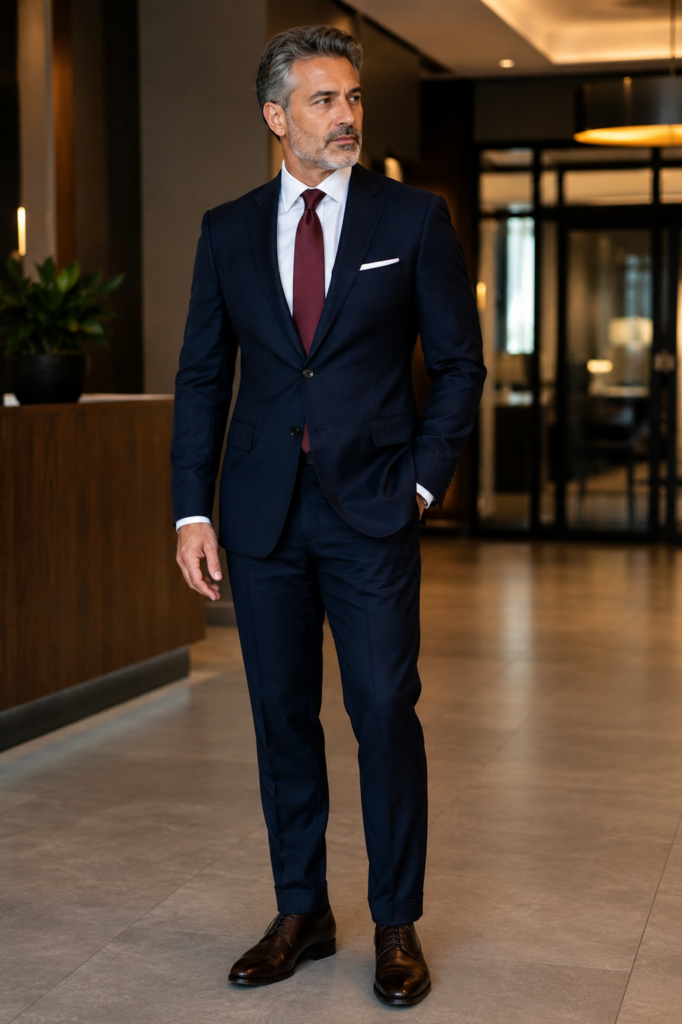
Every man over 40 should have this combination down without having to think about it.
The pieces:
- Navy suit, worsted wool, structured shoulder
- White dress shirt, spread collar
- Burgundy silk tie
- Black leather oxfords
- Black belt
- White pocket square, straight fold
Why it works: This combination has remained a cornerstone of professional dressing for decades because the contrast between navy, white, and burgundy is universally flattering and reads as confident without being flashy. At this stage of life, that reliability is an asset, not a limitation.
One of the biggest mistakes I see with men in this age bracket is holding onto a suit fit from a decade or two earlier, when their build was different. Have your existing navy suits reassessed by a tailor rather than assuming the fit still works exactly as it did when you bought them.
Best for: Client meetings, board presentations, any setting where established authority matters.
2. Boardroom Authority: Charcoal Suit, Light Blue Shirt, Silver Tie
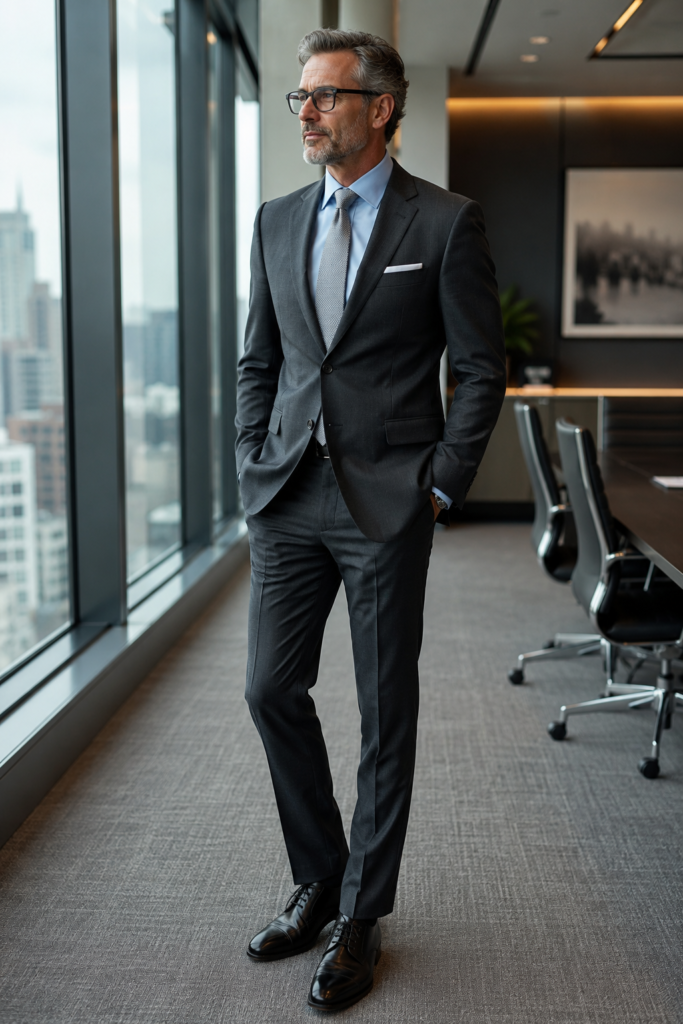
A slightly softer, more sophisticated alternative to the classic white-shirt combination.
The pieces:
- Charcoal suit, fine worsted wool
- Light blue shirt
- Silver-grey silk tie, woven texture
- Black oxfords
- Black belt
Why it works: Light blue against charcoal is gentler on the eyes and complexion than stark white, which can look slightly harsh against skin tones that have changed with age. Silver-grey adds a note of sophistication without the higher contrast of a bolder tie color.
This detail is often overlooked but makes a noticeable difference: as skin tone shifts over the years, softer shirt colors like light blue or ecru can be genuinely more flattering than pure white, which sometimes creates a starker, less warm contrast against the face.
Best for: Board meetings, senior leadership presentations, and formal client-facing roles.
Read also: Linen Suit Outfits for Men: 12 Summer Ideas
3. Elevated Business Casual: Mid-Grey Suit, White Shirt, No Tie

A refined, tie-free look that still holds its authority.
The pieces:
- Mid-grey suit
- White shirt, top button undone
- Brown leather loafers or derbies
- Brown belt
Why it works: Removing the tie doesn’t mean removing the polish, provided the suit fit and shirt quality carry the outfit. This look works particularly well for men who’ve earned enough professional standing that dropping the tie reads as confidence rather than a lack of effort.
A small tailoring adjustment can completely change how a suit looks here. Without a tie to draw the eye downward, the shirt collar needs to sit cleanly on its own — a properly fitted collar band is worth checking with your tailor if you’re planning to wear this look regularly.
Best for: Business casual offices, client meetings with a relaxed dress code, and industry conferences.
4. Weekend Refined: Navy Suit, Chambray Shirt, Suede Loafers
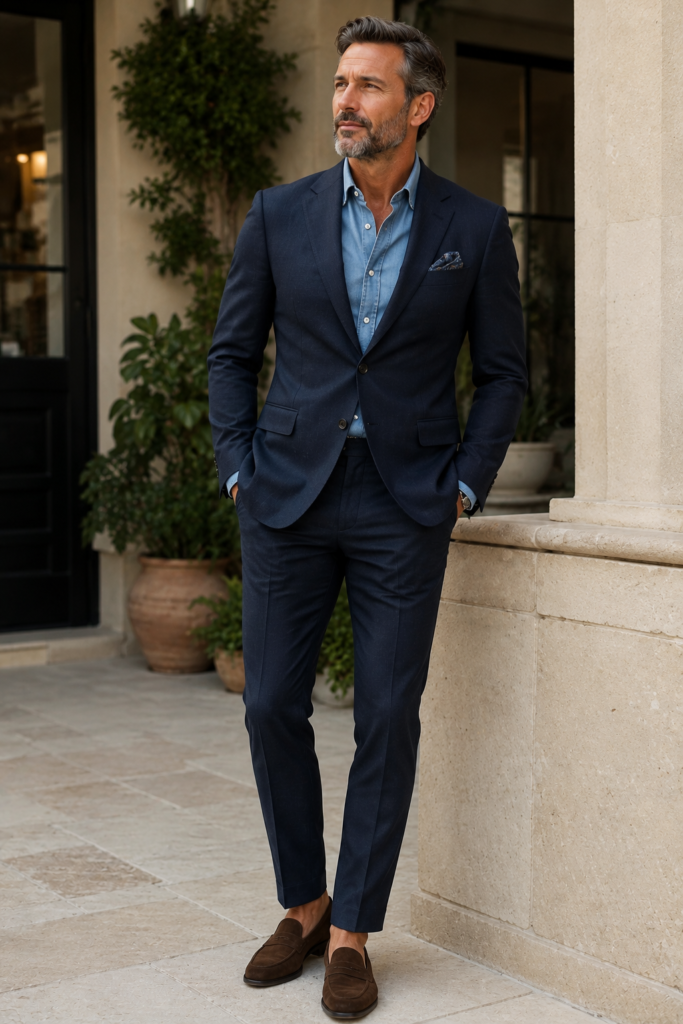
A relaxed but still put-together weekend outfit.
The pieces:
- Navy suit, softer construction
- Chambray shirt, open collar
- Brown suede loafers
- Brown belt
Why it works: Chambray brings a lived-in, textured quality that suits a more relaxed weekend register, and suede loafers continue that same casual sophistication rather than looking like leftover business footwear. This is the outfit for men who want to wear a suit socially without it reading as “work clothes on a day off.”
If you’re building a weekend wardrobe around suiting for the first time, prioritize a softer, half-canvas construction over your business suits — it drapes and moves more naturally without a tie.
Best for: Weekend social events, casual dinners, informal gatherings with friends.
5. Formal Evening: Charcoal Suit, White Shirt, Black Tie
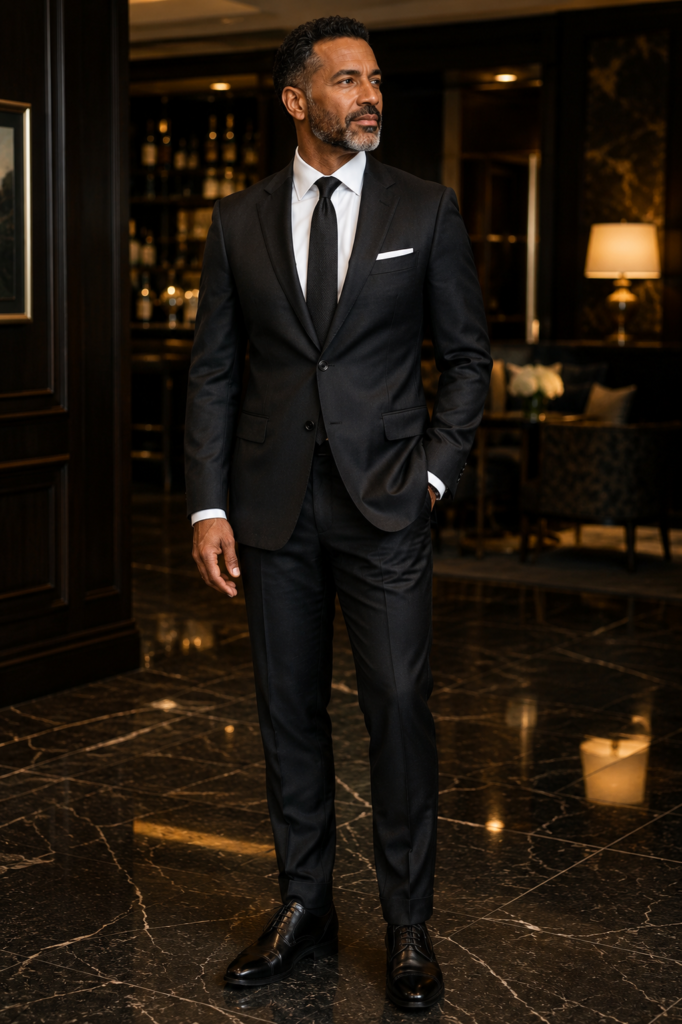
For occasions that call for real formality without a full tuxedo.
The pieces:
- Charcoal suit, fine worsted wool
- White shirt, French cuffs
- Black silk tie
- Black oxfords, polished
- Black belt
Why it works: Charcoal holds enough weight and formality to substitute for black at most black-tie-optional events, and this combination has aged well precisely because it doesn’t rely on any trend-driven detail. It’s a look that will remain appropriate for decades.
Best for: Formal dinners, evening galas, black-tie-optional weddings, award ceremonies.
6. Winter Sophistication: Grey Flannel Suit, Fine Turtleneck
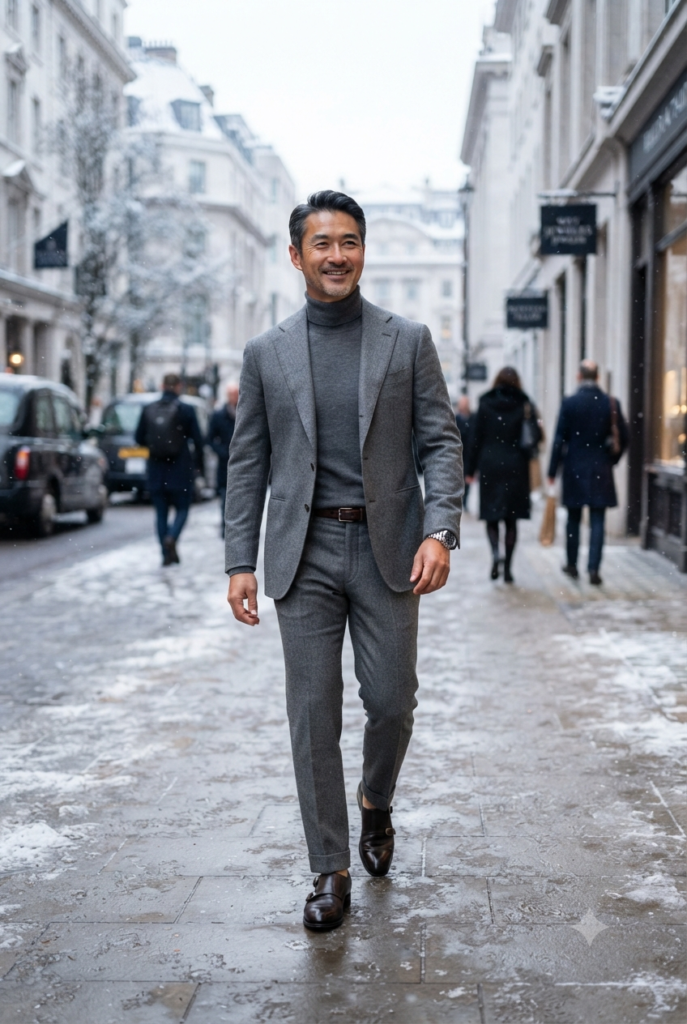
A genuinely elegant cold-weather combination that skips the shirt and tie entirely.
The pieces:
- Grey flannel suit, medium to heavy weight
- Fine merino turtleneck, charcoal, navy, or burgundy
- Suede Chelsea boots
- No belt
Why it works: Flannel’s soft, brushed texture pairs naturally with a knit turtleneck, and the whole combination reads as continental, understated elegance rather than trying too hard to look modern. This look has genuine staying power — it’s been a staple of sophisticated dressing for generations.
This detail is often overlooked but makes a noticeable difference: a turtleneck in a finer, lighter merino wool sits better under a jacket than a bulkier knit, which can add unwanted volume through the torso.
Best for: Winter dinners, holiday gatherings, evening social events, cold-weather business casual settings.
7. Smart Casual Office: Navy Suit, Oxford Button-Down, Knit Tie
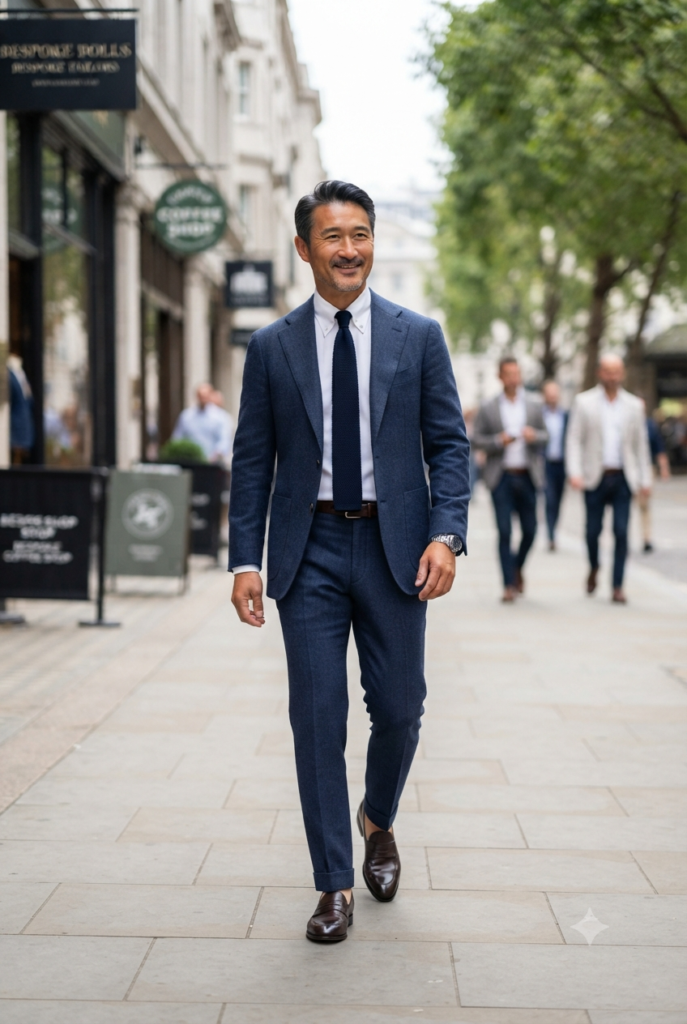
A layered but still relaxed office look.
The pieces:
- Navy suit
- White or light blue Oxford cloth button-down shirt
- Navy or burgundy knit tie, square bottom
- Brown derbies
- Brown belt
Why it works: The Oxford button-down’s slightly heavier weave and buttoned collar give this outfit a more substantial, grounded feel than a standard dress shirt, and the knit tie’s matte texture keeps the whole combination from looking overly formal. This is a distinguished, comfortable middle ground between full business formality and true casual dress.
Best for: Smart casual offices, industry events, and client meetings that don’t require full formality.
8. Summer Elegance: Stone Suit, White Shirt, No Tie
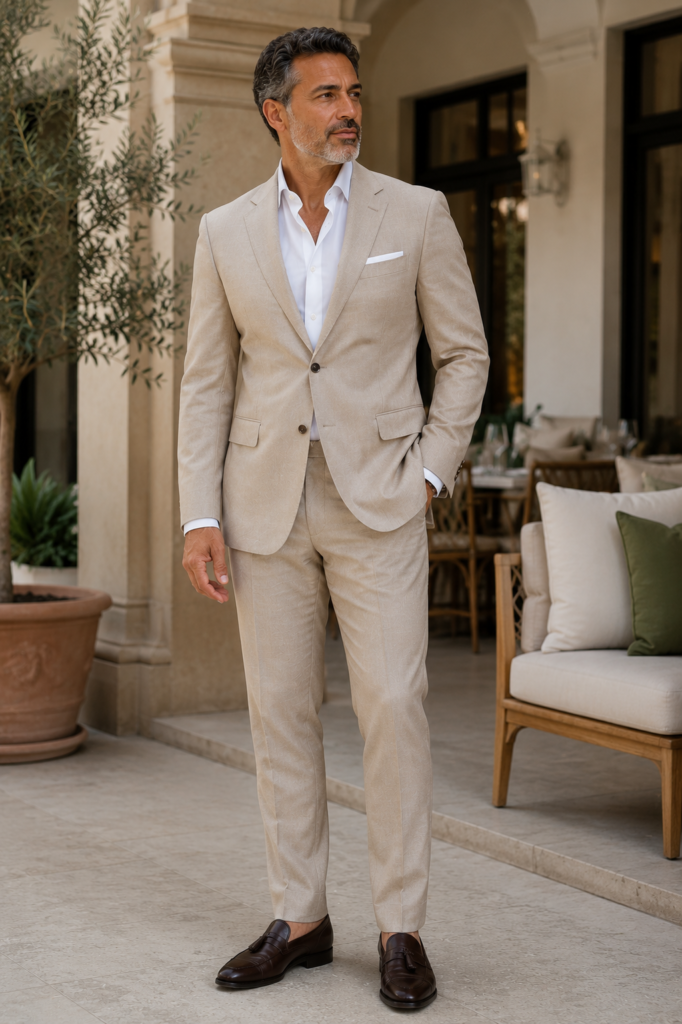
A lightweight, warm-weather suit that still carries real sophistication.
The pieces:
- Stone or light tan suit, linen-wool blend
- White shirt, open collar
- Brown suede loafers, no socks or low socks
- Brown belt
Why it works: Stone is a genuinely flattering color for mature complexions, warmer and softer than a stark white-and-navy combination, and it photographs beautifully in summer daylight. This is a suit color that reads as confident rather than trend-chasing.
Fabric choice matters more than color in summer heat. A linen-wool blend breathes considerably better than standard year-round wool and holds its shape reasonably well through a warm day without wrinkling excessively.
Best for: Summer social events, daytime weddings, warm-weather business casual settings.
9. Formal Occasion: Charcoal Three-Piece Suit, White Shirt, Tie
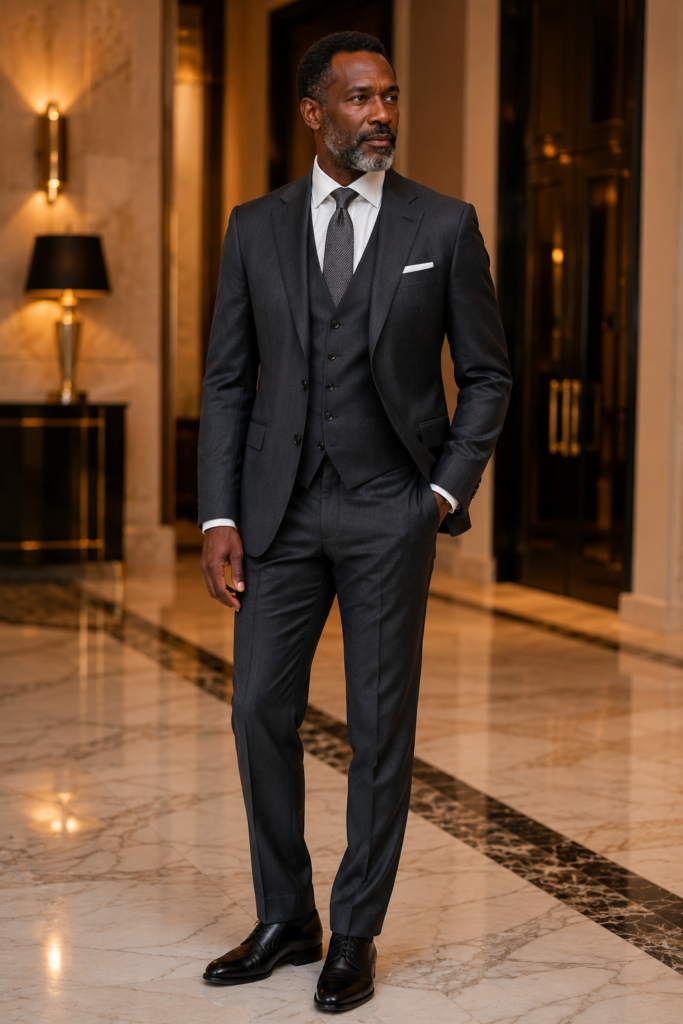
A waistcoat adds genuine gravitas for formal events and wedding attendance.
The pieces:
- Charcoal three-piece suit, matching waistcoat
- White shirt
- Burgundy or deep green tie
- Black oxfords
- Pocket watch chain (optional)
Why it works: A waistcoat has always read as a mark of real formalwear sophistication, and it suits a mature man’s wardrobe particularly well — it’s a detail that signals experience and attention to tradition rather than a passing trend. It also provides a useful structure if you remove the jacket during a long event.
One detail people forget: the bottom button of a waistcoat is traditionally left undone. It’s a small thing, but it’s exactly the kind of detail that signals genuine familiarity with formalwear conventions.
Best for: Weddings, formal galas, milestone celebrations, holiday events.
10. Weekend Social: Navy Suit, Gingham Shirt, No Tie
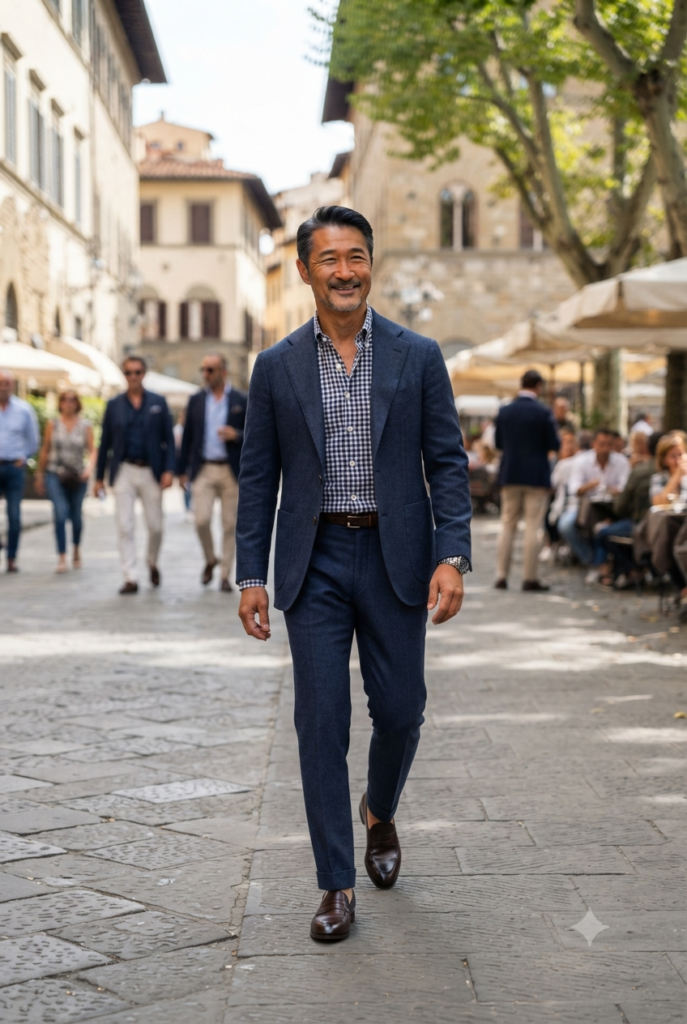
A polished but relaxed look for informal social gatherings.
The pieces:
- Navy suit, softer construction
- Blue-and-white gingham shirt, open collar
- Brown loafers
- Brown belt
Why it works: Gingham’s small-scale pattern reads as texture rather than a bold statement, keeping this outfit understated and appropriate for a wide range of casual social settings. Navy’s reliability as a neutral means this combination will look right at almost any relaxed daytime gathering.
Best for: Weekend brunches, casual parties, informal social events, daytime family gatherings.
11. Fall Countryside: Herringbone Tweed Suit, Brown Brogues
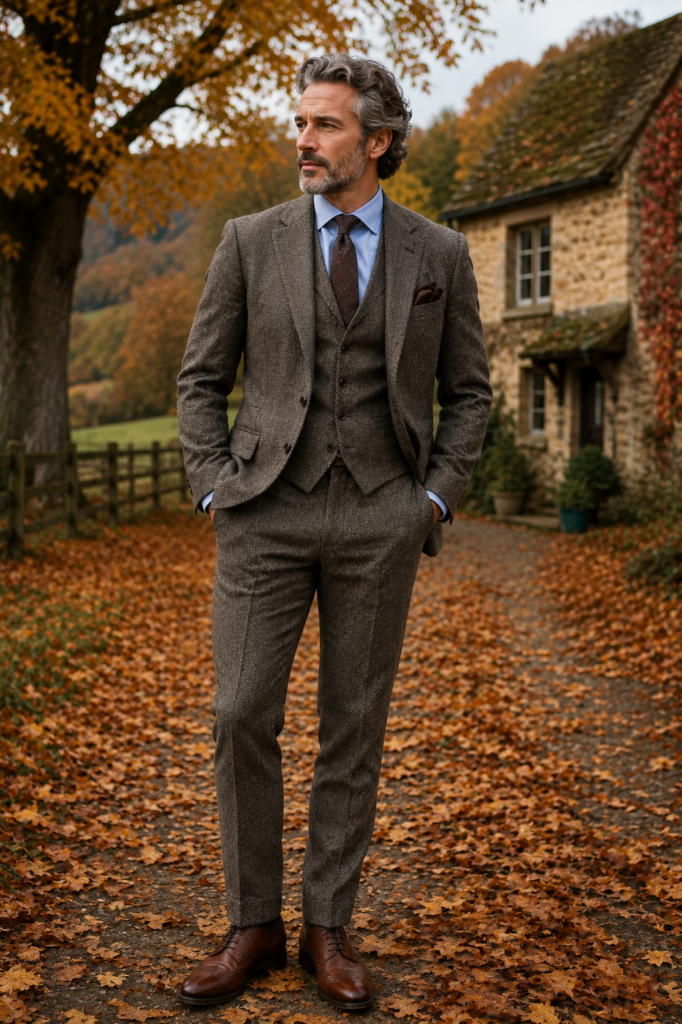
Texture and heritage character define this genuinely distinguished autumn look.
The pieces:
- Grey or brown herringbone tweed suit
- Ecru or pale blue shirt
- Brown wool tie
- Brown brogues
- Brown belt
Why it works: Tweed carries an inherent sense of tradition and quality that suits a more established, confident stage of dressing, and its texture is naturally suited to cooler fall weather. This is a look that reads as timeless rather than trend-driven — tweed has looked this good for well over a century.
Best for: Fall business casual events, countryside weekends, university or heritage-adjacent social settings.
12. Country Club Casual: Navy Suit, Polo Shirt, Loafers
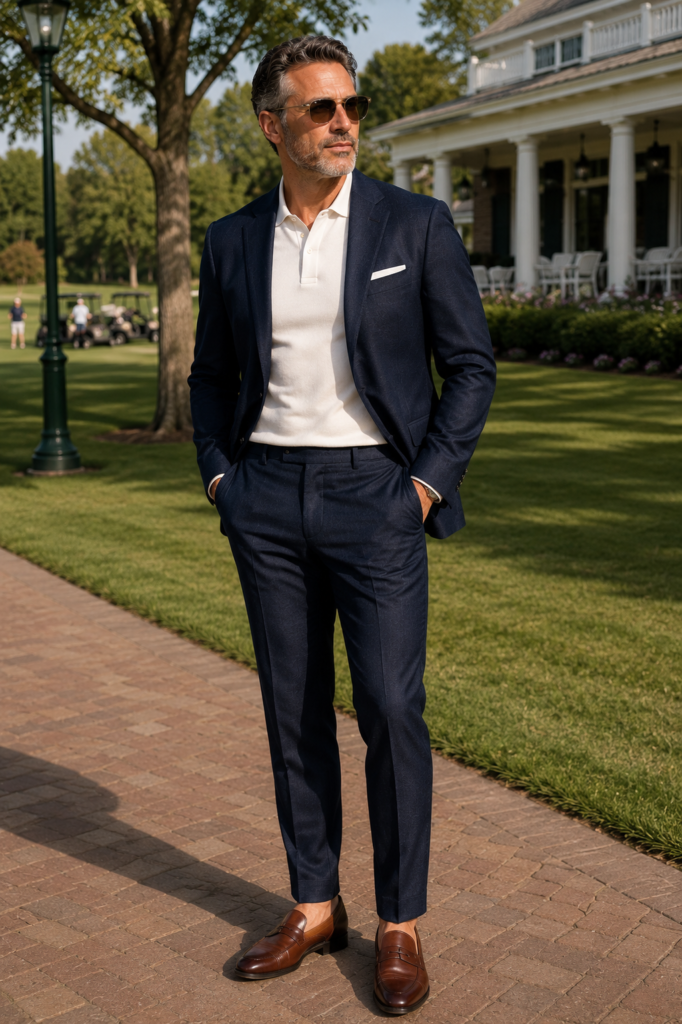
A refined, warm-weather take on suiting that skips the dress shirt entirely.
The pieces:
- Navy suit, lightweight wool or linen blend
- White or navy pique polo shirt, tucked
- Brown suede loafers
- Brown belt
Why it works: A polo shirt under a suit jacket carries genuine country-club sophistication rather than looking underdressed, provided the polo fits close to the body. This is a comfortable, warm-weather combination that still reads as considered and put-together.
Best for: Summer social events, country club settings, warm-weather daytime gatherings.
13. Distinguished Pattern Mixing: Grey Suit, Striped Shirt, Solid Tie
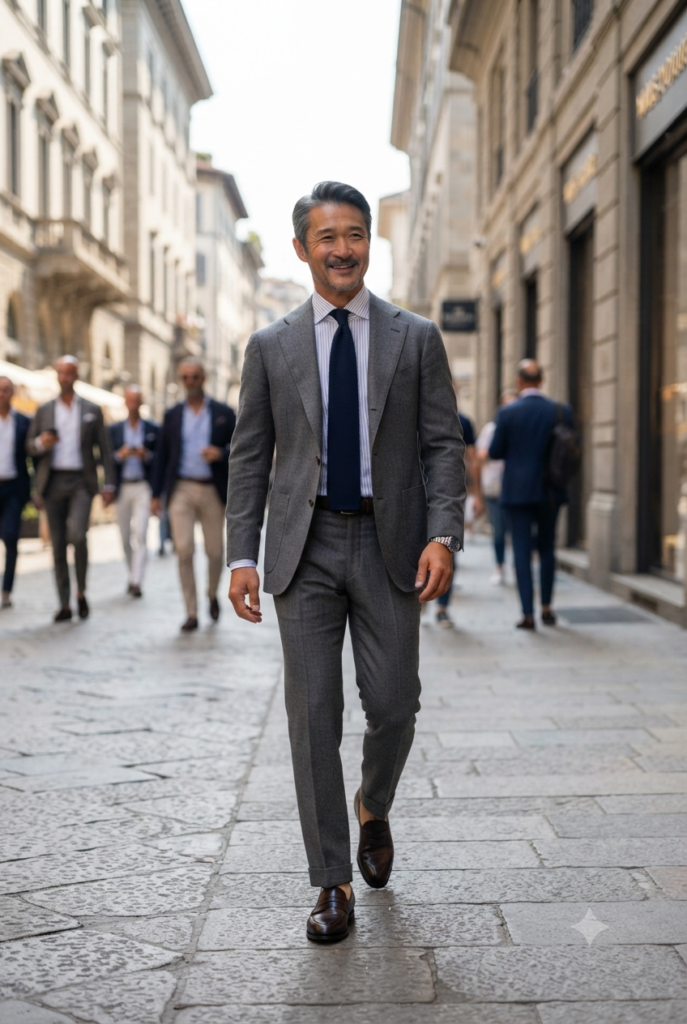
A subtle way to introduce pattern into an established wardrobe without looking like you’re chasing a trend.
The pieces:
- Mid-grey suit, solid
- Blue-and-white striped shirt, university or Bengal stripe
- Solid navy or burgundy tie
- Black or brown shoes
- Solid pocket square
Why it works: The classic pairing rule — pattern with solid, not pattern with pattern — keeps this outfit looking deliberate and controlled. A striped shirt has been a hallmark of sophisticated dressing for generations, which makes it a naturally age-appropriate way to add visual interest.
This detail is often overlooked but makes a noticeable difference: stripe width should scale with your build, and a slightly wider or bolder stripe often suits a more established, confident frame better than an overly fine, subtle one.
Best for: Business presentations, graduation ceremonies, semi-formal daytime events.
14. Elevated Power Look: Navy Double-Breasted Suit, White Shirt, Burgundy Tie
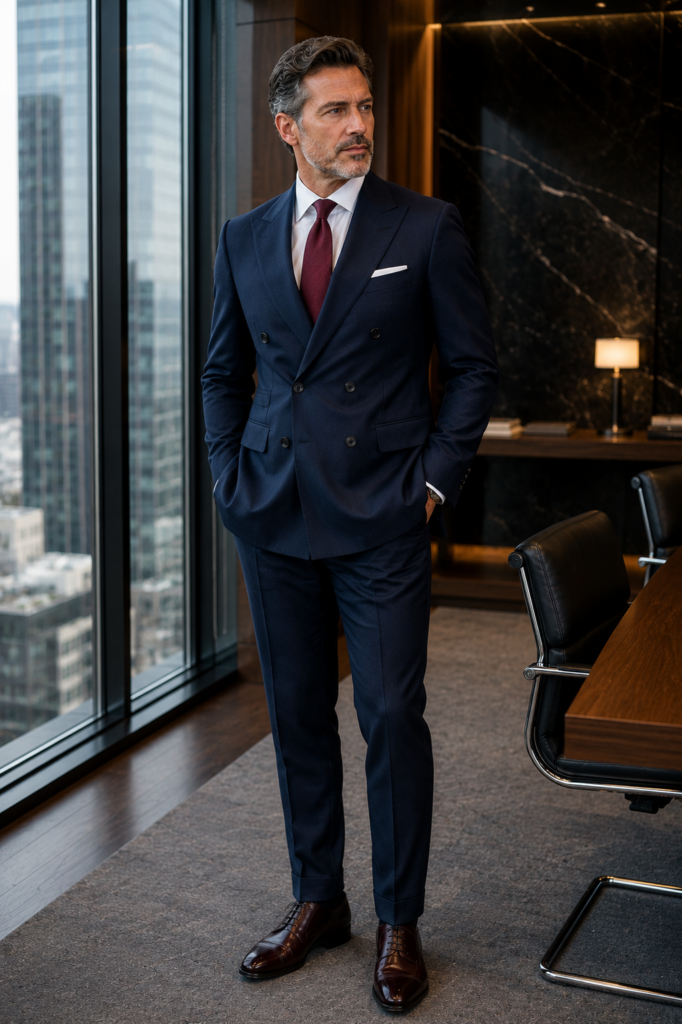
Double-breasted suits carry a natural, confident authority that suits a more mature wardrobe well.
The pieces:
- Navy double-breasted suit, peak lapel
- White shirt
- Burgundy tie
- Black oxfords
- Black belt
Why it works: The structured, wrap-front silhouette of a double-breasted jacket reads as commanding and self-assured, and navy keeps it from tipping into costume territory. This is a genuinely flattering cut for a broader range of builds than people assume, provided the tailoring is precise.
Fit is non-negotiable here. A double-breasted jacket needs to close cleanly across the buttons without pulling. If your build has changed since you last wore this style, have the jacket reassessed before wearing it to an important event.
Best for: Senior leadership settings, formal business dinners, situations calling for real authority.
15. Confident Color Choice: Olive Suit, White Shirt, Brown Tie
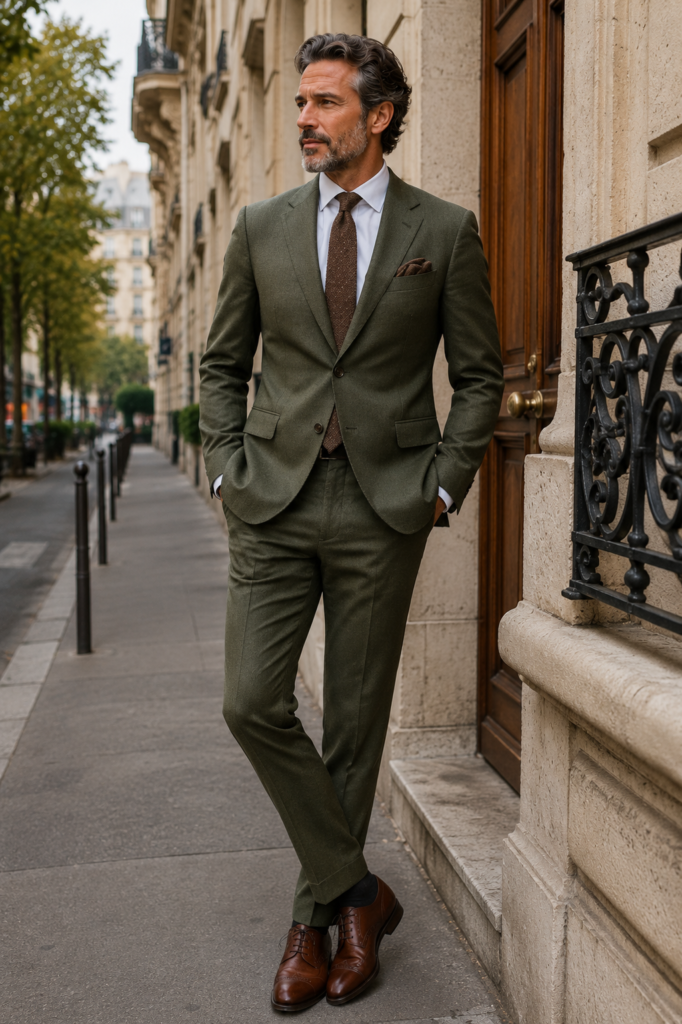
An understated but distinctive color choice for men comfortable stepping slightly outside navy and grey.
The pieces:
- Olive suit, wool or wool-cotton blend
- White or ecru shirt
- Brown or rust tie
- Brown oxfords or brogues
- Brown belt
Why it works: Olive carries an earthy sophistication that reads as considered rather than flashy, and it’s a genuinely flattering color against a wide range of complexions. This is the kind of color choice that signals an established sense of personal style rather than trend-following.
Best for: Fall business events, semi-formal social gatherings, situations where a bit of color distinguishes you without drawing too much attention.
16. Sophisticated Evening Casual: Charcoal Suit, Fine Turtleneck, No Tie

A genuinely elegant evening look that trades the shirt and tie for something more contemporary.
The pieces:
- Charcoal suit, slightly softer construction
- Fine merino turtleneck, black or navy
- Suede chelsea boots
- No belt
Why it works: This combination carries a European, understated elegance that has aged extremely well as a menswear staple — it doesn’t read as chasing a fashion moment, but as a genuinely considered style choice. Charcoal and a fine knit together create a rich, tonal look appropriate for evening settings.
Best for: Dinners, evening social events, cultural events like theater or gallery openings.
17. Resort Look: Navy Suit, Linen Shirt, No Tie, Loafers
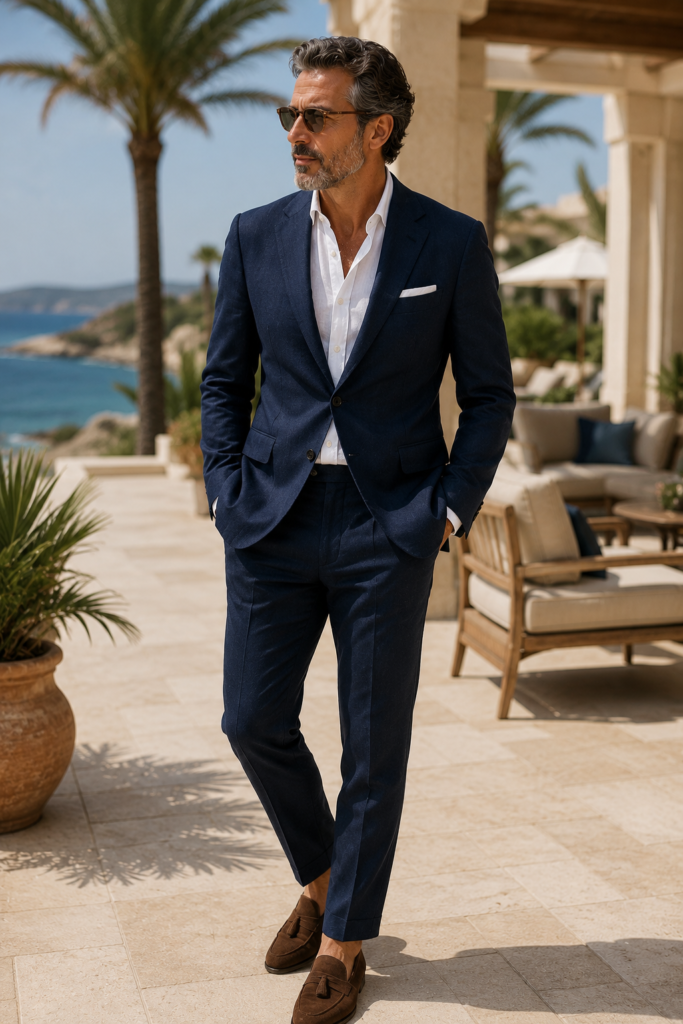
Built for warm-climate travel and vacation settings without sacrificing polish.
The pieces:
- Navy suit, linen-wool blend
- White linen shirt, open collar
- Brown suede loafers, no socks
- Brown belt
Why it works: Linen’s relaxed drape and breathability suit warm-climate travel, and this combination reads as put-together without being overly formal for a resort or vacation setting. It’s a genuinely comfortable option for warm-weather dinners while traveling.
Best for: Resort dinners, warm-climate vacations, destination social events.
18. Formal Evening Event: Midnight Blue Suit, White Shirt, Black Bow Tie
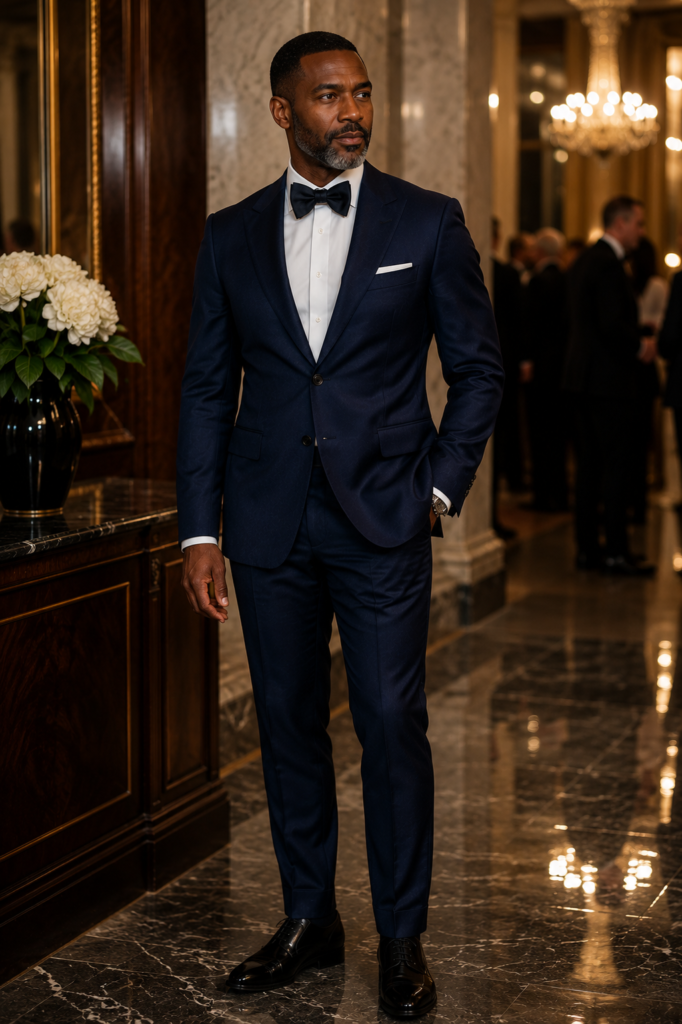
A classic alternative to a tuxedo for events that call for real formality after dark.
The pieces:
- Midnight blue suit, fine worsted wool
- White shirt, French cuffs
- Black silk bow tie, self-tie
- Black patent or high-shine oxfords
- Black belt
Why it works: Midnight blue has a long history as an alternative to true black for evening formalwear, since it photographs and reads as even darker than black under artificial lighting while retaining a touch more richness. This is a genuinely sophisticated, tested combination for black-tie-optional events.
If you’re buying your first bow tie, learn to self-tie rather than relying on a pre-tied version — the slightly imperfect knot of a hand-tied bow tie is part of what signals real formalwear knowledge.
Best for: Black-tie-optional galas, formal evening weddings, milestone celebration dinners.
Read also: Tweed Suit Outfits for Men: 12 Ideas
19. Heritage Elegance: Grey Glen Check Suit, White Shirt, Solid Tie
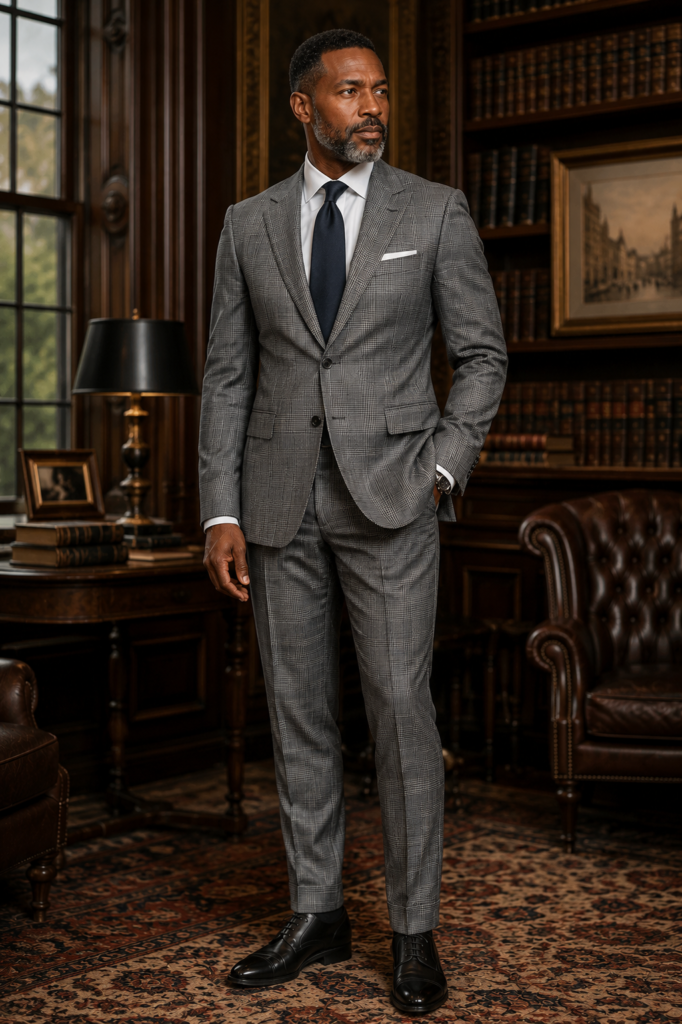
A pattern with genuine history, suited to a wardrobe built on tradition rather than trend.
The pieces:
- Grey glen check suit
- White shirt
- Solid burgundy or navy tie
- Black or brown oxfords
- Matching belt
Why it works: Glen Check has been a staple of sophisticated tailoring for well over a century, and its subtle woven pattern reads as texture rather than a bold statement. This suit brings genuine character to a business or semi-formal wardrobe without needing to chase anything current.
Best for: Business events, semi-formal daytime occasions, situations where subtle pattern signals refined taste.
20. Refined Everyday Versatility: Navy Suit, White Shirt, No Tie, Pocket Square, Monk Straps
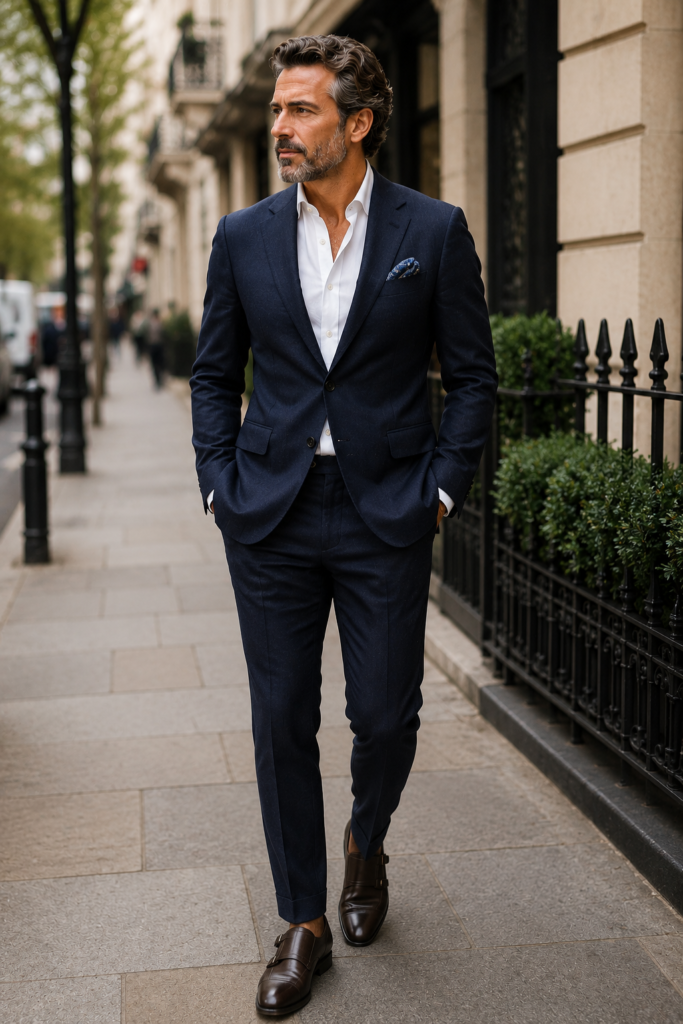
A polished, tie-free look that still carries genuine formality through its details.
The pieces:
- Navy suit
- White shirt, top button undone
- Black double monk-strap shoes
- Black belt
- White pocket square, straight fold
Why it works: Monk straps carry more visual weight and formality than a standard oxford or loafer, which means this outfit can skip the tie entirely while still reading as polished and deliberate. This is the kind of detail-driven sophistication that comes with genuine experience in dressing well — knowing which single element can carry an entire outfit’s formality.
Best for: Business casual settings, client meetings, everyday professional wear where you want polish without a tie.
A Few Principles That Apply Across All 20 Looks
Fit is the single biggest investment you can make. At this stage, a well-tailored mid-range suit will always outperform an expensive one that doesn’t account for your current build. Revisit your existing suits with a tailor rather than assuming they still fit the way they did years ago.
Quality fabric shows, and it’s worth the investment. A genuine wool suit in a classic weave holds its shape and drapes properly in a way synthetic blends simply don’t, and that difference becomes more visible — not less — as you get older.
Confidence in classic choices reads better than chasing trends. The outfits on this list have staying power precisely because they aren’t built around a passing style moment. That’s an asset, not a limitation.
Frequently Asked Questions
Should men over 40 wear slim-fit suits? Generally, a classic or modern fit — tailored through the chest and shoulders with a bit more room through the waist and seat — looks more proportionate than an overly slim cut, which can look restrictive rather than sharp on a mature build.
What suit colors are most flattering for men over 40? Navy, charcoal, and mid-grey remain the most reliable choices. Warmer tones like olive, stone, and tan are also genuinely flattering and can read as more considered than defaulting to the same navy suit repeatedly.
Is it appropriate for a man over 40 to wear a suit without a tie? Yes, and it’s a common, appropriate choice in business casual settings. The key is making sure the shirt collar and overall fit carry the formality that the tie would otherwise provide.
Should the trouser rise change as men get older? A slightly higher rise, sitting closer to the natural waist, tends to be more comfortable and proportionate than a low-rise cut, and it holds a shirt tuck better throughout the day.
What fabric weight works best for a suit worn across multiple seasons? A mid-weight worsted wool, roughly 9 to 11 ounces, offers the most year-round versatility, while lighter linen blends and heavier flannels serve specific summer and winter needs.
Are double-breasted suits appropriate for men over 40? Yes — in fact, this age range often carries the double-breasted silhouette particularly well, provided the fit through the chest and waist is precise.
How often should suits be re-tailored as a man’s build changes with age? It’s worth having your suits reassessed by a tailor every couple of years, or any time you notice a favorite suit fitting differently than it used to. Small adjustments to the waist or trouser rise can extend a suit’s life significantly.
What’s the biggest style mistake men over 40 make with suits? Wearing a fit that was tailored for a different body years ago, rather than adjusting the suit — or buying new ones — as their build changes. A suit that fit perfectly a decade ago rarely fits the same way now.
Should men over 40 avoid trends entirely? Not entirely, but it’s worth being selective. Adopting a trend that suits your existing style — like pairing a suit with a fine turtleneck — tends to look more considered than chasing every seasonal shift.
What’s the most versatile suit for a man over 40 to own first? A well-tailored navy suit in a mid-weight worsted wool remains the most versatile single investment, covering business, semi-formal, and many social occasions.
Final Thoughts
Dressing well after 40 isn’t about holding onto an old approach or overcorrecting into something younger and trendier. It’s about understanding your build, investing in fabric and tailoring that actually last, and choosing combinations that reflect genuine confidence rather than borrowed style. The twenty outfits above aren’t a checklist — they’re a demonstration of how much range and sophistication a well-considered suit wardrobe can offer at this stage of life.
Get the fit right, choose fabrics that age well, and wear these combinations with the same confidence you’ve earned in every other part of your life. That’s what separates a man who looks distinguished from one who simply looks dressed up.
Read also: