Men’s Suit Guide for Tall Guys
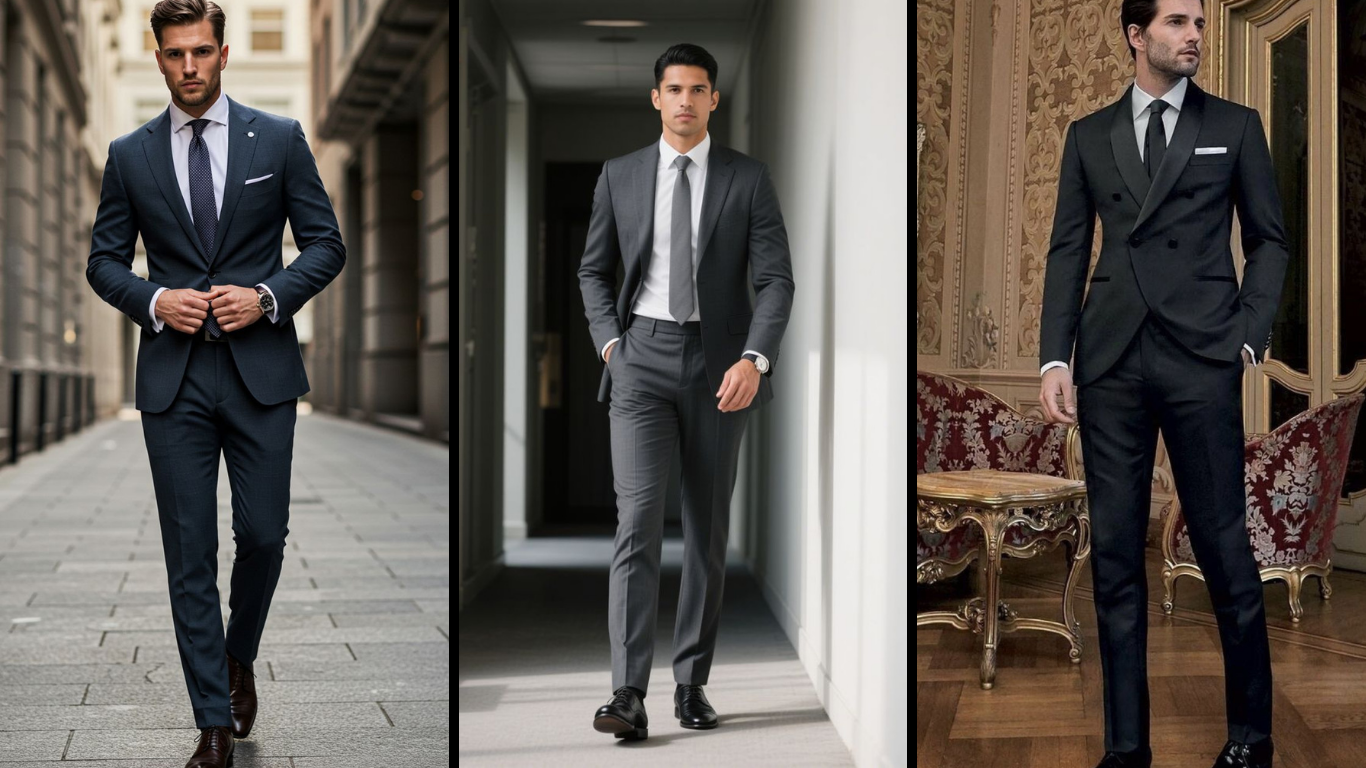
If you’re over 6’2″, you’ve probably had this experience: you find a suit that fits reasonably well through the chest, but the sleeves stop a couple of inches short of your wrist, the trousers hit somewhere around your shin, and the jacket length looks like it was designed for someone six inches shorter than you.
This isn’t bad luck. It’s the reality of an industry that drafts most off-the-rack suits around an average height, which leaves taller men working harder to find pieces that actually fit before any tailoring even begins.
The good news is that height gives you real advantages in a suit. A longer frame carries visual weight well, handles bolder proportions with more ease, and can wear silhouettes — six-button double-breasted jackets, wider lapels, longer jacket lengths — that would overwhelm a shorter build.
The challenge isn’t whether tall men can wear suits well. It’s finding pieces cut with enough length in the right places, and understanding which proportions to lean into rather than fight.
This guide covers what actually matters for taller men building a suit wardrobe: where off-the-rack sizing typically falls short, which fit adjustments matter most, and how to use your height as an advantage rather than something to compensate for.
Where Off-the-Rack Sizing Falls Short
Most ready-to-wear suits are cut using a standard length assumption tied to chest size — a 42-inch chest jacket, for instance, is typically drafted assuming a “regular” height range, somewhere around 5’9″ to 5’11”.
If you’re 6’3″, that same 42-inch chest jacket in a regular length will be noticeably short in the sleeve and jacket body, even though the chest measurement is correct.
This is why “long” sizing exists as a separate category from “regular,” and it’s worth seeking out specifically rather than assuming a size up in regular length will solve the problem.
Sizing up in regular length to compensate for a taller frame usually just gives you a jacket that’s too wide through the chest and shoulders while still being too short in the body and sleeves — solving nothing and creating a new problem in the process.
If you can’t find a long-sized option in a style you want, factor in tailoring costs from the start, since sleeve and jacket length extensions are common alterations for taller men, though they do have real limits based on how much extra fabric was built into the seam allowance.
Jacket Length and Proportion
Taller men generally have more room to work with a slightly longer jacket length than the standard rule of thumb suggests, since a longer torso can carry additional length without looking disproportionate.
That said, the same core principle still applies — the jacket should end roughly where your thumb naturally curls when your arms hang at your sides, covering your seat without extending well past it.
The mistake I see taller men make most often isn’t wearing a jacket that’s too long — it’s wearing one that’s actually too short because they bought a “regular” length in a larger chest size to compensate for their shoulders, ending up with a jacket that stops well above where it should.
This creates a visually truncated torso, which looks disproportionate specifically because a tall frame draws more attention to where the jacket ends relative to the rest of the body.
Read also: Checked Suit Outfits for Men: 12 Ideas
Sleeve Length: The Detail Almost Every Tall Man Gets Wrong
A quarter to half inch of shirt cuff should show beyond the jacket sleeve — this rule doesn’t change based on height, but it’s the detail that most consistently goes wrong for taller men buying off-the-rack, since sleeve length is one of the first things to run short when a suit is sized for an average height and simply scaled up through the chest.
This is worth checking carefully at every fitting, since a jacket that looks correct through the body can still have sleeves that stop well short of where they should.
Sleeve extensions are possible if there’s enough fabric folded under at the cuff, but this isn’t guaranteed — some manufacturers leave minimal allowance, particularly on lower-cost suits, which makes checking sleeve length before purchase more important than assuming it can be fixed afterward.
Trouser Length and the “Flood” Problem
Taller men run into the inverse problem of shorter men here — instead of excess fabric pooling at the ankle, the more common issue is trousers that run short, creating a “flood” look where too much sock or ankle shows. This happens for the same reason sleeve length falls short: standard trouser lengths are cut for an average height and don’t automatically extend proportionally for taller frames, even within the same waist size.
A clean break — trousers just grazing the top of the shoe — remains the target regardless of height, but taller men need to check this specifically rather than assume standard-length trousers will land correctly. If you’re between standard and long sizing, err toward the longer option, since taking up excess length is a simple, inexpensive alteration, while adding length where there isn’t enough fabric is often not possible at all.
Working With a Longer Torso
A longer torso relative to your legs — common though not universal among taller men — affects how jackets and shirts sit specifically at the waist and button stance.
If your proportions run long through the torso, a slightly higher button stance on the jacket can help avoid a low, elongated look through the midsection. This is a detail worth discussing with a tailor if you find that standard suits consistently look like they’re closing lower on your torso than intended.
Shirts are worth attention here too — a shirt that’s cut too short in the body will untuck throughout the day on a longer torso, which is a small but consistently frustrating problem.
Looking specifically for “tall” fit shirts, cut with additional body length, solves this more reliably than sizing up in a regular fit, which adds width you don’t necessarily need just to gain length you do.
Silhouettes and Cuts That Work Well for Tall Frames
Taller men generally have more flexibility with bolder proportions than shorter men do, simply because a longer frame has more visual space to distribute a stronger silhouette without looking overwhelmed.
Double-breasted suits, including six-button configurations, tend to work particularly well on taller frames. The longer visual line created by the double row of buttons suits a longer torso, where the same configuration might look excessive on a shorter build. A six-button double-breasted jacket in navy or charcoal is a genuinely strong option for a taller man looking for a more distinctive silhouette than a standard single-breasted suit offers.
Wider lapels, within reason, also tend to suit taller frames better than narrower ones, since a broader chest and shoulder line has more visual space to support the extra width without looking disproportionate. This doesn’t mean the widest lapel available is automatically correct — proportion still matters — but taller men generally have more room to move toward the wider end of the current range than shorter men do.
Bolder patterns, including larger-scale checks and wider pinstripes, read more naturally on a taller frame, since the larger repeat has more physical space to complete before the eye moves on, avoiding the cramped, busy look that the same pattern might create on a smaller frame.
Read also: 20 Suit Outfits for Men on a Budget
Fabric Weight Considerations
Taller, often leaner frames can generally handle a slightly heavier fabric weight without it reading as bulky, since there’s more frame to distribute the extra visual weight across.
A flannel or heavier wool that might overwhelm a smaller build can add welcome structure and presence to a taller, leaner silhouette. That said, this isn’t a universal rule — a taller man with a broader, more muscular build should still be mindful of fabric weight the same way any broader-built man would, regardless of height.
Common Mistakes Taller Men Make
Sizing up in regular length instead of seeking long sizing. This is the single most common and most easily avoidable mistake. It solves a chest or shoulder fit issue while creating or worsening a length problem, rather than addressing the actual root cause.
Ignoring shirt length. A shirt that untucks constantly throughout the day is often a length problem, not a tucking technique problem. Seeking out “tall” fit shirts solves this more reliably than continually adjusting a shirt that’s simply cut too short for your torso.
Assuming all alterations are possible. Extending sleeve length or trouser length beyond what’s built into the seam allowance often isn’t possible, regardless of how skilled the tailor is. Checking available fabric allowance before purchase, or specifically seeking long-sized options, avoids this problem entirely rather than hoping a tailor can solve it after the fact.
Avoiding bolder silhouettes unnecessarily. Some taller men shy away from double-breasted suits or wider lapels, assuming these choices are reserved for a specific body type that doesn’t include them, when in fact a longer, leaner frame is often exactly the build that carries these silhouettes best.
Dress Code Considerations for Tall Men
Dress code expectations don’t shift based on height — business, business casual, formal, and black tie all carry the same core rules regardless of your build. What does shift is your margin for a specific type of error: a jacket or trouser that runs even slightly short is more visually obvious on a taller frame than the same shortfall would be on an average height frame, simply because there’s more limb length for the eye to notice the gap against.
For interviews and other conservative business contexts, a well-fitted single-breasted suit in navy or charcoal remains the safest, most versatile choice, provided sleeve and trouser length are checked carefully rather than assumed correct out of the box.
Building a Suit Wardrobe as a Tall Man
Start by identifying whether you need long sizing specifically, and prioritize retailers or tailors who offer it, rather than compensating with a larger regular-length size. A single-breasted navy suit in a proper long fit, with sleeve and trouser length checked carefully, is the right foundation piece, the same as it would be for any build.
From there, a double-breasted suit is a genuinely strong second piece for a taller man specifically, since it’s one of the silhouettes that suits a longer frame particularly well. This is a place where height becomes a real advantage rather than a complication to work around.
Frequently Asked Questions
What’s considered “tall” for suit sizing purposes? Most brands classify “long” sizing starting around 6’1″–6’2″, though this varies by manufacturer. If you’re consistently finding regular-length sleeves and trousers falling short, it’s worth checking long-sized options regardless of the exact height threshold.
Can a tailor always add length to sleeves and trousers? Not always. It depends on how much fabric was left in the seam allowance during construction. Checking this before purchase, or seeking long-sized garments from the start, is more reliable than assuming alterations can add length after the fact.
Are double-breasted suits genuinely better suited to tall men? They tend to work particularly well on taller frames, since a longer torso carries the visual weight of the double row of buttons comfortably, but they’re not exclusive to tall men — proportion and fit still matter more than height alone.
Why do my shirts always come untucked during the day? This is very often a shirt length problem rather than a tucking technique problem. Seeking out shirts cut specifically for a longer torso solves this more reliably than adjusting how you tuck a shirt that’s simply too short.
Should I size up in chest size to get more length? No — this typically creates a jacket that’s too wide through the chest and shoulders while still being too short in the body. Seek long sizing specifically, or budget for alterations, rather than compensating with chest size.
Do tall men need to avoid bold patterns? Not at all. Larger-scale patterns often read more naturally on a taller frame than a shorter one, since there’s more visual space for the pattern’s repeat to complete properly.
What’s the biggest fit mistake tall men make? Accepting a “regular” length suit sized up through the chest, rather than seeking a proper long-sized option or budgeting specifically for length alterations from the start.
Can jacket length be extended if it’s too short? This is one of the more limited alterations, since it depends heavily on how much fabric was left at the hem during construction. It’s generally easier to buy a longer length from the start than to extend a jacket that’s already too short.
Do taller men need heavier fabric weights? Not necessarily, but taller, leaner frames often carry heavier fabrics like flannel without looking bulky more easily than smaller frames do. This isn’t a requirement, just an advantage worth knowing about.
Is it worth paying more for long-sized suits specifically? Often yes, since the alternative is usually a compromise — either a regular length that doesn’t fit properly, or significant alteration costs to correct sleeve and trouser length that could have been avoided by starting with the correct sizing category.
Final Thoughts
Height is one of the easier advantages to work with in a suit, provided you start from the right sizing category rather than trying to correct a fundamentally mismatched proportion after the fact.
Seek out long sizing specifically, check sleeve and trouser length carefully at every fitting, and don’t hesitate to lean into bolder silhouettes that a longer frame genuinely suits well.
The men who struggle most with suits at any height are the ones fighting their proportions instead of building around them — and for a taller frame, there’s very little to fight in the first place.
Read also: