20 Suit Outfits for Men on a Budget

Looking sharp doesn’t require an expensive suit. It requires a suit that fits, and the willingness to build a small, versatile wardrobe rather than chasing a closet full of options.
Some of the best-dressed men I’ve fitted weren’t wearing the most expensive fabric in the room — they were wearing a modestly priced suit that had been properly tailored, paired thoughtfully with the same handful of shirts, ties, and shoes worn in different combinations.
The mistake I see most often with budget dressing isn’t buying cheap. It’s buying cheap and skipping the tailor, or buying five mediocre suits instead of one or two good ones.
A tight budget actually rewards a more disciplined approach: fewer pieces, chosen for versatility, altered properly, and worn in enough different combinations that nobody notices you’re recycling the same suit.
This guide covers 20 suit outfits built around a genuinely tight budget, showing how far one or two well-chosen suits can stretch when you know how to rework them.
The Budget Suit-Buying Strategy
A few principles guide every outfit in this list, and they’re worth understanding before you buy anything.
Spend your money on tailoring, not the suit itself. A modestly priced suit that’s been properly altered to your body will outperform an expensive suit worn off the rack. If your budget is genuinely tight, allocate a portion of it specifically for a tailor rather than putting everything into the purchase price.
Buy classic colors first. Navy and grey are the two most versatile suit colors and will work across the widest range of shirts, ties, and occasions. A budget wardrobe has no room for a suit color that only works for one specific setting.
Look for a wool-blend rather than a fully synthetic fabric, even at a lower price point. A wool-poly blend with at least 60-70% wool content will drape, breathe, and age significantly better than a fully synthetic suit, and the difference is often available at a similar price point if you look carefully.
Don’t overlook secondhand and consignment shops. Wool suits, particularly from past decades, were often made with genuinely good fabric and construction, and a well-preserved secondhand suit altered to fit you properly can outperform a brand-new budget suit at a fraction of the cost.
Rent for one-off formal events rather than buying. If you need a tuxedo or a very specific formal look for a single wedding or gala, renting is almost always the more sensible financial choice over buying something you might wear once.
1. The One Suit Foundation: Navy Suit, White Shirt, Burgundy Tie
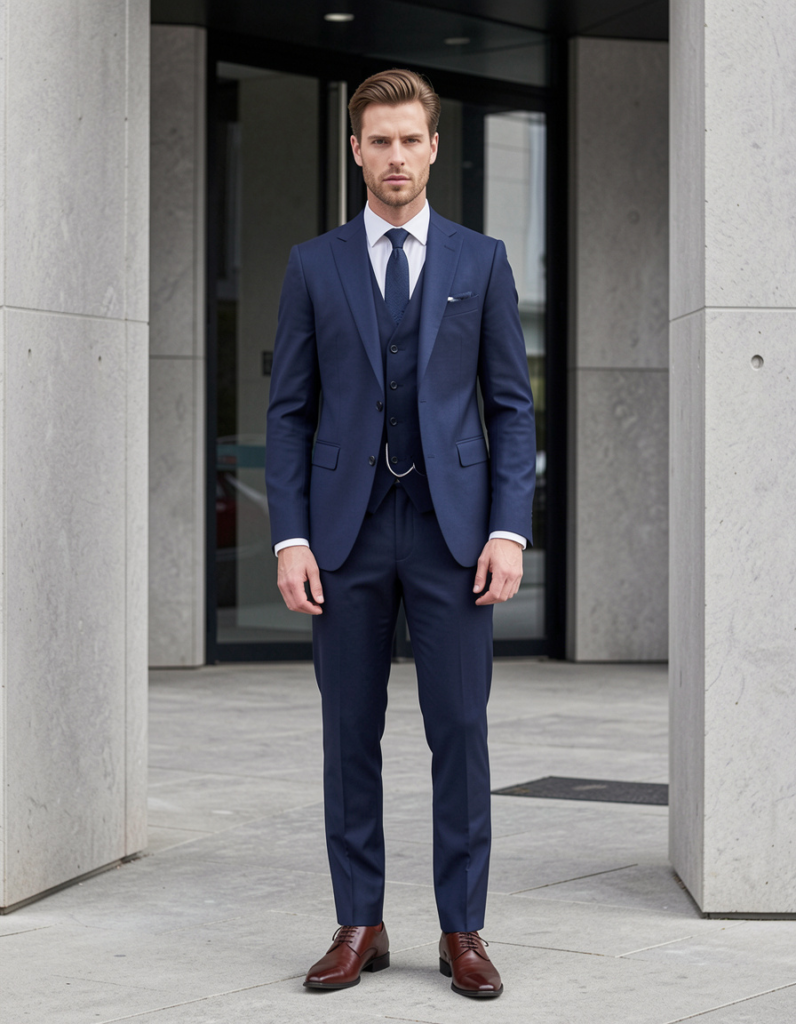
If you’re only building one suit right now, this is the color and combination to start with.
The pieces:
- Navy suit, wool-blend, from a department store or budget menswear retailer
- White dress shirt
- Burgundy tie
- Black leather oxfords (real leather, even at a lower price point, ages better than synthetic)
- Black belt
Why it works: Navy is the single most versatile suit color available, working across business, semi-formal, and even some formal occasions. This combination is the baseline you’ll rework in a dozen different ways throughout this list, so getting the fit right here matters more than almost any other single purchase.
One of the biggest mistakes I see on a budget is buying a suit slightly too big “to be safe,” assuming a tailor can fix anything. A tailor can take a suit in significantly more easily than they can let it out — buy the suit that fits your shoulders correctly, since that’s the one part of a jacket that’s genuinely difficult and expensive to alter.
Best for: Job interviews, business meetings, semi-formal events — the foundational, do-everything suit.
2. Business Casual Rework: Same Navy Suit, Light Blue Shirt, No Tie

The exact same suit from Look 1, restyled for a more relaxed setting.
The pieces:
- Navy suit (same as above)
- Light blue shirt
- Brown loafers
- Brown belt
Why it works: Changing the shirt color and removing the tie is the cheapest, most effective way to make one suit function as two different outfits. Nobody clocks “the same suit” when the shirt, tie, and shoes have all changed — the eye reads it as a fresh combination.
If you’re building a budget wardrobe from scratch, prioritize owning two or three versatile shirts (white, light blue, and a subtle pattern) over multiple suits. Shirts are far cheaper to accumulate and do more to vary your look day to day.
Best for: Business casual offices, client meetings with a relaxed dress code.
3. Evening Look From the Same Suit: Navy Suit, Turtleneck, No Tie

A third, distinctly different look from the same navy suit.
The pieces:
- Navy suit (same as above)
- Affordable fine-knit turtleneck, black or navy
- Any clean, simple leather boot or shoe you already own
- No belt
Why it works: A turtleneck completely changes the register of a suit, shifting it from business to evening casual without spending anything on a new suit. This is the kind of restyling that makes a one-suit budget wardrobe feel much larger than it actually is.
Best for: Dinners, evening social events, occasions where you want a suit but not a business look.
4. Building a Two-Suit Wardrobe: Grey Suit, White Shirt, Navy Tie

Once you can afford a second suit, grey is the color to add.
The pieces:
- Mid-grey suit, wool-blend
- White shirt
- Navy tie
- Black or brown oxfords, depending on the rest of the outfit
- Matching belt
Why it works: Grey and navy together cover nearly every business and semi-formal situation you’ll encounter, and having two suit colors means you can wear a suit five days a week without repeating the exact same look twice in one stretch. This is the second, highest-value purchase for a budget wardrobe.
A small tailoring adjustment can completely change how a suit looks, even a budget one. Get the trouser break and jacket sleeve length checked by a tailor on every new suit purchase — these two adjustments alone make the biggest visible difference for the smallest cost.
Best for: General office wear, expanding a limited suit wardrobe into genuine daily rotation.
Read also: 15 Suit Outfits for Men for Their Own Wedding
5. Weekend Rework: Navy Suit, Chambray Shirt, Loafers

The same navy suit again, now dressed down for a weekend setting.
The pieces:
- Navy suit (same as before)
- Chambray shirt, open collar
- Brown loafers
- Brown belt
Why it works: A textured, casual shirt like chambray shifts the same suit into a completely different social register, proving that one well-fitted suit can genuinely function as several different outfits across an entire week. This is the core skill of budget dressing — reworking what you own rather than buying more.
Best for: Weekend social events, casual dinners, informal gatherings.
6. Vintage Value Look: Secondhand Wool Suit, White Shirt, Tie
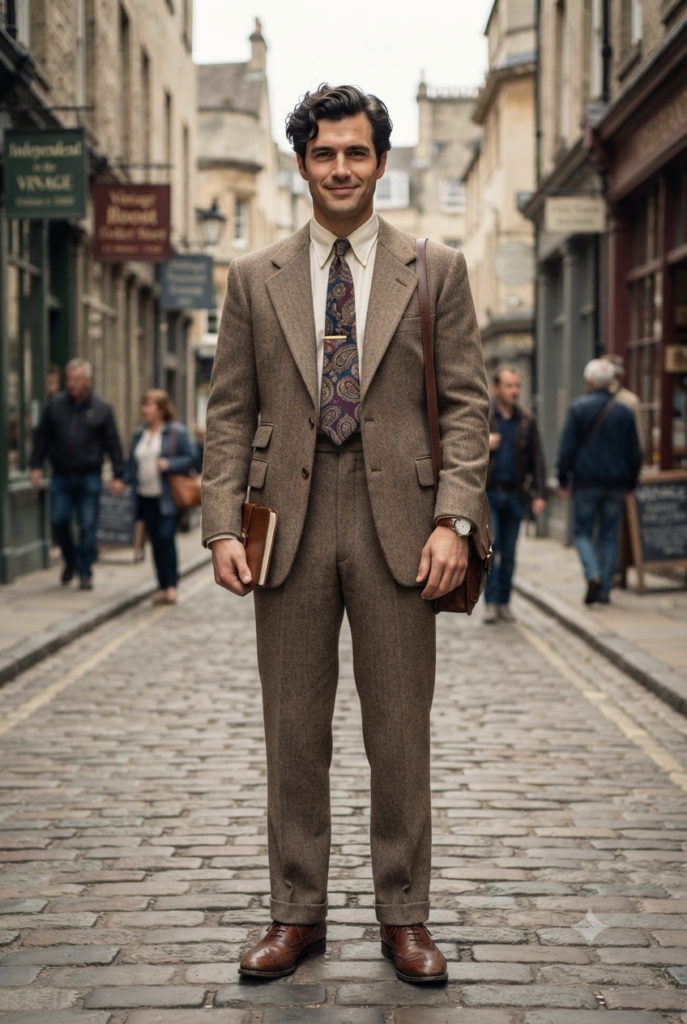
Thrift and consignment shopping can genuinely outperform new budget suiting.
The pieces:
- Secondhand wool suit, navy or grey, altered to fit
- White shirt
- Any solid tie
- Any leather oxford or derby you already own
- Matching belt
Why it works: Suits made in past decades were frequently constructed with genuinely good wool and proper canvassing, at a fraction of what a comparable new suit would cost today. A secondhand suit in good condition, tailored to fit your body, can look and perform noticeably better than a low-end new suit at a similar price point.
If you’re shopping secondhand for the first time, check the shoulders and chest fit first, since those are the hardest and most expensive parts of a jacket to alter. Everything else — sleeves, trousers, waist — can be adjusted by a tailor relatively inexpensively.
Best for: Anyone willing to spend time thrifting for genuinely higher-quality fabric at a lower price.
7. Smart Casual on a Budget: Navy Suit, Gingham Shirt, Knit Tie
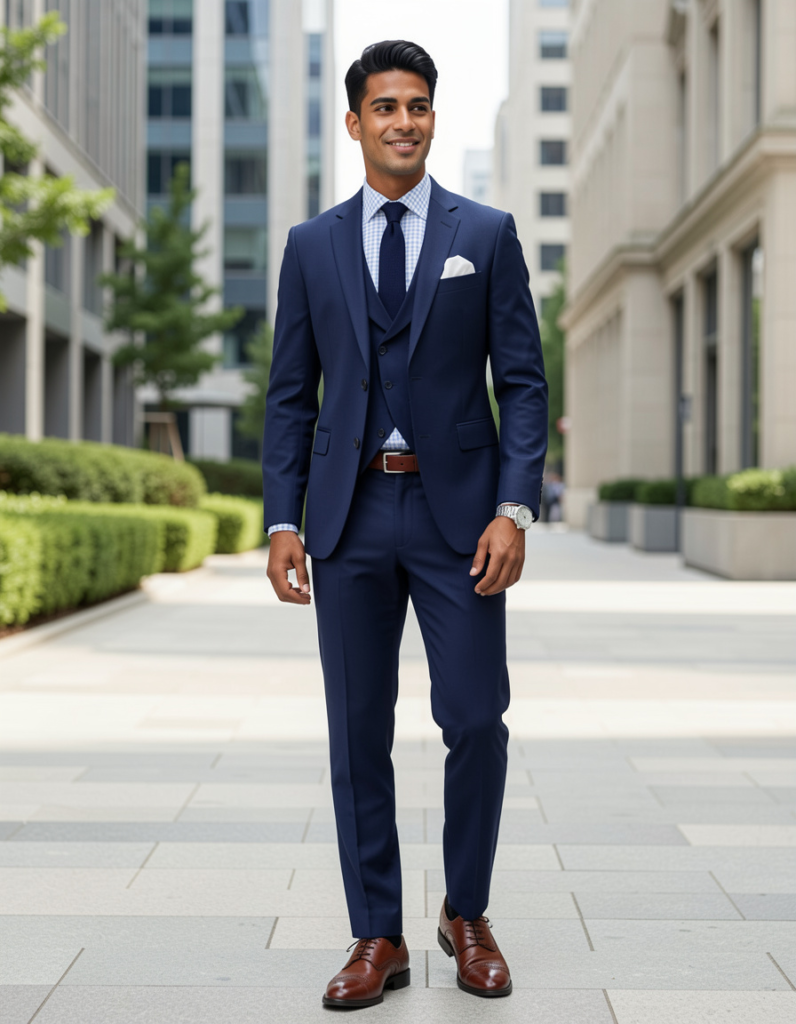
Adding texture and pattern doesn’t require an expensive shirt or tie.
The pieces:
- Navy suit (same as before)
- Affordable gingham check shirt
- Inexpensive knit tie
- Brown derbies
- Brown belt
Why it works: Knit ties and small-pattern shirts are widely available at low price points and instantly add visual interest to an otherwise repeated suit-and-shirt combination. This is one of the cheapest ways to make a limited wardrobe feel like it has more range than it does.
Best for: Smart casual offices, client meetings that welcome a bit more personality.
8. Reworking Existing Pieces: Grey Suit, Striped Shirt, Solid Tie

The second suit, restyled with a shirt pattern instead of a plain one.
The pieces:
- Grey suit (same as before)
- Striped shirt, budget-friendly
- Solid navy or burgundy tie
- Black or brown shoes
- Matching belt
Why it works: Pattern-with-solid is one of the easiest, lowest-risk ways to add visual variety to a limited wardrobe, and striped dress shirts are widely available at accessible price points. This look proves the same grey suit can carry noticeably different energy depending on the shirt underneath.
Best for: Business presentations, semi-formal daytime events.
9. Summer Budget Casual: Navy Suit, Polo Shirt, Loafers

Warm-weather styling that doesn’t require buying a separate summer suit.
The pieces:
- Navy suit (same as before), worn without the jacket lining feeling too heavy if warm-weather appropriate
- Affordable pique polo shirt, tucked
- Brown loafers, no socks
- Brown belt
Why it works: A polo shirt is one of the most affordable ways to shift a suit into warm-weather territory, and it means you don’t necessarily need a dedicated lightweight linen suit if your budget only stretches to one. This combination proves a single suit can flex across seasons with the right shirt choice.
Best for: Summer casual events, warm-weather business casual settings.
10. Formal Event on a Budget: Rented Formal Wear or Navy Suit as a Substitute

For the rare black-tie event, renting is almost always the smarter financial choice.
The pieces:
- Rented tuxedo (for genuinely black-tie events), or
- Your existing charcoal or navy suit, white shirt, black tie, black shoes (for black-tie-optional events)
Why it works: A tuxedo is one of the least cost-effective purchases for most men, since it typically gets worn only a handful of times across an entire life. Renting covers the rare true black-tie event, while your existing dark suit, dressed up with a black tie and black shoes, comfortably covers the more common “black-tie-optional” dress code.
Best for: Weddings, galas, and formal events where the alternative is an expensive one-time purchase.
11. Budget Smart-Casual: Navy Suit, White Shirt, No Tie, Affordable Sneakers

A modern, low-cost way to dress down the same foundational suit.
The pieces:
- Navy suit (same as before)
- White shirt, top button undone
- Affordable minimalist white leather or leather-look sneakers
- Brown belt
Why it works: Minimalist sneakers are available at a wide range of price points, and a clean, simple pair reads just as intentional as an expensive one when it’s well-maintained. This is a genuinely current, low-cost way to rework a business suit into smart-casual territory.
Best for: Creative or casual offices, weekend social events.
12. Casual Friday Budget: Grey Suit, Denim Shirt, Affordable Suede-Look Shoes

Another low-cost restyling of the second suit for a more relaxed office day.
The pieces:
- Grey suit (same as before)
- Affordable light-wash denim shirt
- Budget suede or suede-look derbies
- Brown belt
Why it works: Denim shirts are inexpensive and instantly shift a suit toward casual Friday territory without requiring any new tailoring or a separate casual jacket. This proves a two-suit budget wardrobe can genuinely cover both formal and casual office days.
Best for: Casual Fridays, informal client lunches.
13. Budget Three-Piece Look: Navy Suit, Odd Waistcoat, White Shirt, Tie

Buying a waistcoat separately, rather than as part of a three-piece suit, is often the more affordable path.
The pieces:
- Navy suit (same as before)
- Affordable odd waistcoat in a complementary color (grey, burgundy, or a subtle pattern)
- White shirt
- Solid tie
- Black oxfords
Why it works: A three-piece suit typically costs meaningfully more than a two-piece, but adding a separately purchased waistcoat achieves a similar visual effect for less money, provided the colors are chosen to look intentional together rather than mismatched. This is a smart way to access three-piece formality on a genuinely tight budget.
This detail is often overlooked but makes a noticeable difference: an odd waistcoat should be close in weight and tone to the suit, even if not an exact match, or the combination will look accidental rather than deliberate.
Best for: Weddings, formal winter events, situations calling for extra polish without a full three-piece purchase.
14. Small Details Elevate: Navy Suit, White Shirt, Affordable Pocket Square
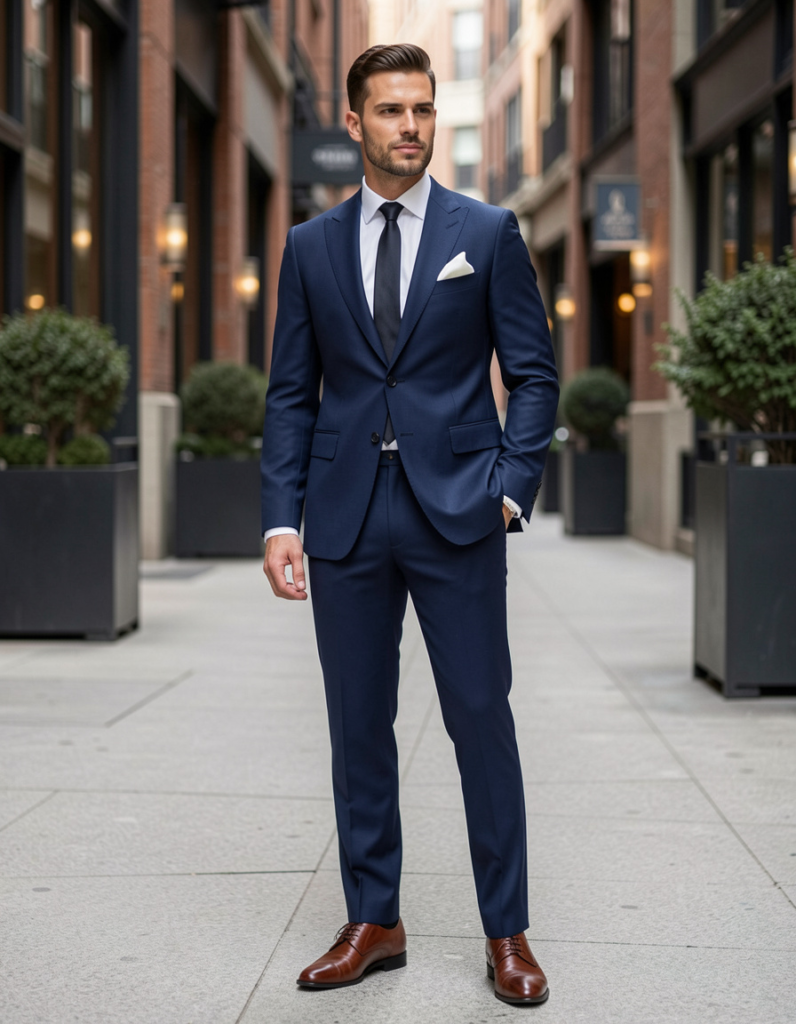
Proof that a small, cheap accessory can meaningfully change how an outfit reads.
The pieces:
- Navy suit (same as before)
- White shirt
- Burgundy tie
- Inexpensive linen or cotton pocket square, straight fold
- Black oxfords
Why it works: A pocket square is one of the cheapest accessories in menswear and one of the highest-impact — it signals attention to detail disproportionate to its cost. This is the easiest, lowest-cost upgrade available to an existing budget suit outfit.
This detail is often overlooked but makes a noticeable difference: a plain white cotton or linen pocket square, folded simply, looks just as intentional as an expensive silk one. The fold and the fact that you’re wearing one at all matter more than the fabric cost.
Best for: Any outfit where you want a small, low-cost signal of extra effort.
15. Budget Monochrome: Grey Suit, Black Shirt, No Tie
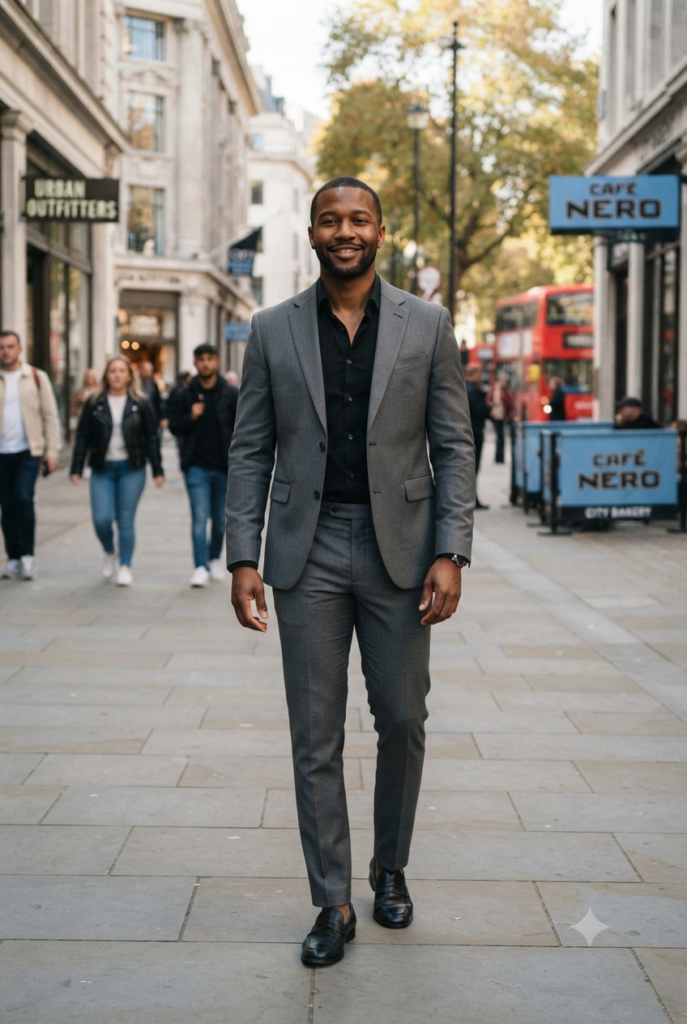
A bold, modern look that doesn’t require anything beyond what’s already in a two-suit wardrobe.
The pieces:
- Grey suit (same as before)
- Affordable black dress shirt or fine-knit shirt
- Any black leather shoe already owned
- Black belt
Why it works: A black shirt is one of the more affordable specialty shirt purchases and instantly creates a completely different, more fashion-forward look from the same grey suit. This proves how much range a limited wardrobe can offer with just one additional shirt purchase.
Best for: Evening events, creative or social settings where you want to stand out from standard business dressing.
16. Adding Personality Cheaply: Navy Suit, Patterned Tie From a Discount Retailer

Ties are one of the cheapest ways to add real visual variety to a small wardrobe.
The pieces:
- Navy suit (same as before)
- White shirt
- Patterned tie (small dot, subtle stripe, or texture) from a discount or outlet retailer
- Black oxfords
Why it works: Ties are widely available at low price points and require no alteration, making them the single most cost-effective way to make a repeated suit-and-shirt combination look different day to day. A small collection of affordable ties in different colors and patterns stretches a limited wardrobe considerably further.
Best for: Everyday office wear, adding variety to a small rotation of suits and shirts.
17. The Suit Separates Hack: Secondhand Blazer, Non-Matching Trousers

Buying jacket and trouser separately, rather than as a matched suit, opens up genuinely useful budget flexibility.
The pieces:
- Secondhand or budget navy blazer, structured
- Grey or tan dress trousers (not matched to the jacket)
- White or blue shirt
- Brown loafers
- Brown belt
Why it works: A blazer and unmatched trousers, worn together intentionally, create a smart-casual outfit that costs less than acquiring a full new suit and adds real range to a small wardrobe. This look works particularly well for settings where a full matched suit would feel like overkill.
This detail is often overlooked but makes a noticeable difference: the jacket and trousers should differ clearly in shade or texture — a near-match that isn’t quite right looks like a mistake, while an intentional, clear difference reads as a deliberate style choice.
Best for: Business casual offices, semi-formal social events, situations where a full matched suit isn’t necessary.
18. Accessorizing Without Overspending: Navy Suit, White Shirt, Affordable Watch

A simple, inexpensive watch can complete a budget outfit without a significant purchase.
The pieces:
- Navy suit (same as before)
- White shirt
- Burgundy tie
- Simple leather-strap watch, affordable and understated
- Black oxfords
Why it works: A plain, well-proportioned watch with a simple leather strap reads as considered regardless of its price point, since the visual impression comes from its simplicity and fit on the wrist rather than the brand or cost. This is a low-cost way to add a finishing touch to a repeated outfit.
Best for: Everyday professional wear, any outfit on this list that could use one more small, deliberate detail.
19. Vintage Tie Upgrade: Grey Suit, White Shirt, Thrifted Silk Tie
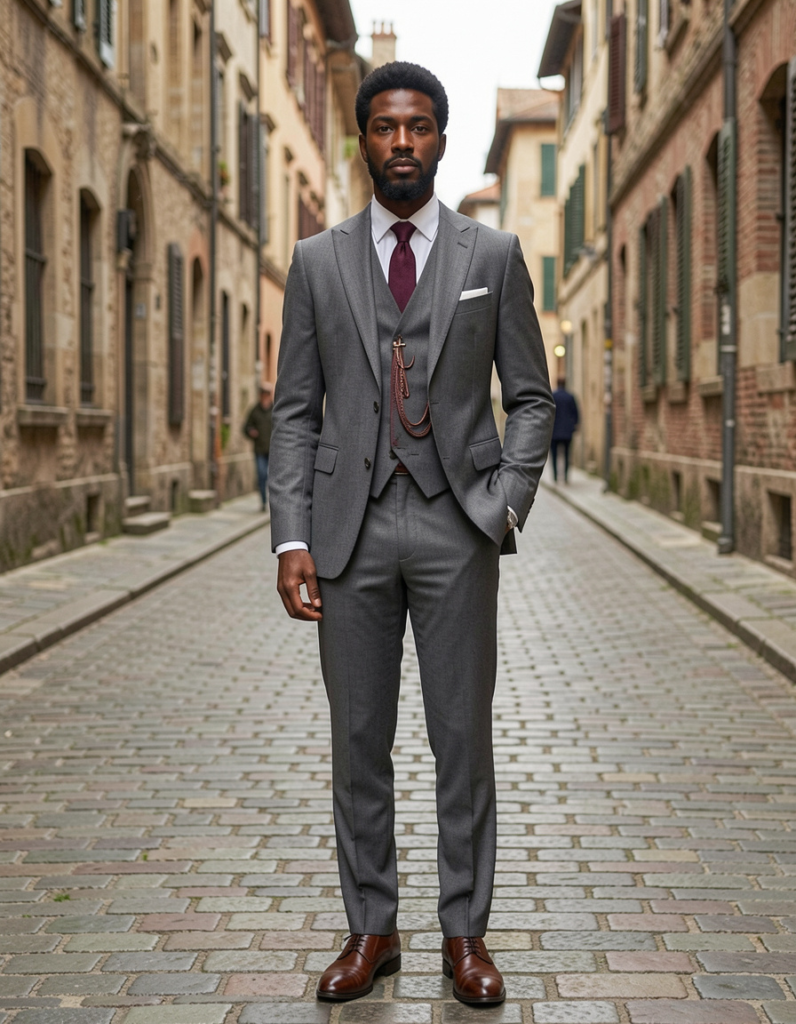
Secondhand ties are an underused way to access higher-quality silk at a fraction of retail cost.
The pieces:
- Grey suit (same as before)
- White shirt
- Thrifted silk tie, solid or subtle pattern
- Black or brown oxfords
- Matching belt
Why it works: Vintage and secondhand silk ties, particularly from thrift and consignment shops, are frequently made from genuinely higher-quality silk than new low-cost ties, and their classic patterns rarely go out of style. This is one of the best value-per-dollar purchases available for a budget wardrobe.
Best for: Anyone willing to spend time searching secondhand shops for higher-quality accessories at low prices.
20. The Complete Budget Wardrobe: One Navy Suit, One Grey Suit, Mixed and Matched

The full picture of what a genuinely tight suit budget can achieve with the right approach.
The pieces:
- Navy suit and grey suit (both previously acquired)
- A rotation of three or four shirts: white, light blue, a subtle stripe, and one patterned option
- Two or three ties: burgundy, navy, and one knit
- One pair of black oxfords and one pair of brown loafers
- One black belt and one brown belt
Why it works: Two suits, a handful of shirts, a few ties, and two pairs of shoes can be combined into dozens of genuinely distinct outfits, covering business, casual, and semi-formal settings without ever feeling repetitive to the people who see you regularly. This is the real lesson of budget dressing — the goal isn’t more clothes, it’s more combinations from fewer, well-chosen pieces.
Best for: Anyone building a genuinely functional professional wardrobe on a tight budget from the ground up.
A Few Principles That Apply Across All 20 Looks
Tailoring is the best money you can spend on a budget suit. A properly altered inexpensive suit will always look better than an expensive one worn without adjustment.
Buy fewer, more versatile pieces rather than many specific ones. Two suits in navy and grey, a handful of shirts, and a few ties will outlast and out-perform a closet full of one-off pieces bought for specific occasions.
Care extends the life of a budget suit significantly. Brush it after wear, air it out between uses, and avoid dry cleaning more than a few times a year — over-cleaning breaks down fabric and lining faster than regular wear does.
Frequently Asked Questions
How much should a first suit realistically cost? This varies widely by market and retailer, but the more important factor is fit. A modestly priced, wool-blend suit that’s been properly tailored will outperform a pricier suit bought off the rack without alterations.
Is a polyester-blend suit acceptable on a tight budget? A wool-poly blend with meaningful wool content (60% or more) will drape and breathe considerably better than a fully synthetic suit. Fully polyester suits tend to look shinier and less flattering, and they don’t breathe well, so it’s worth prioritizing at least some natural fiber content if possible.
Where can I find affordable but decent-quality suits? Department stores, budget menswear retailers, and direct-to-consumer online brands often offer solid options at accessible price points. Secondhand and consignment shops are also genuinely worth checking, since older suits were frequently made with better fabric and construction.
Is it worth getting a cheap suit tailored? Yes, almost always. Alterations to the sleeve length, trouser break, and waist are relatively inexpensive and make a far bigger visual difference than the price difference between a budget and mid-range suit.
Should I buy the suit jacket and trousers separately to save money? This can work well for building a more casual, mix-and-match wardrobe, but for a matched, formal-looking suit, buying the jacket and trousers together as a set ensures the fabric and color match exactly.
Is it better to rent or buy for a one-time formal event? Renting is almost always the more sensible choice for a genuinely one-time event like a specific black-tie wedding, since a tuxedo or highly formal suit often goes unworn for years afterward.
How many suits does someone on a tight budget actually need? Two — one navy and one grey — covers the vast majority of professional and semi-formal situations when paired with a rotation of a few shirts, ties, and shoes.
What’s the best way to shop secondhand for suits? Focus on checking the shoulder and chest fit first, since those are the most expensive and difficult parts of a jacket to alter. Everything else can usually be adjusted by a tailor at a reasonable cost.
How should a budget suit be cared for to make it last? Brush it after each wear, hang it on a proper suit hanger, air it out between uses, and avoid frequent dry cleaning, which breaks down fabric faster than regular wear and proper care.
What’s the single best low-cost purchase to elevate a budget suit outfit? A pocket square is the cheapest, highest-impact accessory available — it signals attention to detail disproportionate to its low cost and works with almost any suit and shirt combination.
Final Thoughts
A tight budget doesn’t have to mean looking underdressed. It means being more deliberate: choosing versatile colors, spending on tailoring instead of price tags, and learning to rework the same suit into a dozen different outfits through the shirt, tie, and shoes you pair it with. The men who dress well on a budget aren’t the ones who found the cheapest suit — they’re the ones who understood that a properly fitted, well-chosen navy or grey suit can do more work than an entire closet of options ever could.
Read also: