20 Suit Outfits for Men for a Job Interview
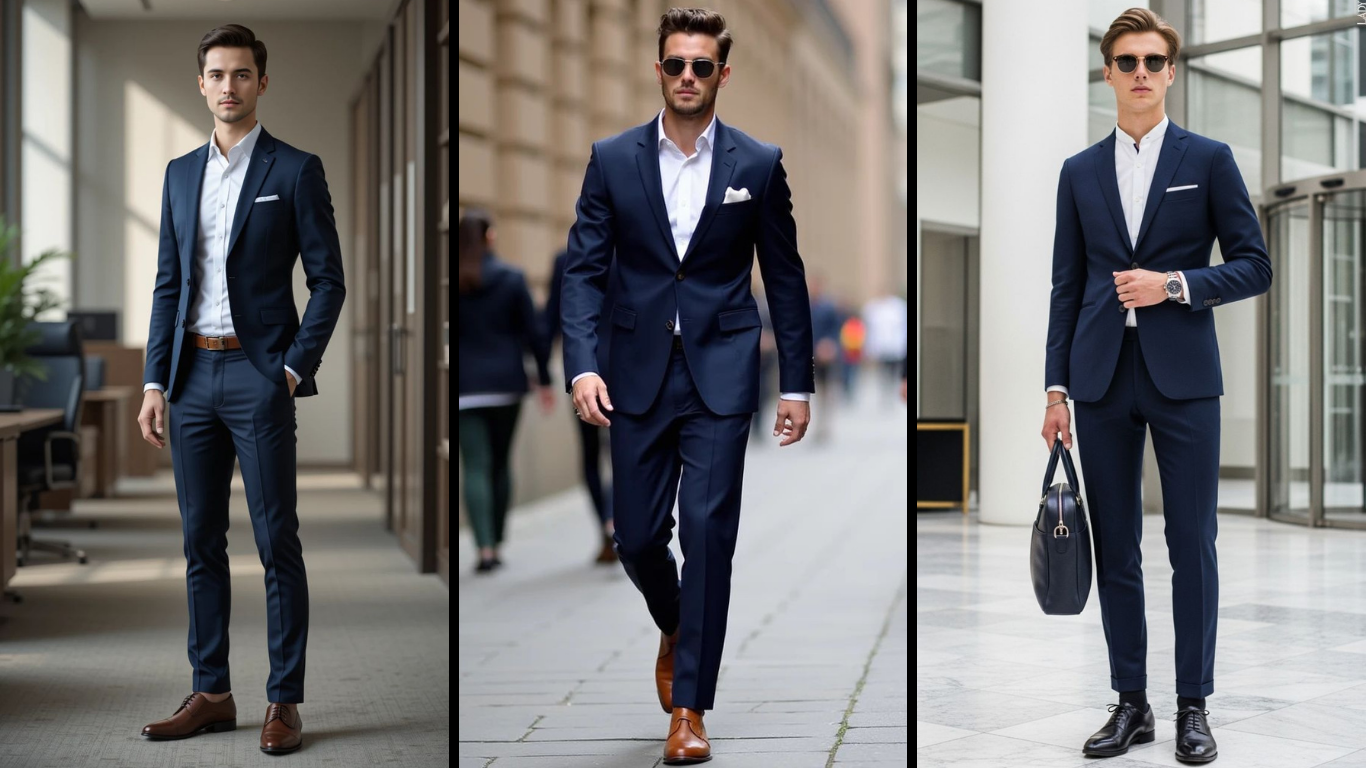
An interview outfit has one job, the rest of your wardrobe doesn’t: it needs to make you forgettable in the right way. Nobody gets hired because of their tie.
But plenty of good candidates have made an interviewer’s first impression slightly harder to trust because their suit didn’t fit, their color choices felt careless, or their outfit didn’t match the culture of the place they were walking into.
The goal isn’t to look memorable. It’s to look like you belong, so the conversation can focus entirely on what you’re actually saying.
I’ve helped clients dress for interviews across law firms, trading floors, tech startups, hospitals, and creative agencies, and the biggest thing I’ve learned is that “interview attire” isn’t one outfit.
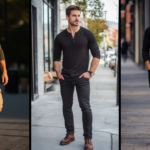
What reads as appropriately sharp at a law firm can read as stiff and out of touch at a startup, and what reads as considered at a startup can read as underdressed at an investment bank.
Knowing the difference — and dressing exactly one notch more formal than the job itself typically requires — is the actual skill here.
This guide covers 20 suit outfits built around different industries, interview stages, and formats, including virtual interviews, so you can walk in dressed for the specific room you’re actually stepping into.
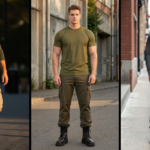
The Core Principle: One Level Above the Job
Before getting into specific outfits, the single most useful rule for interview dressing is this: research the company’s actual daily dress code, then dress one level more formal than that.
If employees wear jeans and hoodies, a full suit might feel like you don’t understand the culture — but a blazer and dress shirt shows effort without misreading the room. If employees wear suits daily, you should be in a suit, tie included, no exceptions.
When you genuinely don’t know the dress code, default to conservative: navy or charcoal suit, white shirt, a simple tie.
It’s always safer to be slightly overdressed at an interview than underdressed — you can always take a jacket off or loosen a tie in the room if it turns out to be more casual than expected.
1. Classic Law Firm Interview: Navy Suit, White Shirt, Burgundy Tie
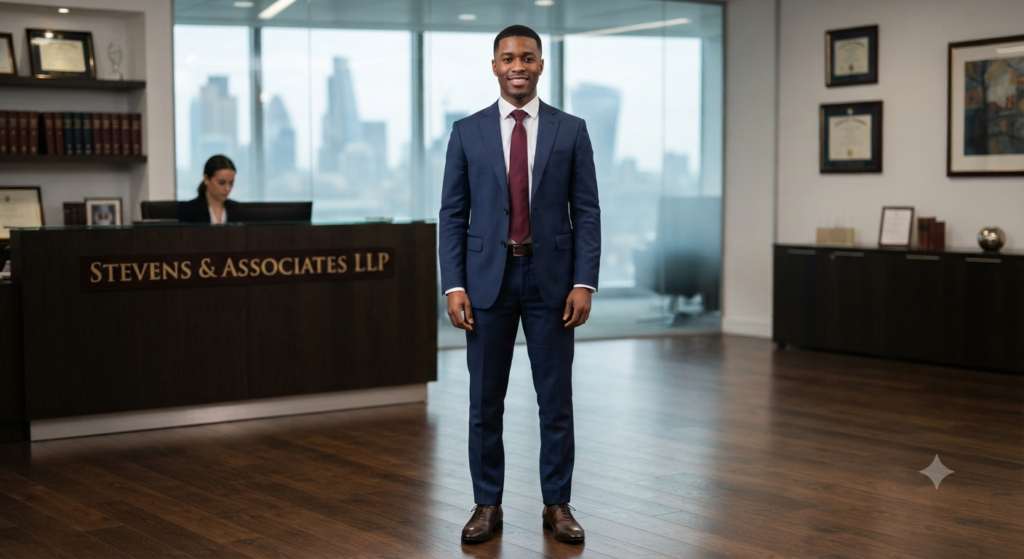
The default outfit for the most conservative interview settings.
The pieces:
- Navy suit, worsted wool, conservative cut
- White dress shirt
- Burgundy silk tie, solid or subtle texture
- Black oxfords
- Black belt
Why it works: Law firms remain some of the most traditionally formal interview environments, and this combination signals reliability and seriousness without any risk of misreading the room. Burgundy against navy and white is a warm, confident color choice that avoids looking either too flashy or too plain.
One of the biggest mistakes I see in this kind of interview is a tie that’s too bold or patterned. Save personality for after you’ve gotten the job — a law firm interview rewards restraint.
Best for: Law firms, courts, traditional corporate legal departments.
2. Investment Banking / Finance Interview: Charcoal Suit, White Shirt, Silver Tie

Finance interviews call for a slightly sharper, more polished register than standard business formal.
The pieces:
- Charcoal suit, fine worsted wool
- White shirt, French cuffs if you have cufflinks
- Silver-grey silk tie
- Black oxfords, polished
- Black belt
Why it works: Charcoal reads as marginally more formal and serious than navy, which suits an industry that places heavy weight on polish and precision. Silver-grey adds a note of sophistication without introducing risk.
This detail is often overlooked but makes a noticeable difference: finance interviews often involve panels or multiple rounds in one day. Choose a suit fabric that resists wrinkling — a fine worsted wool with a slightly higher twist holds its shape far better through a long day than a cheaper, looser weave.
Best for: Investment banks, private equity firms, hedge funds, and traditional financial institutions.
Read also: 15 Suit Outfits for Men for Graduation
3. Tech Startup Interview: Navy Suit, Light Blue Shirt, No Tie

Tech companies, particularly startups, often expect a more relaxed register even for interviews.
The pieces:
- Navy suit, softer construction
- Light blue shirt, top button undone
- Brown leather loafers or derbies
- Brown belt
Why it works: Removing the tie signals cultural awareness — showing up in a full tie at a company where the CEO wears a hoodie can actually work against you by suggesting you haven’t done your research. Navy without a tie still reads as professional and prepared, just appropriately calibrated to the setting.
If you’re unsure how casual to go for a tech interview, this combination is the safer middle ground — formal enough to show respect for the process, relaxed enough not to look like you’re interviewing for the wrong kind of company.
Best for: Tech startups, software companies, and product management roles.
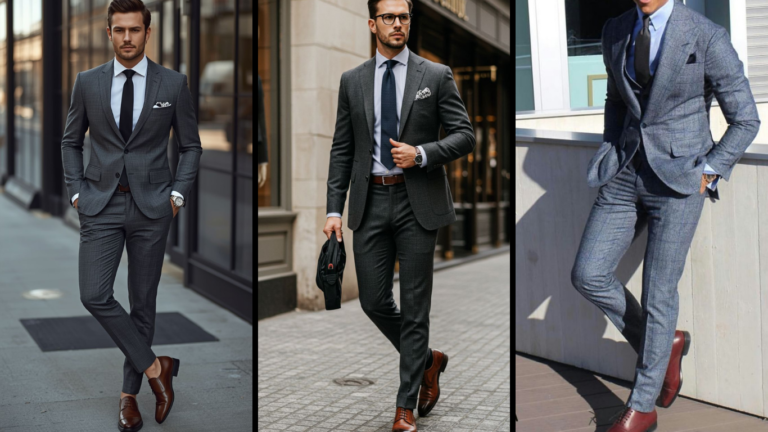
4. Management Consulting Interview: Grey Suit, White Shirt, Navy Tie

Consulting firms reward a polished, buttoned-up presentation, particularly for case interviews.
The pieces:
- Mid-grey suit, worsted wool
- White shirt
- Navy silk tie, solid or subtle texture
- Black oxfords
- Black belt
Why it works: Grey carries slightly less severity than charcoal while remaining fully business-appropriate, which suits consulting’s client-facing, presentation-heavy culture. Navy as the tie color keeps the outfit conservative and confident without adding unnecessary color risk.
A small tailoring adjustment can completely change how a suit looks in a high-stakes interview. Case interviews often involve standing at a whiteboard — make sure the jacket allows full arm movement without pulling across the shoulders.
Best for: Management consulting firms, strategy roles, client-facing advisory positions.
5. Government / Public Sector Interview: Navy Suit, White Shirt, Subtle Patterned Tie
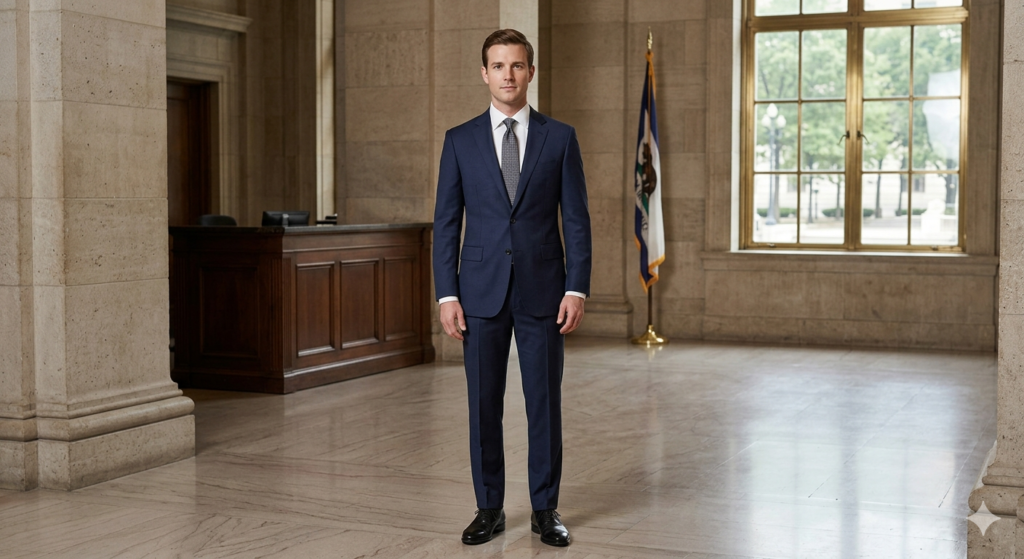
Government interviews call for professionalism without appearing overly showy or expensive.
The pieces:
- Navy suit, conservative cut
- White shirt
- Navy tie with a small, subtle pattern — micro-dot or thin stripe
- Black oxfords
- Black belt
Why it works: A small pattern adds a touch of personality without looking flashy, which suits public sector environments where an overly polished, expensive-looking outfit can occasionally read as out of touch. This combination stays firmly professional while avoiding any sense of excess.
Best for: Government agencies, public administration roles, civil service positions.
6. Big Four Accounting Interview: Charcoal Suit, Light Blue Shirt, Burgundy Tie
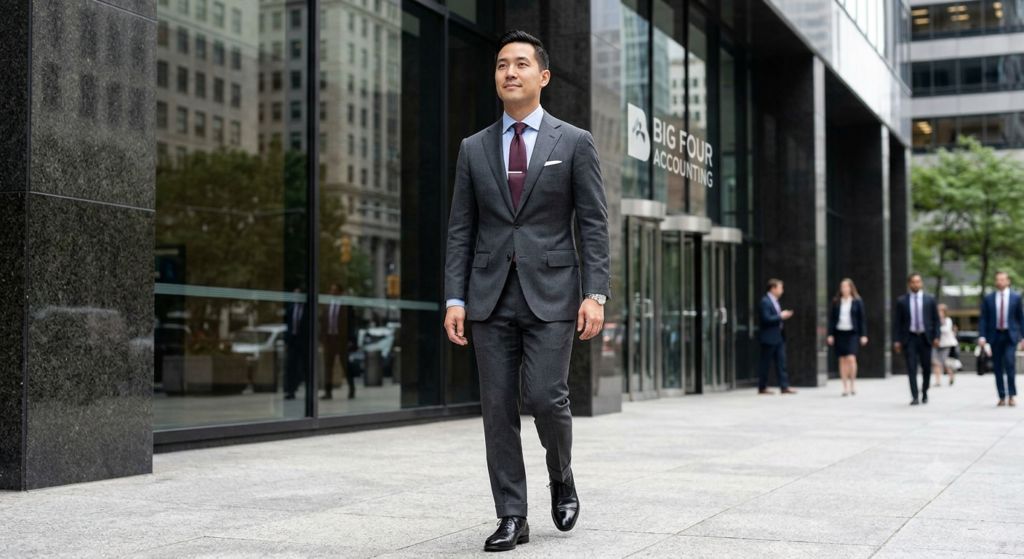
A polished, detail-oriented combination for professional services firms.
The pieces:
- Charcoal suit
- Light blue shirt
- Burgundy silk tie
- Black oxfords
- Black belt
Why it works: Light blue softens the charcoal-and-white combination just slightly, which suits accounting and professional services firms that value precision and approachability in equal measure. Burgundy keeps the outfit warm and confident without introducing risk.
Best for: Big Four accounting firms, professional services firms, audit and advisory roles.
7. Creative Agency Interview: Navy Suit, Oxford Shirt, No Tie

Creative industries reward a suit that shows personal style, not just conformity.
The pieces:
- Navy suit, unstructured or half-canvas
- White or patterned Oxford cloth button-down shirt
- Brown leather loafers or derbies
- Brown belt
Why it works: Removing the tie and choosing a more textured shirt signals awareness of the creative industry’s more relaxed dress norms, while still showing up in a suit demonstrates respect for the interview process itself. This combination hits the balance that most creative agencies expect from candidates.
Common mistake: Wearing a full, formal business suit with a tie to a creative agency interview. It can read as a mismatch with the company’s actual culture, even if the interview itself goes well.
Best for: Creative agencies, design studios, marketing and advertising firms.
8. Healthcare Administration Interview: Grey Suit, White Shirt, No Tie

Healthcare administrative and management roles call for approachable professionalism.
The pieces:
- Mid-grey suit
- White shirt, top button undone
- Black or brown oxfords, depending on the rest of the outfit
- Matching belt
Why it works: Grey without a tie reads as competent and professional without the added formality of a full business suit, which suits many healthcare administrative environments where warmth and approachability matter alongside professionalism. This combination signals seriousness without stiffness.
Best for: Hospital administration, healthcare management roles, and medical practice management.
9. Nonprofit Sector Interview: Navy Suit, White Shirt, Green Tie
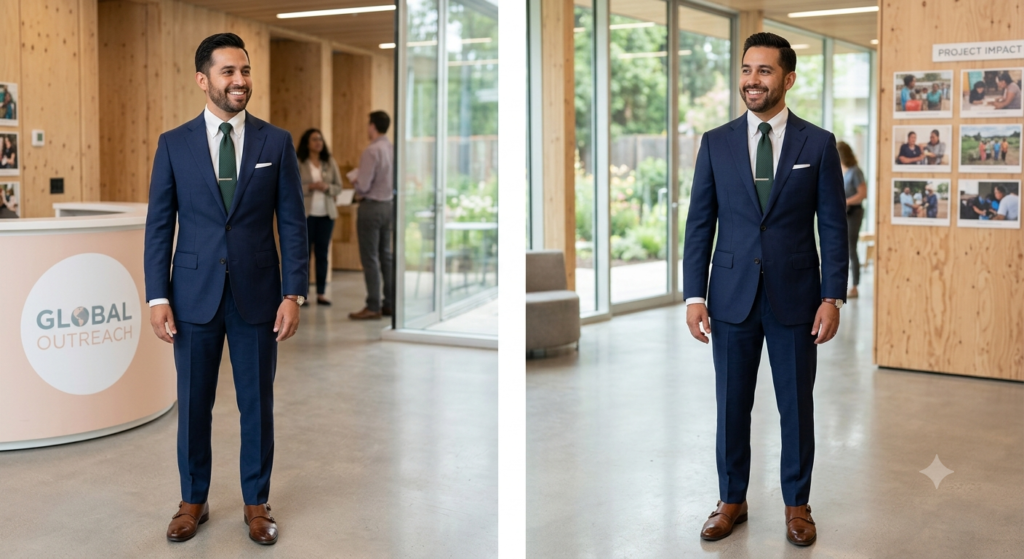
Nonprofit interviews often reward genuine warmth and approachability over pure polish.
The pieces:
- Navy suit
- White shirt
- Forest green or olive tie
- Brown oxfords or brogues
- Brown belt
Why it works: Green as a tie color introduces a touch of individuality and warmth that suits a mission-driven, values-oriented interview environment, without sacrificing the professionalism a navy suit and white shirt provide. Brown shoes soften the overall formality slightly, which fits many nonprofit office cultures.
Best for: Nonprofit organizations, mission-driven companies, advocacy and policy roles.
10. Executive / C-Suite Interview: Charcoal Suit, White Shirt, Black Tie
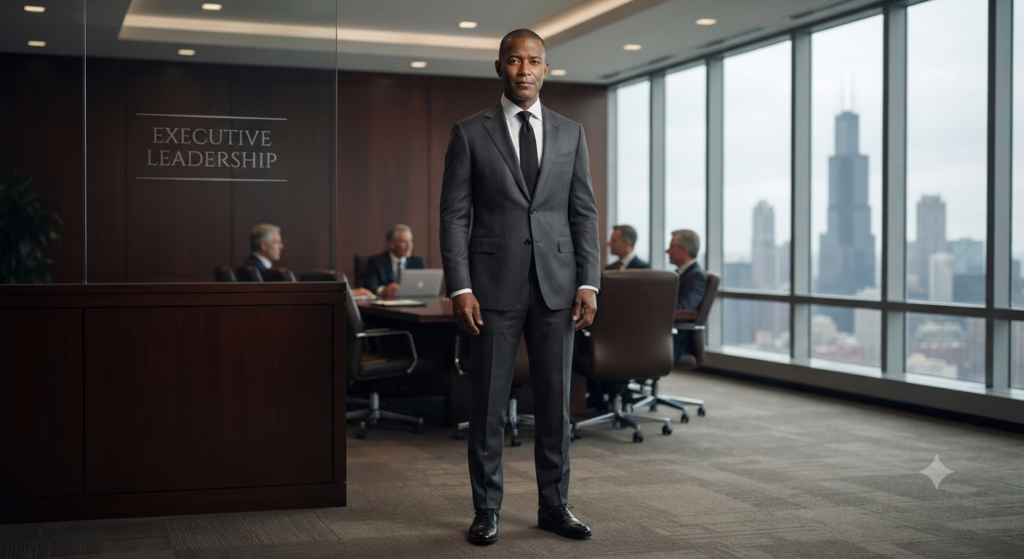
For senior leadership interviews where projecting real authority matters.
The pieces:
- Charcoal suit, fine worsted wool
- White shirt, French cuffs
- Black silk tie, solid
- Black oxfords, polished
- Black belt
Why it works: This combination carries the most weight and formality on this list, appropriate for interviews where you’re being evaluated on your ability to project senior leadership presence, not just competence. Every element here is deliberately restrained and confident rather than expressive.
One of the biggest mistakes I see at this level is candidates who try to introduce personality through a bold tie or pattern. At the executive level, restraint itself is the signal — let your experience and answers carry the personality.
Best for: C-suite interviews, board positions, senior leadership roles at established companies.
11. Virtual / Zoom Interview: Navy Suit, White Shirt, Solid Tie

Video interviews have their own specific styling considerations beyond a standard in-person outfit.
The pieces:
- Navy suit, jacket only needs to be visible from the chest up, but wear the full outfit for posture and mindset
- White or light blue shirt
- Solid navy or burgundy tie
- No busy patterns anywhere in frame
Why it works: Solid colors read far more cleanly on camera than fine patterns, which can create a distracting moiré or shimmering effect on video, particularly with herringbone or houndstooth weaves. Keeping the outfit simple and high-contrast (dark suit, light shirt) also reads better under typical webcam lighting than an all-dark or all-light combination.
If you’re unsure how your outfit reads on camera, do a test video call with a friend beforehand — colors and patterns that look fine in person sometimes behave unpredictably on camera.
Best for: Any virtual interview, regardless of industry — the styling principles here apply broadly.
Common mistake: Wearing pajama pants or casual bottoms because “only the top half shows.” Dressing fully, even for a virtual interview, changes your posture and mindset in ways that come through on camera.
12. Academic / University Administration Interview: Grey Suit, White Shirt, Navy Tie
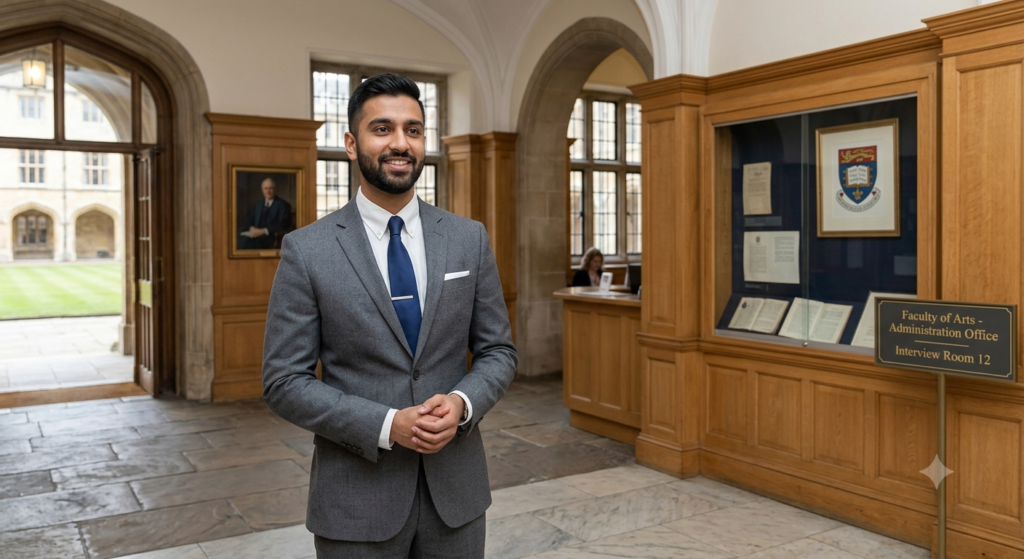
Academic interviews reward a slightly understated, intellectual register.
The pieces:
- Mid-grey suit
- White shirt
- Navy or burgundy tie, solid or subtle texture
- Brown or black oxfords
- Matching belt
Why it works: Grey and navy together read as thoughtful and professional without feeling as corporate as a navy-suit-and-burgundy-tie finance combination. This suits academic hiring committees, which often value substance and approachability over overt polish.
Best for: University administration roles, academic program management, and education sector leadership positions.
13. Retail Management Interview: Navy Suit, Gingham Shirt, Knit Tie

Retail management rewards a candidate who understands product and presentation without looking overly corporate.
The pieces:
- Navy suit
- Blue-and-white gingham shirt
- Navy or burgundy knit tie
- Brown derbies
- Brown belt
Why it works: The gingham pattern and knit tie bring a touch of personal style that suits a retail environment focused on customer-facing presentation, while the navy suit itself keeps the outfit professional and interview-appropriate. This combination signals both competence and taste.
Best for: Retail management roles, store leadership positions, customer-facing management interviews.
14. Pharmaceutical / Medical Sales Interview: Charcoal Suit, White Shirt, Silver Tie

Sales roles in regulated industries like pharma call for a trustworthy, polished presentation.
The pieces:
- Charcoal suit
- White shirt
- Silver-grey tie
- Black oxfords
- Black belt
Why it works: Pharmaceutical and medical sales interviews often involve meeting with clinicians and healthcare decision-makers, so a polished, trustworthy appearance carries real weight beyond just the interview itself — you’re being evaluated on how you’ll present to future clients, too. Charcoal and silver strike a confident, credible balance.
Best for: Pharmaceutical sales, medical device sales, healthcare-adjacent sales roles.
15. Media / Journalism Interview: Navy Suit, White Shirt, No Tie
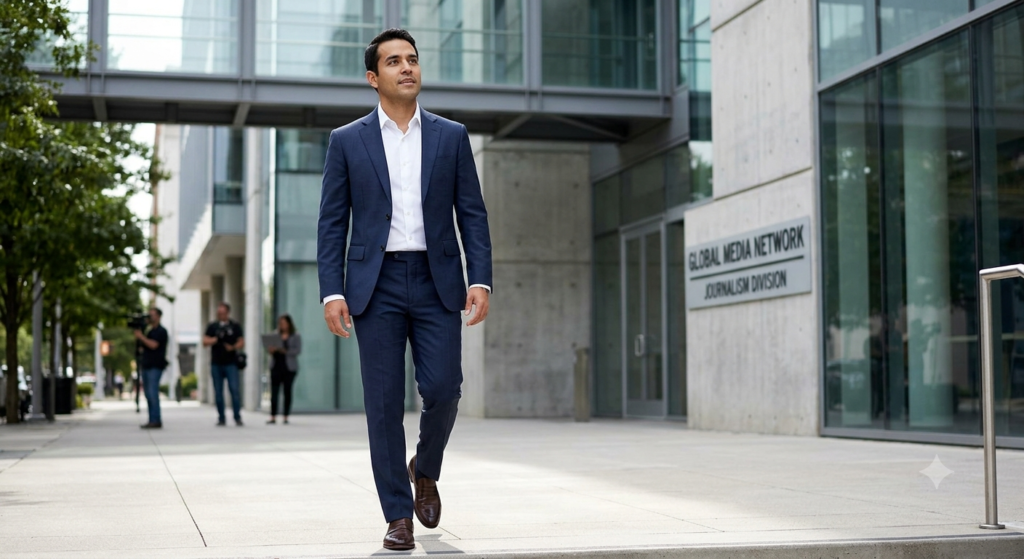
Media roles call for a professional but not overly corporate presentation.
The pieces:
- Navy suit, softer construction
- White shirt, top button undone
- Brown loafers
- Brown belt
Why it works: Removing the tie signals an understanding of media and journalism’s generally less formal office culture, while the navy suit itself shows respect for the interview process. This combination reads as competent and media-savvy without looking stiff on camera or in person.
Best for: Media companies, journalism roles, broadcast and editorial positions.
16. Real Estate Interview: Grey Suit, White Shirt, Burgundy Tie

Real estate rewards confident, client-facing polish.
The pieces:
- Mid-grey suit
- White shirt
- Burgundy silk tie
- Brown or black oxfords
- Matching belt
Why it works: Real estate is a heavily client-facing industry, and this combination signals the same kind of trustworthy, put-together presentation you’d want to project to a potential home buyer or seller. Grey and burgundy together read as confident and approachable rather than overly corporate.
Best for: Real estate agencies, property management firms, and commercial real estate roles.
17. Internal Promotion / Panel Interview: Navy Suit, White Shirt, Navy Tie
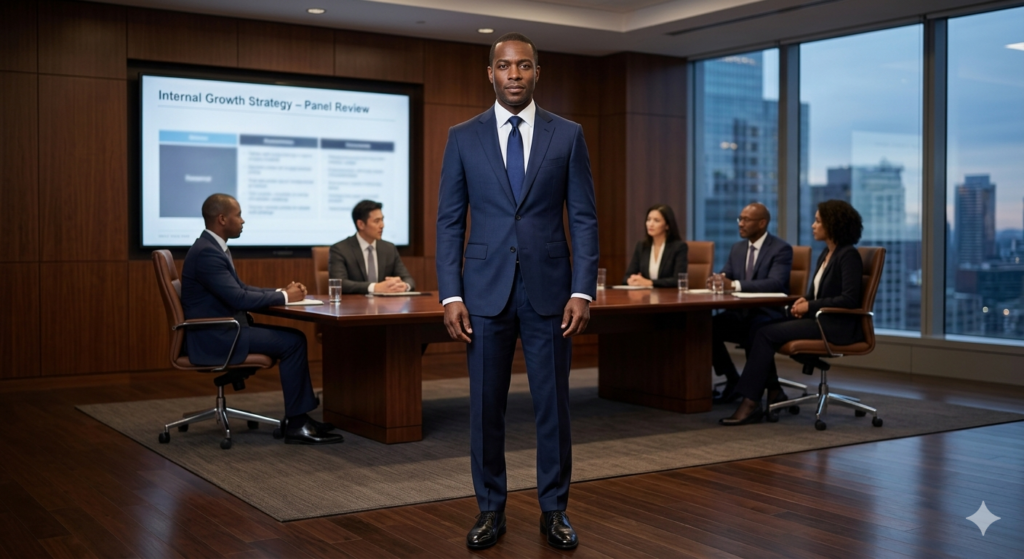
For interviews within a company where you already work, where colleagues on the panel already know your usual style.
The pieces:
- Navy suit
- White shirt
- Navy tie, subtle texture or pattern
- Black oxfords
- Black belt
Why it works: A tonal navy-on-navy combination reads as a natural, slightly elevated version of standard office wear rather than a dramatic departure that might feel performative to colleagues who see you daily. This is the outfit for showing genuine effort without looking like you’re trying to reinvent yourself for the room.
Best for: Internal promotion interviews, panel interviews with existing colleagues, situations where you want polish without an obvious style shift.
18. Board / Director-Level Interview: Charcoal Three-Piece Suit, White Shirt, Tie
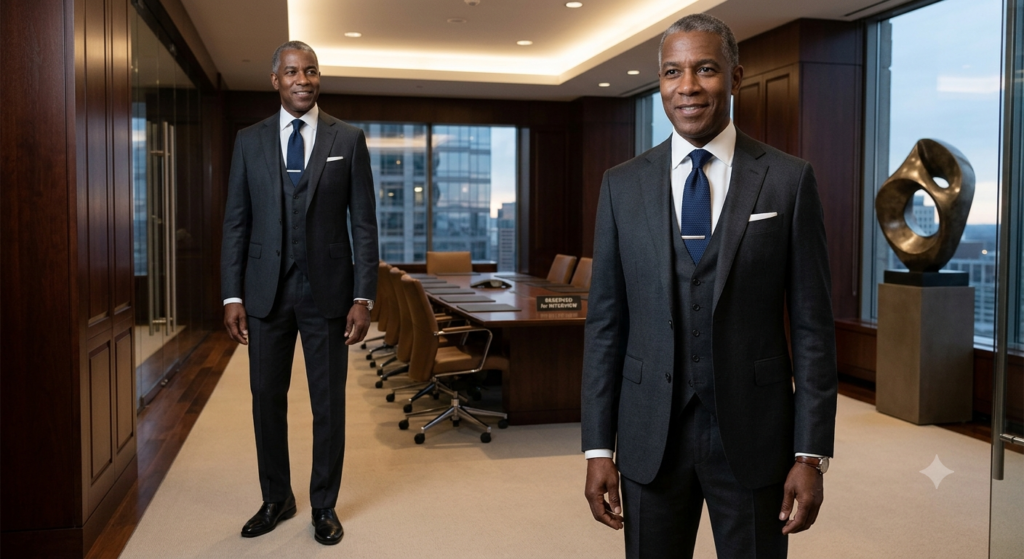
The most formal outfit on this list, reserved for board-level and director positions.
The pieces:
- Charcoal three-piece suit
- White shirt
- Burgundy or navy tie
- Black oxfords
- Pocket watch chain (optional)
Why it works: A waistcoat adds a genuine sense of gravitas and formality appropriate for board-level interviews, where you’re being evaluated on presence and authority as much as competence. This is a combination that signals real seriousness about the role.
Best for: Board of directors interviews, senior governance roles, high-stakes executive positions.
19. Second-Round / Culture-Fit Interview: Navy Suit, White Shirt, No Tie

For later-round interviews at companies where you’ve already established competence and the focus shifts to cultural fit.
The pieces:
- Navy suit, softer construction
- White shirt, top button undone
- Brown loafers
- Brown belt
Why it works: By the second or third round, many interviewers have already assessed your qualifications and are evaluating whether you’ll fit the team day to day. A slightly relaxed version of your first-round outfit — same suit, no tie — shows continuity while adapting to a more conversational, less high-stakes format.
Best for: Second and third-round interviews, culture-fit conversations, and team meet-and-greets after an initial formal interview.
20. Recent Graduate First Job Interview: Grey Suit, White Shirt, Solid Tie

Built for candidates without an established professional wardrobe yet.
The pieces:
- Mid-grey suit, versatile enough to become a wardrobe staple beyond the interview
- White shirt
- Solid navy or burgundy tie
- Black oxfords
- Black belt
Why it works: A well-fitted mid-grey suit is a genuinely versatile first purchase — appropriate for interviews across most industries and useful well beyond the job search itself. Solid, simple choices throughout avoid any risk while still looking polished and prepared.
If you’re buying your first interview suit, prioritize fit over price. A modestly priced suit that’s properly tailored to your body will look considerably better than an expensive one bought off the rack without alterations.
Best for: Entry-level interviews, campus recruiting, first professional job search.
A Few Principles That Apply Across All 20 Looks
Research the company’s actual dress code before choosing your outfit. LinkedIn photos, company social media, and even a quick email to the recruiter asking about dress expectations can tell you more than guessing.
Fit matters more in an interview than in almost any other setting. A well-tailored, modestly priced suit will always read as more competent and put-together than an expensive suit that doesn’t fit properly.
When in doubt, dress one level more formal than you expect the role to require. It’s far easier to remove a tie or jacket if you’re overdressed than to recover from looking underdressed.
Frequently Asked Questions
Should I wear a tie to an interview at a casual company? It depends on the actual office dress code. If daily attire is genuinely casual (jeans, hoodies), a suit without a tie usually strikes the right balance — you show effort without looking like you misunderstand the culture.
What suit color is safest for a job interview? Navy and charcoal remain the safest, most broadly appropriate choices across nearly every industry. Grey is a close third and works particularly well for interviews that call for a slightly less severe presentation.
Do I need a tie for a virtual interview? Generally yes, unless you have specific knowledge that the company’s culture is very casual. A tie still reads as prepared and professional on camera, and solid colors work best to avoid distracting patterns on video.
What should I wear on my bottom half for a virtual interview? Wear full interview attire, including trousers, even though only your top half will be visible. Standing up, moving, or an unexpected camera angle can reveal more than you’d expect, and dressing fully affects your posture and mindset regardless.
Is it okay to wear a patterned suit to an interview? Solid or very subtly patterned suits are the safer choice for most interviews. A bold pattern is a risk that isn’t worth taking when the goal is to be evaluated on your answers, not your outfit.
Should my interview outfit match the company’s brand colors? This isn’t necessary and can come across as trying too hard. Focus on classic, well-fitted professional wear rather than trying to visually align with a company’s branding.
What’s the biggest mistake candidates make with interview attire? Wearing an ill-fitting suit, whether too large or too tight. Fit reads as competence and attention to detail far more than an expensive fabric or a trendy cut does.
Can I remove my jacket during the interview? Generally, wait for a cue from the interviewer — if they remove theirs or explicitly invite you to get comfortable, it’s fine to follow suit. Otherwise, keep the jacket on for the full interview.
Is it appropriate to wear the same suit to multiple interview rounds at the same company? Yes, this is completely normal and not something interviewers typically notice or judge. Focus on ensuring it’s clean and pressed for each round rather than trying to introduce a new outfit each time.
How much should I spend on an interview suit if I’m on a budget? A well-fitted suit from a mid-range retailer, properly tailored, will outperform an expensive suit bought off the rack without alterations. Prioritize spending on tailoring over the suit’s original price tag.
Final Thoughts
The right interview outfit doesn’t win you the job, but the wrong one can quietly work against you before you’ve said a word. Match your formality to the actual culture of the company, prioritize fit above all else, and keep your color and pattern choices restrained enough that the conversation stays entirely on your qualifications. Walk in dressed for the room you’re actually stepping into, and the outfit will do exactly what it’s supposed to do: disappear into the background of a good conversation.
Read also: