Three-Piece Suit Outfits for Men: 12 Ideas That Actually Work
A client once told me he’d bought a three-piece suit for a wedding, worn it once, and then let it sit in the closet for two years because he “didn’t know what else to do with it.”
That’s the most common complaint I hear about the waistcoat suit — people treat it like a costume instead of a wardrobe piece.
Which is a shame, because a good three-piece is one of the most versatile things a man can own, provided you know how to style it for more than one occasion.
The extra layer changes more than the silhouette. It changes how the whole outfit reads — more finished, more considered, occasionally more formal than you intend if you’re not careful with the details around it.
That’s really the heart of the confusion: people know the waistcoat looks sharp, but they don’t know how to dress around it so it doesn’t look like rented formalwear.
This guide walks through twelve three-piece suit outfits for men, each built for a different setting — from the boardroom to a summer wedding to a Tuesday when you just want to look like you tried.
For every outfit, I’ll break down the shirt, tie (or lack of one), footwear, and the small details that separate “sharp” from “trying too hard.” I’ll also flag the fit issues that trip people up most, because with a three-piece, fit problems compound — a waistcoat that gaps or rides up will undo an otherwise perfect jacket and trouser.
1. Charcoal Grey Three-Piece for the Boardroom

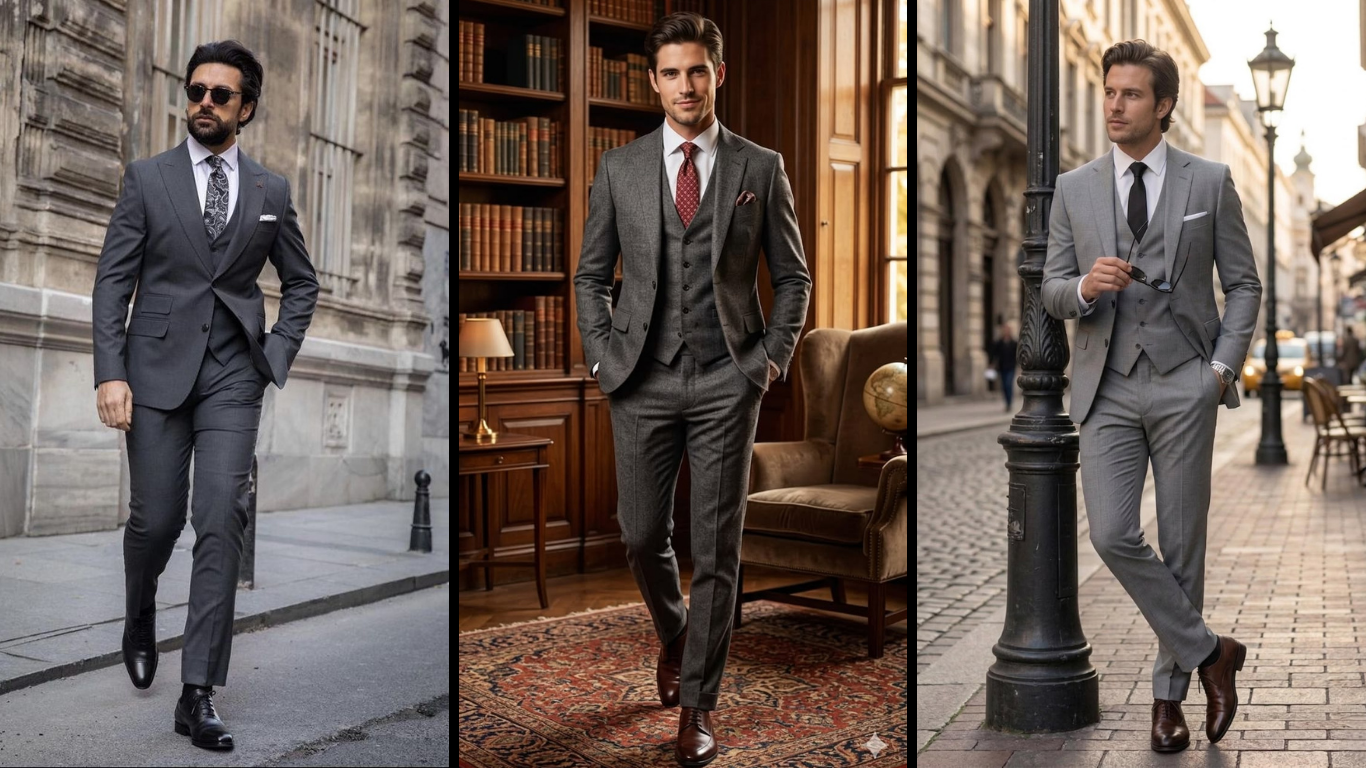
This is the suit I’d tell any man to buy first if he only ever wants one. A mid-to-dark charcoal, in a fine worsted wool, reads as serious without being funereal, and it pairs with nearly every shirt and tie color you own.
The outfit: Charcoal grey three-piece suit, white or very pale blue dress shirt, burgundy or navy silk tie, black oxfords, black leather belt, white linen pocket square.
Why it works: Charcoal is a neutral in the truest sense — it doesn’t compete with your tie or shirt, it supports them. A burgundy tie against charcoal reads as authoritative without being aggressive; navy does the same with slightly more restraint. The white pocket square is there for contrast, not decoration — folded into a simple presidential fold, it echoes the shirt collar and keeps the eye moving up toward your face rather than getting stuck on the tie.
Fit notes: The waistcoat is where most off-the-rack three-pieces fail first. It should close without pulling across the chest, and the bottom button should sit right at or just above the belt line — any lower and it looks like you borrowed it from someone bigger. The jacket’s shoulder seam should end exactly where your shoulder does; extra fabric there is the single most common tailoring flaw I see, and it’s an easy alteration if you catch it early.
Occasions: Client meetings, board presentations, formal interviews, any environment where you want zero room for doubt about how seriously you take the room.
Common mistake: Wearing the jacket buttoned all three buttons on a notch-lapel three-piece. If your jacket has three buttons, the bottom one stays open — always. Some men button all three thinking it looks more “complete,” but it actually distorts the lapel roll and pulls the whole front out of shape.
Budget alternative: A half-canvas suit in this exact colorway from a mid-tier maker will get you 80% of the look for a third of the price of full canvas — the visible difference in a boardroom is negligible; the difference in longevity is not.
2. Navy Three-Piece for a Wedding Guest

Navy is the unsung hero of wedding guest attire. It photographs beautifully, works for daytime and evening ceremonies alike, and never risks the “did he get the memo” problem that black sometimes creates at a wedding that isn’t black tie.
The outfit: Navy three-piece suit, pale pink or soft lavender shirt, a patterned tie in complementary tones (think small navy-and-burgundy paisley), brown suede loafers or cap-toe oxfords, brown belt, no pocket square or a subtly patterned linen one.
Why it works: Pink against navy is one of those combinations that looks bolder in theory than it does in person — it softens the suit rather than clashing with it. Brown shoes with navy is a classic, deliberate contrast that signals you understand color without needing to explain it. Skipping the tie’s exact match to the pocket square (a common over-coordination mistake) keeps the whole look from feeling like a rental.
Fit notes: For a wedding, I lean toward a slightly higher trouser break — closer to no break at all — because it reads more current in photographs, which matter more at weddings than almost anywhere else. Sleeve length should show about half an inch of shirt cuff; this is one of those details that’s often overlooked but is genuinely the first thing an experienced eye clocks.
Occasions: Daytime and early-evening weddings, milestone anniversary parties, engagement dinners.
Common mistake: Matching your tie too closely to the couple’s wedding colors, thinking it’s a nice gesture. It usually reads as trying to coordinate with the wedding party rather than as a guest, which puts you in an odd visual category all night.
Affordable alternative: A navy suit is the one place I’d actually spend more if you can, since you’ll wear it constantly — but a well-fitted budget navy three-piece with a good tie will still outperform an expensive suit that’s slightly too big.
3. Brown Tweed Three-Piece for an Autumn Country Wedding
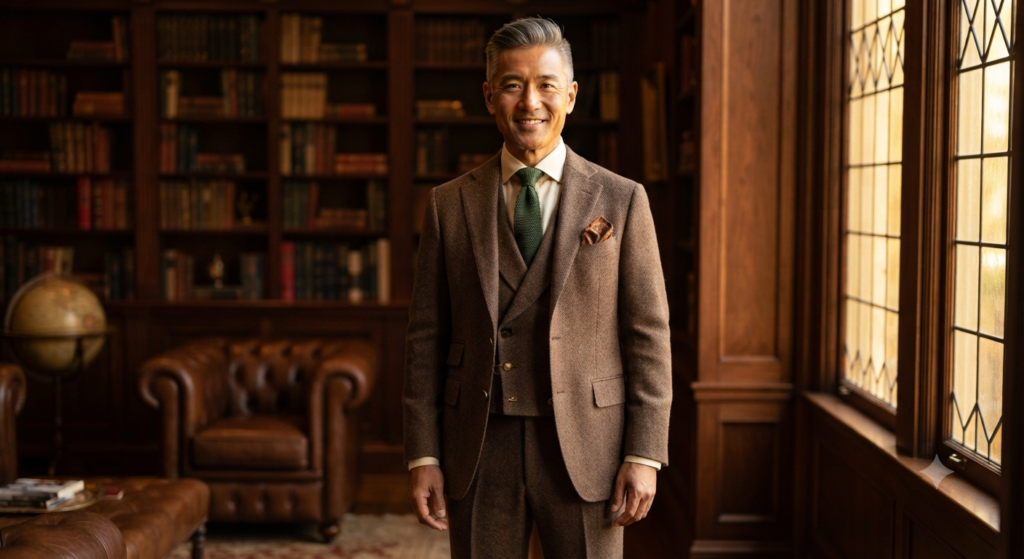
Tweed in a three-piece cut is one of the most flattering things a man can wear in the fall — texture does a lot of visual work that a flat worsted wool simply can’t.
The outfit: Brown herringbone or Donegal tweed three-piece, cream or ecru shirt, a knitted wool tie in rust or forest green, brown brogues, no belt (tweed trousers often have side adjusters — use them), a wool or silk pocket square in a warm autumnal tone.
Why it works: Tweed has enough visual texture that it doesn’t need color contrast to look interesting — it needs color harmony. Cream against brown tweed avoids the stark, almost office-like contrast that white would create, and a knitted tie adds another layer of texture rather than competing with the jacket’s weave.
Fit notes: Tweed suits often run heavier and slightly boxier by design — that’s part of their character, and trying to fit them as slim as a worsted suit usually fights the fabric. Let the waistcoat sit a touch fuller here; a tweed three-piece that’s too tightly tailored loses the relaxed, countryside quality that makes it work in the first place.
Occasions: Fall and early-winter weddings, especially outdoor or rural venues, race days, holiday gatherings with a rustic setting.
Common mistake: Wearing tweed with a slim, sharply structured shirt collar. The whole point of tweed is textural warmth; a stiff, minimalist shirt undercuts that. A soft button-down or spread collar in a slightly heavier cotton suits it better.
Affordable alternative: Tweed is one fabric where a lower price point genuinely shows — cheap tweed can look and feel like carpet. If budget is tight, look for a tweed-blend rather than a full wool tweed; it drapes better than a poor-quality pure tweed at the same price.
Read also: Men’s Suit Guide for Tall Guys
4. Light Grey Three-Piece for a Summer Daytime Wedding
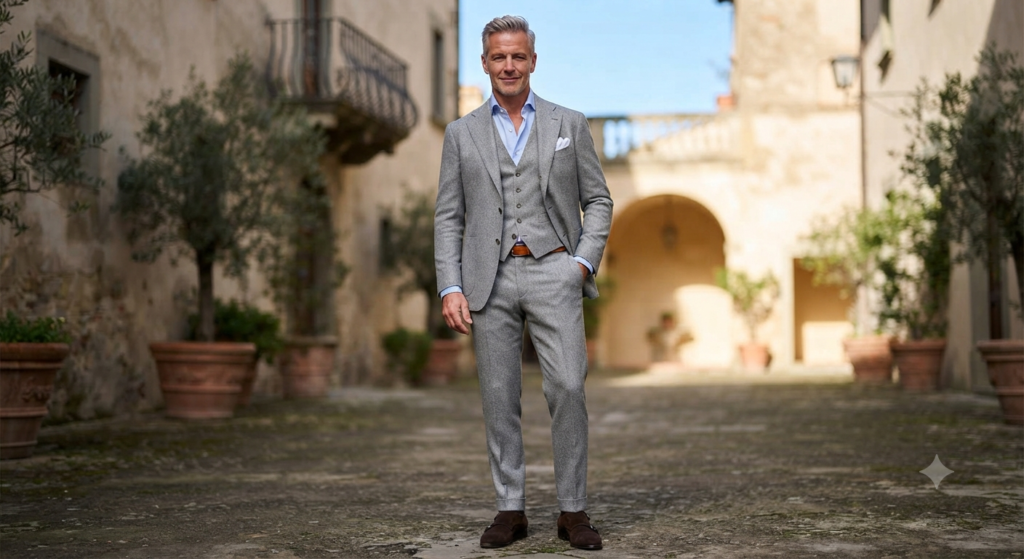
Light grey is the warm-weather answer to charcoal — same versatility, cooler feel, and it photographs exceptionally well outdoors.
The outfit: Light grey three-piece in a fresco or high-twist wool, sky blue shirt, no tie or a knitted silk tie in a muted color, brown suede monk straps or loafers, tan belt, a linen pocket square with a hand-rolled edge.
Why it works: Light grey is forgiving in a way charcoal isn’t — it hides less, so the fit has to be right, but it also flatters more skin tones and doesn’t absorb heat the way darker wool does. Going tieless with the waistcoat still buttoned keeps the outfit formal enough for a ceremony while acknowledging the heat; this is a genuinely useful trick for daytime summer events where a full tie feels like overkill.
Fit notes: In warm weather, a fresco or high-twist wool matters more than the color — these weaves let air move through the fabric, which a flannel or heavier worsted simply won’t in July. If you’re hot in a three-piece, it’s usually the fabric choice, not the extra layer, that’s the problem.
Occasions: Outdoor summer weddings, garden parties, daytime receptions, any warm-weather event with a dress code above “smart casual.”
Common mistake: Assuming a three-piece is automatically too hot for summer and avoiding it altogether. The right open-weave fabric changes this completely — the waistcoat covers your shirt, which actually means one less layer of visible sweat-through if things get warm.
Affordable alternative: Fresco wool suits at a lower price point can still perform well thermally, even if the hand isn’t as fine as a luxury mill’s cloth — for a warm-weather wedding you’ll wear once or twice a year, this is a reasonable place to save.
5. Navy Pinstripe Three-Piece for a Job Interview
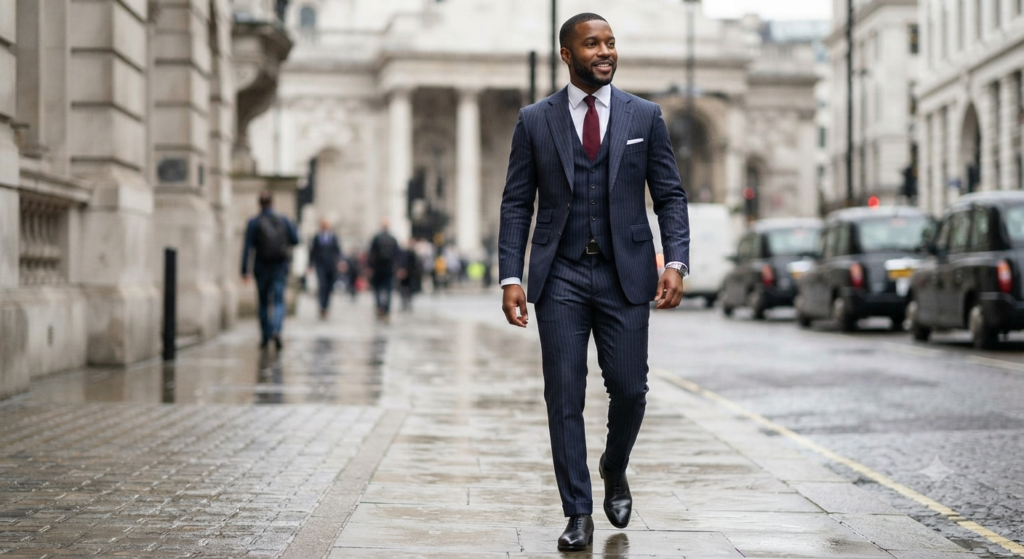
A subtle pinstripe adds a note of visual interest without sacrificing the gravity you want walking into an interview.
The outfit: Navy pinstripe three-piece (chalk stripe kept subtle, not banker’s-stripe bold), white or pale blue shirt, solid navy or burgundy tie, black oxfords, black belt, white pocket square in a simple fold.
Why it works: Interviews reward clarity, not personality — the stripe gives just enough texture to look considered rather than off-the-rack basic, while the solid tie and plain shirt keep the whole look calm and easy to read at a glance. This is not the outfit to experiment with color; the goal is competence, not memorability.
Fit notes: Vertical stripes are unforgiving of a bad fit — any pulling or gaping is amplified because the eye naturally tracks the lines. Get the waist suppression right (the tailored taper from chest to waist) and make sure the stripe lines up at the seams; a good tailor will match this automatically, but it’s worth checking before you wear it out.
Occasions: Interviews, first client pitches, any first impression that matters more than personal expression.
Common mistake: Choosing too bold a stripe. Wide, high-contrast pinstripes read as costume-like or dated in most modern interview settings; a fine, tonal stripe reads as quietly expensive instead.
Affordable alternative: If you can only own one interview suit, skip the pinstripe and go solid navy or charcoal — but if you already have a solid suit and want a second option, a subtle pinstripe three-piece adds range without adding risk.
6. Black Three-Piece for a Semi-Formal Evening Event
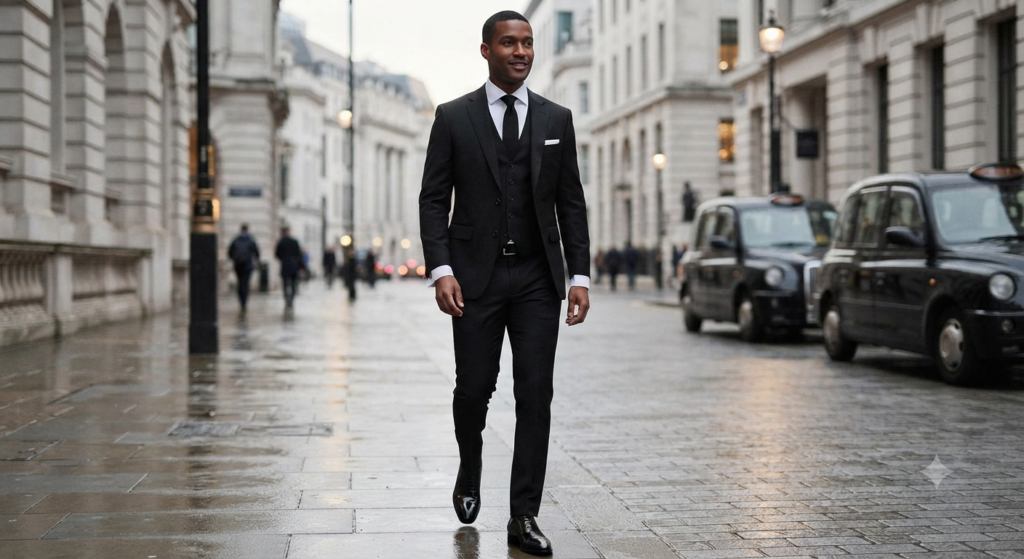
Black in a three-piece cut sits just below black tie in formality — useful for evening events that ask for more polish than a business suit but don’t require a tuxedo.
The outfit: Black three-piece suit, white shirt, black silk knit tie or a black grenadine tie, black patent or high-shine leather oxfords, black belt, white silk pocket square.
Why it works: Black three-pieces walk a fine line — done right, they look like understated formalwear; done wrong, with the wrong shoes or a shiny fabric, they look like a uniform. Keeping every accessory monochrome and letting the shirt provide the only real contrast is what keeps this outfit feeling intentional rather than stiff.
Fit notes: Black shows fit flaws more than almost any other color because there’s no pattern or texture to distract from a poor line. This is the suit where I’d insist on a proper tailoring check — sleeve, shoulder, and waist — before wearing it anywhere important.
Occasions: Evening galas, formal dinners, award ceremonies with a “cocktail” or “semi-formal” dress code, milestone birthday parties.
Common mistake: Treating black as a safe, all-purpose choice for weddings during the day. Black three-pieces can read overly formal or somber at a daytime ceremony — save this one for evening.
Affordable alternative: A quality black suit is worth investing in once, since a cheap black wool can look flat and lifeless under evening lighting — look for a slight sheen from a higher wool grade rather than the coating some budget fabrics use to fake it.
7. Windowpane Check Three-Piece for Smart Casual Weekend
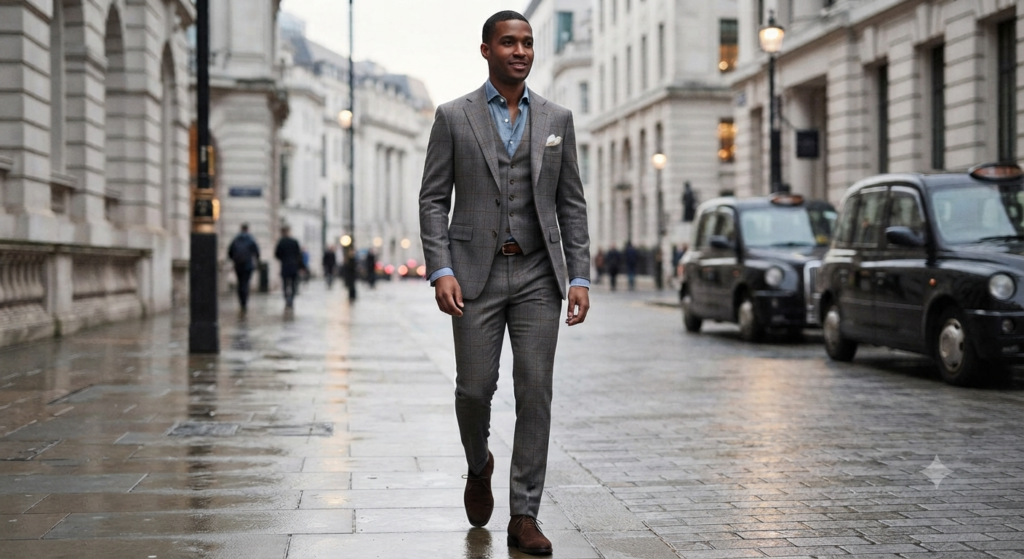
This is the outfit for men who think a three-piece can’t do casual. A soft windowpane check, worn without a tie, proves otherwise.
The outfit: Grey or brown windowpane three-piece, open-collar chambray or oxford shirt, no tie, suede desert boots or brown loafers, brown belt, pocket square optional and casual (linen, unpressed fold).
Why it works: Removing the tie and opening the collar immediately drops the formality register, and a check pattern (rather than a solid) reinforces that this is meant to be relaxed. The waistcoat still adds structure, so the outfit doesn’t slide all the way into “just a jacket and trousers” territory — it keeps a three-piece’s finished quality while dressing down the details around it.
Fit notes: Without a tie, the shirt collar needs to sit well on its own — a spread or button-down collar in a slightly heavier cotton holds its shape better open than a thin dress shirt will.
Occasions: Smart casual dinners, daytime social events, creative office environments, weekend gatherings where you want to look put-together without looking like you’re headed to work.
Common mistake: Pairing a casual three-piece with a dress tie left half-heartedly loose. If you’re going tieless, commit — a loosened tie reads as end-of-workday, not intentional styling.
Affordable alternative: Check patterns are a great place to buy budget, since the eye is drawn to the pattern rather than the fabric’s fineness — this is one of the more forgiving suits to buy off the rack at a lower price point.
8. Olive Green Three-Piece for a Fall Cocktail Event
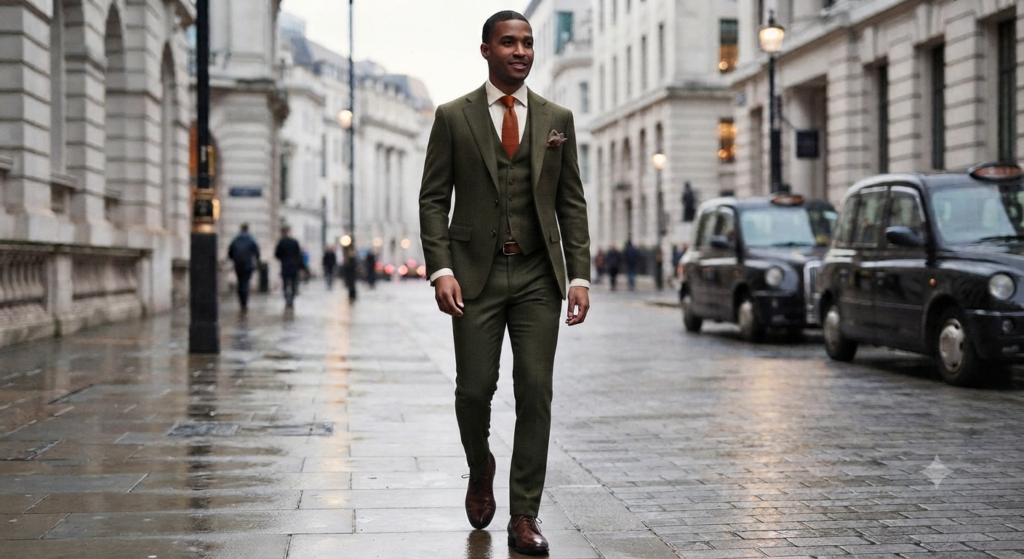
Olive is one of those colors that reads as adventurous on the rack and surprisingly wearable once it’s on — it sits between brown and grey in versatility.
The outfit: Olive green three-piece in a flannel or brushed wool, cream or ecru shirt, a rust or mustard knitted tie, dark brown leather boots or oxfords, brown belt, a patterned wool pocket square.
Why it works: Olive is an earth tone, so it pairs naturally with the other warm colors in this outfit — rust, mustard, brown — without needing the stark contrast that a navy or grey suit would. The brushed or flannel finish adds textural depth appropriate for the season, and it keeps the color from reading too bright or costume-like.
Fit notes: Olive suits often photograph and read differently under different lighting — warmer indoor light brings out the green, cooler daylight can push it toward khaki. If you’re buying online, ask for a swatch or check return policies, since this is one color where in-person fitting genuinely changes the perceived shade.
Occasions: Fall cocktail parties, evening receptions, creative industry events, dinner parties with a dressed-up but non-corporate crowd.
Common mistake: Pairing olive with black accessories. Black reads too stark against an earth tone and breaks the cohesive warm palette — brown, in every shade, is almost always the better call here.
Affordable alternative: Olive is a strong color to buy from a budget line if it’s your first “colored” suit — it’s versatile enough that even a lower-cost version earns its place in rotation.
9. Mid-Grey Flannel Three-Piece for the Winter Office
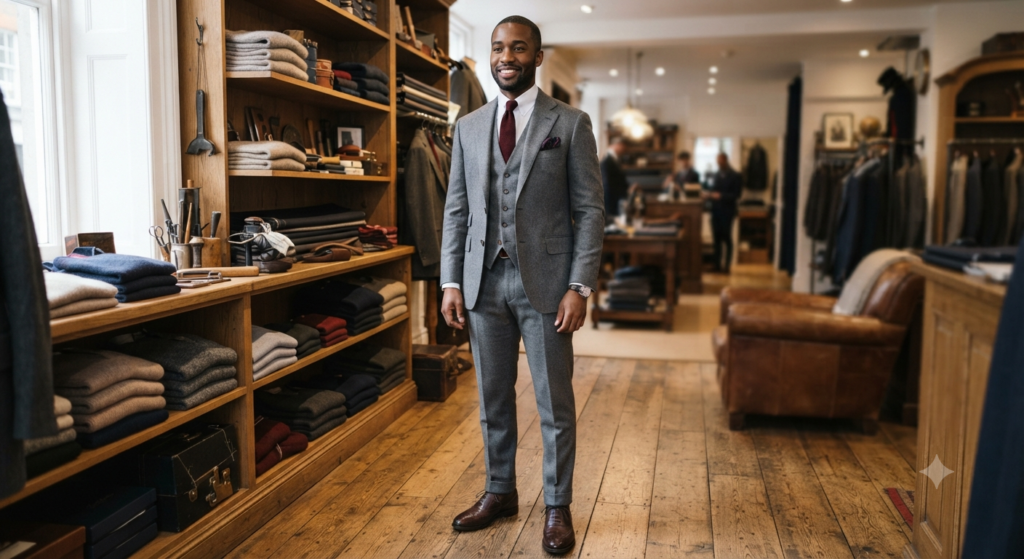
Flannel is the fabric that makes winter tailoring genuinely comfortable rather than just tolerable — it has enough weight and texture to feel substantial without looking bulky.
The outfit: Mid-grey flannel three-piece, oxford cloth button-down shirt in white or pale blue, a wool or cashmere tie in burgundy or bottle green, dark brown or black leather brogues, black or brown belt to match the shoes, a wool pocket square.
Why it works: Flannel’s soft, matte finish reads as more relaxed than a sharp worsted, which suits winter’s slower, cozier mood without sacrificing office-appropriate formality. A wool tie rather than silk continues that textural logic — matching the fabric’s mood rather than fighting it with a glossy accessory.
Fit notes: Flannel drapes differently than worsted wool — it tends to mold to the body over time and can look slightly looser when new. Don’t overcompensate by having it cut too tight; let it break in over a season and you’ll get a more comfortable, better-draping suit than if you’d forced a slim fit from day one.
Occasions: Winter office wear, client meetings from November through February, any indoor formal setting where a lighter fabric would feel thin against the cold outside.
Common mistake: Wearing flannel with a high-shine silk tie and patent shoes. The mismatch in finish — matte fabric, glossy accessories — undercuts the cohesive, understated quality flannel is good at.
Affordable alternative: Flannel is genuinely one of the better value fabrics at mid-range price points, since its texture hides minor construction imperfections that would show clearly on a smooth worsted.
Read also: 20 Suit Outfits for Men on a Budget
10. Linen Three-Piece for a Destination Summer Wedding
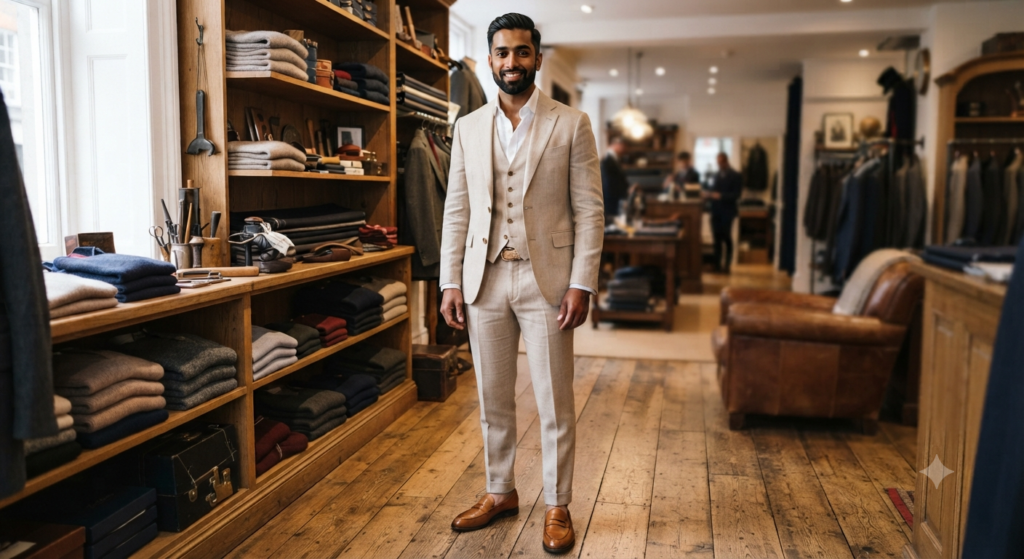
Linen in a three-piece feels almost contradictory — a relaxed fabric in a formal cut — but it’s become one of the defining looks for warm-weather destination weddings, and for good reason.
The outfit: Natural or light blue linen three-piece, white or pale pink linen or cotton-linen blend shirt, no tie, tan or white leather loafers (no socks or low no-show socks), woven leather belt, no pocket square or a very light linen one.
Why it works: Linen’s wrinkles are part of its character, not a flaw to fight — trying to keep a linen suit crisp all day is a losing battle and also misses the point. The relaxed texture pairs naturally with a tieless, open-collar shirt and unstructured loafers, creating a coherent “resort formal” look rather than a business suit that’s simply too hot for the venue.
Fit notes: Linen three-pieces should be cut slightly more relaxed through the body than a wool suit — a too-tight linen waistcoat will show every crease and pull in a way that reads as ill-fitting rather than intentionally textured.
Occasions: Beach or destination weddings, summer garden parties, any warm-climate event with a dress code that still calls for a full suit.
Common mistake: Choosing a dark linen for a hot climate. Dark linen absorbs heat and also shows creasing more starkly than lighter shades — natural, tan, or pale blue are more forgiving in every sense.
Affordable alternative: Linen-cotton blends hold their shape slightly better than pure linen and are often less expensive — a reasonable trade if you want fewer wrinkles and a lower price tag, at the cost of a bit of linen’s characteristic texture.
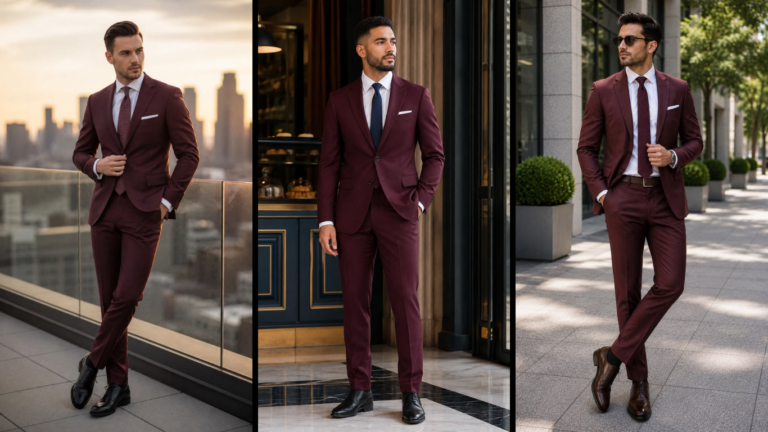
11. Burgundy or Oxblood Three-Piece for a Festive Evening Event
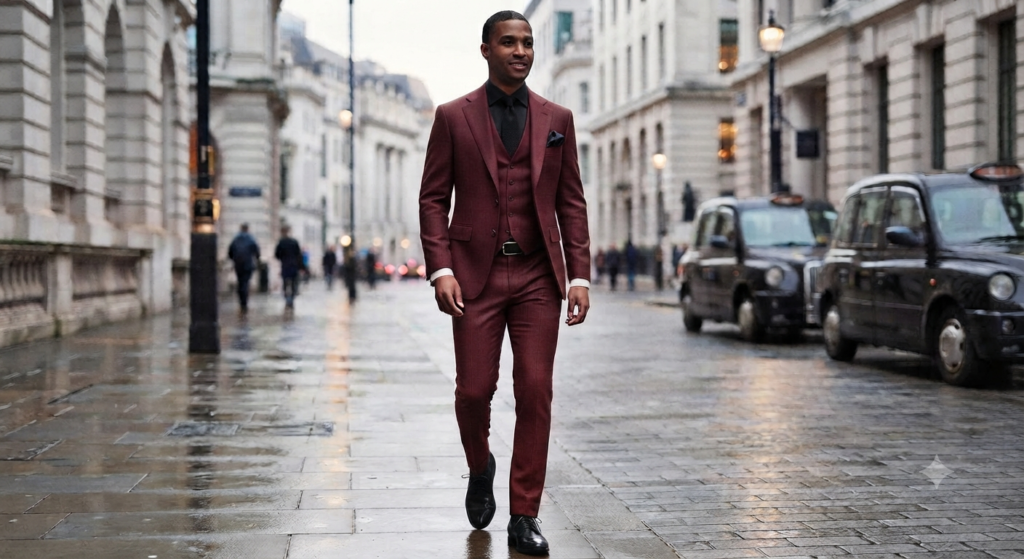
A deep burgundy three-piece is one of the few genuinely bold suit colors that still reads as sophisticated rather than costume-like — largely because the color is so close to black in low light.
The outfit: Burgundy or oxblood three-piece in a fine wool or wool-silk blend, black or charcoal shirt, no tie or a black grenadine tie, black leather oxfords or velvet loafers, black belt, black silk pocket square.
Why it works: Burgundy has enough depth to avoid looking like a novelty color, especially under evening or holiday lighting where it can read almost black until you get close. Keeping the rest of the outfit in black and charcoal lets the suit color do the talking without competing accessories.
Fit notes: This is a statement suit, so fit needs to be exact — any looseness reads as costume rather than confident color choice. If you’re only wearing this once or twice a year, it’s worth a tailoring appointment even on a rental or budget piece.
Occasions: Holiday parties, New Year’s Eve events, festive evening dinners, any occasion that calls for personality within a still-formal dress code.
Common mistake: Pairing burgundy with brown accessories, assuming “earth tones go together.” Burgundy actually pairs more cleanly with black and charcoal — brown can make the whole look muddy rather than rich.
Affordable alternative: Because this is a suit most men wear only occasionally, it’s a reasonable place to buy budget — just prioritize fit over fabric quality, since fit is what will make or break a bold color.
12. Odd Waistcoat Look — Wearing the Vest Separately for Business Casual
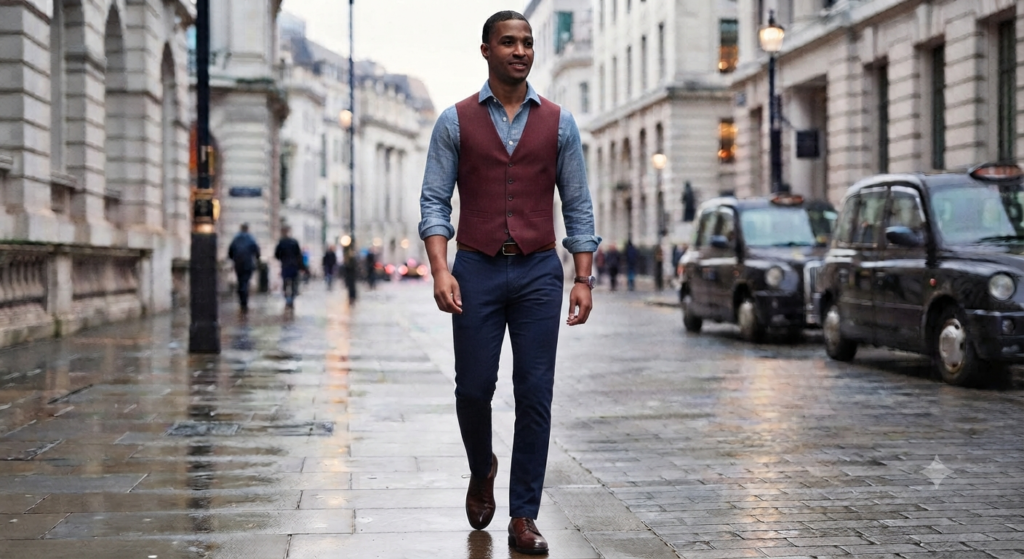
The most underused trick with any three-piece suit: you don’t have to wear all three pieces together every time. Separating the waistcoat opens up an entirely different, more casual register.
The outfit: Waistcoat from your grey or navy three-piece, worn over a chambray or oxford shirt with the sleeves rolled, no jacket, no tie, chinos or suit trousers, brown loafers or clean sneakers, brown belt.
Why it works: A waistcoat worn alone reads as business casual rather than formal — it keeps a level of structure and polish that a shirt alone lacks, while dropping the two most formal signals (the jacket and the tie) entirely. This is a genuinely practical way to get more mileage out of a three-piece suit rather than leaving it in the closet between formal occasions.
Fit notes: A waistcoat cut to be worn under a jacket sometimes sits slightly differently on its own — check that the armholes and shoulder seams still sit cleanly without a jacket layered over them, since a jacket can hide minor gapping that becomes visible without it.
Occasions: Business casual offices, creative workplaces, dinner or drinks after work, any setting where a full suit feels like too much but a plain shirt feels like too little.
Common mistake: Wearing the waistcoat with the suit trousers and assuming it still reads as “half a suit.” Pairing it instead with chinos or a different trouser makes clear this is an intentional separate, not just an incomplete outfit.
How Fit Changes Everything in a Three-Piece Suit
A three-piece suit has more places for fit to go wrong than a two-piece, simply because there’s another garment in the mix. A few fit principles apply across every outfit above:
Waistcoat length: The bottom edge should sit right at your trouser waistband, or just below it — too short and it exposes shirt when you move; too long and it looks bulky under the jacket.
Waistcoat closure: It should close without straining across the chest or gapping at the buttons when you sit down. If you’re between sizes, size for a clean close when seated, not just standing.
Jacket over waistcoat: The jacket’s front should lie flat over the waistcoat without any visible bulk or lines showing through — if you can see the waistcoat’s outline pressing against the jacket fabric, the waistcoat is cut too full for that particular jacket.
Trouser break: For most of these looks, I’d lean toward a slight break or no break — a fuller break reads dated with the more tailored silhouette a three-piece implies.
Sleeve and shirt cuff: Regardless of the outfit, aim for about half an inch of shirt cuff showing beyond the jacket sleeve. It’s a small detail, but it’s one of the first things that separates a suit that fits from one that simply exists on the body.
Building a Versatile Three-Piece Wardrobe
If you’re buying your first three-piece suit, resist the urge to start with the most exciting color on this list. Charcoal or navy will get you through more occasions than any patterned or colored suit, and once you have one of those, a second suit in a different neutral (the other of the two, essentially) gives you real range before you start adding tweed, olive, or burgundy into the rotation.
One small tailoring adjustment can completely change how a suit looks and performs across occasions — having a tailor adjust the waistcoat’s button stance or take in the back slightly can turn a suit that only works for weddings into one that works for the office too. It’s worth the modest cost, especially on a suit you paid a reasonable amount for and want to keep wearing.
Suit Care and Maintenance for Three-Piece Suits
The extra piece means extra care considerations. A few things worth knowing:
Dry clean sparingly — once or twice a season unless visibly soiled. Over-cleaning breaks down the wool fibers and the canvas structure faster than regular wear does. Spot-clean and air out the suit between wears instead.
Use a wooden or padded hanger, and hang the waistcoat separately or on a hook rather than folded, to avoid crease lines across the front panels.
Brush the wool regularly with a natural bristle clothes brush to lift dust and surface debris before it works into the fibers.
Store with cedar blocks rather than mothballs — the smell lingers far less, and cedar does the same job of deterring moths.
Frequently Asked Questions
Do you always need to wear a tie with a three-piece suit? No. The waistcoat itself adds enough formality that a three-piece can go tieless for business casual or warm-weather events, as long as the shirt collar is substantial enough to look intentional open.
Should the bottom button of the waistcoat be left undone? Yes, on most traditional cuts, the bottom button is left open — it’s a holdover convention that also helps the waistcoat sit better when seated. Some modern, more fitted waistcoats are cut to be worn fully buttoned, so check with your tailor which style you have.
Can I wear a three-piece suit in summer without overheating? Yes, provided you choose an appropriate fabric — fresco wool, high-twist wool, or linen all breathe far better than a standard worsted or flannel. The waistcoat itself isn’t the problem; the fabric weight usually is.
What shoes work best with a three-piece suit? Oxfords and brogues are the most versatile choices across formal and semi-formal settings; loafers work well for business casual or summer looks. Match the shoe’s formality to the occasion, not just the suit color.
Is it acceptable to wear the waistcoat without the jacket? Yes, and it’s one of the best ways to get extra use out of a three-piece suit. Pair it with a different trouser than the matching suit pants to make clear it’s a deliberate separate rather than a half-finished outfit.
How do I know if my waistcoat fits properly? It should close without pulling at the buttons, sit flat against your chest and stomach, and its bottom edge should hit right around your trouser waistband. Sit down in it before buying — a waistcoat that fits standing can gape or strain when seated.
What’s the difference between a full-canvas and fused three-piece suit? A full-canvas suit has a layer of horsehair canvas between the outer fabric and lining that molds to your body over time and drapes more naturally; a fused suit uses glued interfacing, which is cheaper but can bubble or separate after repeated wear and cleaning. For a suit you’ll wear regularly, canvas construction lasts considerably longer.
Can a three-piece suit work for a funeral? Yes — charcoal, black, or dark navy three-pieces are all appropriate, worn with a plain white or pale shirt and a subdued or plain tie. Avoid anything with a pattern, bright color, or shine.
How many three-piece suits does a man actually need? Most men are well served by one versatile neutral (charcoal or navy) before adding a second for range. Beyond two, additional three-pieces are really about personal style and occasion variety rather than practical necessity.
Do three-piece suits work for shorter or broader builds? Yes, with attention to proportion — a waistcoat with a slightly lower button stance can elongate a shorter frame, while a broader build benefits from a waistcoat cut with enough room to close cleanly without straining, since a tight waistcoat draws attention to width rather than minimizing it.
Final Thoughts
The three-piece suit isn’t a special-occasion costume — it’s a genuinely flexible piece of tailoring once you know how to dress around it.
The waistcoat can be worn buttoned and formal for a wedding, opened at the collar for a casual weekend, or removed from the jacket entirely for an easy business casual layer.
What separates a suit that earns its keep from one gathering dust is less about the suit itself and more about understanding fit, fabric, and the small styling choices that adjust its formality up or down.
Buy the best fit and construction your budget allows, learn the handful of tailoring principles that make the difference, and you’ll find far more occasions for a three-piece suit than you might expect. Trends will keep shifting; a well-fitted suit in a smart color, worn with confidence, won’t go out of style.
Read also: