Men’s Suit Guide: How Many Suits Does a Man Actually Need?
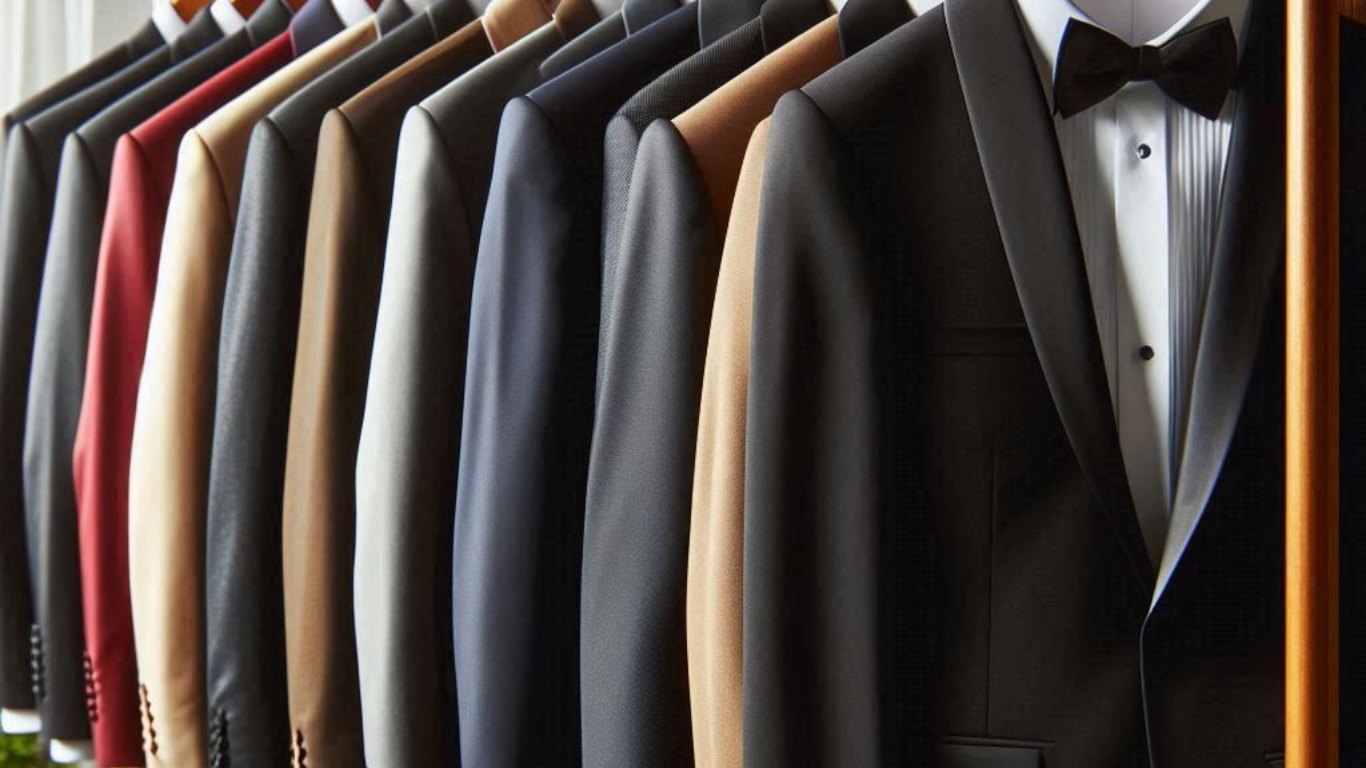
I get some version of this question more than almost any other: “How many suits do I actually need?” It usually comes from one of two directions — a guy who owns exactly one suit and is starting to feel the limits of that, or a guy who’s been told he needs a rotation of five or six and is trying to figure out whether that’s genuine advice or just a way to sell more suits.
The honest answer isn’t a fixed number. It depends entirely on how often you wear suits, in what contexts, and how much variety your work and social calendar actually demands.

A man who wears a suit once a year for weddings needs a completely different wardrobe than one who wears one five days a week in a client-facing role.
Treating both of those situations the same way — with the same generic “own three suits” advice — is exactly how men end up either underprepared or overspending on suits they’ll barely wear.

This guide breaks down suit wardrobe planning by actual use case, not by an arbitrary number, so you can figure out what you genuinely need rather than what a retailer wants you to buy.
Start With Frequency, Not a Target Number
The single most useful question to ask yourself isn’t “how many suits should I own” — it’s “how many times a week or month will I actually wear one.” This single piece of information changes the entire calculation.
If you wear a suit daily for work, rotation matters enormously, both for practical reasons — a suit needs roughly 24 to 48 hours to rest and let the fabric recover its shape between wears — and for simple wear-and-tear reasons, since a single suit worn five days a week will show fabric fatigue and shine at the seat and elbows far faster than one given regular rest between wears.
If you wear a suit occasionally — client meetings once or twice a month, the odd formal event — rotation matters less, and your money is better spent on one or two genuinely versatile pieces rather than a wider rotation you won’t get enough use out of to justify the cost.
The One-Suit Wardrobe: When It’s Actually Enough
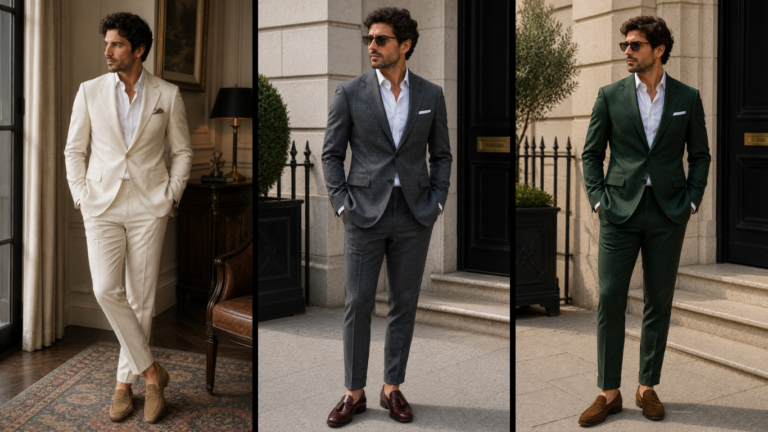
If your suit-wearing occasions are truly infrequent — a wedding here, a funeral there, the occasional interview — one suit, chosen carefully, can reasonably cover you for years. The suit that works hardest in this scenario is a single-breasted, notch lapel suit in navy or charcoal, in a mid-weight wool that isn’t tied to a specific season.
This single suit needs to be properly tailored, since it’s carrying the full weight of every formal occasion in your life.
This isn’t the place to cut corners on alterations, even if you’re keeping the wardrobe minimal by design. One suit worn rarely but fitted precisely will consistently outperform a small rotation of suits that don’t fit quite right.
Read also: Velvet Suit Jacket Outfits for Men: 12 Ideas
The Two-Suit Wardrobe: The Practical Minimum for Regular Wear
Once you’re wearing a suit somewhat regularly — a job that requires one a few times a month, or a life stage with a steady stream of weddings and events — two suits become the practical minimum, primarily for rotation reasons rather than variety.
The standard approach here is navy and charcoal, both in notch lapel, single-breasted cuts. This combination covers the overwhelming majority of business and semi-formal contexts without requiring you to think too hard about which one to reach for on a given morning.
Some men prefer navy and a mid-grey instead of charcoal, particularly in warmer climates, since mid-grey often reads as slightly more season-flexible than a heavier charcoal tone.
The value of two suits isn’t really about having a spare in case one needs cleaning, though that’s a genuine practical benefit.
It’s about extending the life of both garments by giving each one recovery time between wears, which meaningfully slows down fabric fatigue and keeps both suits looking sharp for longer than a single suit worn on repeat ever would.
The Three-to-Four-Suit Wardrobe: Regular Business Wear
If you’re wearing a suit most days for work, three to four suits is where the math starts to make genuine sense, both for wear rotation and for simple day-to-day variety. At this frequency, a single suit worn several times a week will show visible wear — shine at the seat, fabric fatigue at the elbows and knees — within a year or two, regardless of quality.
A reasonable four-suit rotation for daily business wear typically includes: a navy suit, a charcoal suit, a lighter grey or subtle pattern for variety, and a fourth piece based on your specific context — a seasonal fabric like a lighter wool or linen blend for warmer months, or a more distinctive pattern like a subtle pinstripe if your workplace allows more personality in dress.
This is also the point where seasonal fabric variation starts to matter practically rather than just aesthetically. A mid-weight wool that works fine year-round in a temperate climate becomes genuinely impractical in a hot, humid summer, and a four-suit wardrobe gives you room to include at least one suit in a lighter fabric weight for exactly that reason.
Beyond Four Suits: When More Genuinely Helps
Once you’re past four suits, additional pieces are less about covering a functional gap and more about genuine variety, personal style expression, or covering a wider range of specific occasions — cocktail events, black tie, distinct seasonal needs.
This isn’t wasteful spending if you’re getting real use out of the variety, but it’s worth being honest with yourself about whether a sixth or seventh suit is solving an actual problem or just accumulating for its own sake.
A genuinely useful expansion beyond four suits often includes a dedicated formal or black tie option, since this is a category that a standard business rotation doesn’t cover at all, and trying to make a business suit stand in for black tie occasions rarely looks quite right.
Building the Rotation in the Right Order
If you’re building a suit wardrobe from scratch, the order matters more than most men realize. Start with navy, since it’s the single most versatile color across the widest range of occasions — business, weddings, even funerals in a pinch.
Add charcoal or mid-grey second, since it gives you a genuinely different tone for variety while remaining just as versatile as navy.
From there, prioritize based on your actual calendar rather than general style advice. If you attend a lot of summer weddings, a lighter-weight suit in a warm-weather fabric is a smarter third purchase than a formal black-tie option you might use once.
If your work involves client-facing meetings in colder months, a heavier flannel suit might serve you better than a pattern-heavy piece you’re less confident wearing regularly.
This is also where a double-breasted suit earns a place in the rotation for many men — not as a first or second purchase, but as a third or fourth piece once you understand your proportions and have specific occasions, like evening events or cocktail-adjacent business functions, where a more distinctive silhouette genuinely serves you.
Common Mistakes in Suit Wardrobe Planning
Buying variety before buying fundamentals. A patterned or unusually colored suit is a poor third purchase if you don’t yet own a solid navy and charcoal to rotate between. Build the foundation first.
Underestimating rotation needs for frequent wearers. One of the biggest mistakes I see is a man wearing a single suit several times a week for months, wondering why it looks tired and worn far sooner than expected. Fabric needs rest between wears to hold its shape, and this matters more than most men account for when they’re only thinking about upfront cost.
Overbuying for infrequent occasions. On the other end, some men build out a four- or five-suit wardrobe despite wearing a suit only a handful of times a year. This isn’t really a wardrobe problem — it’s often better solved by owning one or two genuinely excellent, versatile pieces and investing the difference elsewhere.
Neglecting seasonal fabric variation. A wardrobe built entirely around a single mid-weight fabric works fine in temperate climates but becomes a real problem in places with genuine seasonal extremes. If you experience real heat or real cold for extended parts of the year, your rotation should reflect that rather than assuming one fabric weight covers everything.
Suit Longevity and How It Affects the Math
A well-constructed suit, properly cared for and given adequate rest between wears, can reasonably last five to ten years. This longevity is directly tied to rotation — a suit worn constantly without rest wears out significantly faster than the same suit given regular breaks, regardless of how well it was made initially.
This is worth factoring into your wardrobe math directly: if you’re planning to wear suits regularly for the next decade, building out a proper rotation from the start is more cost-effective over time than replacing a single overworked suit every year or two because it was never given the chance to hold its shape.
Matching Your Wardrobe to Your Actual Life, Not a General Rule
The most common mistake in this entire conversation is treating suit wardrobe size as a fixed rule rather than a genuine reflection of how often you wear one and in what contexts. A man who works from home and wears a suit twice a year has fundamentally different needs than one who’s in client meetings four days a week, and no general style guide — including this one — should override your own honest assessment of your actual calendar.
If you’re unsure where you fall, it’s worth tracking your suit-wearing occasions for a few months before committing to a larger wardrobe expansion. You may find you wear suits less often than you assumed, which changes the calculation significantly, or more often than you realized, which is equally useful information.
Frequently Asked Questions
Is one suit really enough for most men? If your suit-wearing occasions are genuinely infrequent — a handful of times a year — one well-fitted, versatile suit in navy or charcoal can reasonably cover you. It’s about the frequency of wear, not a fixed rule.
How much rest does a suit actually need between wears? Roughly 24 to 48 hours is the general guideline, allowing the fabric fibers to recover their shape and any moisture from wear to fully dry out before the next use.
Should my second suit be a different color or a different fabric weight? Color first, in most cases. Navy and charcoal (or mid-grey) cover the widest range of occasions before fabric weight variation becomes the more pressing need.
Do I need a separate suit for black tie events? If you attend black tie events with any regularity, yes — a standard business suit doesn’t substitute well for that dress code. If it’s a rare occurrence, renting is often more practical than buying a dedicated piece you’ll use infrequently.
How many suits does a daily office job actually require? Three to four is the practical range for most men wearing a suit five days a week, allowing for proper rotation and some genuine day-to-day variety without excessive spending.
Is it better to own fewer, higher-quality suits or more, moderately priced ones? For most wear frequencies, fewer, well-tailored suits outperform a larger rotation of mediocre ones, since fit and construction matter more to how a suit looks and lasts than sheer quantity.
When does a double-breasted suit make sense to add to a rotation? Once you already own solid single-breasted foundational pieces and have specific occasions — cocktail events, evening functions — where a more distinctive silhouette genuinely serves a purpose in your calendar.
Should I buy a lighter-weight suit if I live somewhere without extreme seasons? It’s less critical in a genuinely temperate climate, but if you experience even moderate seasonal shifts, a lighter fabric option adds real comfort and wearability during warmer months.
How do I know if I need to expand my suit wardrobe? Track how often you’re wearing your current suits and whether you’re finding yourself reaching for the same one repeatedly without adequate rest between wears. That pattern is a clearer signal than any general rule of thumb.
Is it wasteful to own more than four or five suits? Not inherently, provided you’re genuinely using the variety for real occasions rather than accumulating suits you rarely wear. The waste isn’t in the quantity itself — it’s in owning pieces that don’t serve an actual purpose in your calendar.
Final Thoughts
There’s no universal number of suits every man needs, no matter how often that specific figure gets repeated in general style advice. What matters is an honest look at how often you actually wear one, in what contexts, and how much variety your calendar genuinely demands.
Build from a versatile foundation — navy and charcoal, properly tailored — and expand only when a real gap in your rotation calls for it. That approach will always serve you better than chasing a specific number for its own sake.
Read also: