Checked Suit Outfits for Men: 12 Ideas
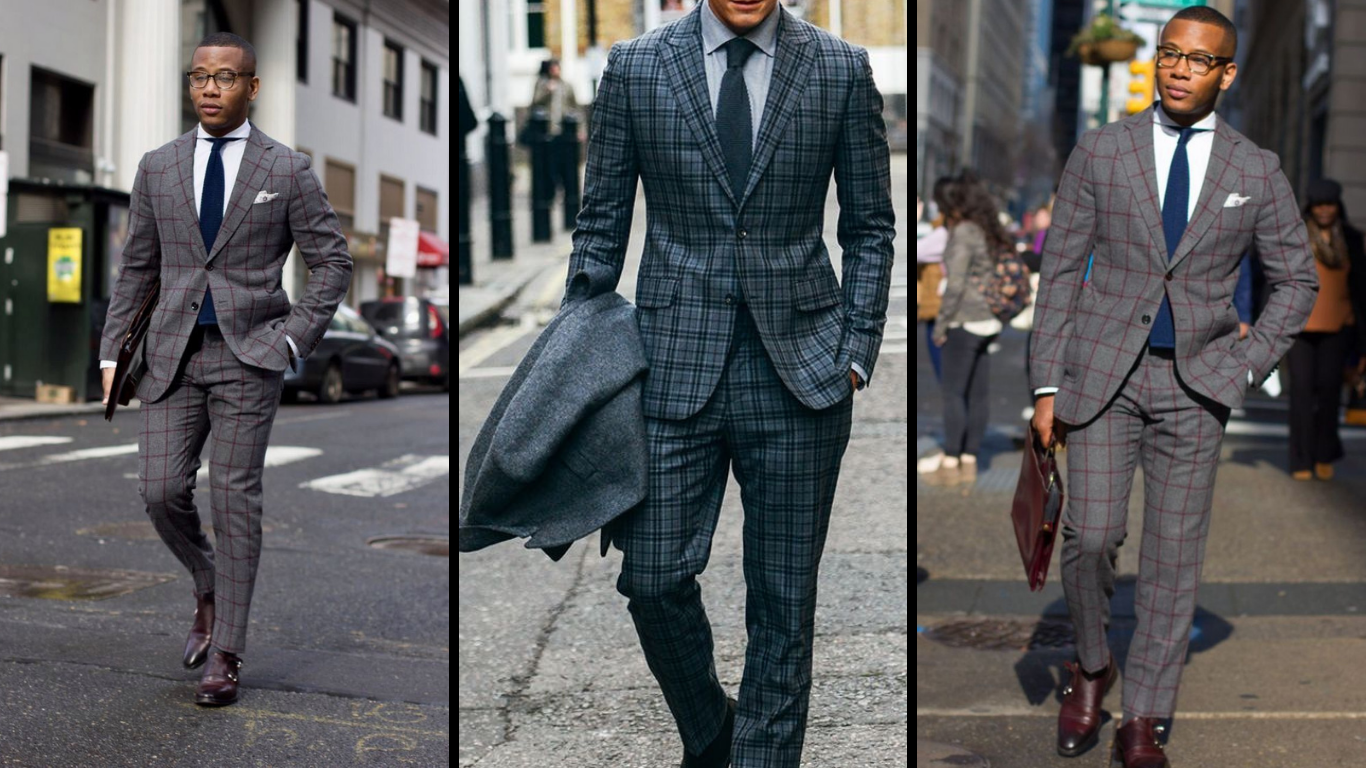
A checked suit intimidates a lot of men who’d otherwise be completely comfortable in a patterned shirt or tie, and the hesitation usually comes down to one thing: not knowing how much pattern is too much once the entire suit is doing the work a solid color normally would.
The truth is that a checked suit is often easier to wear well than people expect, provided you understand that the pattern itself is the statement — everything else in the outfit needs to go quiet and let it do its job.
This guide covers twelve checked suit outfits, from the subtle glen checks that work in conservative offices to the bolder windowpane and large-scale patterns built for genuine style statements.
For each, I’ll cover the shirt, tie, and footwear choices that complement rather than compete with the pattern, along with guidance on choosing a check scale that actually suits your build.
1. Subtle Glen Check Charcoal Suit for Interviews and Conservative Offices

A fine glen check (sometimes called a Prince of Wales check when it includes a colored overcheck) in charcoal or grey is the most conservative, office-safe entry point into checked suiting. From a normal viewing distance, it reads as simply a textured grey rather than an obviously patterned suit, which makes it appropriate for interviews and traditional business settings where a bolder pattern might feel like too much of a risk. Pair it with a solid white or light blue shirt, a solid navy or burgundy tie, and black oxfords.
The key with this suit is restraint everywhere else — since the pattern is subtle but present, a busy tie or shirt pattern layered on top will start to look cluttered rather than considered. Keep every supporting piece completely solid.
Best for: interviews, client meetings, conservative business offices where a completely plain suit might feel expected but a bit more personality is welcome.
2. Windowpane Navy Suit for Creative-Office Business Casual

A windowpane check — a clean grid pattern of thin lines over a navy or charcoal base — offers more visible pattern than a glen check while still reading as clean and modern rather than busy. Pair it with a solid white or pale blue shirt, no tie, and brown leather loafers or derbies for a business-casual look suited to advertising, design, or media offices.
The graphic simplicity of windowpane is part of what makes it easier to wear than other checks — the straight, evenly spaced lines photograph and read as intentional even under office fluorescent lighting, unlike busier or more textured checks that can start to look muddy at a distance.
Best for: creative-industry offices, casual client meetings, smart-casual business settings.
Read also: Velvet Suit Jacket Outfits for Men: 12 Ideas
3. Prince of Wales Check Suit in Grey for Business Formal with Personality

A true Prince of Wales check — a grey glen check base with a colored overcheck, often a subtle blue or red line running through it — brings genuine visual interest to formal business wear without sacrificing the conservative structure the setting calls for. Pair it with a solid white shirt, a solid navy or burgundy tie, and black cap-toe oxfords.
This is a good next step once you’re comfortable with the subtler glen check above and want slightly more pattern presence for board meetings, presentations, or formal client events where you want to be remembered as put-together without looking flashy.
Best for: board presentations, formal business meetings, senior leadership roles where a subtle personality is welcome.
4. Houndstooth Suit for Fall and Winter Semi-Formal Wear

Houndstooth’s distinctive broken-check pattern, traditionally in black and white or grey and cream, has real textural depth that makes it a particularly good choice for cooler months.
A houndstooth suit in a heavier flannel weight pairs well with a cream or white shirt, a solid burgundy or forest-green tie, and brown suede or leather boots.
Because houndstooth has more visual movement than a simple grid check, it works best at a smaller, finer scale for business settings, with larger, bolder houndstooth reserved for more casual or fashion-forward contexts.
Check the scale against your own build in a mirror before committing — a houndstooth pattern that’s too bold for your frame can start to vibrate or blur at a normal viewing distance.
Best for: fall and winter business-casual wear, semi-formal dinners, cooler-weather events where texture matters as much as pattern.
5. Micro-Check Navy Suit — The Safest Entry Point for First-Time Checked Suit Buyers

If you’ve never owned a checked suit and aren’t sure how much pattern you’re comfortable wearing, a micro-check — a very fine, tightly spaced check that reads as a simple texture from more than a few feet away — is the least risky way to start. Pair it with a solid white shirt, any solid tie color, and black or brown shoes, depending on the occasion.
This suit will work in nearly every setting a solid navy suit would, since the pattern is genuinely subtle enough to go unnoticed in most everyday interactions, while still offering a bit more visual depth up close than a completely flat solid fabric.
Best for: first-time checked suit buyers, versatile everyday business wear, and any setting where a solid suit would typically be worn.
6. Shepherd’s Check Suit for a Classic, Country-Inspired Look
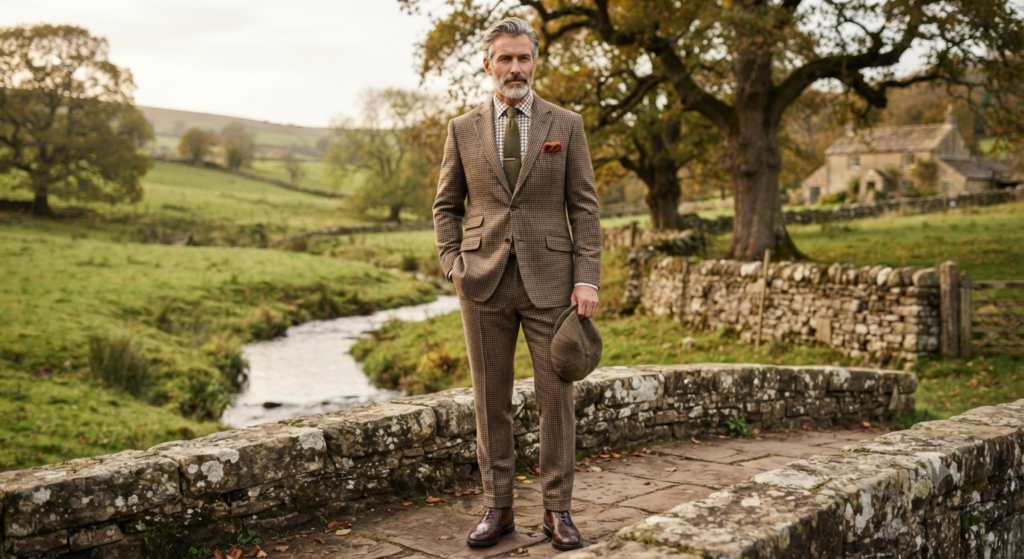
Shepherd’s check, a simple black-and-white or grey-and-white pattern with roots in traditional British countryside dressing, brings genuine heritage character to a suit without venturing into anything too bold or unconventional. Pair it with a cream or white shirt, a solid tie in a rich, complementary color like deep green or burgundy, and brown leather brogues or boots.
This pattern works particularly well in a heavier tweed or flannel fabric, which reinforces its countryside origins and makes it a strong choice for fall weekend events, casual business-adjacent gatherings, or any setting calling for texture and classic character rather than modern minimalism.
Best for: fall weekend events, countryside-inspired dress codes, semi-formal gatherings with a traditional aesthetic.
7. Bold Windowpane Suit for a Cocktail Event Statement

For evening cocktail events where a bit of boldness is welcome, a windowpane check with wider spacing and more visible contrast between the lines and the base color makes a genuine style statement without crossing into costume territory.
Pair it with a solid black or deep navy shirt for maximum drama, or a crisp white shirt for a slightly more restrained version, black leather shoes, and minimal accessories.
Wider windowpane spacing (roughly 2-3 inches between lines) tends to suit taller or larger frames better, since the pattern needs enough visual space to read clearly rather than looking cramped. This is a suit built for evenings when you want to be genuinely noticed, not a suit for the office.
Best for: evening cocktail parties, milestone celebrations, events where personal style is part of the expectation.
8. Tattersall-Inspired Check Suit for Country and Preppy Casual Settings
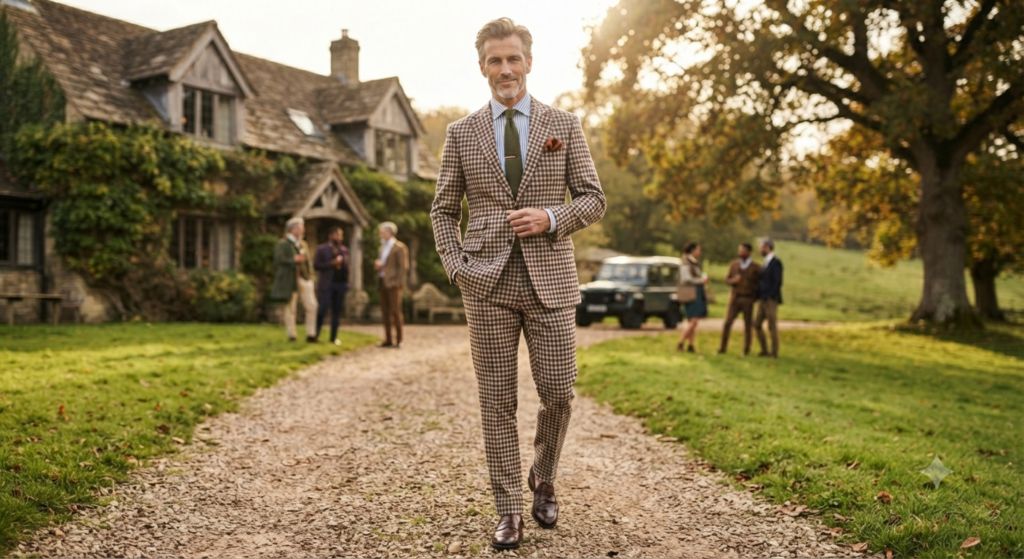
Tattersall, traditionally a shirting pattern featuring a grid of thin colored lines over a light base, occasionally appears in suiting fabric as well, bringing a distinctly American-prep or English-countryside sensibility to a suit. Pair it with a solid Oxford-cloth shirt, no tie or a simple knit tie, and suede loafers or desert boots.
This is a genuinely casual pattern by suiting standards, better suited to weekend events, country club settings, or relaxed social gatherings than to business wear. Keep the rest of the outfit simple and let the tattersall pattern carry the visual interest.
Best for: country club events, weekend social gatherings, preppy-leaning casual dress codes.
9. Checked Suit Separates — Jacket with Solid Trousers for Versatility

Rather than wearing a full matching checked suit every time, pairing just the checked jacket with coordinating solid trousers — grey flannel with a windowpane jacket, for instance — creates a more casual, versatile look that gets more mileage out of a single purchase. Pair it with a solid oxford shirt, no tie, and brown leather loafers or boots.
This approach works particularly well for bolder or larger-scale checks, since separating the jacket from a matching pair of trousers reduces the overall visual intensity of the pattern and makes it easier to wear in more casual, everyday settings.
Choose trousers in a genuinely complementary but distinct shade from the jacket’s base color, rather than something close enough to look like an abandoned matching suit.
Best for: casual business-adjacent wear, weekend events, everyday versatility from a single checked jacket purchase.
10. Large-Scale Check Suit for Tall or Broad Frames
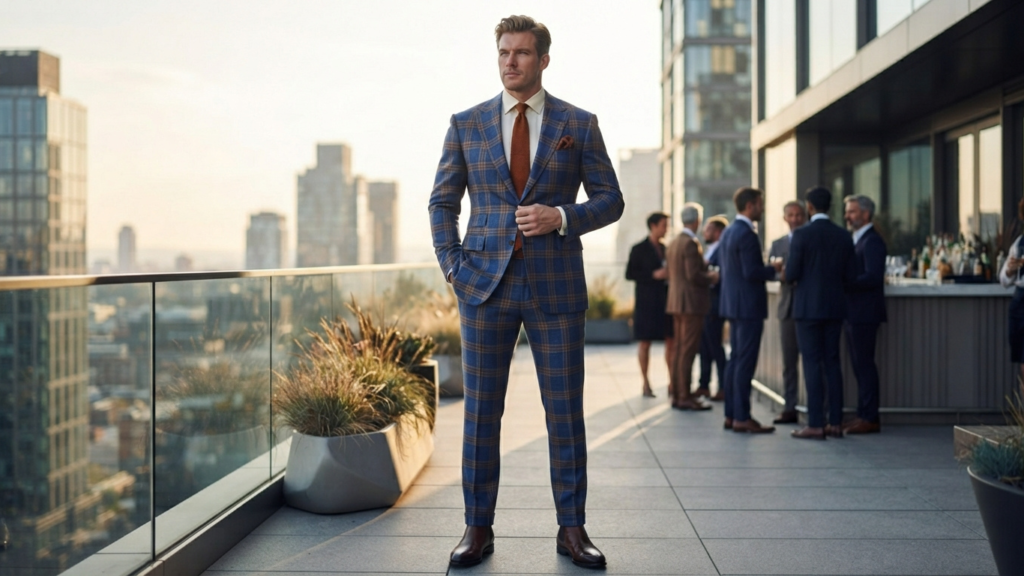
A bolder, larger-scale check — whether glen check, windowpane, or houndstooth — genuinely suits taller or broader men better than it does smaller frames, since there’s more visual space for the pattern to read clearly without looking cramped or disproportionate.
Pair it with a solid white shirt, a solid tie in a complementary color, and black or brown leather shoes, depending on the check’s undertone.
If you’re a smaller-framed man drawn to a bolder check, sizing the pattern down rather than the suit is the better fix — look specifically for a finer-scale version of the same check family rather than assuming the pattern itself is off-limits.
Best for: taller or larger-built men looking for a genuine style statement, fashion-forward business or semi-formal events.
11. Subtle Check Suit for Spring or Summer Wedding Guest Attire
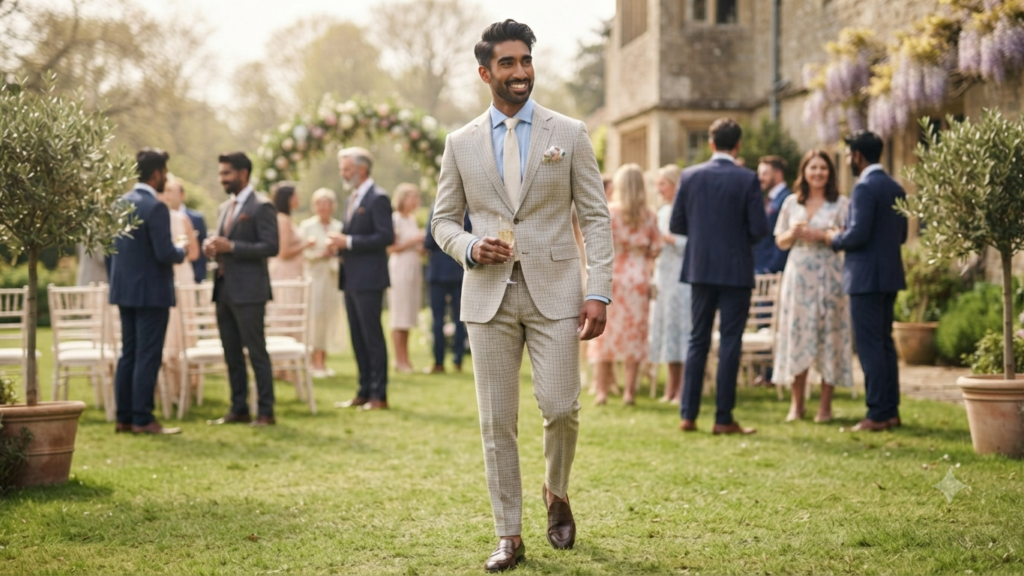
A light grey or pale blue suit with a very fine, barely-there check — visible up close but nearly invisible from a normal viewing distance — offers a wedding guest outfit with more textural depth than a completely solid suit, without venturing into anything too bold for the occasion.
Pair it with a pale blue or white shirt, a tie in a color that complements the wedding’s likely palette, a folded pocket square, and brown leather derby shoes.
This is a good middle-ground choice for wedding guests who want their outfit to look slightly more considered in photos than a plain, solid suit, without risking a pattern bold enough to compete with the couple’s own attire or the day’s overall aesthetic.
Best for: spring and summer wedding guest attire, daytime semi-formal events.
12. Houndstooth or Herringbone Flannel Suit for Winter Business-Casual Wear

For winter specifically, a houndstooth or herringbone pattern in a heavy flannel wool brings both seasonal warmth and textural richness to business-casual wear. Pair it with a cream or white shirt, a chunky knit tie, and brown leather boots.
Herringbone technically refers to the weave rather than a true check pattern, but it’s often grouped with checks for styling purposes since it creates a similarly textured, non-solid visual effect. Both patterns photograph well under winter’s typically dimmer natural light, reading as substantial and considered rather than flat.
Best for: winter business-casual offices, cold-weather semi-formal events, situations calling for texture and warmth together.
Choosing a Check Scale That Suits Your Build
Pattern scale is the single most important factor in whether a checked suit flatters you or overwhelms you, and it has little to do with the specific check type — glen, windowpane, houndstooth, and shepherd’s check all follow the same basic rule. Stand in front of a mirror at a normal conversational distance (roughly arm’s length to a few feet) and check whether the pattern is still clearly legible. If it dissolves into a blur or reads as simply a muddy solid color, the scale is likely too small for your frame or the viewing distance you’re testing at. If it looks overwhelming or cartoonish up close, it’s likely too large.
As a general guideline, larger and broader frames can handle bolder, larger-scale checks without the pattern looking disproportionate, while smaller or slighter frames generally look better in finer, more subtle checks. This isn’t an absolute rule, but it’s a reliable starting point if you’re unsure which scale to choose for a specific check pattern.
Pairing Solids with a Checked Suit — The One Rule That Matters Most
Across every outfit in this guide, one principle holds consistently: once the suit itself is carrying a pattern, everything else needs to go solid. A checked tie with a checked suit, or a patterned pocket square layered on top of a checked jacket, creates a cluttered, competing visual effect that undermines the suit’s own pattern rather than complementing it. If you want to add visual interest beyond the suit itself, texture (a knit tie instead of silk, for instance) is a safer way to do it than introducing a second pattern.
Frequently Asked Questions
Is a checked suit appropriate for a job interview? A subtle glen check or micro-check is generally safe for interviews, particularly in conservative industries. Bolder checks like windowpane or houndstooth are better saved for less formal interview contexts, such as creative or startup industries with more relaxed dress expectations.
How do I know if a check pattern is too bold for a business setting? If the pattern is still clearly visible and legible from across a room, it’s likely too bold for a traditional business setting. Conservative offices generally call for patterns that read as texture rather than obvious pattern from a normal viewing distance.
Can I wear a patterned tie with a checked suit? It’s safer to avoid this — pairing two patterns, even different types, tends to look cluttered rather than intentional. Keep the tie completely solid whenever the suit itself carries a check pattern.
What’s the difference between glen check and Prince of Wales check? Glen check is the base pattern — a woven grid pattern typically in muted greys. Prince of Wales check is technically a glen check with an added colored overcheck, often a subtle blue or red line, layered through the design.
Is houndstooth more casual or more formal than a standard glen check? Houndstooth generally reads as slightly more casual and textural than a fine glen check, particularly in a heavier or bolder-scale version. A fine, subtle houndstooth in a business-weight fabric can work in semi-formal settings, but it leans more casual than a traditional glen check overall.
Should I buy a checked suit as my first suit, or start with a solid color? A solid navy or charcoal suit is generally the smarter first purchase for maximum versatility. A checked suit works best as a second or third purchase once your wardrobe basics are covered, specifically because it’s less universally appropriate across every occasion a solid suit would handle.
Can a checked suit be worn as separates, with the jacket and trousers split apart? Yes, and it’s often a smart way to get more use out of a bolder or larger-scale check — pairing the checked jacket with solid trousers reduces the overall pattern intensity and makes it easier to wear more casually and more frequently.
Is a checked suit appropriate for a wedding as a guest? A subtle, fine-scale check in a light color (grey or pale blue) works well for daytime or spring and summer weddings. Bolder checks are better reserved for cocktail events or semi-formal gatherings rather than the wedding ceremony itself.
Does the check scale really matter based on my height and build, or is that overstated? It genuinely matters — a check that’s proportionally too large for a smaller frame can look overwhelming, while a check too fine for a larger frame can disappear entirely and just read as a flat solid color. Testing the pattern’s visibility at a normal viewing distance in a mirror is the simplest way to judge this for your specific build.
What shoes work best with a checked suit? Black oxfords remain a safe, versatile choice across most checked suits, particularly cooler-toned checks like Glen check or Prince of Wales. Warmer-toned checks like shepherd’s check or tattersall generally pair better with brown leather or suede.
Final Thoughts
A checked suit rewards confidence more than most other suiting choices, but that confidence should show up in your posture and fit, not in piling on additional patterns and color to match it. Choose a check scale that actually suits your build, keep everything else in the outfit deliberately quiet, and the pattern itself will do exactly what it’s meant to do — add depth and personality to an outfit without ever needing to fight for attention against everything else you’re wearing.
Read also: