15 Suit Outfits for Men for Their Own Wedding
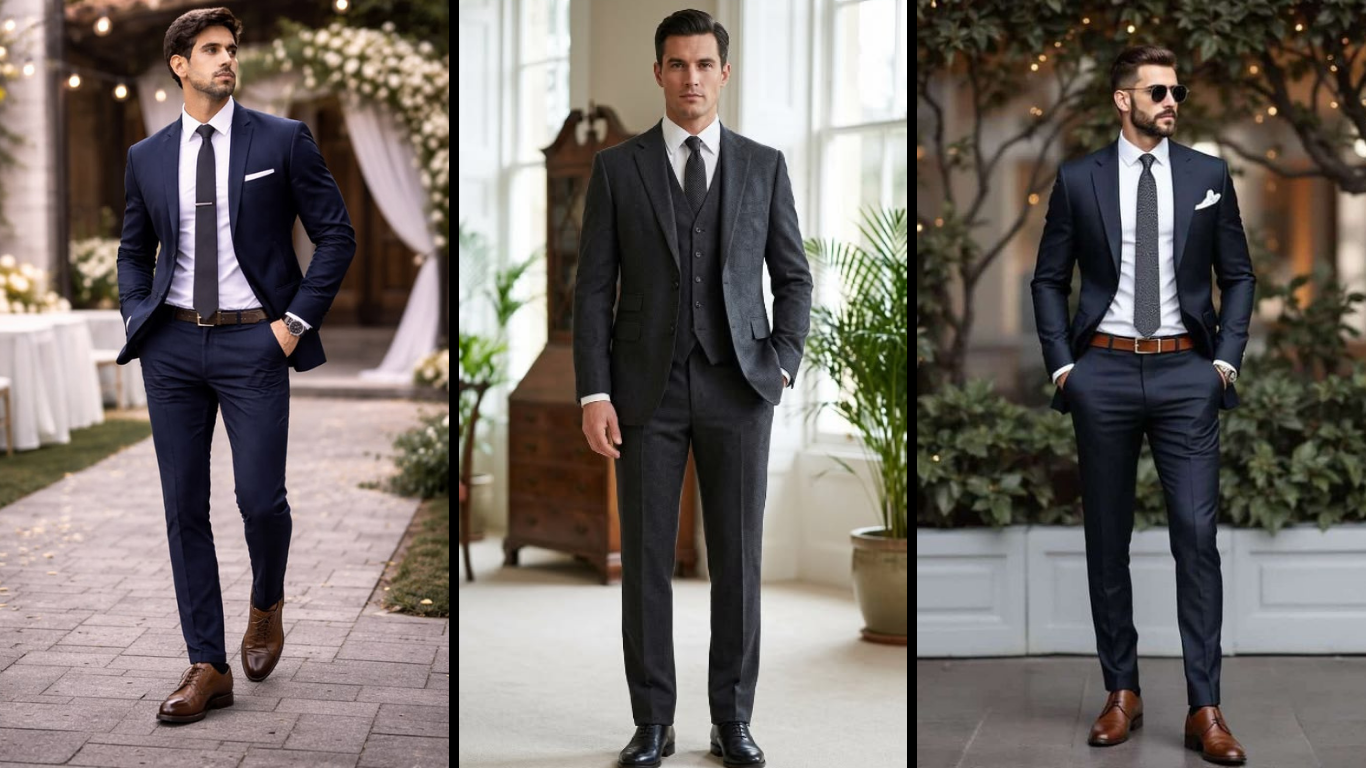
Dressing for your own wedding is a genuinely different exercise than dressing as a guest, even though a lot of the same principles apply.
You need to look distinctly more formal — or at least distinctly more considered — than everyone else in the room, coordinate with a partner’s dress and the day’s overall palette without matching it too literally, and get the fit right well in advance, since this is one suit you can’t afford to have arrive a week before the ceremony and hope for the best.
This guide walks through fifteen groom outfits covering everything from black-tie formal to relaxed beach ceremonies, along with the practical planning considerations — timing, coordination, rental versus buying — that matter specifically because this is your wedding, not someone else’s.
1. Classic Navy Suit for a Traditional Daytime Wedding
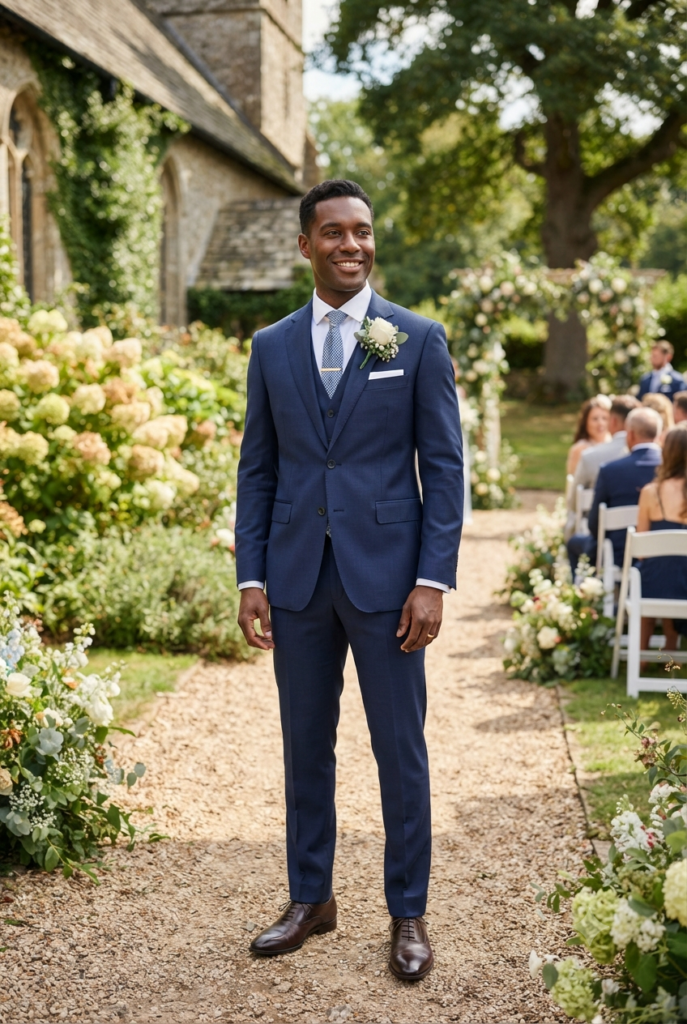
A well-tailored navy suit remains the most reliable, broadly appropriate choice for a traditional daytime wedding, whether it’s held in a church, a hotel ballroom, or an outdoor venue in the evening. Pair it with a white shirt, a silver or navy silk tie, black or dark brown oxfords, and a boutonniere that picks up an accent color from the day’s palette.
Navy photographs exceptionally well across a range of lighting conditions, which matters enormously on a day when photos will be taken for decades to come. If you’re unsure what to choose and have no other strong preference, this is the safest starting point that still looks genuinely elevated rather than merely safe.
Best for: traditional daytime weddings, church ceremonies, and most conventional wedding settings.
2. Black Tuxedo for a Formal Evening Black-Tie Wedding
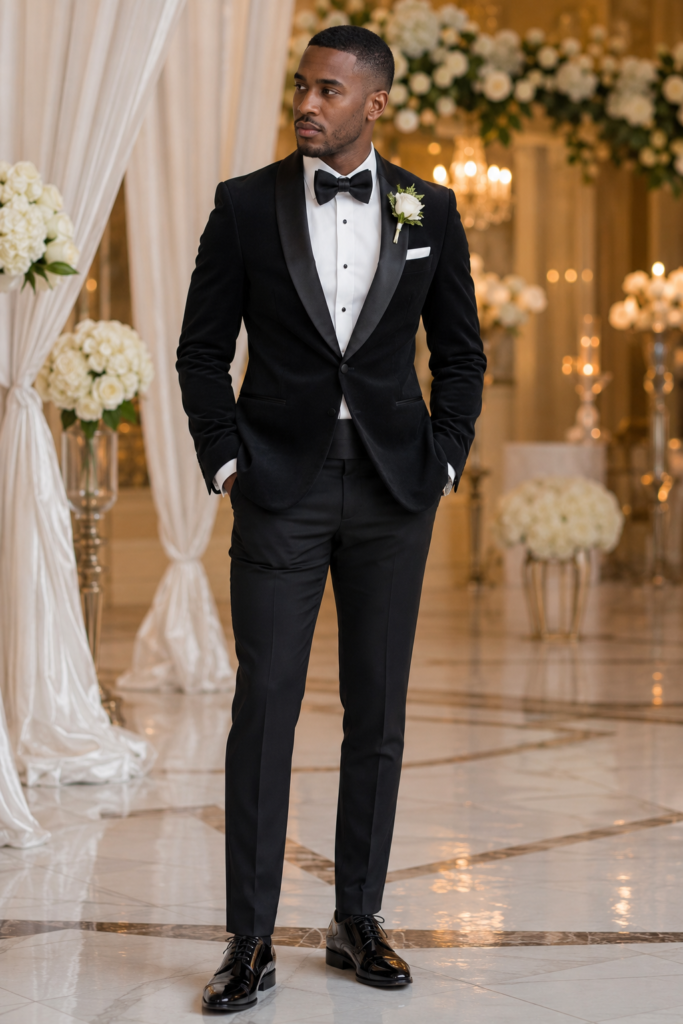
For a genuinely formal evening wedding with a black-tie dress code, a proper tuxedo — black with satin lapels, a matching bow tie, a pleated or plain-front formal shirt with studs, and patent leather or highly polished black shoes — is the expected and correct choice. This is distinct from a black suit; the satin lapel facing, the bow tie, and formal shirt details are what actually signal “tuxedo” rather than “very dark suit.”
If black tie is specified on your invitation, guests will be dressed accordingly, and showing up in a standard suit — even a very sharp one — will read as underdressed at your own wedding. Confirm the dress code language with your venue or planner well in advance if there’s any ambiguity.
Best for: formal evening weddings with an explicit black-tie dress code.
3. Grey Morning Suit for a Formal Daytime European-Style Wedding
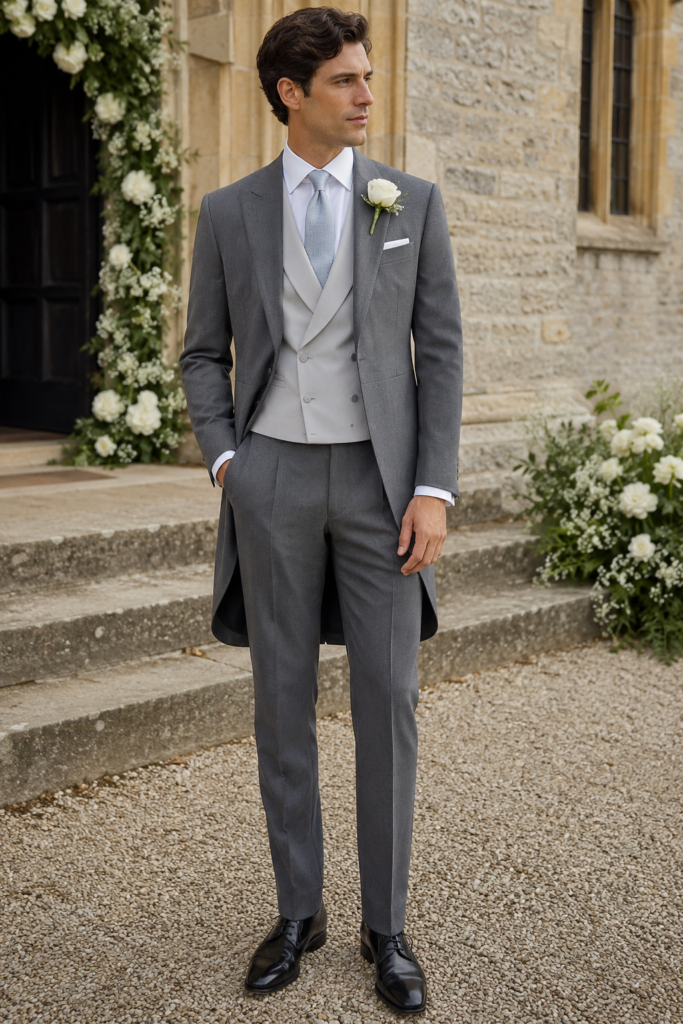
For formal daytime weddings following British or European tradition — particularly common at certain religious ceremonies or family traditions with strong ties to that style — a grey morning suit (a cutaway coat, waistcoat, and striped trousers) is the traditional formal daytime equivalent of an evening tuxedo. Pair it with a white shirt, a silver or grey tie or cravat, and black leather shoes.
This is a genuinely formal, specific style of dress that’s less common in casual or American wedding traditions, so it’s worth confirming with family or whoever’s officiating whether this level of formality is actually expected before committing to it, since it can look distinctly out of place if the rest of the wedding is more relaxed.
Best for: formal daytime weddings following British or European traditions, family weddings with specific formal customs.
4. Linen Suit for a Beach Wedding
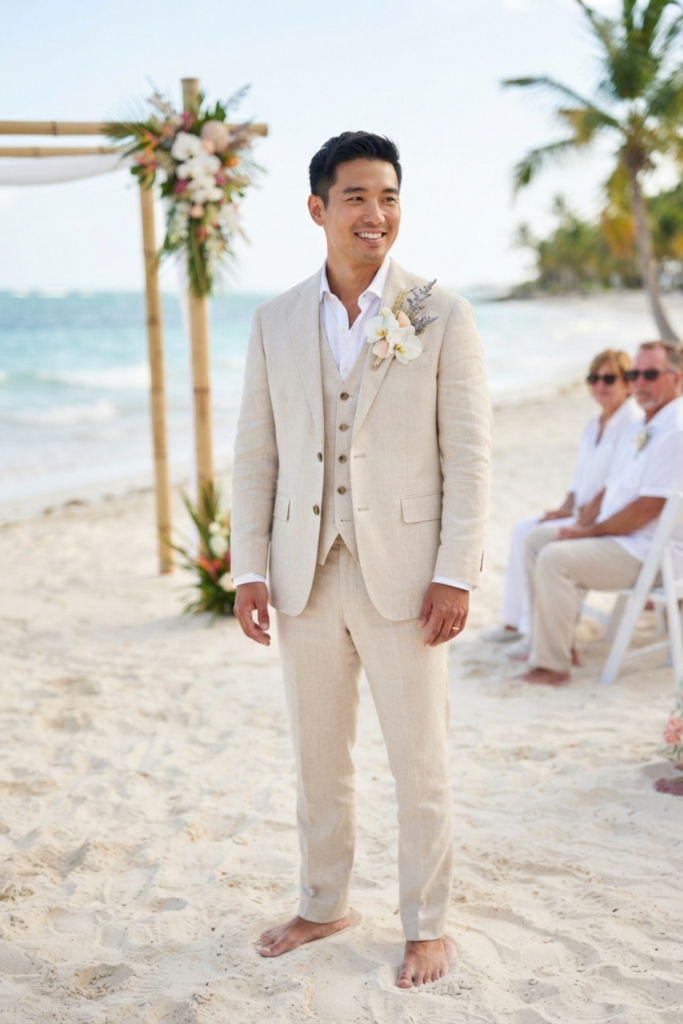
For a genuine beach or coastal ceremony, a lightweight linen suit in stone, tan, or pale blue, paired with an open-collar linen or cotton shirt and espadrilles or suede loafers, keeps you comfortable in the heat and humidity while still looking appropriately dressed for your own ceremony. Skip the tie entirely — linen’s relaxed drape doesn’t pair naturally with a tie’s added formality, and the setting doesn’t call for it.
As the groom, it’s worth choosing a slightly more elevated version of what your male guests might wear — a well-tailored linen suit rather than simply linen trousers and a shirt — so you read as distinctly the groom in photos rather than blending into the general guest group.
Best for: beach weddings, coastal or destination ceremonies, warm-weather outdoor settings.
5. Tan Suit for an Outdoor Garden Wedding
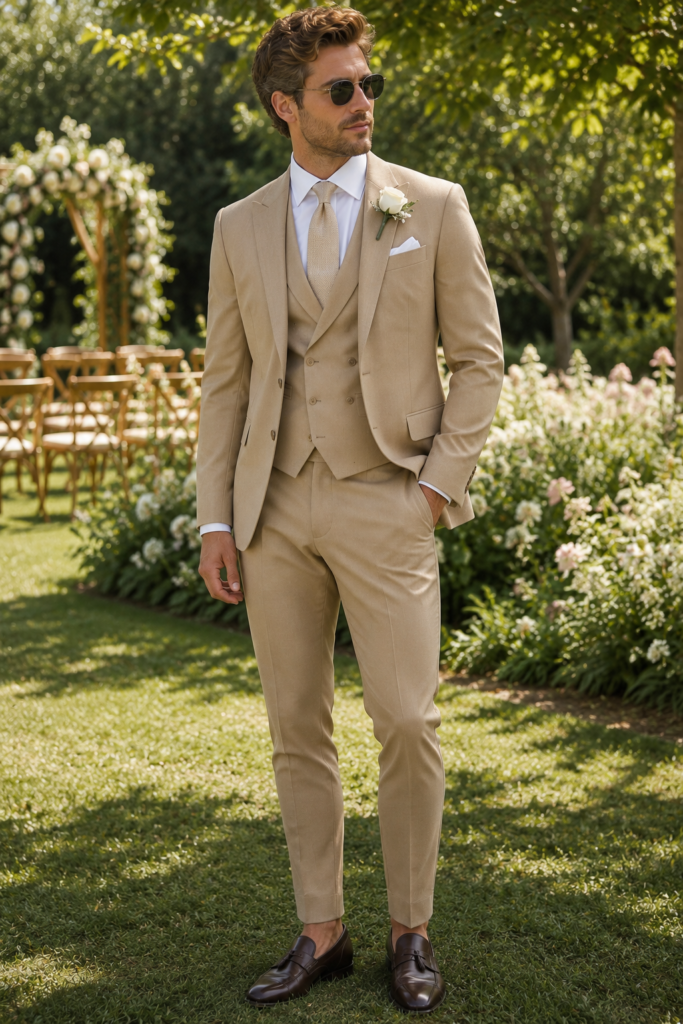
A tan or khaki suit brings warmth and a relaxed elegance to an outdoor garden or vineyard wedding setting. Pair it with a white shirt, a navy or burgundy tie, brown leather or suede shoes, and a boutonniere that complements the day’s floral arrangements.
This color works particularly well against natural greenery in outdoor photography, creating a warm contrast that a navy or black suit doesn’t offer in the same setting. If your partner’s dress or the wedding’s color scheme leans toward warm, earthy tones, a tan suit coordinates especially well.
Best for: garden weddings, vineyard ceremonies, outdoor daytime settings with a natural, relaxed aesthetic.
6. Ivory Dinner Jacket for a Summer Evening Semi-Formal Wedding
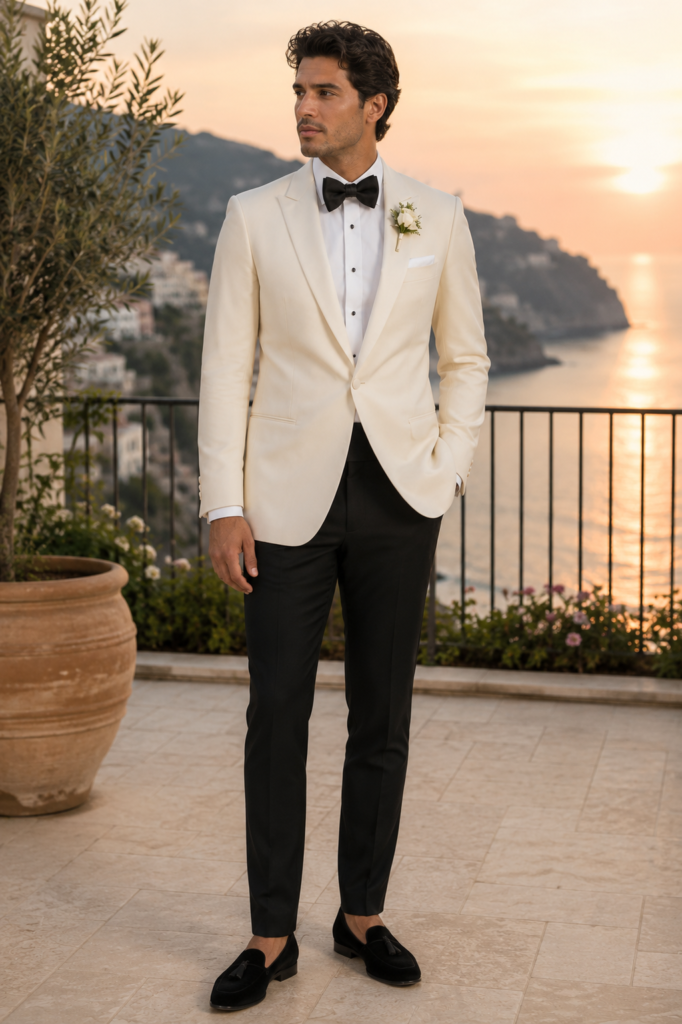
For a summer evening wedding with a semi-formal or “dressy casual” dress code, an ivory or cream dinner jacket paired with black formal trousers, a white shirt, a black bow tie, and black patent shoes creates a genuinely elegant, warm-weather-appropriate alternative to a full black tuxedo. This look has real history in resort and destination formal wear, specifically.
Read also: Velvet Suit Jacket Outfits for Men: 12 Ideas
Because this is a distinctive, somewhat bold choice, it’s worth confirming that the venue and season genuinely call for this level of formality — an ivory dinner jacket at a very casual backyard wedding will look mismatched to the rest of the event, however sharp it looks on its own.
Best for: summer evening weddings with a semi-formal dress code, destination or resort-style ceremonies.
7. Navy Suit, No Tie, for a Casual or Courthouse Wedding
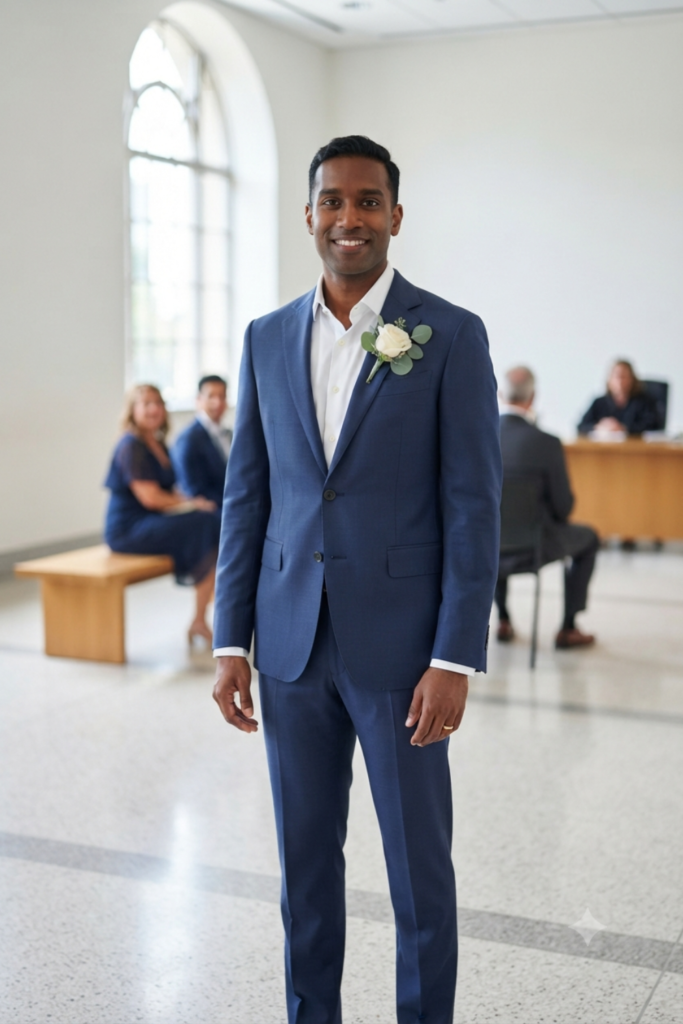
For a courthouse ceremony or a genuinely casual wedding celebration, a navy suit with an open-collar white shirt and brown leather loafers is entirely appropriate and avoids looking overdressed for a low-key setting. A boutonniere is still a nice touch even at the most casual ceremony, since it’s a small detail that visually signals you’re the groom without requiring any additional formality.
This is also a practical choice if you’re planning to go straight from the ceremony into a more relaxed celebration afterward without a wardrobe change — the tie-less navy suit transitions comfortably between both settings.
Best for: courthouse weddings, elopements, casual or low-key wedding celebrations.
8. Burgundy Suit for a Fall Wedding Groom Statement
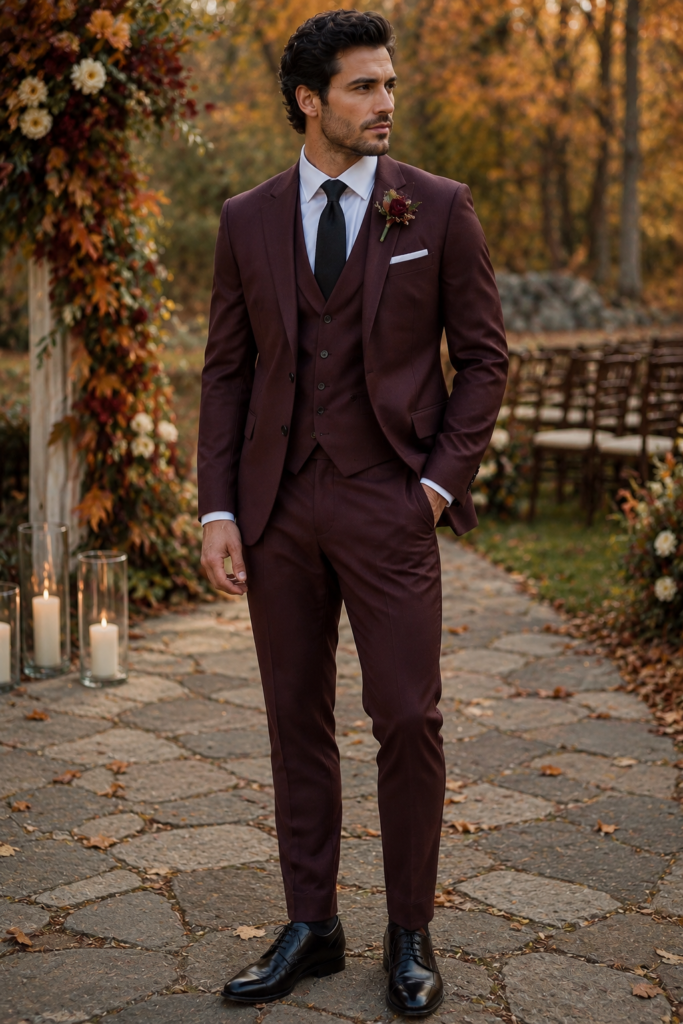
A deep burgundy suit is a genuinely bold, memorable choice for a groom, specifically — it reads as a deliberate style statement in a way that photographs beautifully against typical fall wedding palettes (deep oranges, browns, and greens). Pair it with a white or cream shirt, a black or navy tie, and black leather shoes.
As the groom, you have more latitude to wear a bolder color than your guests typically would, since the wedding photography is specifically built around you and your partner standing out. This is a good option for a groom who wants his wedding photos to look distinctly different from a standard navy-suited groom.
Best for: fall weddings, grooms wanting a genuinely bold, memorable color statement.
9. Forest Green Suit for a Modern, Non-Traditional Wedding
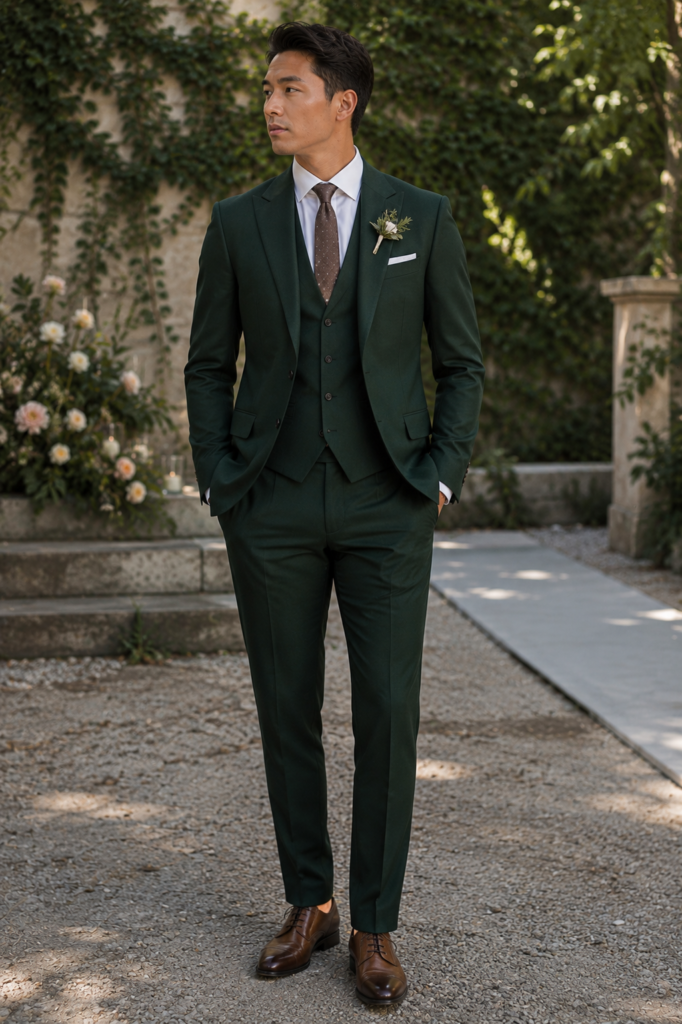
For couples planning a wedding that intentionally departs from traditional conventions, a deep forest or hunter green suit offers a modern, sophisticated alternative to the expected navy or black. Pair it with a white or pale pink shirt, a burgundy or navy tie, and black leather shoes.
Green suits have moved firmly into acceptable, even fashionable, groom territory over recent years, particularly for couples planning a wedding with a distinctive personal aesthetic rather than a strictly traditional one.
Coordinate with your partner in advance if the wedding’s color scheme includes green already, since a green suit against a green-and-white floral scheme, for instance, can look especially striking.
Best for: modern, non-traditional weddings, couples with a distinctive personal style running through the day’s aesthetic.
10. Double-Breasted Suit for a Formal, Vintage-Inspired Wedding
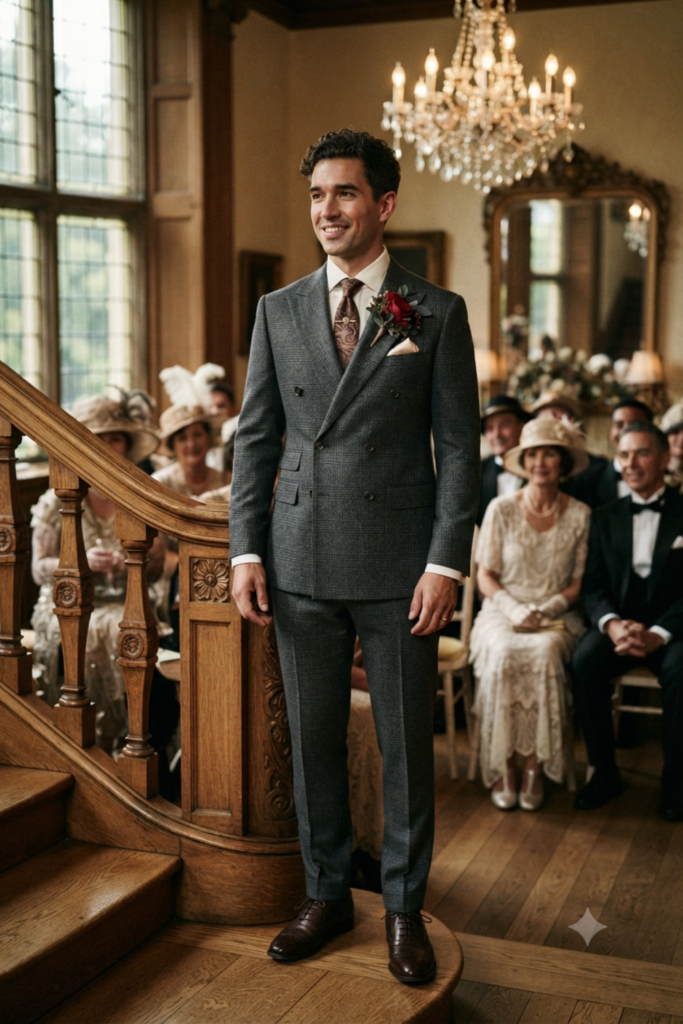
A double-breasted suit brings genuine old-world formality and a distinctive silhouette to a wedding, particularly one with a vintage or classic-Hollywood aesthetic. Pair it with a white shirt, a solid navy or black tie, and black leather shoes.
The structured, closed-front silhouette of a double-breasted jacket photographs particularly well in formal wedding portraiture, creating a strong, elegant line that a standard single-breasted suit doesn’t offer in quite the same way. This is a good choice for a groom who wants genuine formality without going all the way to a full tuxedo.
Best for: formal weddings with a vintage or classic aesthetic, grooms wanting distinctive formality short of a full tuxedo.
11. Three-Piece Suit for Traditional Formal Weddings
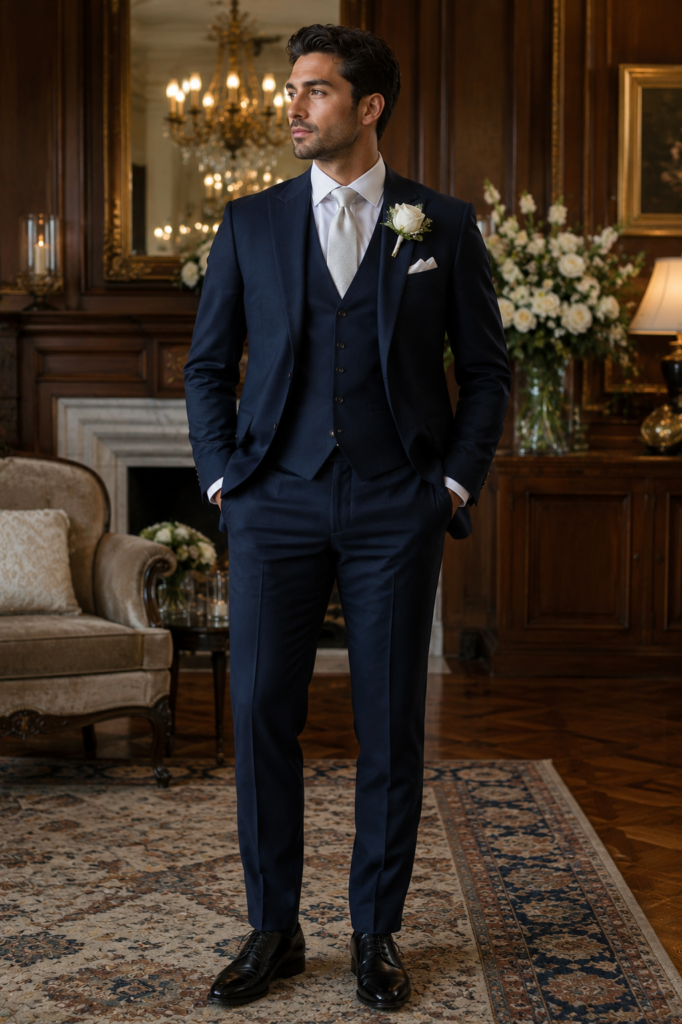
A three-piece suit — jacket, trousers, and a matching waistcoat — adds a layer of formality and visual interest that a standard two-piece suit doesn’t offer, which is part of why it’s remained a popular choice for grooms specifically at traditional formal weddings. Pair it with a white shirt, a silver or navy tie, and black leather shoes.
The waistcoat is a detail that reads clearly in every photo, even ones where the jacket is removed later in the celebration — this is a genuine practical advantage for a groom specifically, since it’s common to shed the jacket for dancing while the waistcoat maintains a formal, put-together look underneath.
Best for: traditional formal weddings, grooms who plan to remove the jacket later in the celebration while staying visually formal.
12. Velvet Dinner Jacket for a Winter Evening Wedding
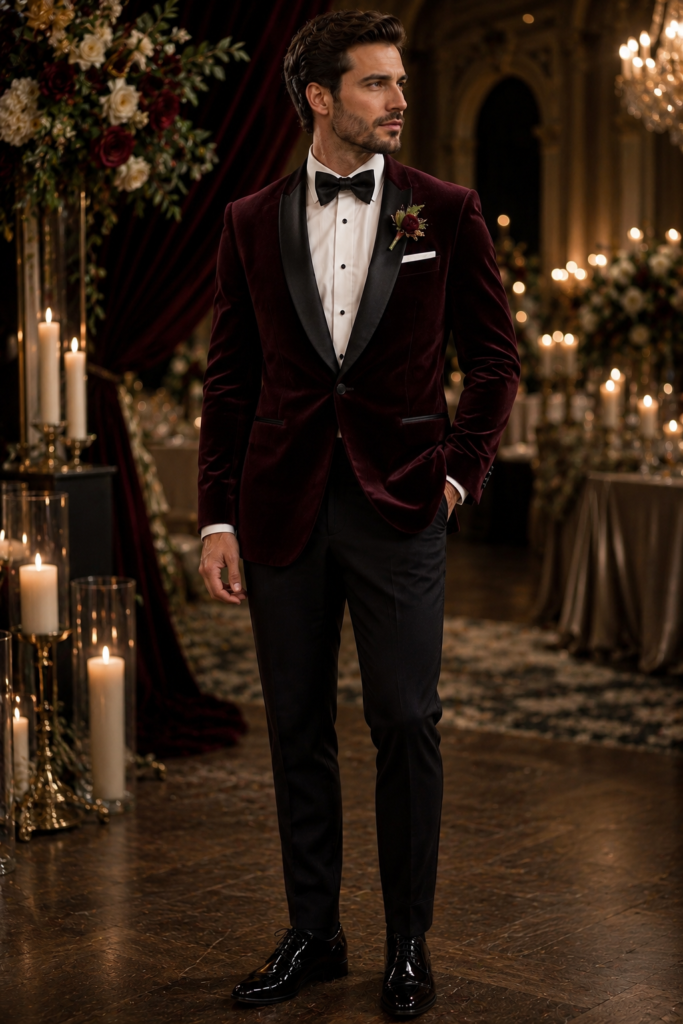
For a winter evening wedding, particularly one with a holiday-adjacent or intimate, celebratory atmosphere, a velvet dinner jacket in a deep color — burgundy, forest green, or midnight blue — paired with black formal trousers, a white shirt, and a black bow tie, brings genuine warmth and richness that a standard wool tuxedo doesn’t offer in the same way. Pair it with black patent or polished leather shoes.
Velvet’s light-catching texture photographs beautifully under the warmer, dimmer lighting typical of winter evening receptions, making this a strong choice for a groom who wants his wedding photos to have real visual depth and richness specific to the season.
Best for: winter evening weddings, intimate celebrations with a rich, warm aesthetic.
13. Seersucker Suit for a Summer Casual Wedding
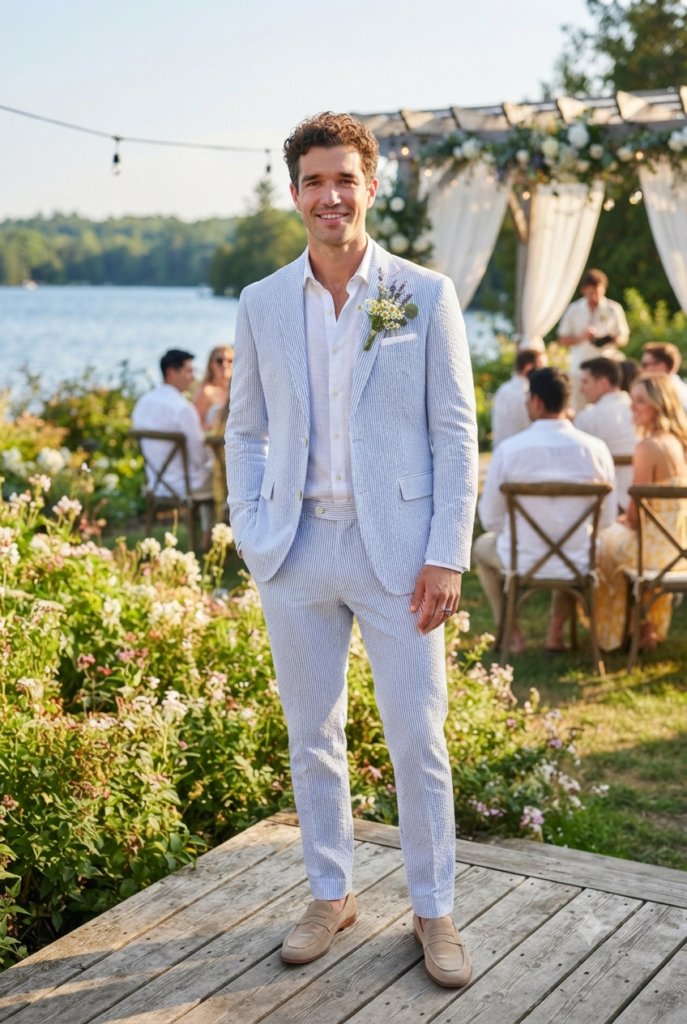
For a genuinely casual summer wedding — a backyard ceremony, a relaxed outdoor celebration — a seersucker suit paired with a white or light blue shirt, no tie, and brown leather loafers or boat shoes leans fully into warm-weather, relaxed elegance. Seersucker’s textured, slightly rumpled appearance is part of its charm rather than something to fight against.
As the groom, pairing this with a boutonniere and possibly a solid-color pocket square is enough to distinguish you visually from guests who might be wearing something similar, without needing to add formality that would clash with the day’s overall casual register.
Best for: casual summer weddings, backyard ceremonies, relaxed outdoor celebrations.
14. Coordinating Your Suit with Groomsmen Without Matching Exactly
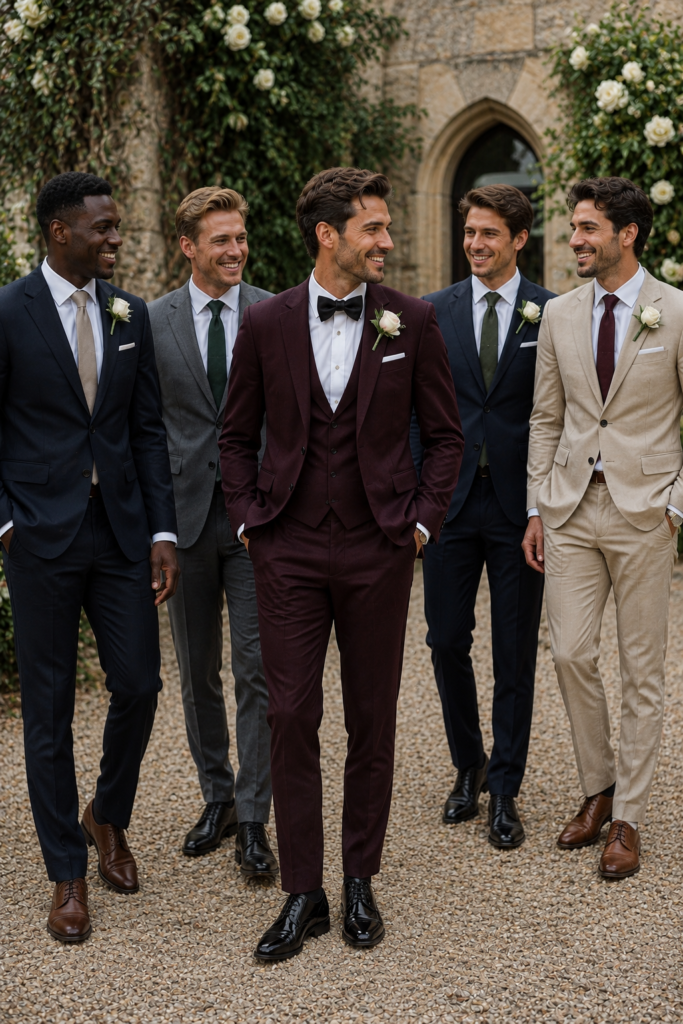
Rather than putting groomsmen in the exact same suit as the groom, an increasingly popular and visually effective approach is choosing a complementary but distinct look for the groom — a different color, a subtle pattern, or a different tie — so that wedding photos immediately identify who the groom is without needing a caption.
If your groomsmen are in navy, for instance, choosing a subtly patterned navy or a slightly different but complementary shade for yourself achieves this distinction while still looking cohesive as a group.
This is worth discussing with your partner or wedding planner early in the planning process, since it affects not just your own outfit choice but what you’ll be asking groomsmen to coordinate around.
Best for: weddings with a full groomsman party, couples wanting a clear visual distinction between the groom and the wedding party in photos.
15. Understated Suit for a Second Wedding or More Private Celebration
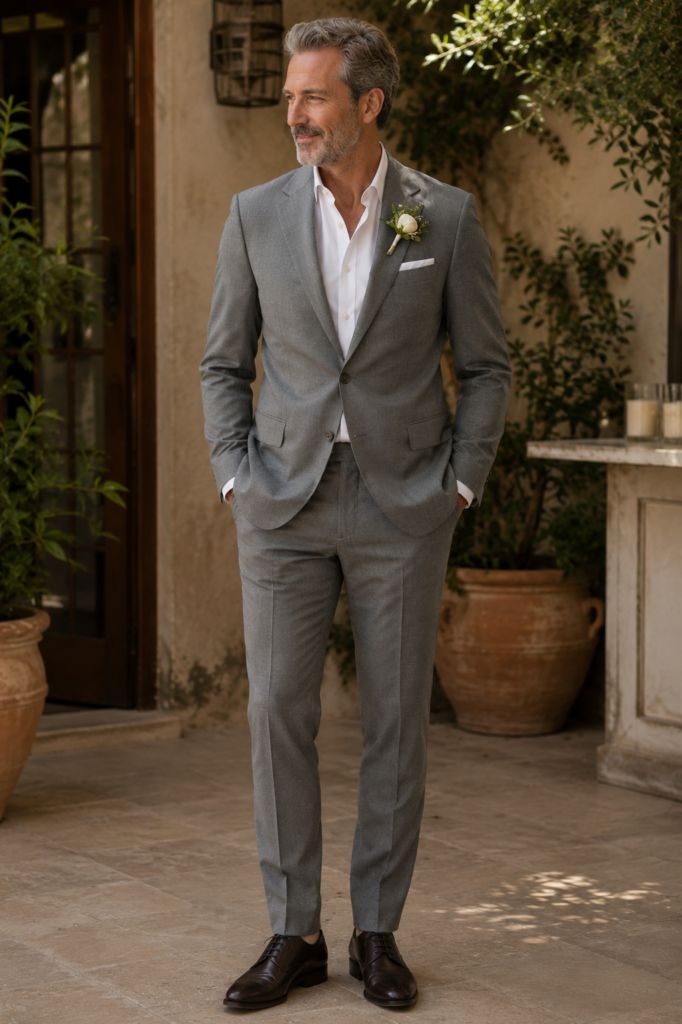
For a second wedding or a smaller, more private celebration, a well-tailored suit in navy or grey, without the elaborate formality of a full tuxedo or three-piece suit, is often the more appropriate and comfortable choice. Pair it with a white or light blue shirt, a simple tie, and black or brown shoes, depending on the setting’s formality.
There’s no obligation to match the scale or formality of a first wedding simply because tradition suggests weddings call for maximum formality — many grooms in this situation find a genuinely comfortable, well-fitted suit that reflects the more intimate nature of the day is a better fit than an elaborate formal outfit that doesn’t match the occasion’s actual scale.
Best for: second weddings, smaller or more private ceremonies, couples wanting an understated but still elevated look.
Coordinating with Your Partner’s Dress and the Wedding’s Color Palette
If you know your partner’s dress color, fabric, and overall style in advance, it’s worth loosely coordinating rather than matching exactly — a navy suit against an ivory dress, for instance, or a warm tan suit against a dress with earthy floral accents, creates photos that feel intentional as a pair without requiring identical colors or an overly literal theme. Discuss the day’s broader color palette (florals, linens, overall aesthetic) with whoever’s planning the wedding, since your suit is one of the visual anchors of every formal photo taken that day.
Rental Versus Buying for Your Own Wedding
For a formal tuxedo you may not wear again for years, renting is often the more practical choice, particularly if your local formalwear shop offers good fit and reasonably current styles. For a suit you’re likely to wear again — navy, charcoal, or a versatile color — buying and having it properly tailored is usually the better long-term value, since you’ll get continued use out of it at future events, interviews, or general professional wear.
Whichever you choose, plan the purchase or rental well in advance of the wedding date — ideally two to three months out, at minimum — to allow time for alterations, a second fitting, and any adjustments needed once you see how the suit actually photographs and moves.
Frequently Asked Questions
Should the groom’s suit always be more formal than the groomsmen’s? Not necessarily more formal, but generally distinct — a different color, a subtle pattern, or a different tie helps the groom stand out visually in photos without requiring a difference in the actual formality level.
How far in advance should I buy or order my wedding suit? Two to three months at minimum, to allow time for alterations and at least one additional fitting closer to the date, particularly if your body shape might shift slightly due to any pre-wedding lifestyle changes.
Is it acceptable to wear a colored suit, like green or burgundy, for my own wedding? Yes — grooms generally have more latitude for a bolder color choice than guests would, since wedding photography is specifically built around the couple. Confirm it complements your partner’s dress and the day’s overall palette before committing.
What’s the difference between a tuxedo and a very formal black suit? A tuxedo specifically includes satin-faced lapels, a bow tie, and a formal shirt with studs or a pleated front — details that a standard black suit, however sharp, doesn’t include. If the invitation specifies black tie, a genuine tuxedo is the expected choice rather than a dark suit.
Should I match my shoes to my groomsmen’s shoes? It’s not required, though loose coordination (similar tone, similar formality level) tends to look more cohesive in group photos than a stark mismatch. Exact matching isn’t necessary if your overall suit color or style is already distinct from theirs.
What if the wedding venue’s weather is unpredictable? Choose a mid-weight fabric that can handle some temperature variation, and have a backup plan — a lightweight overcoat for unexpected cold, or the ability to remove a jacket comfortably if it’s warmer than expected. Confirm with your venue whether there’s indoor shelter available in case of rain for an outdoor ceremony.
Is it appropriate to rent a suit for my own wedding, or should I always buy? Renting is entirely appropriate, particularly for formal tuxedos you’re unlikely to wear again soon. Buying makes more sense for versatile suits (navy, charcoal) that you’ll continue wearing for interviews, other formal events, or general professional wear afterward.
How formal should my outfit be for a wedding with an explicitly stated dress code on the invitation? Follow the stated dress code closely rather than assuming personal preference should override it — if guests are asked to dress formally or in black tie, your own outfit as the groom should meet or slightly exceed that same level of formality, not fall short of it.
Can I wear the same suit for my ceremony and reception, or is a change expected? Wearing the same suit throughout the entire day is entirely standard and expected in most cases. Some grooms do change into a more relaxed outfit for an evening reception or after-party specifically, but it’s a personal choice rather than an expectation.
What accessories should I prioritize as the groom specifically? A boutonniere that complements the day’s floral arrangements is the one accessory that visually signals “groom” in almost every wedding photo, regardless of your suit’s formality level. Beyond that, a quality watch and well-chosen cufflinks (if your shirt has French cuffs) are worth the investment, since they’ll show up clearly in close-up photography throughout the day.
Final Thoughts
Your wedding is one of the few days where dressing distinctly, even boldly, is not just acceptable but genuinely expected — the outfit exists to mark the occasion and to be remembered in photographs for decades, not just to blend appropriately into a room the way most suit-wearing occasions call for. Choose something that reflects how you and your partner actually want the day to feel, get the fit right well in advance, and let the suit be one more detail that makes the day feel entirely your own.
Read also: