Nike Air Max 90 vs Air Max 97: The Complete Comparison Guide
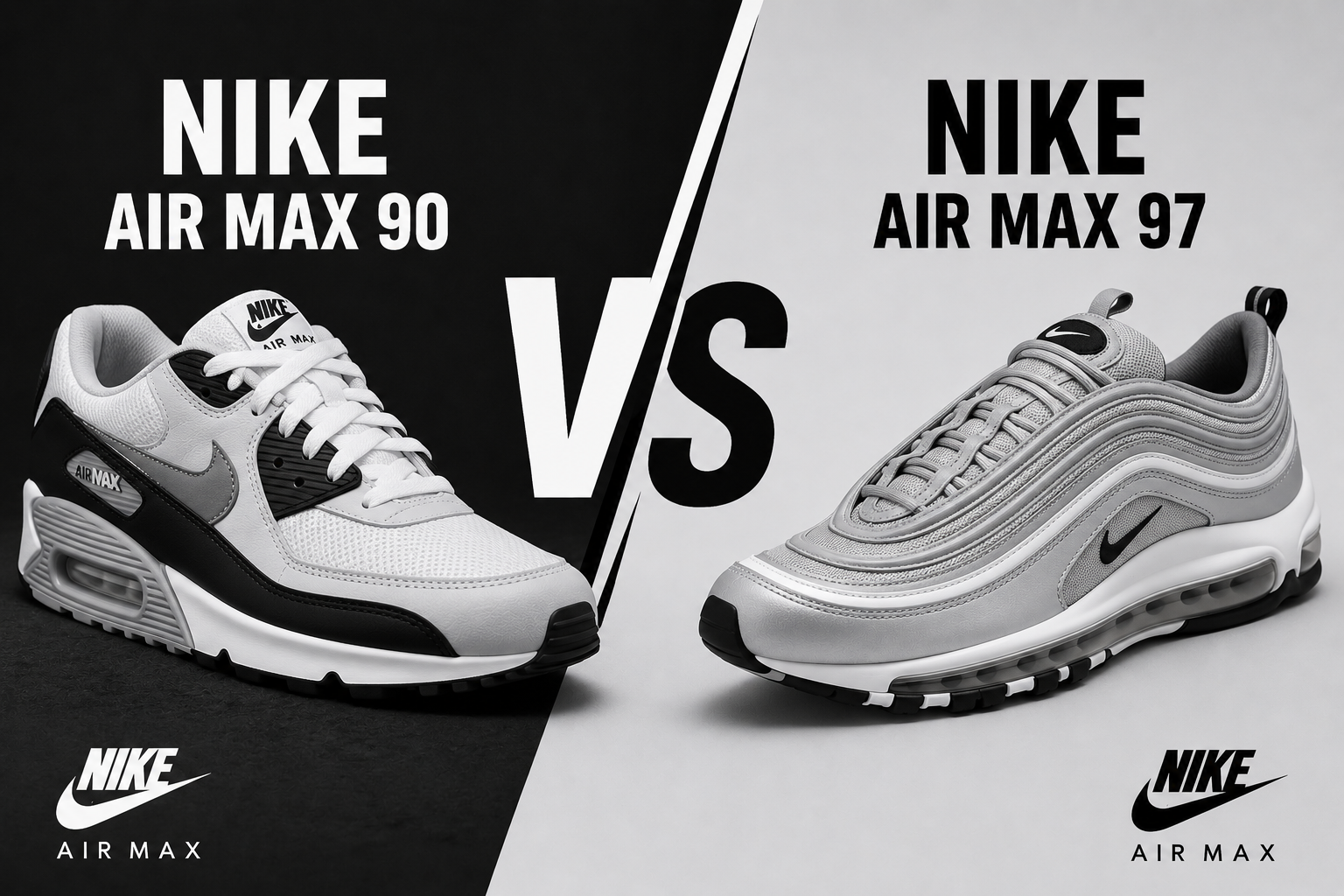
Few debates in sneaker culture run as deep as the Air Max 90 vs Air Max 97 comparison.
Both are icons of Nike’s Air Max lineup, both changed the trajectory of sneaker design when they released, and both are still everywhere — on college campuses, in airport terminals, on Pinterest boards, and in every sneakerhead’s rotation.

But they’re built on genuinely different ideas about cushioning, silhouette, and comfort.
The Air Max 90, designed by Tinker Hatfield, is the more classic, structured shoe with a visible heel Air unit and a bold, blocky silhouette.

The Air Max 97, designed by Christian Tresser and inspired by Japanese bullet trains, was the first Nike shoe with a full-length visible Air unit, giving it a sleeker shape and a noticeably softer ride.
If you’re trying to decide between these two Nike lifestyle shoes, this guide breaks down every meaningful difference — comfort, fit, weight, durability, and style — so you can pick the one that actually fits your feet and your life, not just your Pinterest board.
What This Article Will Help You Decide
- Which shoe feels more comfortable for all-day wear
- How the two differ in cushioning and underfoot feel
- Sizing quirks specific to each model
- Materials and how they hold up over time
- Weight differences and how they affect long days
- Which shoe suits which foot shape
- Style versatility across casual and streetwear outfits
- Value for money and long-term cost per wear
- Which shoe is the smarter pick for walking, travel, and all-day standing
- Whether one is genuinely “better,” or whether it comes down to preference
Quick Verdict
| Category | Winner |
|---|---|
| Best Overall | Air Max 97 |
| Best for Comfort | Air Max 97 |
| Best for Walking | Air Max 97 |
| Best for Casual Wear | Air Max 90 |
| Best Value | Air Max 90 |
| Best for Wide Feet | Air Max 97 |
| Best for Narrow Feet | Air Max 90 |
| Best for All-Day Wear | Air Max 97 |
| Best for Travel | Air Max 97 |
| Best Classic/Retro Look | Air Max 90 |
As always, “best overall” is a general lean, not a universal rule. Your foot shape, budget, and personal style should carry more weight than any single ranking.
Who Should Buy Each Shoe?
Who Should Buy the Nike Air Max 90
The Air Max 90 makes sense if you want the more “classic sneaker” silhouette — something that reads as timeless rather than futuristic. It’s a strong pick for anyone who wants a slightly firmer, more grounded ride, or who prefers a shoe with a narrower, more structured fit through the midfoot. It’s also the better budget pick, generally running a bit cheaper than the 97.
Think: someone building a rotation of classic Nike lifestyle shoes who wants one pair that pairs cleanly with denim, joggers, or shorts without looking overly technical.
Who Should Buy the Nike Air Max 97
The Air Max 97 is the better choice if comfort is your top priority. The full-length Air unit delivers a noticeably softer, more cushioned ride, which makes a real difference on long walking days. It also tends to suit wider feet better, thanks to a roomier forefoot.
Think: someone who’s on their feet for hours at a time, travels frequently, or simply wants the plushest possible everyday sneaker with a bit more visual flash.
Product Overview
Nike Air Max 90
- Design: Bold, blocky silhouette from 1990 (originally the Air Max III) with layered synthetic and mesh panels and a visible heel Air unit
- Materials: Mix of leather, suede, and mesh depending on colorway; original design used Duromesh with synthetic suede and leather overlays
- Midsole technology: Visible Air unit isolated in the heel, split into two cushioning compartments
- Outsole: Waffle-style rubber outsole with a winding tread pattern through the midfoot to the heel
- Weight: Roughly 12–13 oz per shoe (men’s size 10)
- Breathability: Good — mesh paneling on most colorways keeps the shoe relatively airy
- Cushioning: Firm, responsive, more grounded feel than later Air Max models
- Support: Structured overlays and a padded tongue give a locked-in, supportive fit
- Available colors: Extensive — from OG Infrared to seasonal drops and countless collaborations
- Retail price range: Standard men’s Air Max 90 typically retails around $140, with premium and collaboration editions running $150–$180+
- Intended use: Everyday casual wear, light walking, retro streetwear styling
Nike Air Max 97
- Design: Sleek, wavy silhouette inspired by Japanese bullet trains, with reflective piping and a low-cut collar
- Materials: Combination of leather, mesh, and synthetic overlays, varying by colorway
- Midsole technology: Full-length visible Air unit — the first Nike model to use this design, offering noticeably more cushioning volume than the 90
- Outsole: Rubber outsole with a waffle-inspired traction pattern optimized around the visible Air bag
- Weight: Slightly heavier than the 90, typically around 13–14 oz per shoe
- Breathability: Strong, thanks to mesh paneling across the upper
- Cushioning: Noticeably softer and more forgiving underfoot than the Air Max 90, given the full-length Air unit
- Support: Innovative lacing system and low-cut collar provide flexibility along with a locked-in fit
- Available colors: Wide range, with the “Silver Bullet” as the most iconic; frequent designer collaborations
- Retail price range: Standard men’s Air Max 97 typically retails around $175–$190, with select releases and collaborations running higher
- Intended use: All-day casual wear, extended walking, streetwear and statement styling
Head-to-Head Comparison
Design
The 90 has a boxier, more angular silhouette with clean panel lines that have aged into a certified classic look. The 97 is sleeker and more sculptural, with wavy overlays and a shape that still reads as slightly futuristic decades after release. If you want understated and timeless, go 90. If you want a bit more visual statement, go 97.
Comfort
This is the clearest differentiator in the whole comparison. The 97’s full-length Air unit provides noticeably more cushioning volume than the 90’s isolated heel unit, resulting in a plusher, more forgiving ride, especially over long periods on your feet.
Fit
The Air Max 90 has a slightly narrower, more structured fit through the midfoot. The Air Max 97 tends to run a touch roomier, particularly in the forefoot, thanks to its more rounded toe shape.
Sizing
Both models generally run true to size for most people, though the 97 can feel marginally roomier out of the box. If you have narrow feet, the 90 typically offers a more secure, locked-in fit without needing to size down.
Materials
Both shoes use a similar mix of leather, suede, and mesh depending on the specific colorway. The 90’s overlays tend to be a bit more rigid and structured, while the 97’s paneling has more give and flexes more naturally with the foot.
Breathability
Both shoes ventilate reasonably well thanks to mesh paneling, though breathability varies significantly by specific colorway and material choice (a full leather 97 will run warmer than a mesh-heavy 90, for example).
Cushioning
The Air Max 97 wins decisively here. Its full-length Air unit was a genuine technological leap over the 90’s segmented heel unit, and it still shows in day-to-day comfort.
Arch Support
Neither model was built with dedicated arch support — both use relatively flat sockliners. If you need more arch support, an aftermarket insole works well with either shoe.
Heel Support
The Air Max 90’s more structured heel counter offers slightly better lockdown. The 97’s low-cut collar prioritizes flexibility over rigid support, which some wearers love and others find a bit loose without careful lacing.
Weight
The 97 is a bit heavier due to the larger Air unit and additional overlay material. It’s a modest difference, but it’s noticeable on very long walking days.
Traction
Both outsoles perform reliably on dry, flat surfaces. The 90’s waffle pattern has a slight edge in everyday grip, while the 97’s tread works well but is a touch less aggressive due to the design constraints of surrounding the full-length Air bag.
Durability
The Air Max 90’s more rigid construction and simpler heel Air unit tend to hold up a bit longer under heavy daily use. The 97’s full-length Air unit, while more comfortable, is a larger surface area that can be more vulnerable to punctures or wear over years of hard use — though for normal daily wear, this is rarely an issue.
Flexibility
The 97 flexes more naturally underfoot thanks to its rounder profile and softer midsole. The 90 feels slightly stiffer, particularly when new, though it loosens with wear.
Walking Comfort
For extended walking, the 97’s superior cushioning makes it the clear winner. The 90 is still comfortable for moderate walking but doesn’t offer the same shock absorption over several hours.
Standing All Day
Same story here — the 97’s fuller cushioning noticeably reduces foot fatigue during long shifts or standing-heavy days compared to the 90.
Casual Everyday Wear
Both shoes are outstanding everyday sneakers. The 90 leans more classic and versatile; the 97 leans slightly more statement-making and technical-looking.
Travel
The Air Max 97’s comfort advantage makes it the better travel shoe for long days of walking through airports and cities.
Cleaning
Both are straightforward to clean with a soft brush, mild soap, and water. The 97’s mesh panels can require a bit more care to avoid soaking through to the foam underneath, while the 90’s leather and suede combinations benefit from a dedicated suede brush on those sections.
Maintenance
Rotate socks, treat leather and suede sections with a protector spray, and avoid submerging either shoe in water — the same basic rules apply to both models.
Weather Resistance
Neither shoe is built for wet weather. Suede sections on the 90 are particularly vulnerable to water stains, and both models’ visible Air units are cosmetic more than functional in rain or snow.
Break-in Period
The 97 tends to feel comfortable faster thanks to its softer, more flexible midsole. The 90’s more structured build can take a few wears to fully break in.
Style Versatility
The Air Max 90 is arguably the more universally versatile shoe — it slots into a wider range of outfits, from casual streetwear to slightly dressier smart-casual looks. The 97 leans into a bolder, more technical aesthetic that’s fantastic for streetwear but slightly less neutral.
Available Colorways
Both models see frequent new colorways and collaborations, though the Air Max 90 generally has an even larger back catalog given its longer continuous production run.
Resale Value
Rare Air Max 97 collaborations (Off-White, Sean Wotherspoon) have historically commanded some of the highest resale premiums in the entire Air Max line, giving the 97 a slight edge in collector value, though standout AM90 collabs hold their own too.
Price
The Air Max 90 is typically the more affordable of the two at standard retail, making it the better pick for budget-conscious shoppers.
Long-Term Value
Given the 97’s superior comfort for all-day and extended wear, many owners feel its higher price is justified if it’s going to be a daily driver. The 90 offers excellent value as a slightly cheaper, still highly durable option for lighter use.
Comparison Table
| Feature | Nike Air Max 90 | Nike Air Max 97 |
|---|---|---|
| Price | ~$140 | ~$175–$190 |
| Weight (per shoe, approx.) | 12–13 oz | 13–14 oz |
| Upper Material | Leather, suede, mesh | Leather, mesh, synthetic overlays |
| Midsole | Visible heel Air unit | Full-length visible Air unit |
| Outsole | Waffle-pattern rubber | Rubber, contoured around Air unit |
| Best Use | Everyday casual, retro style | All-day wear, walking, statement style |
| Comfort Rating | 8/10 | 9.3/10 |
| Style Rating | 9/10 | 9/10 |
| Durability Rating | 8.5/10 | 8/10 |
| Support Rating | 8/10 | 7.5/10 |
| Breathability Rating | 8/10 | 8/10 |
| Overall Rating | 8.4/10 | 8.7/10 |
Understanding Nike Air Max Technology: What Makes Each Shoe Unique
The core difference between these two sneakers isn’t just style — it’s engineering. Nike’s visible Air cushioning started with the Air Max 1 in 1987, which exposed a small Air unit in the heel for the first time. The Air Max 90 built on that same heel-only concept, refining the shape and splitting the unit into segments for a more responsive, controlled ride. It’s a design built around structure and support rather than maximum softness.
The Air Max 97, released seven years later, represented a genuine leap forward. Designer Christian Tresser extended the Air unit the full length of the sole, from heel to toe, which meant more air volume, more surface area for shock absorption, and a noticeably plusher ride. This is also why the 97 tends to run a bit heavier — that larger Air chamber, plus the surrounding foam and overlay material needed to house it, adds weight the 90 simply doesn’t carry.
There’s a practical takeaway here for shoppers: the size and placement of an Air unit directly predicts how a shoe will feel underfoot. A heel-only unit (like the 90) gives you responsiveness and a firmer landing, which some wearers find more stable and grounded. A full-length unit (like the 97) prioritizes shock absorption across the whole foot, which is why podiatric comfort reviews and everyday wearers consistently rate the 97 higher for extended walking and standing.
This also explains why later Nike lifestyle shoes — like the Air Max 270 and Air Max 720 — pushed Air unit size even further, chasing the same “more air, more cushioning” logic the 97 pioneered. If you’ve liked the feel of any modern max-cushioned Nike lifestyle shoe, there’s a good chance you can trace its lineage directly back to what the Air Max 97 started.
Real-Life Scenarios
- College students: Air Max 97 — better comfort for full days of walking between classes
- Office workers (business casual): Air Max 90 — cleaner, more classic silhouette
- Travelers: Air Max 97 — superior all-day cushioning for airports and sightseeing
- Walking all day: Air Max 97
- Airport travel: Air Max 97
- Streetwear outfits: Air Max 97 — the bolder, more technical look pairs well with cargo pants and layered fits
- Business casual outfits: Air Max 90
- Gym workouts: Neither shoe is built for training — both lack the lateral support needed for lifting or high-intensity cardio
- Long shifts (retail, hospitality): Air Max 97
- Daily commuting: Tie — both handle typical commutes comfortably
- Vacation: Air Max 97, for the comfort factor over multiple walking-heavy days
- Weekend wear: Air Max 90, for a classic, easygoing casual look
Outfit Ideas: Nike Air Max 90
- White tee, straight-leg jeans, bomber jacket
- Cargo shorts, graphic tee, baseball cap for summer errands
- Tailored joggers, fitted crewneck, denim jacket
- Track pants, zip-up hoodie, crossbody bag
- Chinos, tucked-in polo, minimal watch — smart casual crossover
- Distressed jeans, plain white tee, plaid flannel worn open
- Athletic shorts, ribbed tank, snapback
- Cream hoodie, black joggers, utility vest
- Denim-on-denim styling with a plain tee
- Wide-leg trousers, oversized sweater, minimal jewelry
Outfit Ideas: Nike Air Max 97
- Cargo pants, fitted long-sleeve, technical windbreaker
- Wide-leg jeans, cropped hoodie, bucket hat
- Track suit top-to-bottom for a full retro-technical look
- Oversized graphic tee, joggers, crossbody sling bag
- Leather jacket, ripped jeans, plain white tee
- Nylon shorts, compression shirt, running jacket for an athletic-lifestyle look
- Puffer vest, mock neck, slim joggers
- Layered streetwear fit — hoodie under an oversized jacket, cargo pants
- Reflective windbreaker to match the 97’s reflective piping, dark jeans
- Minimalist all-black outfit that lets the Silver Bullet colorway stand out
Best Alternatives
- Nike Air Max 95 — a heavier, more rugged Air Max option with visible forefoot cushioning
- Nike Air Max Plus (TN) — for shoppers who want an even bolder, more technical silhouette
- Nike Air Max 1 — the original visible-Air sneaker, for a more minimal, retro-focused look
- Nike Air Max 270 — a modern lifestyle-focused Air Max with the tallest heel Air unit in the line
- Adidas Ozweego — a chunky, comfort-driven alternative with a similarly retro-futuristic look
- New Balance 9060 — great for a dad-shoe aesthetic with excellent cushioning
- Nike Air Huarache — a lighter, more minimal alternative with a distinct neoprene-inspired fit
- Puma RS-X — a budget-friendly chunky sneaker with a similar retro-tech vibe
- Nike Air Max 98 — sits stylistically between the 97 and 270, worth considering if you like both
- Reebok Instapump Fury — for shoppers who want a truly distinctive ’90s silhouette outside the Nike ecosystem
Pros and Cons
Nike Air Max 90 — Pros
- Classic, timeless silhouette that ages well style-wise
- Slightly more affordable at standard retail
- Structured, supportive fit for narrower feet
- Strong durability from its simpler, more rigid construction
- Enormous range of colorways and collaborations
Nike Air Max 90 — Cons
- Less cushioned than the 97 for extended walking
- Narrower fit may not suit wider feet
- Heel-only Air unit means less shock absorption overall
- Can feel stiffer during the break-in period
Nike Air Max 97 — Pros
- Superior all-day cushioning from the full-length Air unit
- Roomier fit, better suited to wider feet
- Faster break-in period thanks to a softer midsole
- Bold, statement-making design
- Strong collector and resale value on rare colorways
Nike Air Max 97 — Cons
- Higher price point at standard retail
- Slightly heavier than the 90
- Larger Air unit may be marginally more vulnerable to punctures over years of hard wear
- Less structured heel support than the 90
Common Mistakes Buyers Make
- Assuming both shoes fit identically: The 97 tends to run roomier, especially in the forefoot; try both before assuming your usual size works for each.
- Buying either shoe for workouts: Neither is built for lifting, running, or high-intensity training — both lack the lateral stability those activities require.
- Skipping suede protection: Suede sections on the Air Max 90 stain easily; a protector spray before first wear is essential.
- Ignoring foot width: Wide-footed buyers who choose the 90 without trying it on often end up with a tight, pinched feel — the 97 is generally the better call.
- Overpaying for hype colorways: Limited collaborations can run significantly above retail; if comfort and everyday wear are your priority, standard general-release colorways deliver the same performance for far less.
Care Guide
Cleaning: Remove laces and insoles, use a soft-bristle brush with mild soap and warm water on leather and mesh sections, and a dedicated suede brush for any suede paneling. Wipe clean with a damp cloth and air-dry away from direct heat.
Storage: Use shoe trees or stuff with paper to maintain shape, and store away from direct sunlight to prevent the midsole foam from yellowing over time.
Maintenance: Apply a protector spray to leather and suede sections every few weeks of regular wear. Rotating between multiple pairs significantly extends the lifespan of the Air unit and outsole on both models.
Increasing lifespan: Avoid machine washing either shoe. Address scuffs and dirt promptly rather than letting them set. Replace insoles periodically if you want a comfort refresh without buying a new pair.
When to Choose the Nike Air Max 90
- You want the more classic, timeless silhouette
- Your budget favors the slightly cheaper option
- You have narrower feet or prefer a more structured, locked-in fit
- You’re mostly using the shoe for moderate, everyday wear rather than extended walking
- You want maximum style versatility across casual and smart-casual outfits
When to Choose the Nike Air Max 97
- Comfort and all-day cushioning are your top priority
- You have wider feet or a higher instep
- You’re going to be walking or standing for extended periods
- You want a bolder, more technical streetwear look
- You’re willing to pay a bit more for superior cushioning technology
Final Verdict
Neither shoe is a universal winner, and honestly, that’s what keeps this rivalry going after three decades. The Air Max 97 pulls ahead on raw comfort thanks to its full-length Air unit — if you’re going to be on your feet all day, it’s the smarter buy. The Air Max 90 counters with a more classic, structured silhouette, a lower price tag, and a narrower fit that suits more foot shapes than people expect.
If comfort and all-day wearability matter most, go with the Air Max 97. If you want the more budget-friendly, versatile, timeless option, the Air Max 90 is hard to beat. Many long-time Nike fans eventually own both, using the 90 for everyday errands and the 97 for longer days on their feet — which, if your budget allows, isn’t a bad strategy at all.
Frequently Asked Questions
Is the Air Max 97 more comfortable than the Air Max 90? Yes, generally. The 97’s full-length visible Air unit provides more cushioning volume and shock absorption than the 90’s heel-only Air unit, especially over extended wear.
Does the Air Max 97 run true to size? Mostly yes, though it can feel slightly roomier than the 90, particularly in the forefoot.
Does the Air Max 90 run true to size? Yes, the Air Max 90 generally fits true to size with a more structured, snugger feel through the midfoot.
Which shoe is better for wide feet? The Air Max 97 typically accommodates wide feet better thanks to its roomier forefoot shape.
Which shoe is better for narrow feet? The Air Max 90’s more structured, snugger fit tends to suit narrower feet better.
Are Air Max 90s or 97s better for walking all day? The Air Max 97 is the better choice for extended walking thanks to its full-length Air cushioning.
Which sneaker is more durable? Both are durable, but the Air Max 90’s simpler, more rigid construction tends to hold up marginally longer under heavy daily use.
Can you wear the Air Max 90 or 97 to the gym? Neither is designed for training. Both lack the lateral support and stability needed for lifting, running, or high-intensity workouts.
Which shoe is cheaper? The Air Max 90 is generally cheaper at standard retail than the Air Max 97.
How do you clean white Air Max 90s or 97s? Use a soft-bristle brush with mild soap and warm water, focus extra care on suede or mesh sections, wipe clean, and air-dry away from direct sunlight or heat.
Do the Air Max 90 and 97 work for business casual outfits? The Air Max 90 leans slightly more versatile for business casual thanks to its cleaner, more classic silhouette.
Which shoe has more colorway options? The Air Max 90 generally has an even larger back catalog of colorways given its longer continuous production run, though both models see frequent new releases.
Is the Air Max 97 heavier than the Air Max 90? Yes, slightly. The 97’s full-length Air unit and additional overlay material add a bit of weight compared to the 90’s heel-only design.
Which shoe holds resale value better? Rare Air Max 97 collaborations have historically commanded some of the highest resale premiums in the Air Max lineup, though standout Air Max 90 collabs also hold strong resale value.
Should I buy both the Air Max 90 and the Air Max 97? If your budget allows, yes — they serve slightly different purposes (classic everyday styling versus maximum all-day comfort) and complement each other well in a rotation.
Read also: