15 Burgundy Suit Outfits for Men (And What to Wear Them With)
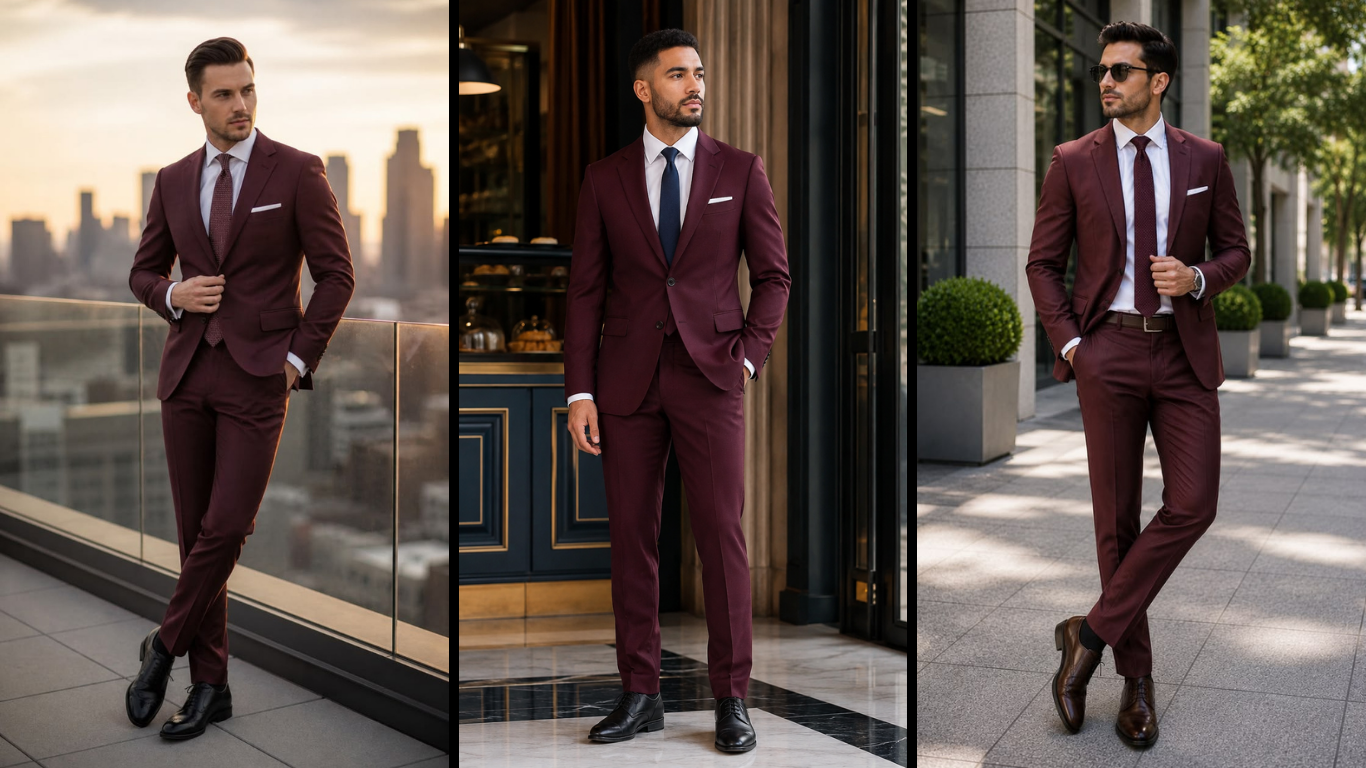
A client once told me he almost returned his burgundy suit the day after buying it because he “didn’t know what went with it.” That reaction is more common than you’d think.
Burgundy sits in an odd spot in most men’s mental color wheel — it’s not quite formal like navy, not quite bold like a true red, and it’s easy to assume it only works with one or two combinations.
In reality, burgundy is one of the more flexible suit colors you can own, provided you understand what it’s actually doing on you: it’s a warm, muted, slightly autumnal color that flatters a wide range of skin tones and pairs well with everything from crisp white shirts to heavier knitwear.
The confusion usually comes from treating burgundy like a novelty color instead of a genuine wardrobe staple. It isn’t a costume piece you wear once for a wedding.
Worn correctly, a good burgundy suit works for job interviews, client dinners, weddings, and weekend events — the trick is knowing which shirt, tie, and shoe combination matches which occasion, and how to keep the whole outfit from tipping into “too much.”
This guide runs through fifteen ways to build an outfit around a burgundy suit, covering the shirt, tie, or no-tie decision, footwear, and accessories for each, along with the occasions each version suits best and the mistakes that most often derail the look.
Whether you’re wearing burgundy for the first time or you’ve had one hanging in your closet that you’re not sure how to wear, you should walk away from this with a clear sense of how to wear a burgundy suit for nearly any setting on your calendar.
One quick note on shade: burgundy ranges from a deep wine that’s almost indistinguishable from black in low light to a brighter oxblood that reads more clearly as red.
Most of the combinations below work across that range, but I’ll flag it when a specific shade matters more than usual.
1. White Shirt, Navy Tie — The Reliable Starting Point
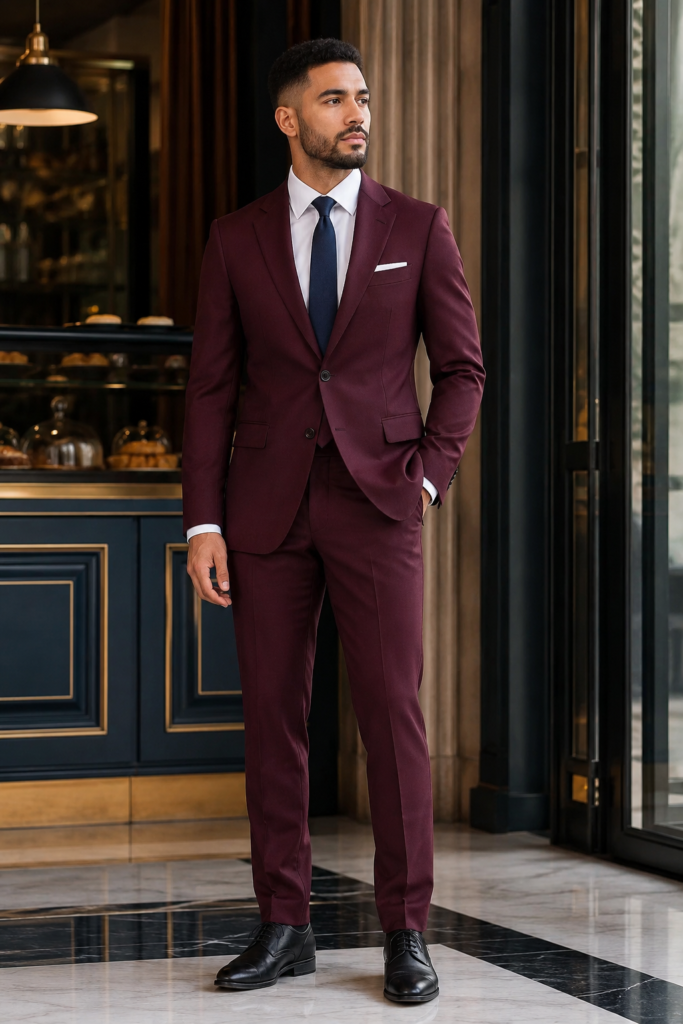
This is the combination to reach for if you’re wearing a burgundy suit for the first time and want to feel confident rather than experimental. White and navy are both neutral enough that they let the suit be the statement, without adding any competing color into the mix.
Keep the tie a simple, solid, or fine grenadine texture rather than anything busy — burgundy suits already carry enough visual weight that a heavily patterned tie starts to look cluttered. A white linen or cotton pocket square, folded into a clean, straight edge, adds a small amount of polish without extra color.
Black oxfords are the safer choice here, particularly with a deep, near-black burgundy; a brighter oxblood suit looks better with a matching oxblood or dark brown shoe instead, since black can feel slightly harsh against the warmer shade. A leather belt to match your shoe color, and a simple metal or leather-strap watch, complete the look.
This combination works for interviews, client meetings, and any formal business setting. The most common mistake here is choosing a tie that’s too close in color to the suit itself — a maroon or wine-colored tie against a burgundy jacket creates a flat, monochrome effect that reads as an accident rather than a deliberate choice. Navy provides the contrast the outfit actually needs.
2. Pale Blue Shirt, No Tie — Smart Casual Office
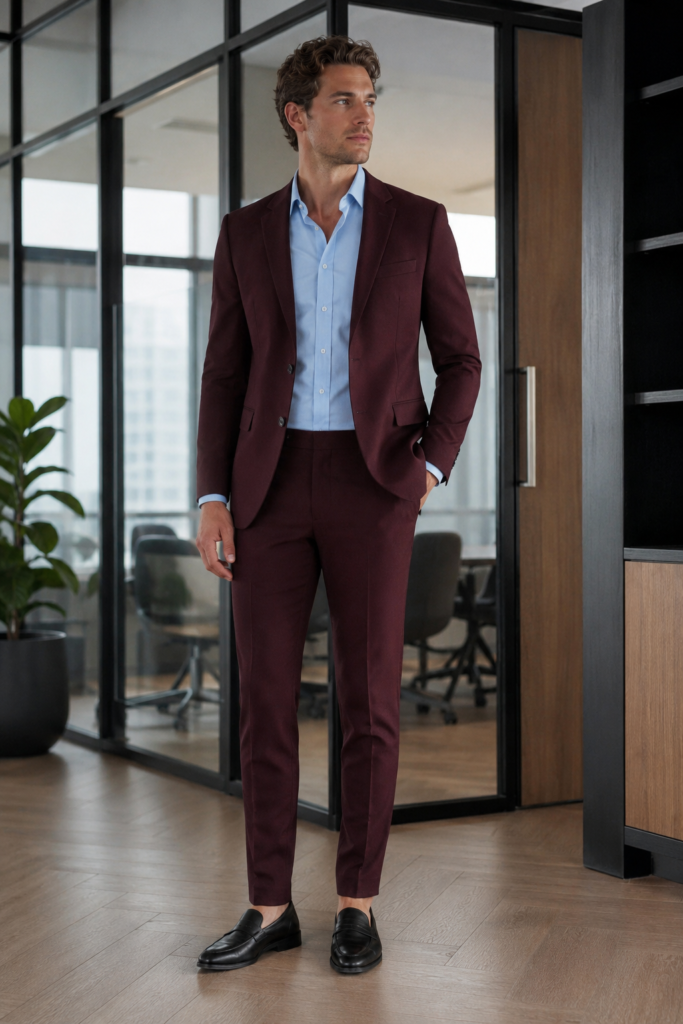
Swap the white shirt for a pale blue one and drop the tie, and this same suit shifts into smart-casual office territory. Pale blue is cooler than burgundy, which creates a nice temperature contrast, and without a tie, the open collar keeps the whole outfit relaxed enough for offices with a less formal dress code.
Skip the pocket square in this version — an open collar already signals a more casual register, and adding a folded pocket square on top of it can feel mismatched, like you got halfway dressed for two different outfits.
Brown leather loafers work well here, striking a balance between put-together and relaxed. A brown belt to match, and if you wear one, a simple leather-strap watch rather than anything with a metal bracelet, which tends to read more formal than this outfit calls for.
This works for smart-casual offices, Friday meetings, and casual business lunches. Fit matters more than usual in this combination, since there’s no tie to draw the eye toward the collar — make sure the shirt’s collar sits close to your neck without gapping, since an open collar with excess fabric around the neck looks unfinished rather than casual.
Read also: 20 Suit Outfits for Men for a Job Interview
3. Cream Shirt, Brown Knit Tie — Fall Business Dinner
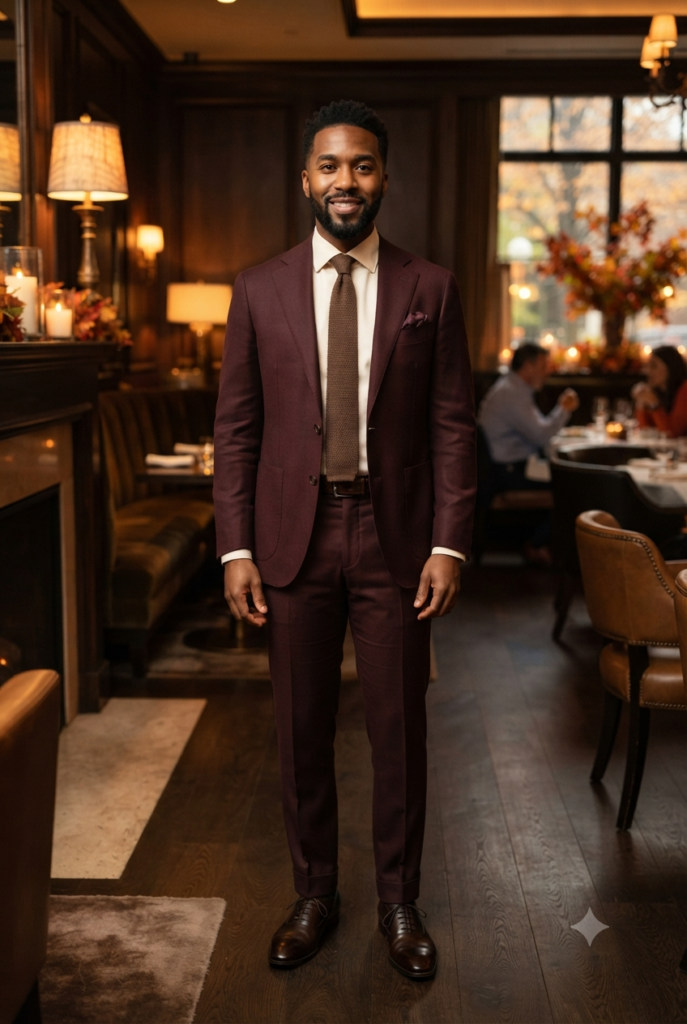
Cream or ecru, rather than stark white, brings out the warmth in a burgundy suit in a way that’s particularly effective for fall. Pair it with a brown knit tie for a textured, slightly rustic combination that photographs beautifully for evening business dinners.
The knit tie’s flat, matte texture works especially well against the smoother finish of a wool suit — texture contrast, rather than exact color matching, is doing a lot of the work in this outfit. A pocket square isn’t necessary here; the knit tie already provides enough visual interest on its own.
Suede monk-strap shoes in a mid-brown tone continue the textural theme established by the tie. A brown leather belt and a watch with a brown leather strap keep the accessories consistent in tone without being an exact match to the shoe.
This combination suits fall business dinners, industry events, and any semi-formal evening setting where you want something warmer and less corporate than a standard white-shirt-and-silk-tie look.
The mistake to avoid: tying a large, thick knot with the knit tie. Because knit fabric already has more bulk than silk, a smaller four-in-hand knot keeps the proportions right.
4. Black Turtleneck — Modern Evening Look
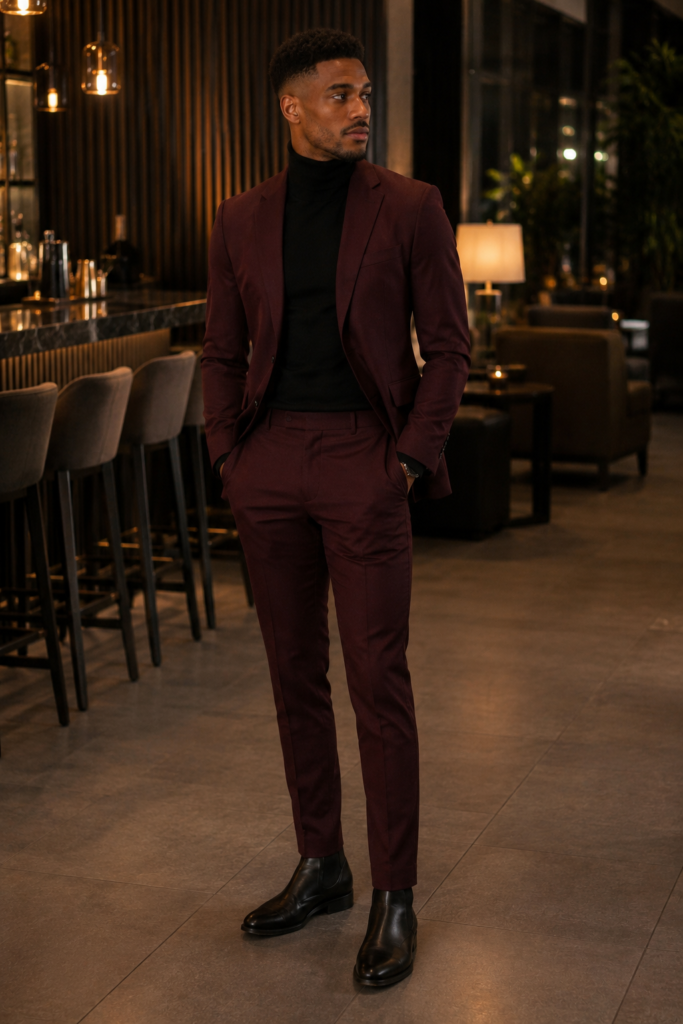
For a genuinely modern take on a burgundy suit, swap the dress shirt entirely for a fine-gauge black turtleneck. This combination has become a favorite among stylish men in recent years, and for good reason — the high, clean neckline of the turtleneck against a rich burgundy jacket creates a sharp, editorial contrast without needing a tie or pocket square to finish it.
There’s no collar or tie in this version, so the whole look depends on the turtleneck fitting close to the neck without bulk. A fine merino wool or wool-cotton blend is essential here — anything chunky will throw off the suit’s proportions and make the neckline look bulky rather than sleek.
Black leather Chelsea boots continue the sleek, dark line down from the turtleneck. Skip the belt if your trousers allow it, since this look is built around a clean, uninterrupted silhouette rather than a lot of visible detail.
This works for dinners, evening events, and any setting sophisticated enough for a suit but relaxed enough to skip the tie entirely. The mistake to watch for: choosing a turtleneck that’s too thick or too loose around the neck. It should sit close and flat, not rolled or bunched.
5. Pink Shirt, Navy Tie — The Underrated Combination
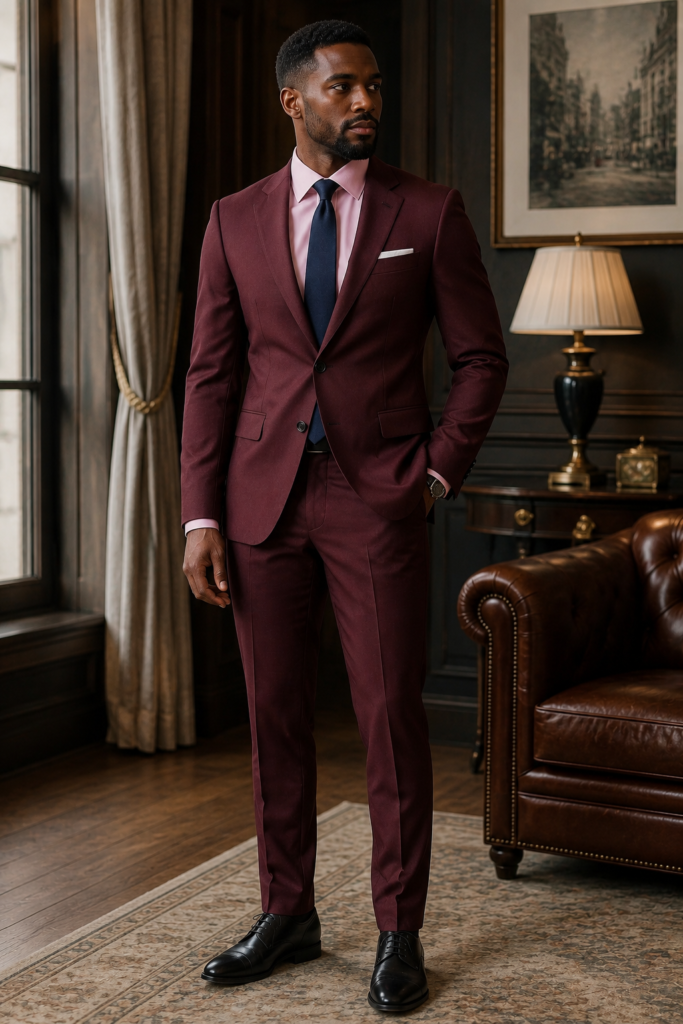
A soft pink shirt is a genuinely underrated pairing with burgundy, since both colors sit in the same warm family without competing for attention — pink is lighter and cooler-toned enough to read as a shirt color rather than a second suit color.
A navy tie, once again, provides the neutral anchor the outfit needs.
A white pocket square keeps the chest simple, rather than adding a third color into an outfit that already has pink, burgundy, and navy working together. Black or dark brown oxfords both work here, depending on how deep your particular shade of burgundy runs.
This is a strong option for business meetings and client dinners where you want to look distinctive without straying from professional norms.
One detail worth getting right: choose a pale, muted pink rather than a bright bubblegum shade — a soft pink recedes into the background as a shirt color should, while a brighter pink starts competing with the suit itself for attention.
6. Denim Shirt — Casual Weekend Wear
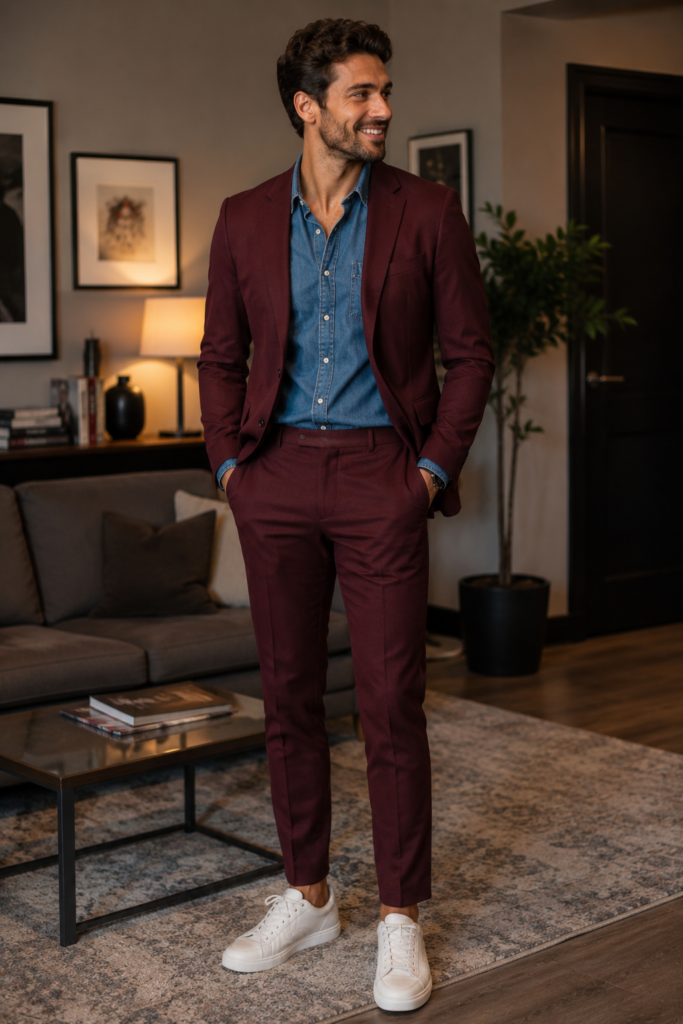
A chambray or lightly faded denim shirt under a burgundy suit jacket takes the whole outfit into relaxed, weekend territory. This combination works particularly well for casual daytime social events, rehearsal dinners, or any setting where a full suit-and-tie look would feel like overkill.
No tie, and the top button left open. If you want a small amount of extra detail, a plain linen pocket square in white or a light neutral color works well against the texture of the denim shirt.
White leather sneakers, kept clean and minimal, bring the formality of the whole outfit down further. This is one of the few combinations here where sneakers genuinely work better than a leather dress shoe.
This look is ideal for casual rehearsal dinners, relaxed Friday offices, and daytime events where a suit is optional but welcome.
The mistake to avoid: choosing a dark, obviously “jeans material” denim shirt rather than a lighter chambray — the darker option looks like a mismatched accident rather than an intentional style choice.
7. Burgundy Blazer, Grey Trousers — Suit as Separates
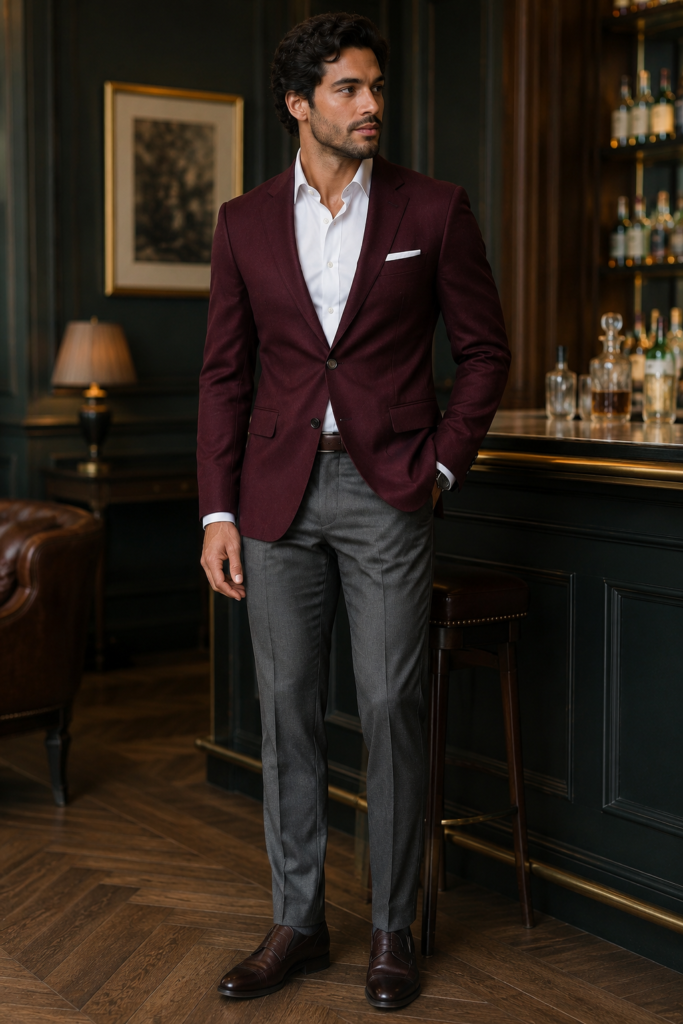
Splitting the suit into a burgundy blazer worn over contrasting grey trousers is a smart move if you want more mileage from a single purchase, and it also tones down the overall boldness of wearing burgundy head-to-toe.
A white or pale blue shirt keeps this combination office-appropriate. A tie is optional; if you add one, a small-patterned navy or grey tie keeps the palette restrained and professional.
Black oxfords work well here, since the grey trousers shift the whole outfit’s register toward traditional business wear. A matching black belt, and a pocket square in a muted burgundy or grey tone, if you want a single accent color pulling the two halves of the outfit together.
This works for offices that allow separates and any setting where you want a memorable but still professional presence. One fit note worth remembering: a jacket cut as part of a suit is proportioned to match its own trousers, so double-check the jacket length still balances properly against whatever trousers you’re now pairing it with.
8. Grey Trousers Swapped for Burgundy Trousers, Navy Blazer
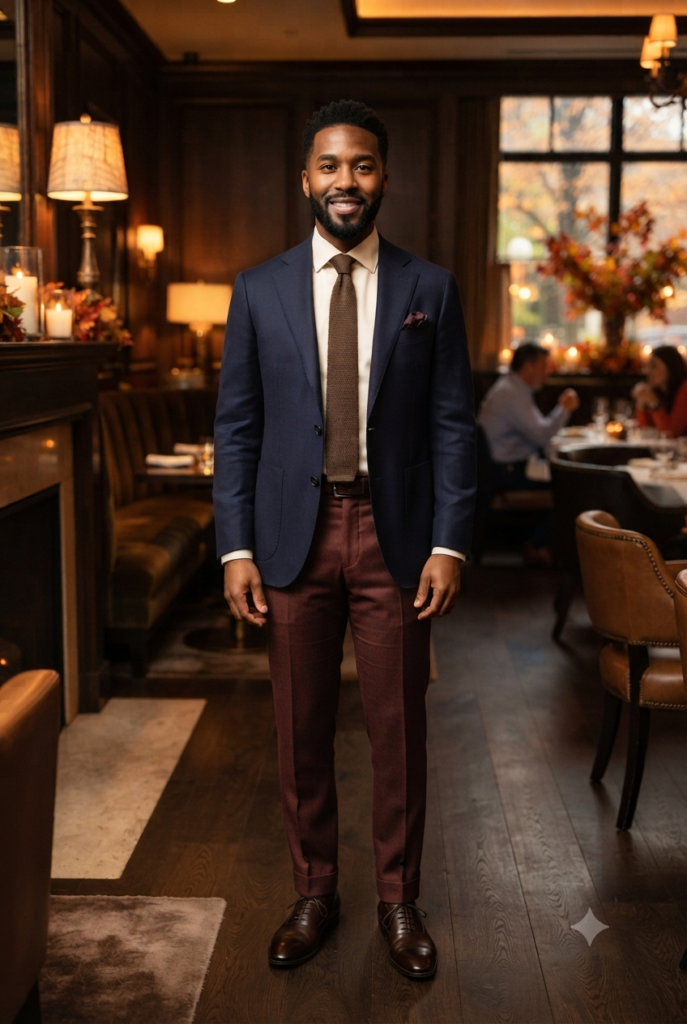
Flip the separates approach, and you get burgundy trousers under a navy blazer — a subtler way to introduce the color if you’re not ready to wear a full burgundy jacket. The color shows up below the waist rather than across your chest and shoulders, which reads as more understated, even though it’s the same amount of burgundy fabric overall.
A white or pale blue shirt keeps things classic underneath the navy blazer, and a tie is optional depending on the formality of the event.
Brown suede loafers strike a good balance between the trousers’ warmth and the blazer’s more traditional navy base. A brown belt and a watch with a brown leather strap tie the two halves of the outfit together.
This is a strong option for smart-casual offices and daytime social events where you want to experiment with burgundy without committing to a full jacket in the color.
The common mistake: choosing trousers that are too slim or too baggy. Burgundy trousers benefit from a clean, tapered leg — anything too loose starts to look like loungewear, and anything too tight draws attention to fit issues rather than the color choice.
Read also: 15 Ways to Wear a Pink Suit (Without Looking Like You’re Trying Too Hard)
9. Striped Shirt, Silk Pocket Square — Cocktail Party
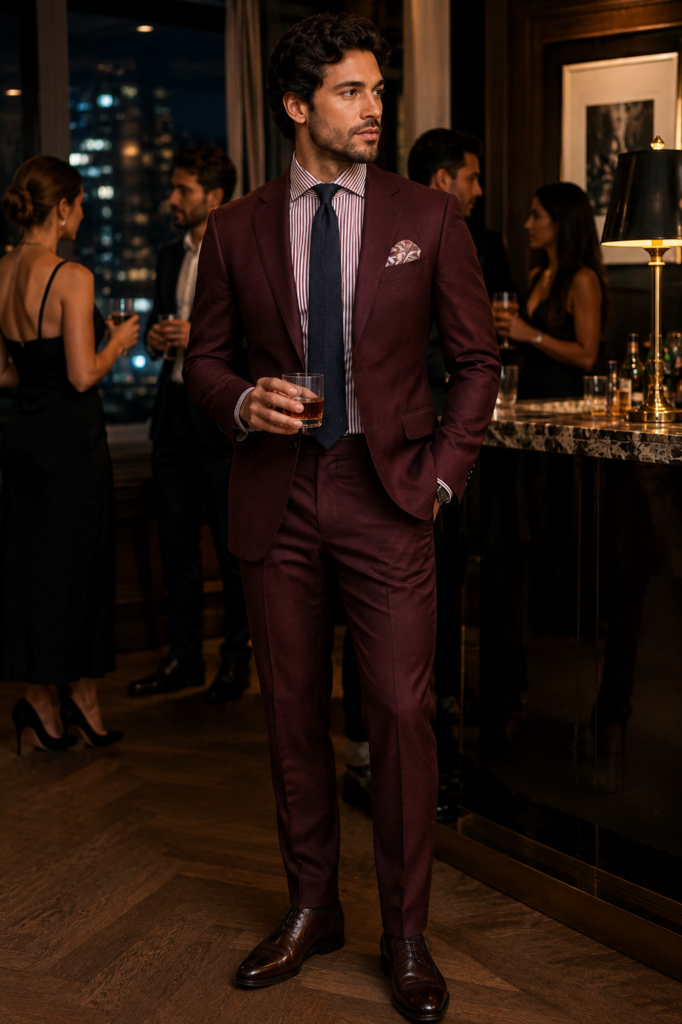
For a cocktail party or evening social event, a fine-striped shirt (thin navy or white stripes) paired with a textured silk pocket square in a complementary color adds personality to the outfit without needing a tie to hold the neckline together.
Since there’s no tie, leave the top collar button open, and let the pocket square be the outfit’s central accessory — a puff fold or three-point fold with visible texture suits the more festive setting better than a plain straight-edge fold would.
Velvet loafers in navy or a deep green work particularly well here, reading as dressier than suede without tipping into full formal-shoe territory. A slim leather belt and a dress watch with either a metal bracelet or a slim leather strap complete the look.
This combination is built for cocktail parties, holiday events, and evening gatherings that sit between smart casual and semi-formal. The mistake to avoid: choosing a pocket square in the exact same color as the shirt’s stripe — a complementary color pulled from elsewhere in your outfit looks more considered than a matching one.
10. White Linen Shirt — Warm-Weather Wedding
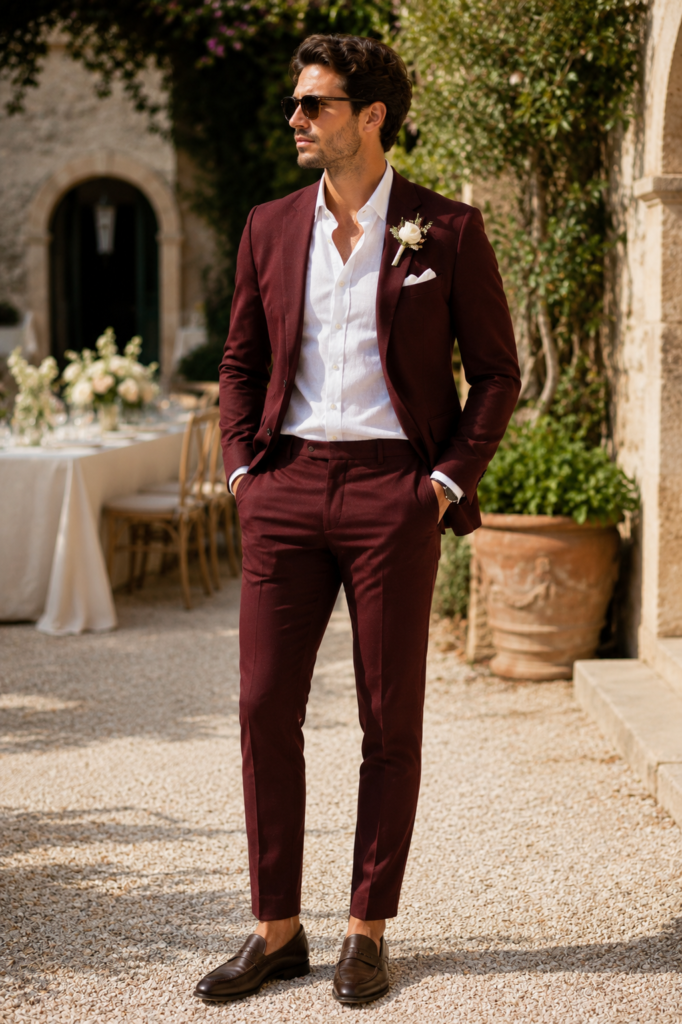
For weddings in warmer climates or during summer months, a linen or linen-cotton blend shirt softens the overall formality of a burgundy suit and matches the breathable, relaxed feel the occasion calls for. Burgundy is less common as a warm-weather color than navy or tan, but a lighter-weight burgundy suit fabric — a wool-linen blend, specifically — makes this combination work without looking out of season.
Skip the tie in genuinely hot settings, and leave a linen pocket square unstructured rather than pressed into sharp folds, to match the shirt’s relaxed texture.
Woven leather loafers or breathable slip-ons, worn without socks, suit the climate. A fabric or leather-strap watch, rather than anything heavy or metallic, keeps things comfortable in the heat.
This look is designed for destination and warm-climate weddings specifically. If the suit itself isn’t a lightweight, breathable fabric, this combination won’t feel right — a heavy wool burgundy suit paired with a linen shirt looks like a mismatch between the fabric and the season, so the whole outfit, not just the shirt, needs to reflect the warmer setting.
11. Black Bow Tie — Semi-Formal Evening Statement
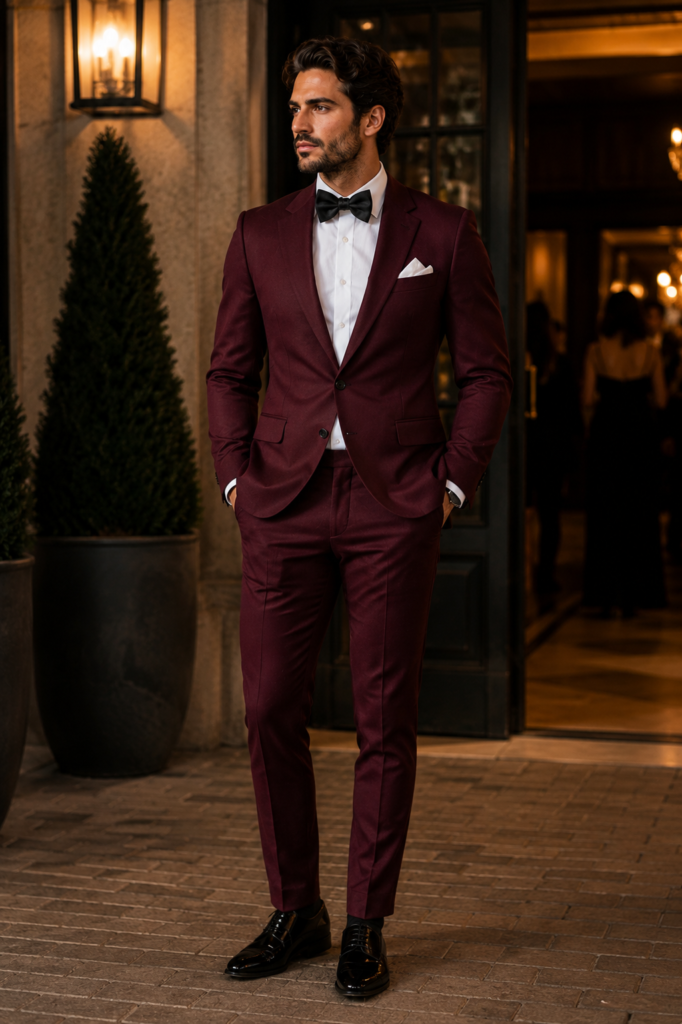
For a semi-formal evening event — an upscale dinner, an engagement party, or any invitation that calls for “cocktail attire” — a black bow tie elevates a burgundy suit into genuine statement territory.
Choose a solid black silk or velvet bow tie rather than anything patterned; the suit’s color is already doing a lot of visual work, so the bow tie’s job is to support it with confidence rather than compete with more pattern.
A white shirt with a spread collar (bow ties need enough room underneath the knot to sit properly) and a black silk pocket square tie the whole look together.
Black patent or high-shine leather oxfords match the formality of the bow tie, along with a black leather belt and a dress watch on a black leather strap. If you wear cufflinks, keep them simple and metallic rather than colorful.
This works for milestone events, upscale dinners, and semi-formal evenings where you want to be remembered. The mistake to avoid: reaching for a pre-tied, perfectly symmetrical bow tie. A slightly imperfect, hand-tied knot always reads as more genuine and less like a rental-counter costume piece.
12. Grey Sweater Vest — Fall and Winter Office Layering
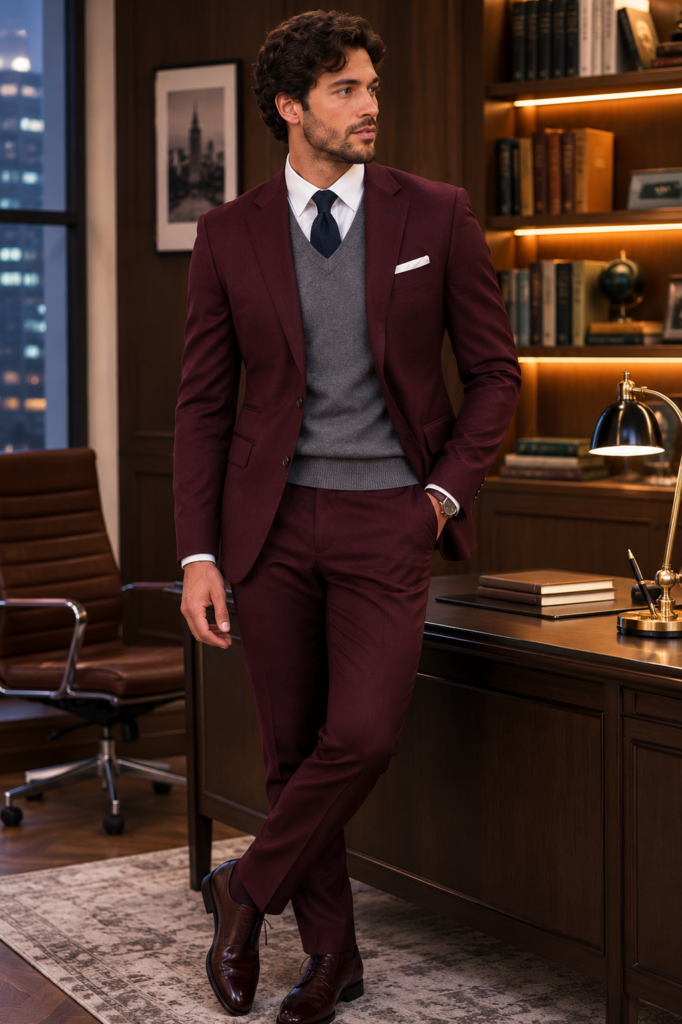
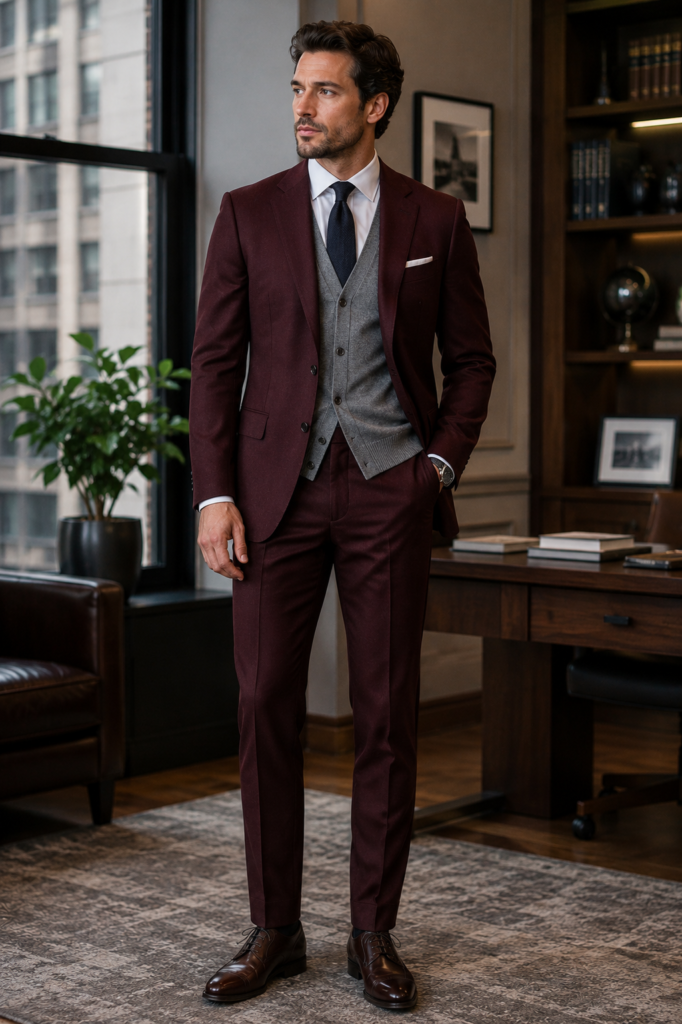
For colder months, layering a fine-gauge grey or charcoal sweater vest over a white or pale blue dress shirt, underneath the burgundy suit jacket, adds warmth and texture without bulking up the silhouette the way a full sweater would. This combination has a slightly academic, tweedy feel that pairs naturally with burgundy’s autumnal tone.
A tie is optional underneath the vest; if you include one, keep it slim so it doesn’t get lost under the vest’s V-neck. Skip the pocket square in this version — between the vest, shirt, and jacket, there’s already enough visual detail.
Brown leather brogues or wingtips complement the textured, seasonal feel of the outfit, along with a brown belt and a leather-strap watch. If your burgundy suit is in a heavier flannel or wool-flannel blend, this is exactly the combination that puts that heavier fabric to good use.
This works for fall and winter office settings, particularly in industries with a bit more personality in the dress code. The mistake to avoid: a sweater vest that’s too thick or too long, which adds visible bulk at the waist or peeks out past the jacket’s hem.
13. Polo Shirt — Resort and Vacation Casual
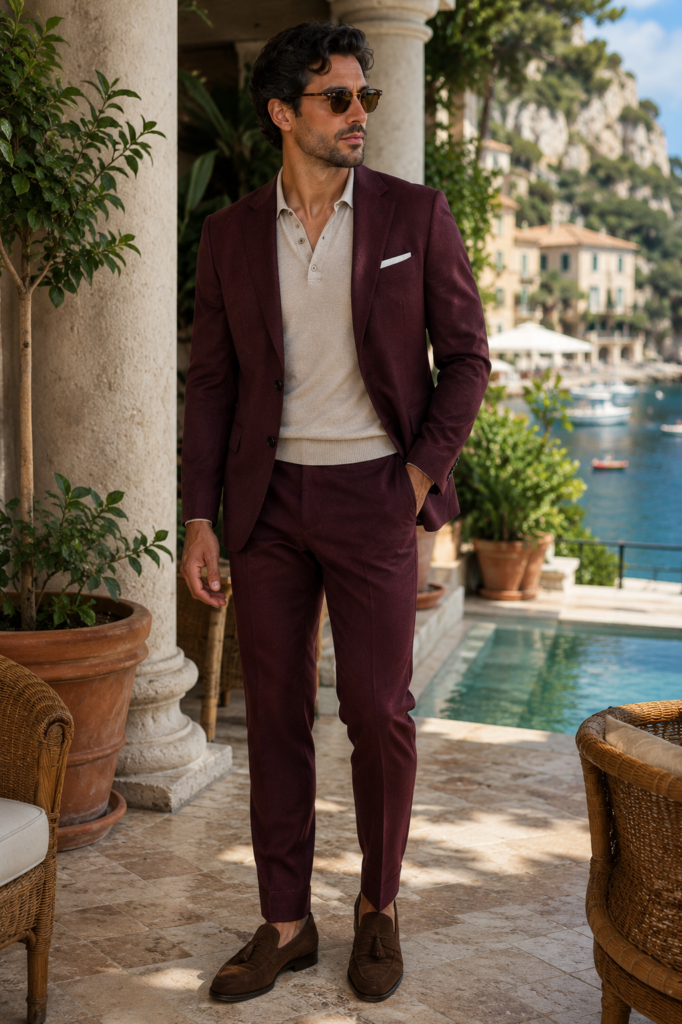
For genuinely relaxed settings — a resort dinner, a daytime vacation event, or a country club lunch — a well-fitted polo shirt underneath a burgundy suit jacket, paired with the trousers rolled slightly at the ankle or worn as separates with lighter chinos, creates an easy, warm-weather look that still carries some structure.
Choose a polo in white, navy, or cream — solid colors work better here than anything striped or logo-heavy, which adds clutter the outfit doesn’t need.
Boat shoes or woven espadrilles suit this setting far better than leather dress shoes, and going sockless is expected rather than optional here. Leave the belt off if your trousers allow it, keeping the whole look intentionally undone.
Read also: Men’s Suit Guide for Short Guys
This combination is for resort settings and vacation dinners where a full formal suit would feel out of place. The mistake to watch for: wearing this exact combination somewhere more formal than intended — a polo under a suit jacket reads clearly as “vacation,” and no amount of good tailoring changes that context.
14. Burgundy Suit with Tonal Burgundy Tie — Monochrome Done Right
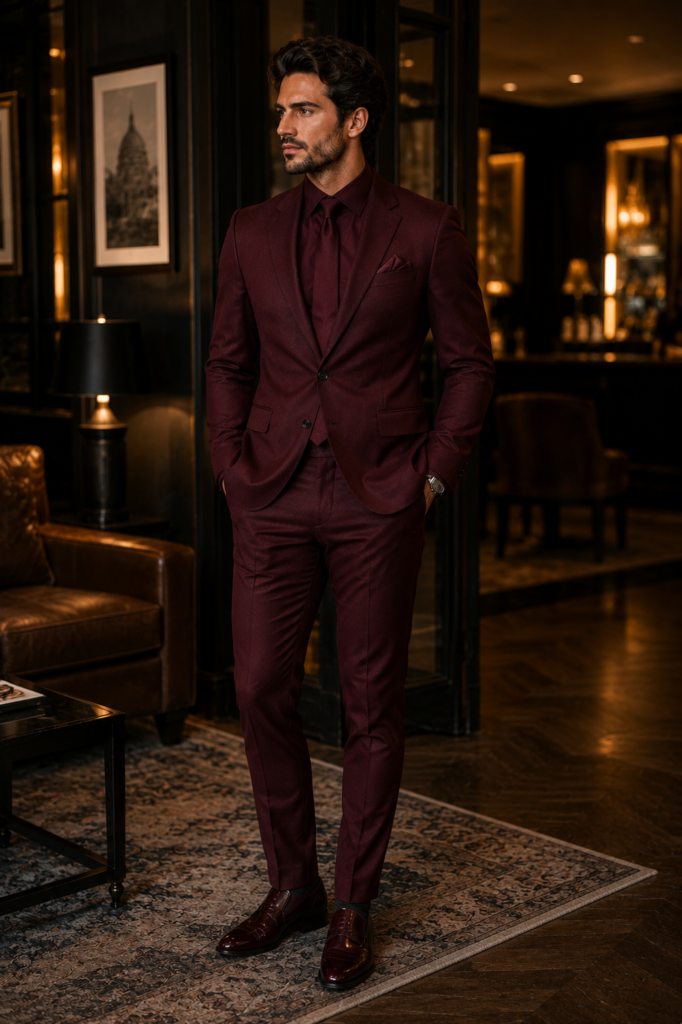
Wearing a tie in the same color family as the suit is often a mistake, as noted earlier — but done deliberately, with the right contrast in shade and texture, a tonal look can actually work. The key is choosing a tie in a noticeably different shade of burgundy (a lighter oxblood tie against a darker wine suit, for example) and in a different texture, like a textured silk grenadine rather than a smooth, flat silk that matches the jacket’s finish too closely.
A white shirt is essential here to break up the tonal palette and keep the outfit from reading as flat or monochrome. Skip a matching pocket square; a white or subtly patterned one in a different color keeps the eye moving rather than locking onto a single tone.
Black or dark brown oxfords, depending on your suit’s exact shade, along with a matching leather belt, complete the outfit.
This is an advanced combination best suited to men who already feel confident wearing burgundy and want to push the look further for a special event — an anniversary dinner, an art opening, or a milestone celebration.
The mistake that ruins this outfit almost every time: matching the tie’s shade and texture too closely to the suit, which erases the contrast that makes a tonal outfit work in the first place, and just looks like the tie was chosen at random from the same drawer.
15. Burgundy Trousers with a White Shirt — Summer Separates
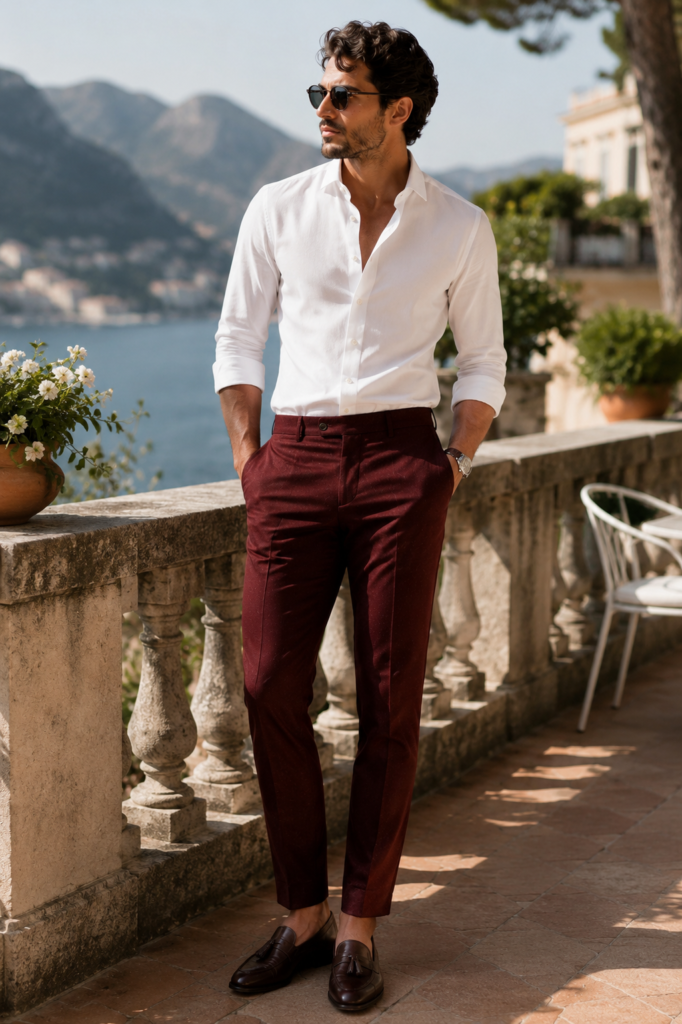
For a genuinely casual summer look, wear the burgundy suit’s trousers alone with a simple white short-sleeve or rolled-sleeve shirt, no jacket at all. This is one of the most versatile ways to get extra use out of a burgundy suit purchase, since it turns half the suit into a completely different, much more casual outfit.
No tie, obviously, and the shirt can be linen, cotton, or a lightweight cotton-linen blend depending on the climate. Skip any structured accessories here — this look works because it’s deliberately simple.
Espadrilles or minimal leather sandals suit the casual register best. A woven or leather belt in a light tan color, if the trousers need one, and nothing more.
This works for casual summer daytime events, outdoor lunches, and warm-weather social gatherings where a full suit or blazer would feel out of place entirely.
The one thing to get right: make sure the trousers are genuinely lightweight, since suit trousers built for a heavier wool jacket often run warmer than a standalone pair of summer trousers would, and that mismatch becomes obvious the moment the jacket comes off.
Getting the Fit Right, No Matter Which Look You Choose
Every combination above depends more on fit than on any single shirt or tie choice. The shoulders are the foundation of any jacket — the seam should sit right at the edge of your shoulder bone, without drooping past it or pulling inward, and this is the one thing that’s genuinely difficult and expensive for a tailor to fix, so get it right at the point of purchase if you can.
Sleeve length should land at the wrist bone, showing roughly a half-inch of shirt cuff underneath. Jacket length, as a rough guide, should cover your seat without extending much past it — cupping your hand at your side, your fingers should roughly meet the jacket’s hem.
For trousers, most of the looks above favor a slight break or none at all, rather than a heavy break that pools fabric over the shoe. A cleaner leg line, in particular, keeps burgundy from looking heavy or old-fashioned, since the color already carries more visual weight than a lighter neutral like grey or tan.
Fabric Choices Worth Knowing
Burgundy suits show up most often in mid-weight to heavier wools, which suits the color’s naturally warm, autumnal character — a worsted wool in this shade works well for most of the business-adjacent looks above, holding a clean drape without looking too heavy for spring or fall wear.
For genuinely warm climates or summer weddings, look specifically for a wool-linen blend, which keeps some structure while adding breathability that a pure wool suit can’t offer in the heat.
A flannel or wool-flannel blend is the better choice for the sweater-vest or turtleneck looks aimed at fall and winter, since the heavier texture and slightly brushed finish pair naturally with knitwear.
Velvet, while less common for a full suit, occasionally shows up in burgundy dinner jackets specifically for evening events, and it’s worth knowing that texture, more than color, is what signals formality in that case.
Building Toward a Wardrobe, Not Just One Suit
If burgundy is your first step outside of navy and grey, resist the temptation to buy several burgundy pieces at once. One well-made burgundy suit, worn the seven or eight different ways described above, will get you more genuine use than three lower-quality pieces in slightly different shades that end up looking similar in photos anyway.
Once you’ve worn it enough to notice which two or three combinations you gravitate toward most, that’s your signal for what to invest in next — a better pair of shoes in the tone you keep reaching for, or a proper silk knit tie if you find yourself borrowing one every time.
Frequently Asked Questions
Is burgundy too bold for a conservative office? It depends on the shade and the jacket’s texture. A deep, near-black burgundy in a matte worsted wool reads as sophisticated and is genuinely office-appropriate in most modern workplaces. A brighter oxblood is a slightly harder sell in conservative industries, and works better for client-facing or creative roles.
What skin tones suit burgundy the most? Burgundy’s warmth flatters a wide range of skin tones, but it particularly complements warmer undertones and darker skin tones, where the color’s depth reads as rich rather than heavy. Cooler, paler skin tones can still wear it well, but may want to lean toward a shirt in white or pale blue to add contrast near the face.
Can I wear a burgundy suit to a funeral? It’s generally best avoided. While burgundy is more muted than a true red, it still reads as more expressive than the black, charcoal, or navy expected at most funerals, so it’s safer to reserve for other occasions.
Is it okay to wear a burgundy suit in summer? Yes, provided the fabric matches the season. A wool-linen blend burgundy suit, paired with a linen shirt as described above, works well for warm-weather weddings and events. A heavier wool or flannel burgundy suit will feel and look out of place in genuinely hot weather.
Do burgundy and black go together? Yes, and it’s one of the more common pairings — black shoes, belts, and accessories work particularly well with a deep, near-black burgundy suit. With a brighter oxblong shade, dark brown often provides a slightly warmer, more complementary alternative.
What’s the biggest mistake men make with burgundy suits? Pairing them with a tie in a nearly identical shade of red or maroon, which flattens the outfit into a single tone rather than creating the contrast that makes the suit color stand out. Navy, white, cream, and even pale pink all provide better contrast than another shade of red.
Should I buy a burgundy suit off the rack or have one tailored? Off-the-rack is a reasonable starting point, but budget for basic alterations — sleeve and trouser length at minimum, and a waist adjustment if needed. Because burgundy draws more attention than navy or grey, fit issues are simply more visible, which makes tailoring even more worthwhile.
Can I wear a burgundy suit if I’m on the larger side? Yes — fit matters far more than color here. A well-tailored burgundy suit with a slightly fuller cut through the chest and a straighter leg through the trouser looks sharp on any build. Sizing down to appear slimmer usually backfires, creating visible pulling and strain across the fabric instead.
Is a burgundy suit appropriate for a wedding if I’m not in the wedding party? Yes, particularly for fall and winter weddings, or evening receptions, as long as it doesn’t match the colors the wedding party is wearing. When in doubt, check with the couple or a member of the wedding party beforehand.
How many times can I realistically wear the same burgundy suit differently? Quite a few. Between shirt changes, tie decisions, separating the pieces, and swapping formal accessories for casual ones, one well-made burgundy suit can reasonably cover interviews, client dinners, weddings, and casual weekend outings without ever looking repetitive.
Final Thoughts
A burgundy suit rewards the same thing every good suit does: confidence built on fit, not just color.
Start with one of the more conservative combinations above if you’re easing into the color for the first time, and once you’ve got a sense of how it works with your skin tone, your build, and your usual calendar of events, branch out into the bolder pairings — the tonal tie, the bow tie, the turtleneck.
The suit itself stays constant. What changes is everything you choose to build around it, and that’s exactly what makes one well-made burgundy suit worth far more than its price tag suggests.
Read also: