How to Trim a Beard at Home: A Beginner’s Guide to Shaping and Maintaining Your Beard
A beard doesn’t look good because it’s long. It looks good because it’s shaped: clean lines on the neck and cheeks, an even length, and nothing wandering off on its own.
The good news is that learning how to trim a beard at home is mostly a matter of knowing where the lines go and going slowly. You don’t need a barber, and you don’t need expensive gear.

This guide walks through the full process step by step: the tools you actually need, how to set your neckline and cheek line, how to trim a short beard versus a longer one, how to shape a beard to suit your face, and how to maintain beard length between trims without losing the size you’ve worked to grow.
The Quick Answer: How to Trim a Beard at Home
- Start with a clean, dry (or barely damp) beard, combed in the direction it grows.
- Set your trimmer to a longer guard than you think you need. You can always go shorter, but you can’t put hair back.
- Trim the body of the beard with the guard on, moving against the grain in short, steady strokes.
- Mark your neckline about one to two finger-widths above your Adam’s apple, then clean up everything below it.
- Define your cheek line by following the natural edge of your beard, and remove stray hairs above it.
- Tidy the mustache, and check both sides for symmetry.
- Finish by washing off loose hair and moisturizing the skin, or applying a little beard oil.
The rest of this guide explains each step in detail, plus how to adjust it for your beard length and style.
What You Need Before You Start
You can get a very good result with a short list of tools.
- An electric beard trimmer with guards. This is the main tool. Look for adjustable or interchangeable guards, a secure guard attachment, and a blade that can also be used without a guard for detail work.
- A beard comb or brush. Combing lifts hairs so they’re cut evenly and reveals length differences you’d otherwise miss.
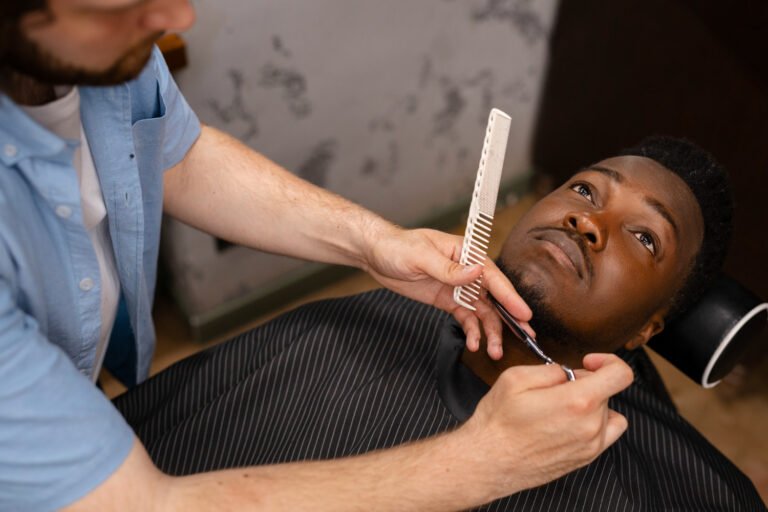
- Small scissors (optional but useful). Good for stray long hairs, the mustache, and spots a trimmer misses. Use scissors made for grooming, not kitchen or craft scissors.
- A mirror, and ideally a second one. A hand mirror lets you check the sides and underneath your chin.
- Good lighting. Bright, even light from the front shows patches and uneven lines.
- A razor or detailer (optional). For a sharper neckline and cheek line if you want a crisper edge.
- A towel for the shoulders. It saves a lot of cleanup.
A note on guard numbers
Guard numbers aren’t standardized across brands. One brand’s “3” can be a different length from another’s. Check the length printed on your trimmer (usually in millimeters) rather than relying on a number you saw in a video.

Prepare Your Beard
Wash and dry. A clean beard cuts more evenly than one coated in oil, product, or dirt. Wash with a gentle cleanser or beard wash, and rinse well.
Trim dry or barely damp. Wet hair stretches and clumps, so it looks longer than it is, and you can end up cutting more than you meant to. Towel dry thoroughly and let it dry the rest of the way before you start. Some guides say trim only when dry, others say damp is fine. What matters is that it isn’t soaking wet.
Comb it out. Comb the beard in the direction it grows, then against the grain, so all hairs stand up evenly. Notice where it grows in different directions, such as on the neck or around the chin. Those areas often need extra care.
Check your trimmer. Make sure the blade is clean and the guard is securely clicked in place. A guard that slips mid-stroke is one of the easiest ways to leave a bald stripe.
Read also: How to Grow a Beard Faster: What Works, What Doesn’t, and What Just Takes Time
How to Trim a Beard Step by Step
Step 1: Choose your starting length
Decide how much you want to take off. If you’re unsure, begin with a guard that leaves the beard longer than your target and work down. A common rule of thumb is to start with a guard roughly half your current beard length, then adjust. Always err on the longer side for your first pass.
Step 2: Trim the body of the beard
With the guard attached, run the trimmer through the beard in slow, steady passes.
- Go against the grain (upward on the cheeks and neck, against the direction hair grows) for a shorter, more even result. If you want to take off less, go with the grain.
- Use short, overlapping strokes. Don’t press the trimmer hard into the skin.
- Keep the trimmer level and flat so the guard sits evenly against your face.
- Work in sections: one cheek, the other cheek, the chin, then under the jaw.
- Keep a gradient on the sides. The beard from the top of the sideburn can be shorter and gradually get longer as it moves down the cheek and jawline. This creates a natural, tapered shape instead of a boxy block.
- Check after every few passes. Look in the mirror from the front and both sides.
If you need a shorter length, switch to the next guard down and repeat, rather than going straight to your shortest setting.
Step 3: Set your neckline
The neckline is the most important line on your beard, and the one beginners most often get wrong.
- Where it goes: a widely used rule of thumb places it about one to two finger-widths above your Adam’s apple. Many barbers suggest keeping it closer to one finger if you have a short beard.
- Why not higher: a neckline set too high makes your beard look smaller and can look disconnected from your jawline.
- Why not lower: a neckline that creeps down toward the collarbone looks messy and unplanned.
To find it, tilt your head back slightly, put a finger or two above your Adam’s apple, and picture a gentle curve from that point up to just behind each ear, following the shape of your jaw rather than going straight across. Many men like to mark the center point first, then curve out evenly in both directions.
Once you have the line, trim off everything below it. Use the trimmer with no guard, or a razor, going carefully. Keep the line curved, not straight and not squared off, so it looks natural from the front and side.
Step 4: Define the cheek line
The cheek line is the upper edge of your beard on your face. A clean cheek line makes a beard look deliberate.
- Find the natural line. Start from the sideburn and follow the natural edge where your beard grows, aiming toward the corner of your mouth. Keep it as high as your natural growth allows.
- Don’t over-shape it. Cheek lines that are too low or too sharply artificial can look odd. Stay close to where the hair actually grows.
- Remove stray hairs above the line. Use the trimmer without a guard, a detailer, or a razor. The closer you take those stray hairs, the crisper the line will look.
- Soften the transition. If you prefer a more natural look, trim the hairs nearest the line slightly longer with scissors so the edge fades gradually instead of cutting off abruptly.
Check that both sides match by looking straight into the mirror, not at an angle.
Step 5: Trim the mustache
Comb the mustache downward. Trim any hair that overlaps your upper lip, using scissors or a trimmer without a guard. Work slowly, a little at a time, and keep the left and right sides even. Clean up the area where the mustache meets the beard so it blends smoothly.
Step 6: Refine and check
Turn your head from side to side and tilt it up. Look for:
- Uneven length on one side.
- Longer hairs sticking out or curling away.
- Gaps where you went too short.
- Lines that don’t match left to right.
Fix problems with small adjustments, using scissors or a guard-free trimmer for single stray hairs.
Step 7: Finish
Brush off loose hair and rinse your face. Pat dry and apply a moisturizer or a small amount of beard oil to keep skin comfortable after trimming. If your skin is acne-prone, choose lightweight, non-comedogenic products.
How to Trim a Short Beard
A short beard is the least forgiving to trim because there’s less hair to hide mistakes, so precision matters more than technique.
- Use one consistent guard length for the whole beard, usually kept short and even.
- Trim more often. A short beard looks untidy faster, and lines blur within a few days. Many men trim short styles every few days to weekly.
- Keep the lines sharp. Because there’s little length to define the shape, a clean neckline and cheek line do most of the work.
- Consider a tight fade on the cheeks. A slightly shorter guard at the top that blends upward looks polished and can flatter the jaw.
- Avoid going too close on curly or coarse hair. If you have curly facial hair, cutting too short can cause hairs to curl back into the skin, which leads to ingrown hairs and razor bumps. Leave slightly more length and avoid shaving the neckline too tightly.
How to Shape a Beard to Fit Your Face
You’re not locked into one shape. A few simple principles help:
- Round faces: keep the sides a little shorter and let length gather at the chin to create the impression of a longer, more angular face.
- Square faces: a softer, slightly rounded beard line can balance a strong jaw. Avoid very boxy edges.
- Long or oval faces: keep the sides fuller and the chin length moderate so the face doesn’t look elongated.
- Thin or patchy cheeks: keep the cheek line high and neat, and consider a style that leans on the chin and jaw, such as a short boxed beard or goatee.
- Weak chin: letting the chin hair grow a little longer than the sides can add definition.
These are guidelines, not rules. If you like how a shape looks on you, it works.
How to Maintain Beard Length Between Trims
If you’re trying to grow your beard out, the goal is to keep it neat without losing length.
Trim the edges, not the whole beard. Maintaining your neckline and cheek line makes a beard look tidy even when you let the length grow. Regular edge cleanup lets the beard get longer without looking unkempt.
Trim in small amounts. If you’re maintaining length, remove only stray, split, or sticking-out hairs with scissors rather than running a trimmer over the whole thing.
Follow a simple schedule.
| Beard type | Edge cleanup | Full trim |
|---|---|---|
| Stubble or very short | Every 2–4 days | Weekly |
| Short beard | Weekly | Every 1–2 weeks |
| Medium beard | Every 1–2 weeks | About every 2–4 weeks |
| Long beard | Every 2 weeks | Every 4–8 weeks, or as needed |
These are rough starting points. Faster-growing beards need more frequent upkeep, and some men find twice a month is enough for a full trim.
Take care of the hair itself. Comb or brush daily, use a conditioning product if your beard feels dry, and moisturize the skin underneath. Healthy hair breaks less, so you keep more length.
Trim split ends only if you see them. Look for frayed tips and snip them off. It doesn’t speed up growth, but it prevents breakage from working its way up the hair.
Common Beard Trimming Mistakes
- Starting with a guard that’s too short. The classic mistake. You can’t undo it, so start longer.
- Setting the neckline too high. This makes the beard look small and unnatural. One to two fingers above the Adam’s apple is the safer range.
- Skipping the neckline altogether. A freshly trimmed beard with no clean edges still looks messy.
- Trimming when the beard is soaking wet. Wet hair looks longer than it is, so you cut too much.
- Ignoring symmetry. Check both sides, and look straight on, not only from an angle.
- Pressing too hard. The trimmer’s job is to cut hair, not scrape skin. Heavy pressure causes irritation and uneven cuts.
- Trying to fix mistakes by cutting more. If one side looks short, don’t keep trimming the other side down to match unless you’re sure. Pause and reassess in good light.
- Not cleaning your tools. Hair and residue dull blades and can irritate skin.
Trimmer Care and Safety
- Clean the blade after each use. Brush away hair, and follow the manufacturer’s instructions for cleaning and oiling.
- Replace or sharpen blades when they dull. A dull blade pulls hairs and irritates skin.
- Check guards and attachments before each use.
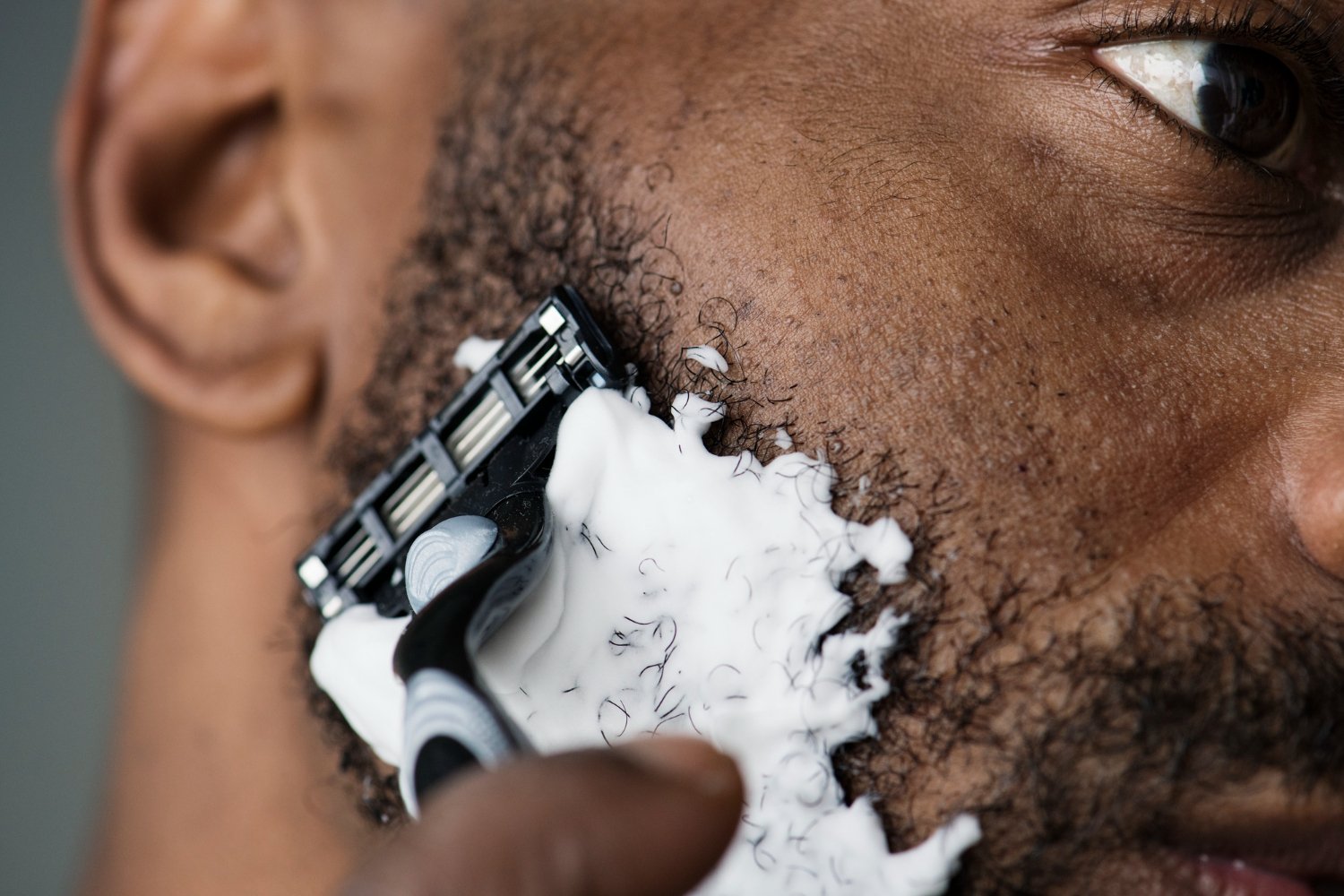
- Keep skin protected. If you’re using a razor on your neckline, use shaving cream or gel, and apply a moisturizer or soothing product afterward.
- Let irritated skin recover. If your skin is red or sore after trimming, skip the razor and go lighter next time.
- Don’t share trimmers or razors. It can spread bacteria and skin conditions.
When to Get Help from a Barber
Trimming at home works well for most men, but a barber can help if:
- You’re starting from a very long beard and want a significant reshape.
- You have a complicated style, such as a sharp line-up or a pronounced fade.
- You want a professional to set your neckline and cheek line once, which you can then follow at home.
- Your beard grows in unusual patterns or has several swirls.
Going once to set the shape and then maintaining it yourself is a reliable approach, and it costs far less than regular visits.
If you have persistent skin problems such as painful bumps, scarring, or lasting irritation after trimming, see a dermatologist rather than simply changing tools.
Frequently Asked Questions
How often should I trim my beard?
It depends on length and how neat you want it. Short beards and stubble look best with edge cleanup every few days to weekly, and medium to long beards usually need a full trim every few weeks. Many men find twice a month is a good rhythm for a full beard.
Should I trim my beard wet or dry?
Dry, or only slightly damp. Wet hair clumps and stretches, so you can’t judge length accurately and risk cutting too much.
What guard should I use to trim my beard?
Start with a guard longer than you think you need and work down. A common starting point is a guard about half your current beard length. Check the millimeter markings on your trimmer, since numbers vary between brands.
Does trimming make my beard grow faster or thicker?
No. Trimming doesn’t change how fast hair grows or how dense it is. It removes damaged ends and keeps the beard tidy, which can make it look fuller.
How do I fix a patchy trim or a mistake?
If you’ve gone too short in one area, stop and let it grow back, and tidy the rest to blend. A slightly longer beard with clean edges often hides small mistakes. If it’s a large gap, a barber can help you reshape to a style that works with it.
How do I keep my beard from looking messy as it grows?
Keep the neckline and cheek line clean, comb or brush daily, and trim stray hairs. A well-defined edge makes growing beards look intentional.
Conclusion
Trimming your own beard comes down to a few habits: start longer than you think, set a clean neckline about one to two fingers above your Adam’s apple, keep the cheek line close to its natural edge, and check your work in good light. Do it slowly the first few times. Most beginners improve quickly because the process is repetitive, and mistakes grow back.
For your first trim, use a longer guard, trim the body lightly, set the neckline, and stop as soon as it looks tidy. Then settle into a rhythm that suits your beard length: quick edge cleanups often, and a fuller trim when the shape starts to drift.
Read also: