7 Easy Ways to Deodorize Smelly Shoes Naturally
We’ve all had that moment — you kick off your shoes at the end of the day and quietly hope no one is standing too close. Smelly shoes are one of those problems nobody really talks about, but almost everyone deals with.
If you want to deodorise smelly shoes naturally, without spraying them with something that smells like a chemical factory trying to cover up a farmyard, you’re in exactly the right place.
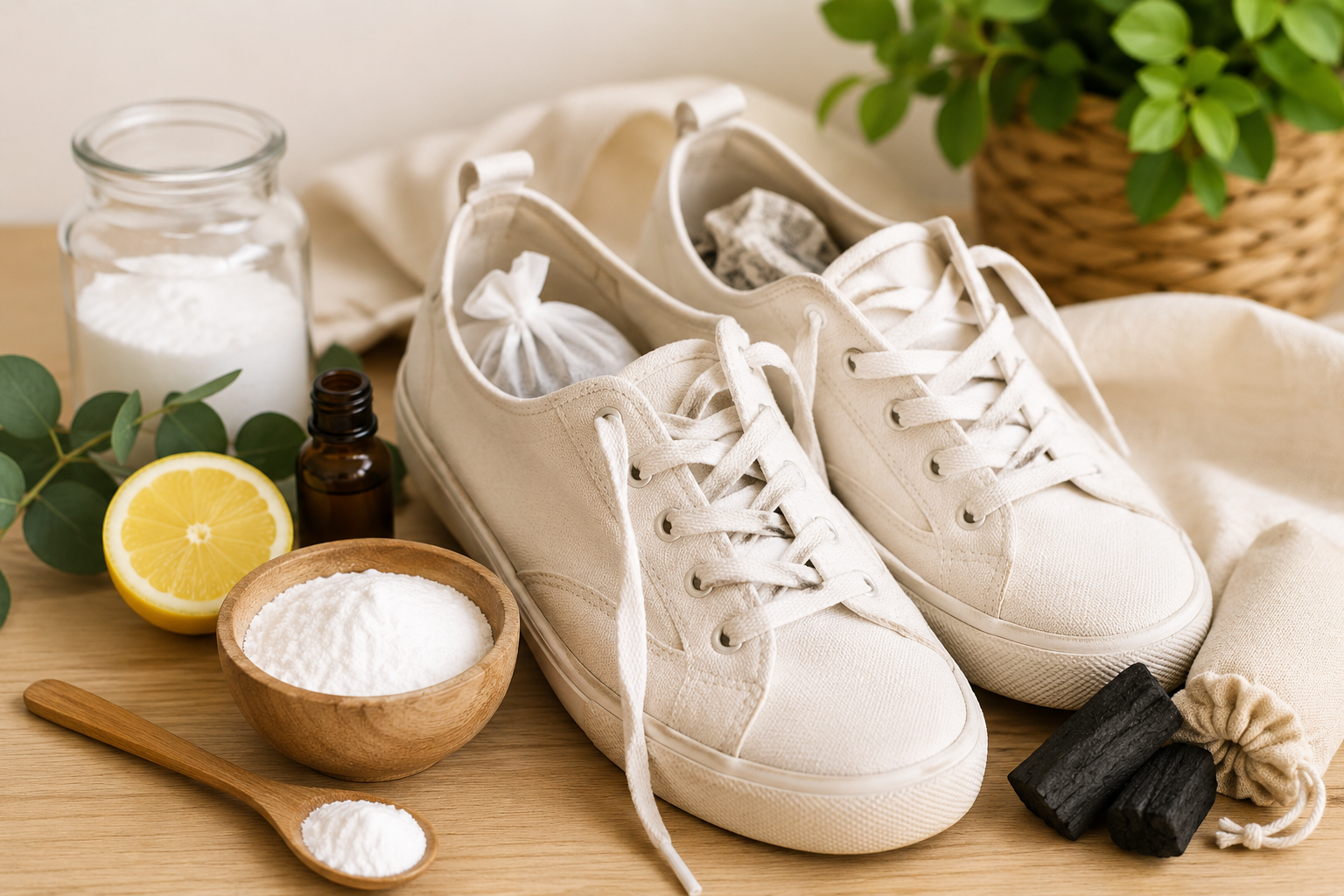
The fixes here are simple, effective, and built almost entirely from things you already own. No gimmicks, no expensive products — just seven methods that actually work.
The short version:
- Pack shoes with baking soda overnight to absorb odour at the source.
- Place cedar shoe inserts or cedar chips inside shoes between wears.
- Freeze shoes in a sealed bag overnight to kill odour-causing bacteria.
- Stuff with dry black tea bags to neutralise the smell naturally.
- Allow shoes to air out fully after every single wear — never store them damp.
What You’ll Need
- Baking soda
- Cedar shoe inserts or cedar chips (widely available and reusable)
- Black tea bags (used and dried, or fresh)
- White vinegar
- A clean spray bottle
- Sealable plastic bags (for the freezer method)
- Essential oils — tea tree or lavender (optional but effective)
- Newspaper or white paper towels
1. Baking Soda Overnight Treatment
Baking soda is the heavyweight champion of natural deodorising, and it works just as well inside shoes as it does at the back of your fridge.
Sprinkle a generous amount — roughly a tablespoon per shoe — directly inside each shoe, making sure to distribute it as far into the toe as possible. Leave overnight, or for at least six to eight hours, then shake it out thoroughly before wearing.
Baking soda absorbs moisture and neutralises the acidic compounds that cause odour rather than simply masking them. For persistently smelly shoes, repeat several nights in a row.
Slip a couple of used baking soda sachets inside for an even less messy version.

Quick tip: Put the baking soda in an old sock or a piece of thin cloth tied at the top before placing it in the shoe. Same effect, none of the white powder residue to shake out in the morning.
2. Cedar Shoe Inserts
Cedar is one of those materials that does several things at once — it absorbs moisture, naturally inhibits the growth of odour-causing bacteria, and leaves a clean, subtle woody scent that doesn’t compete with whatever perfume you’re wearing.
Cedar shoe inserts or shoe trees sit inside your shoes between wears and work passively, requiring nothing from you except remembering to put them in.
They’re reusable, they last for years, and they double as shape-retainers that prevent creasing in leather and structured shoes. Sand them lightly with fine-grit sandpaper every few months to reactivate the wood’s natural oils. This is one of the few shoe care purchases that genuinely pays for itself.
Read also: The Right Way to Break In New Shoes Without Getting Blisters
3. The Freezer Method
This one sounds strange, and I completely understand if your first instinct is scepticism. Bear with me. The bacteria responsible for shoe odour — the ones that thrive on sweat and warmth — cannot survive freezing temperatures.
Place each shoe in a separate sealable plastic bag (to keep the moisture off your food, for everyone’s sake), and put them in the freezer overnight. Take them out in the morning, let them return to room temperature fully before wearing, and the bacterial population that was causing the smell will be dramatically reduced.
It won’t fix deeply embedded odours on its own, but combined with the baking soda method, the results are genuinely impressive. Works best on trainers and fabric-upper shoes.
Quick tip: This method works on the bacteria but not on any product or material residue contributing to the smell. If your insoles are the real culprit — which they often are — remove them, treat them separately, and let them air out before replacing.
4. Black Tea Bags
Brewed black tea contains tannins — natural compounds that are mildly antibacterial and surprisingly effective at pulling moisture out of porous materials.
Brew two tea bags as normal, let them cool completely, then squeeze out most of the liquid so they’re damp but not dripping. Place one tea bag inside each shoe and leave for an hour. Remove, allow the shoe to air dry fully, and the difference in smell is usually noticeable straight away.
The tea does double duty — killing bacteria and absorbing the residual moisture that lets them grow back quickly. Use a second round of fresh (dry) tea bags afterwards if you want to leave them in longer without dampening the shoe.
5. White Vinegar Spray
White vinegar is acidic enough to neutralise the alkaline compounds produced by odour-causing bacteria, which is exactly why it works so well on smells without leaving a scent of its own once it dries.
Mix equal parts white vinegar and water in a small spray bottle and spritz the inside of the shoe lightly — not soaked, just a fine mist over the lining and insole.
Leave to air dry completely (this is important — vinegar smell while damp is not the goal), and the odour will be significantly reduced once fully dry. For fabric or mesh shoes, this is one of the fastest fixes available. For leather, use sparingly and condition the leather afterwards.
Quick tip: Add 3–4 drops of tea tree essential oil to your vinegar spray. Tea tree is naturally antifungal and antibacterial, which means it tackles the root cause of the smell rather than just neutralising the odour temporarily.
6. Newspaper Stuffing and Air-Drying
This one isn’t glamorous, but it might be the most underrated method on the list. Most shoe odour comes not from the shoe itself but from trapped moisture — sweat that doesn’t have anywhere to go.
Stuffing your shoes tightly with newspaper after every wear draws that moisture out of the lining and insoles, while the paper also absorbs any residual smell.
Leave them in a ventilated spot, not a closed wardrobe, for several hours before storing. It sounds too simple, but consistently airing shoes out properly after every wear is the single habit that prevents the problem from developing in the first place.
Read also: How to Remove Salt Stains From Boots in Winter
7. Essential Oil Drops on Insoles
For shoes that need a little extra freshness beyond odour removal — think work shoes you wear every day, or trainers you use regularly — a few drops of essential oil on the insole between wears adds a genuinely pleasant scent that lingers subtly.
Tea tree and lavender are the best choices: both are naturally antibacterial, so they’re doing something useful rather than just smelling nice.
Apply two or three drops directly to the insole, let it absorb fully before wearing (essential oils can feel oily and may irritate skin if applied to a shoe you’re about to put on immediately), and reapply every few days. Not a substitute for treating the odour at its source, but a lovely finishing touch once you have.
Common Mistakes to Avoid
- Storing shoes in a closed wardrobe while they’re still warm from wearing. Trapped warmth and moisture are exactly the environment bacteria love. Always air out shoes before putting them away.
- Using strongly scented sprays to cover the smell instead of treating it. Masking odour and removing odour are two completely different things. Artificial fragrance fades; the smell comes back.
- Ignoring the insoles. Insoles absorb the majority of foot sweat and are almost always the main source of the odour. Remove and treat them separately — or replace them if they’re beyond saving.
- Putting shoes away, damp. After rain, exercise, or a long, warm day, shoes need proper drying time before storage. Putting them away damp is basically creating a bacteria incubator.
- Only treating shoes after they already smell. These methods work best as part of a regular routine, not as an emergency fix.
How to Prevent Smelly Shoes Long-Term
- Wear moisture-wicking socks. Cotton holds sweat against your foot; wool and synthetic moisture-wicking fabrics pull it away. This single change reduces shoe odour significantly.
- Let your feet breathe. Going barefoot at home, choosing open shoes when the weather allows, and alternating between closed-toe styles all reduce the overall amount of sweat your shoes absorb.
- Rotate your shoes daily. Wearing the same pair every day means they never fully dry between wears. Rotating between two or three pairs makes a dramatic difference.
- Use cedar inserts consistently. Make it a habit — cedar goes in every time you take the shoes off. It takes two seconds and prevents the problem from building up.
- Replace insoles regularly. Even with perfect shoe care habits, insoles absorb months of sweat and eventually hold more bacteria than any treatment can fully clear. Fresh insoles every few months are cheap, easy, and genuinely transformative.
FAQ
What is the fastest way to deodorise smelly shoes naturally? The white vinegar spray method is the quickest — mist the inside, let it dry fully, and the smell is usually gone within a couple of hours. For immediate freshening before wearing, a few drops of tea tree essential oil on the insole is the fastest option. For a deeper fix, baking soda overnight is the most thorough single treatment.
Can I deodorise smelly shoes naturally if the smell is really bad? Yes, but you may need to combine methods. Start with the freezer method to reduce the bacteria count, follow up with baking soda overnight, then finish with cedar inserts used consistently going forward. If the insoles are beyond recovery, replace them — no amount of treatment will fully clear the smell that’s deeply embedded in degraded foam.
How often should I treat my shoes for odour? Prevention is far easier than treatment. Using cedar inserts after every wear, airing shoes out properly, and a baking soda treatment once every couple of weeks for regularly worn shoes keeps odour from becoming a problem in the first place. If shoes already smell, treat as needed until the smell clears, then maintain with the preventative habits above.
Does the freezer method really work on smelly shoes? It genuinely does — on the bacteria, specifically. Cold temperatures kill or dramatically reduce the odour-causing bacterial population, which is why the smell improves after a night in the freezer. It works best combined with other methods (like baking soda) that also absorb residual moisture, since bacteria will return if the conditions for their growth remain.
Final Thoughts
Smelly shoes are a genuinely fixable problem, and fixing them doesn’t require anything expensive, complicated, or chemical. Between baking soda, cedar, the freezer, and a bottle of white vinegar, you have everything you need for almost every scenario. The real secret, though, is making a couple of these habits regular — cedar inserts every time, air-dry before storing, and rotate your pairs. That’s what keeps the problem from coming back. Bookmark this article for the next time things get a little fragrant, and don’t say we didn’t warn you about the freezer.
Read also: