How to Build a Stylish Men’s Wardrobe on a Budget
I still remember standing in front of my closet at 24, staring at twelve t-shirts I never wore and realizing I had nothing to put on for a first date.
Sound familiar? Most guys don’t have a money problem when it comes to dressing well — they have a direction problem.
You can build a stylish men’s wardrobe on a budget without spending a single extra dollar on impulse buys, but only if you stop shopping like you’re collecting and start shopping like you’re investing.
This isn’t another “10 basics every man needs” list. I’ve pulled these specifically from a decade of dressing real guys with real budgets — the ones who wanted to look sharp without explaining to their bank app why there’s a $400 charge from a boutique in SoHo.
Here’s exactly where your money should go, and just as importantly, where it shouldn’t.
By the end of this, you’ll know precisely what to buy first, what to skip entirely, and why most “budget style” advice online is actually wasting your money.

Why Most Budget Style Advice Fails You
Here’s the thing — most articles tell you to “buy quality basics,” then list twenty items. That’s not a budget plan, that’s a $2,000 shopping list with the word “budget” slapped on top.
A real budget wardrobe strategy is about sequencing: which five or six pieces unlock the most outfit combinations, worn the most often, replaced the least frequently.
Cost-per-wear, not price tag, is the only number that matters. A $90 pair of chinos worn 150 times costs you 60 cents a wear.
A $25 fast-fashion shirt that pills after six washes and gets binned? That’s the expensive option, even though it looked cheaper at checkout.
The Core Pieces Worth Your Money First
1. A Mid-Grey Crewneck Sweater That Does the Work of Five Shirts
This is the one I always recommend to clients who say they “don’t know what to wear.” Mid-grey (not charcoal, not heather — true mid-grey) sits neutral against nearly every skin tone and pairs with navy, black, olive, and white without a single clash.
Go for a cotton-merino blend if you can find one; pure acrylic pills within a season and pure merino at budget price points is usually too thin to layer well.
Styling tip: Wear it over a white tee with the collar peeking out, dark jeans, and white sneakers. That’s a complete outfit in under ten seconds of thought.
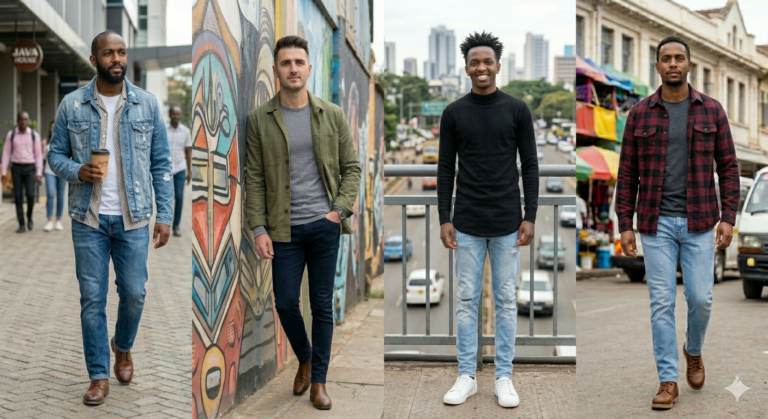
2. One Pair of Dark, Raw-ish Denim Jeans (Skip the Distressing)
I know everyone says “buy quality jeans,” but here’s what nobody tells you — distressed and faded denim looks dated faster than almost anything else in your closet.
Dark, clean denim with minimal stretch (around 2% elastane, no more) holds its shape and reads dressed-up or casual depending on what you put with it. Brands like Uniqlo and Everlane consistently nail this at the $50–80 range; you don’t need $200 selvedge denim to get a clean dark wash that lasts.
Real-world use case: Dark jeans, white shirt, and brown leather shoes will get you into most “smart casual” restaurants without a second look from the host.
3. The White Sneaker That Goes With Everything
Skip this one unless you’re willing to actually clean them — a white sneaker with scuffed soles and yellowed rubber undoes everything else you’re wearing.
But if you’ll wipe them down occasionally, a minimal leather low-top (think Common Projects-style silhouette, though brands like Koio or even Zara’s leather sneakers copy the shape well under $100) is the single most versatile shoe a man can own.
The minimal design — no visible logos, no chunky soles, no contrast stitching — is what makes it pair with both gym shorts and a blazer.
This is genuinely my personal favourite category to shop because the return on cost-per-wear is unbeatable. You’ll wear these more than every other shoe in your closet combined.
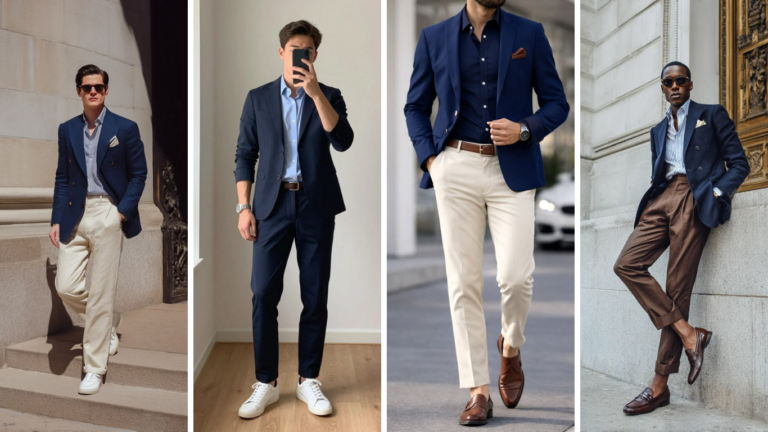
4. A Navy Blazer That Isn’t Actually a Suit Jacket
Here’s a mistake I see constantly: guys buy a suit, then wear the jacket alone and wonder why it looks slightly off. A suit jacket is cut to match its trousers exactly — wear it solo and the proportions read subtly wrong, even if you can’t articulate why.
A standalone navy blazer, cut separately with a slightly more relaxed shoulder, is built to be worn alone over jeans or chinos. This is a slower buy — wait for end-of-season sales, since a well-cut blazer is worth paying closer to $150–200 even on a budget, but never pay full retail price for one.
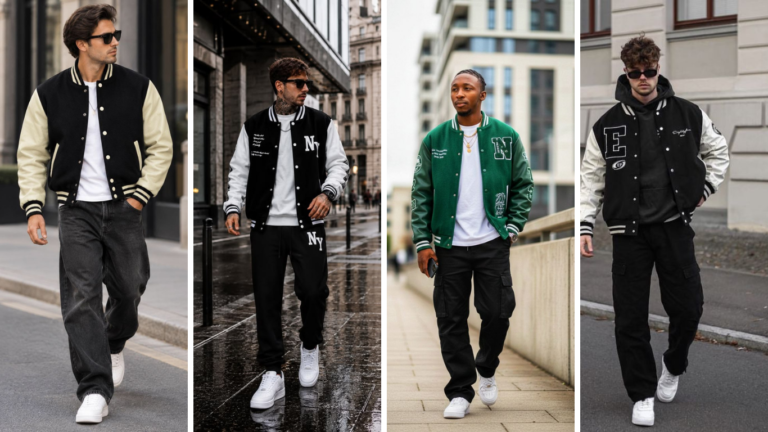
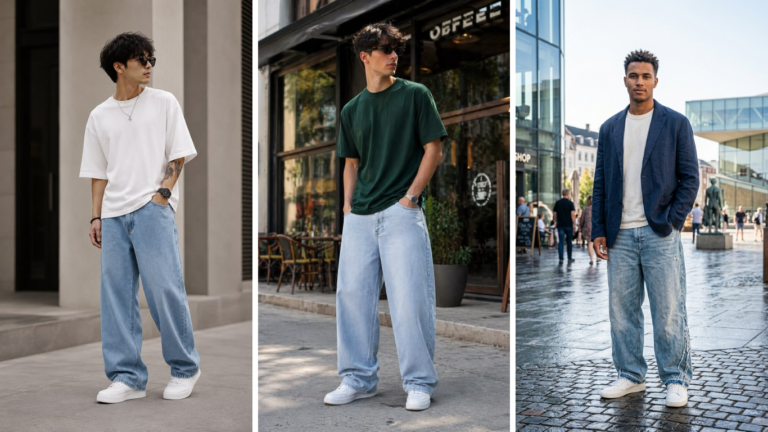
Read also: 20 Baggy Jeans Outfits for Men in 2026
5. Two Oxford Cloth Button-Down Shirts (One White, One Light Blue)
The OCBD — that’s “oxford cloth button-down,” the slightly nubby cotton weave with the soft, rolled collar — is the most underrated budget piece in menswear.
It’s casual enough to wear untucked with jeans, sharp enough to wear under a sweater into an office. Brooks Brothers invented the style for polo players in the 1890s, and the soft button-down collar (versus a stiff, pointed dress shirt collar) is exactly why it never looks try-hard.
Styling tip: Roll the sleeves to just below the elbow, leave the top button open, no undershirt needed. Instantly reads “put together” without reading “trying.”
6. A Genuine Leather Belt in Dark Brown
And yes, I know that sounds obvious, but you’d be amazed how many men still own a $12 faux-leather belt that’s already cracking at the fold.
A real leather belt — even an inexpensive one from a brand like Allen Edmonds’ lower-tier line or a basic full-grain option from Amazon’s better sellers — ages into a patina rather than peeling.
Match your belt to your shoes, not your bag, not your watch. That’s the actual rule, and most style articles get it slightly wrong by saying “match your accessories.”
PRO TIP: Buy fewer items in better fabric before you buy more items in worse fabric. A wardrobe of 15 pieces in cotton, wool, and leather will outlast and outperform a wardrobe of 40 pieces in polyester blends — both in how long it lasts and how good it looks on day one. Cost-per-wear always beats price tag.
Where to Actually Save Money (And Where Not To)
This is the part most “budget fashion” content skips entirely — they tell you to buy cheap, but never tell you where cheap is actually fine.
Save on: plain white and black t-shirts, gym wear, socks, and seasonal trend pieces you’ll wear for one summer.
Spend more, relatively, on: outerwear, shoes, and denim — the three categories that touch your body shape most directly and show wear fastest when cheaply made.
Honestly, this one surprised me when I first started working with budget-conscious clients: the item men most regret buying cheap isn’t a jacket or a shoe.
It’s a watch. A $15 fashion watch looks fine in a product photo and looks plastic-y within a month on an actual wrist. If you want a watch, save up for one $80–120 option with a leather or metal band rather than owning three cheap ones.
The Shopping Sequence That Actually Works
Buy in this order, not all at once: white sneakers and one pair of dark jeans first (these unlock the most outfits immediately), then your OCBD shirts, then the grey sweater, then the belt, and the blazer last, since it’s the highest cost-per-item and the slowest to need replacing.
Spacing purchases like this also means you’re not buying everything from one fast-fashion clearance rack in a single panic-shop, which is how most men end up with a closet full of things that don’t actually go together.
Final Thoughts: Build Slow, Wear Often
A stylish wardrobe on a budget isn’t about finding hidden cheap gems — it’s about sequencing a small number of well-made, neutral pieces so they all combine with each other. Buy fewer things, buy them in the right order, and let cost-per-wear guide every decision instead of the price tag alone.
What’s the one piece in your closet right now that you reach for more than anything else — and did it cost you more or less than you expected? Drop it in the comments, I read every one.
Read also: