Nike Air Max 90 vs Air Max 97: Comfort, Sizing, Style and Which to Buy
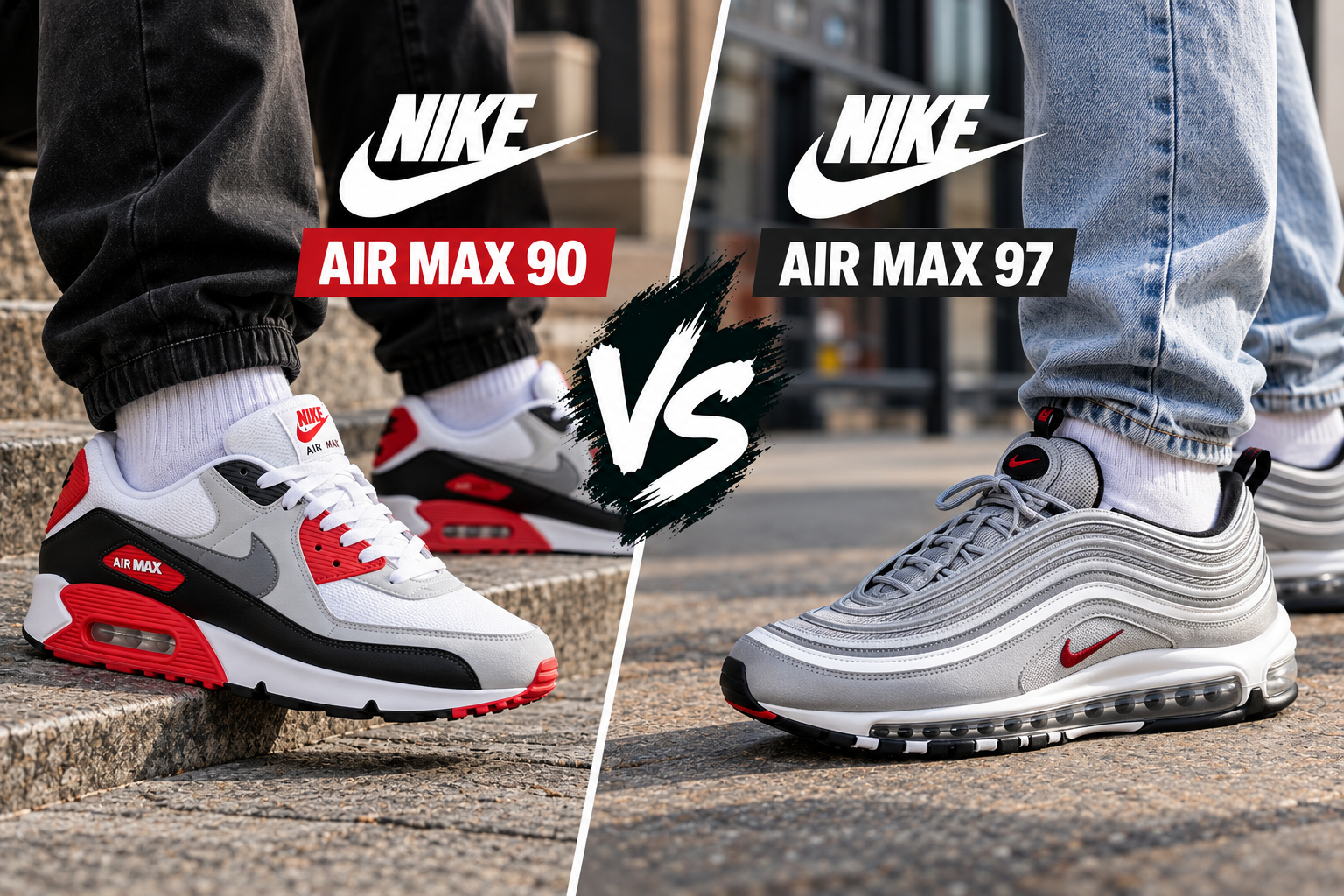
The Nike Air Max 90 vs Air Max 97 debate usually starts with looks, but it shouldn’t end there. Both are classic Nike runners turned lifestyle sneakers, and both have visible Air cushioning.
They differ in silhouette, how the cushioning is built, how they fit around the foot, and which outfits they suit best.

This guide breaks down those differences so you can pick the pair that suits your feet and your wardrobe, and it flags where the available information is inconsistent.
The Short Answer: Which Should You Buy?
Choose the Air Max 90 if you want a more versatile, traditional-looking sneaker with a padded collar, a long list of colorways and materials, and a fit that most sources describe as true to size.
Choose the Air Max 97 if you want a sleeker, more futuristic shoe with full-length Air cushioning and a distinctive ripple-style upper, and you’re comfortable with a snugger fit.
Here’s the key technical difference. The Air Max 90 has a visible Air unit in the heel. The Air Max 97 was the first Nike shoe with a visible Air unit running the entire length of the sole. Neither is clearly “better.” The 90 is the easier all-rounder, and the 97 is the bolder statement piece.

Nike Air Max 90 vs Air Max 97 at a Glance
| Air Max 90 | Air Max 97 | |
|---|---|---|
| Released | 1990 | 1997 |
| Designer | Tinker Hatfield | Christian Tresser |
| Air unit | Visible Max Air unit in the heel | Full-length visible Max Air unit |
| Typical upper | Leather, synthetic and mesh with stitched overlays and TPU accents | Mesh and synthetic (some versions add leather overlays) |
| Silhouette | Classic, layered, padded collar | Sleek, flowing ripple lines |
| Outsole | Rubber waffle pattern | Rubber outsole |
| Fit (general) | Mostly described as true to size | Often described as snug; Nike’s own page recommends sizing up |
| Colorway and material variety | Very wide | Narrower but still large |
| Best for | Everyday wear, flexible styling | Standout looks, modern streetwear |
Nike releases many versions of both models, so specifications vary by pair. Always check the product page for the exact version you want.
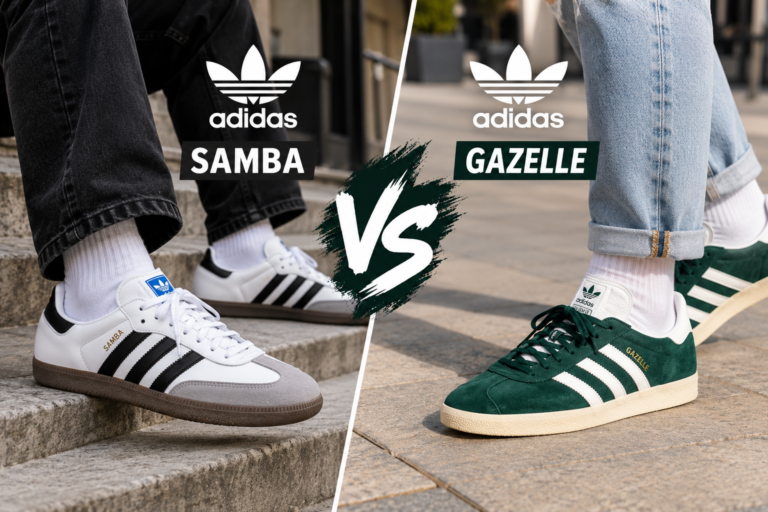
Read also: Adidas Samba vs Gazelle: Differences, Sizing, Comfort and Which to Buy
Design and Style Differences
Air Max 90. Hibbett describes it as the third generation of the Air Max family, designed by Tinker Hatfield. It’s a low-top with a padded collar and a layered upper. Retail descriptions list stitched overlays, TPU accents and a rubber waffle outsole as signature details. The window to the heel Air unit is the shoe’s visual anchor.
Air Max 97. Nike describes the 97 as having a ripple design inspired by Japanese bullet trains. Hibbett credits designer Christian Tresser and notes the signature lines wrapping around the upper. The result is a smoother, more streamlined profile with a bold sole.
Height and presence. Hibbett says the full-length Air unit of the 97 gives a subtle lift of around 1 to 1.5 inches, depending on the model. In practice, that sole looks substantial from the side, while the 90’s heel bubble reads as more traditional.
Variety. The 90 comes in more materials and colorways. Foot Locker’s Air Max 90 listing describes patent leather, wool-like textiles and all-over graphic prints, in addition to the original mesh and leather build. The 97 appears more often in mesh and synthetic constructions, though premium and special versions exist.
Materials and Construction
Air Max 90. Retailer listings for current Air Max 90 versions commonly describe leather, synthetic and mesh in the upper. Foot Locker describes a mixed-material upper with synthetic and genuine leather overlays, a foam midsole, visible Max Air cushioning and a rubber waffle outsole. Some versions use more synthetic material and others more leather, so check the listing.
Air Max 97. Nike’s product page describes mesh and synthetic materials on the upper, a foam midsole, a foam sockliner and a rubber outsole. It also lists a pull tab for getting the shoe on. Other versions swap in leather overlays or welded synthetic panels, but the mesh-and-synthetic combination is the standard description.
What it means for you. Mesh adds breathability, and synthetic overlays add structure and easy cleaning. The 97’s flowing upper has fewer stitched panels than the 90, which can make it look cleaner but also means you should check how a specific version is built if you care about durability.
Comfort: Air Max 90 vs 97
Comfort is where opinions split, and it depends on what you value.
The case for the Air Max 90. One comparison site concludes that the 90 is generally the more comfortable of the two, citing a well-padded interior, though it also says overall comfort is very similar. Retail descriptions emphasize the padded collar and foam midsole, plus the heel Air unit for lightweight cushioning.
The case for the Air Max 97. The full-length Air unit gives consistent cushioning under the whole foot. Nike describes the 97’s cushioning as soft, with a springy, soft foam midsole. Another review site rates comfort as good after break-in, noting that some break-in is needed.
Where sources disagree. Sole Retriever notes that some people prefer the foam-based cushioning of the Air Max 90, while others feel the Air Max 97 is a bit stiffer, and concludes it comes down to personal preference. That’s the honest summary: neither is a plush, modern running shoe, and both use older-generation designs.
Practical considerations.
- The 90’s padded collar can feel more cushioned around the ankle.
- The 97’s snugger, form-fitting upper can feel secure for some feet and restrictive for others.
- Neither is ideal for long runs. They’re lifestyle sneakers built on running heritage.
- If you have wide feet, the fit issue (below) may matter more than the cushioning technology.
Sizing: Air Max 90 vs 97
Searching for Air Max 90 vs 97 sizing returns conflicting advice, so here’s how to read it.
Air Max 90. Sole Retriever says the Air Max 90 fits true to size, and its Air Max 95 guide also treats the 90 as true to size. A general sizing article warns that fit varies by model and material, so one version may not fit exactly like another. Sock thickness also changes how snug a shoe feels.
Air Max 97. Here the sources diverge:
- Nike Canada’s product page notes that the shoe fits small and recommends ordering half a size up.
- Captain Creps says the 97 typically fits true to size but offers a snug fit due to its sleek design, and says it may feel slightly tighter than the 90. It also says the 97 can be tight for wide feet and suggests sizing up from the start if snug.
- A comparison site says the two shoes fit similarly overall, with the slight difference mainly in width.
How to make sense of it. The most consistent message is that the 97 tends to feel snugger than the 90, particularly across the width. Nike’s own advice is to go half a size up for the 97. The 90 is mostly described as true to size.
A practical approach.
- Normal-width feet: Start with your usual size in the 90. For the 97, your usual size can work, but consider half a size up if you like room.
- Wide feet: Go half a size up in the 97, or try it on in store first. The 90 is generally the safer choice.
- Narrow feet: Your usual size in both should work. Use a thicker sock or insole if there’s heel slip.
- Buying online: Check the specific product page for fit notes and buy from a retailer with easy returns, since fit differs by version.
Style: How to Wear Each Shoe
Both shoes are casual sneakers, and neither suits formal tailoring. But they lean in different directions, so the Air Max 90 vs 97 style choice comes down to the kind of outfit you wear most.
Air Max 90 outfits
The 90’s classic, layered look works with a wide range of clothing.
- White or grey Air Max 90 with straight-leg indigo jeans, a plain white tee and a bomber jacket. A reliable everyday outfit. The neutral shoe lets the jacket lead.
- Black Air Max 90 with black or charcoal tapered trousers and a fine-knit sweater. Hibbett notes that the black Air Max 90 pairs well with office attire for a relaxed workplace. Keep the trousers slim and the rest of the outfit plain.
- Triple-white or cream Air Max 90 with stone chinos and a navy overshirt. A cleaner smart-casual look that keeps the sneaker from dominating.
- Colorful Air Max 90 with grey joggers and a hoodie. A sport-casual combination where the shoe is the focal point. Keep the clothes in neutral tones.
Air Max 97 outfits
The 97’s sleek, futuristic profile suits clean, modern outfits.
- Black or silver Air Max 97 with black cargo trousers and a technical jacket. A streetwear look that echoes the shoe’s reflective, high-tech feel.
- White Air Max 97 with slim-fit grey joggers and a plain black tee. Simple and sharp. The ripple lines add interest without extra accessories.
- Dark Air Max 97 with straight black jeans and an oversized sweatshirt. A comfortable look that balances the sole’s volume.
- Neutral Air Max 97 with athletic shorts and a boxy tee in summer. The thick sole suits sporty shorts better than tailored ones.
Trouser tips.
- The 90 handles straight, tapered and slightly relaxed trousers well.
- The 97’s thick, sleek profile looks best with tapered or straight trousers that stop at or just above the ankle. Wide, long trousers can hide the ripple lines that make the shoe distinctive.
- Both shoes look odd with very short, tight trousers that expose the whole sole.
Color tip. If you only buy one pair, black, white or grey gives the most outfit options in either model. Bright colorways make a statement but limit how often you can wear them.
Durability and Maintenance
Both are generally seen as durable sneakers. One comparison site says both the 90 and 97 are durable, and a review site describes the 97’s outsole as wearing well on pavement and its synthetic upper as resilient.
Care basics.
- Wipe uppers with a damp cloth and mild soap, as one retailer’s listing recommends.
- Clean mesh gently with a soft brush so you don’t fray it.
- Don’t machine wash them or put them near direct heat.
- Wipe down white midsoles and Air units regularly to avoid yellowing and scuffs.
The 97’s mesh and synthetic uppers are easy to wipe but can show dirt in light colors, while the 90’s leather panels may crease over time.
Price and Value
Prices vary by country, retailer, colorway and version, so these are examples rather than fixed figures. Foot Locker has listed a standard Air Max 90 on sale at $99.99, reduced from $120, and a premium Air Max 90 Premium Treble at $145. Nike Canada listed the Air Max 97 at $230 (Canadian dollars). Special editions and premium materials cost more.
As a rule of thumb, the 97 tends to cost more than a standard 90 in many markets, but sales and colorway differences can reverse that. Check current prices from Nike and major retailers before buying.
Best Nike Air Max Sneakers: Where the 90 and 97 Fit
If you’re comparing the best Nike Air Max sneakers more broadly, the 90 and 97 sit in different places.
- The Air Max 90 is the best all-rounder of the two thanks to its range of colorways, materials and generally easier fit.
- The Air Max 97 is the strongest choice if you want the most visible cushioning technology and a sleek, modern look.
Other models in the family, including the Air Max 1, 95, Plus and 270, offer different shapes, cushioning setups and fits. If neither the 90 nor the 97 feels right, those are worth trying on. “Best” depends on foot shape, budget and style, so no single model wins for everyone.
Who Should Buy Which?
Buy the Air Max 90 if you:
- Want the most versatile everyday sneaker.
- Prefer a padded collar and a classic silhouette.
- Want a wide choice of materials and colorways.
- Prefer a fit that’s usually close to true to size.
Buy the Air Max 97 if you:
- Want full-length Air cushioning and a sleek futuristic look.
- Like a snug, secure fit.
- Prefer modern streetwear styling.
- Are happy to size up half a size if needed.
Consider something else if you:
- Have very wide feet and can’t try before you buy.
- Need modern, plush running cushioning for long distances.
- Want a dressy sneaker for smart outfits.
FAQ
Does the Air Max 97 make you taller? A little. Hibbett says the full-length Air unit gives a lift of roughly 1 to 1.5 inches, depending on the model. The exact height varies by version.
Can I wear Air Max 90 or 97 sneakers for running? Both started as running shoes, but today they’re lifestyle sneakers. For regular running, a current performance running shoe is a better choice.
Do the Air Max 90 and 97 come in women’s and kids’ sizes? Yes. Retailers list women’s and boys’ sizes, and size charts show how men’s and women’s conversions differ. Check the chart for the exact model.
Final Verdict
The Air Max 90 and Air Max 97 are both strong picks, but they appeal to different tastes. The 90 is the safer, more flexible choice, with a classic look, padded collar and fit that’s usually close to true to size. The 97 is the bolder choice, with full-length Air, a sleek profile and a snugger fit that often benefits from going up half a size.
If you can, try both on in the afternoon with the socks you normally wear. Comfort and fit are personal, and the pair that feels right on your foot beats the one that looks better in photos.
Read also: